What Conveyor Pulley Lagging Actually Does
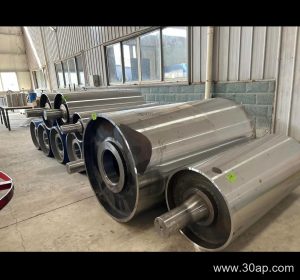
Conveyor pulley lagging is a replaceable layer applied to the drum face of a conveyor pulley to raise friction between the pulley and the conveyor belt. Without it, a bare steel shell can slip under load, especially when the belt is wet, dusty, or carrying abrasive material. The lagging also protects the pulley shell from wear and can help with belt tracking when the surface is profiled. In a quarry or a cement plant, a drive pulley with worn lagging often shows up as belt slip, heat buildup, and uneven wear on the belt cover.
This is not the same as a tail pulley or a bend pulley. A drive pulley transmits torque, so its lagging is usually chosen for grip. A tail pulley mostly guides and tensions the belt, and a bend pulley changes direction; their lagging needs can differ. The term “conveyor pulley lagging” covers the rubber or ceramic layer itself, not the pulley type. When someone asks for lagging on a drive pulley, they are usually asking for a surface that will not polish smooth under continuous load.
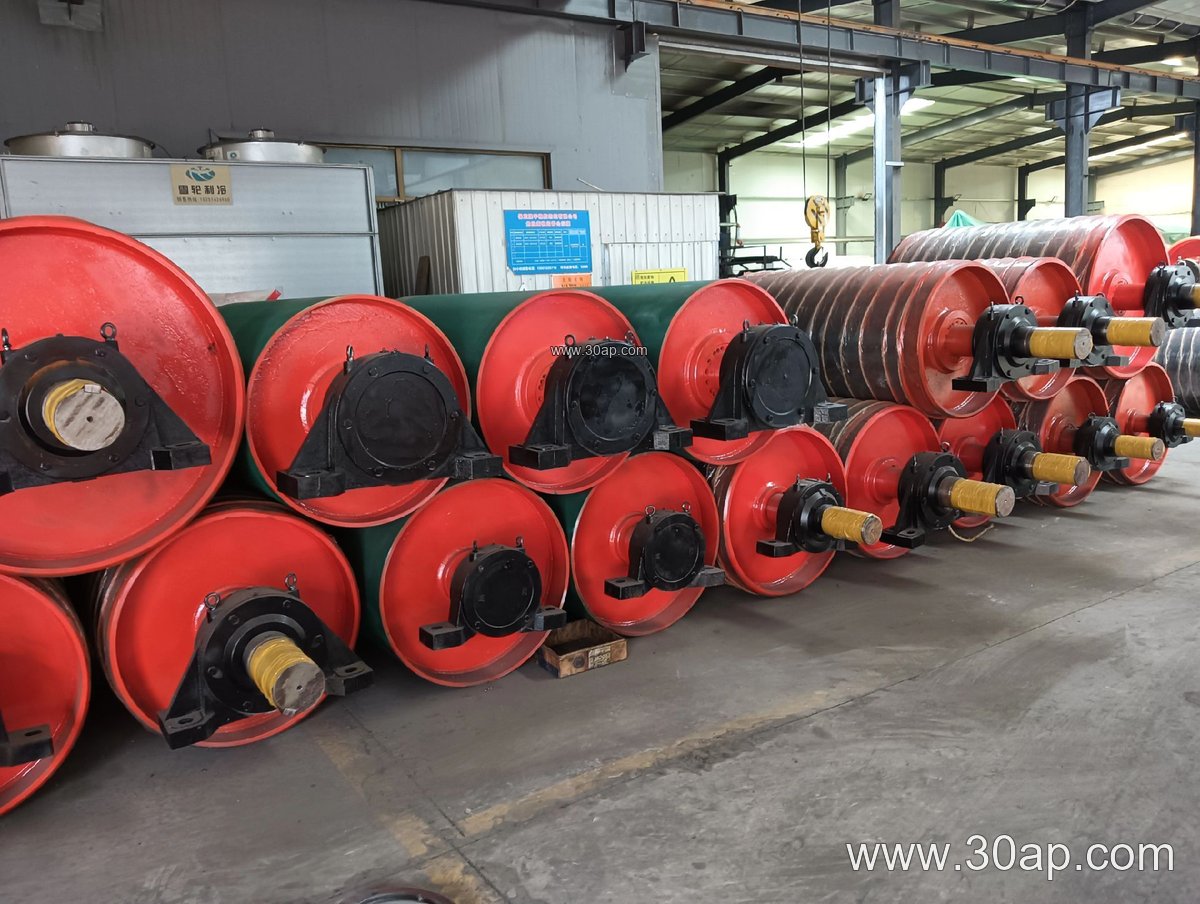
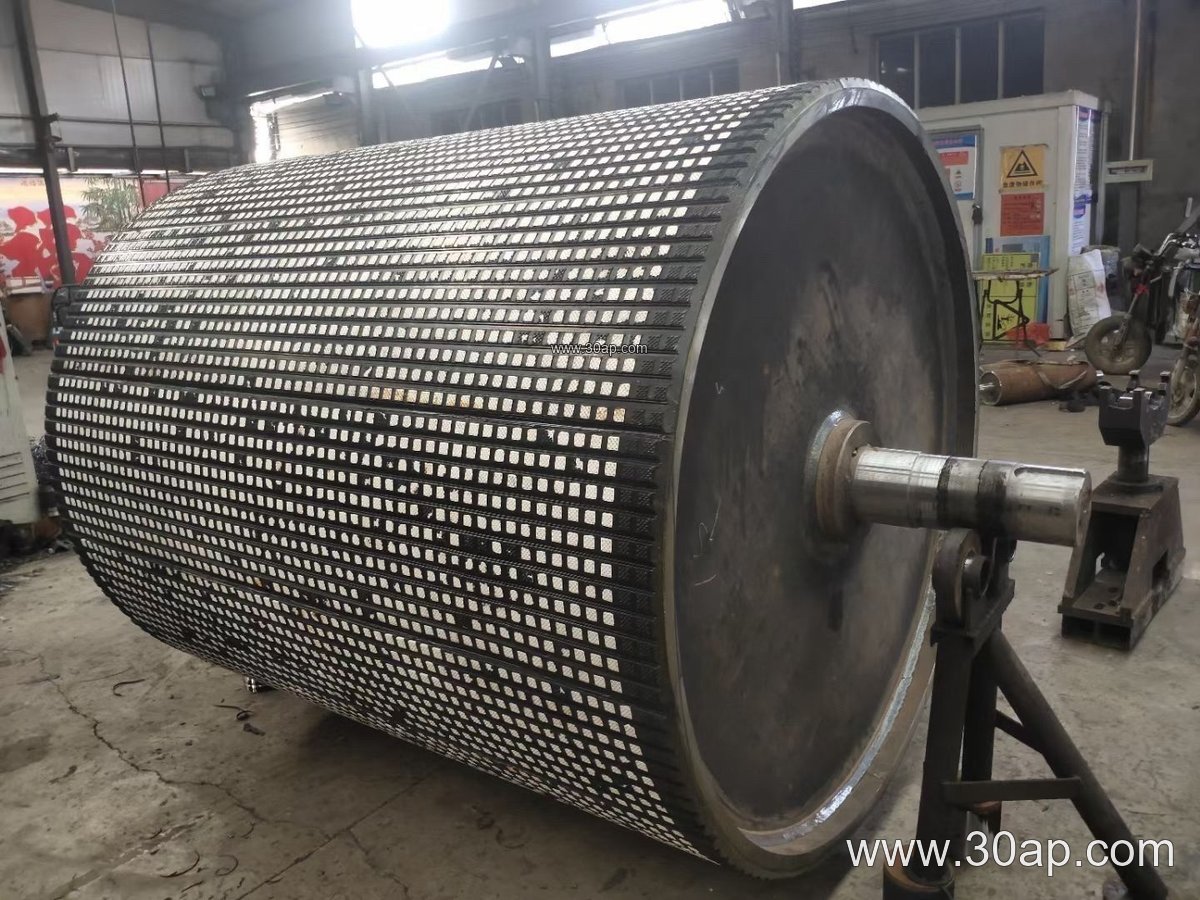
How the Lagging Is Built and Fitted
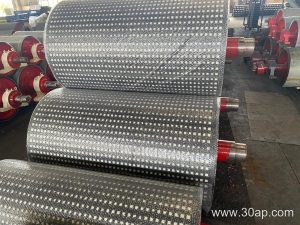
Most lagging is supplied as rubber sheet, either plain or with a pattern, and is bonded to the pulley shell. Common surface forms include plain, diamond, herringbone, and ceramic. Thickness is often 8, 10, 12, 15, or 20 mm, depending on the duty. A heavy-duty mining conveyor belt carrying coarse ore may need a thicker, tougher lagging than a light bulk material line in a food or fertilizer plant. The bond matters as much as the rubber: cold-bonded lagging is common for field replacement, while hot-vulcanized lagging is often used where a stronger bond is required.
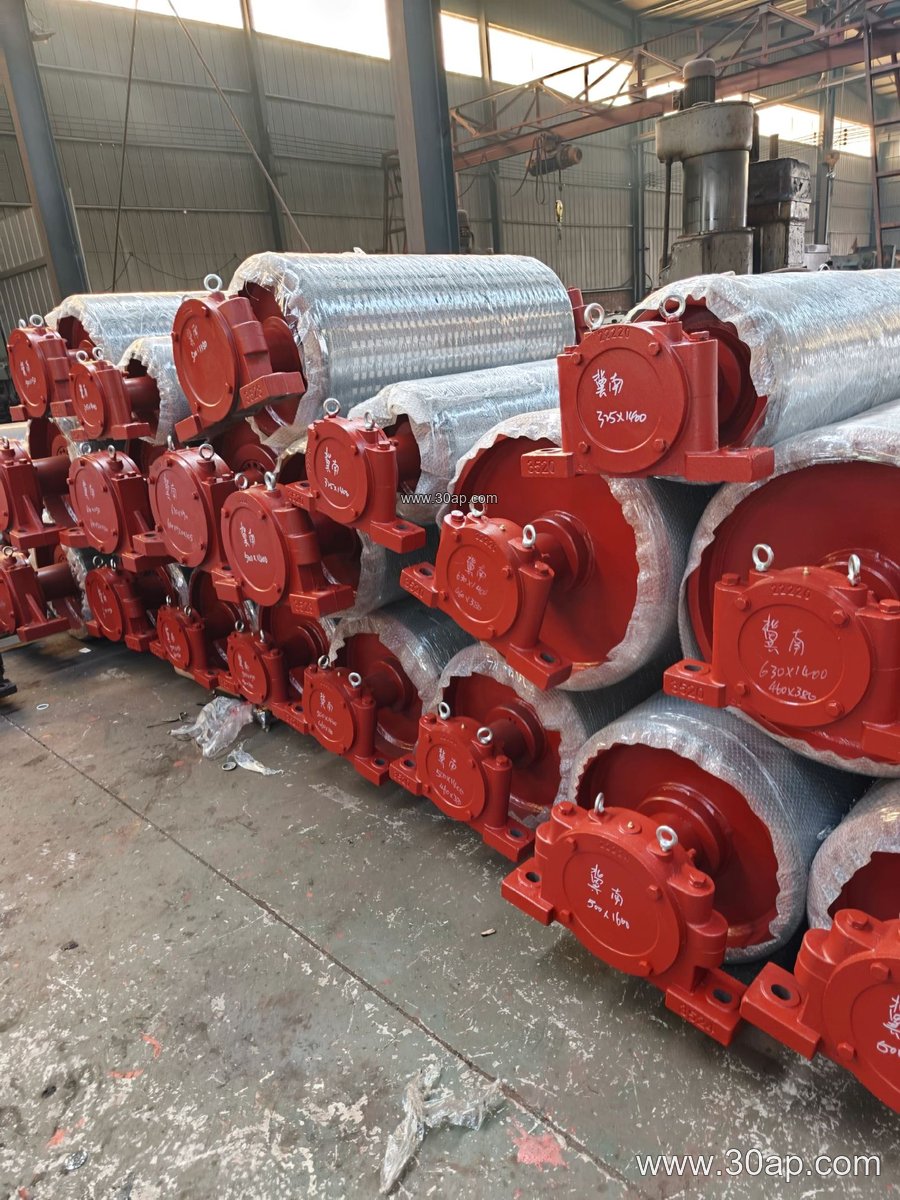
The pulley face width usually runs a little wider than the belt. For example, a B800 belt often pairs with a pulley face around 950 mm, and a B1200 belt with roughly 1400 mm. These are reference proportions, not fixed rules. Diameter and shaft size are selected from torque, belt tension, and load, not from belt width alone. A B800 × Ø500 drive pulley and a B1200 × Ø1000 drive pulley may both exist, but the shaft diameter is determined by the mechanical design. Common shaft sizes include Ø80, Ø100, Ø120, and Ø160, again as design values rather than a matching table.
Where the Surface Choice Matters
In a coal mining conveyor or a power plant coal handling line, flame retardant and anti-static properties are often requested for the belt, and the lagging should be compatible with that environment. A rubber conveyor belt with a smooth cover may need a different lagging pattern than a chevron conveyor belt used on an incline. On a steep aggregate conveyor, diamond or herringbone lagging can help shed water and reduce slip, while ceramic lagging is chosen where abrasive fines would quickly wear plain rubber.
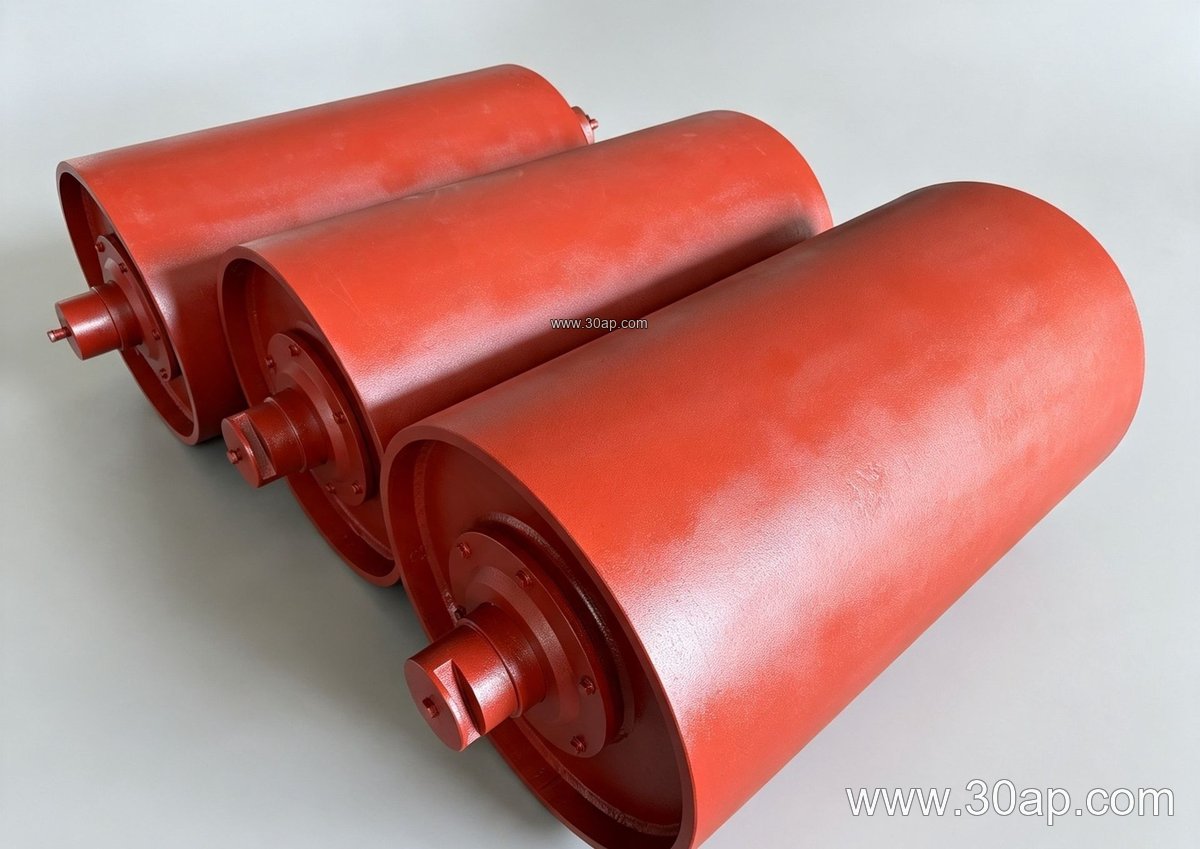
For a steel cord conveyor belt under high tension, the drive pulley lagging must handle high contact pressure without squashing or debonding. In a sand and gravel plant, a cold-bonded diamond lagging is a practical field replacement. In a cement plant, heat and dust can shorten lagging life, so the compound and bond system deserve attention. The same applies near a crusher conveyor or a screen feed point, where impact and fines are constant.
Buyer Checklist Before Ordering
Start with the pulley position and duty: drive, tail, take-up, or bend. Then confirm the pulley shell diameter and face width, the belt width, and the belt type. A buyer specifying lagging for a B1000 conveyor should confirm whether the pulley is Ø630 or Ø800, and whether the face is 1150 mm or wider. Surface form, thickness, and bonding method should follow the actual conditions: wet, oily, abrasive, or high-tension. Ask for the rubber grade and the recommended bonding procedure, and confirm that the lagging can be replaced without removing the pulley if field service is planned. Finally, check that the lagging supplier understands the difference between a drive pulley and a bend pulley, because the wrong surface on the wrong drum can cost more than the part itself.