What an NN200 Conveyor Belt Is
An NN200 Conveyor Belt is a fabric core belt built on nylon warp and nylon weft canvas, usually described in English as an NN conveyor belt or nylon-nylon fabric core conveyor belt. The number 200 refers to the nominal tensile strength class of the carcass, commonly quoted in N/mm per ply. In practical terms, this is a middle-strength multi-ply fabric belt that sits between lighter cotton or EP constructions and high-tenacity steel cord belts. Buyers in mines, quarries, cement works, power plants and sand and gravel yards often choose this class because it balances strength, flexibility and reasonable cost.
The same product also appears on drawings as an NN200 nylon conveyor belt, a fabric core conveyor belt of NN grade, or simply an NN belt. Those are equivalent names for the same construction. Do not confuse it with EP Conveyor Belt grades, where the carcass uses polyester warp and nylon weft, or with Steel Cord Conveyor Belt designs that have no fabric plies at all.
How the Belt Is Built
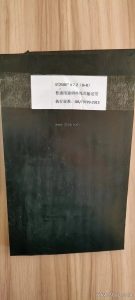
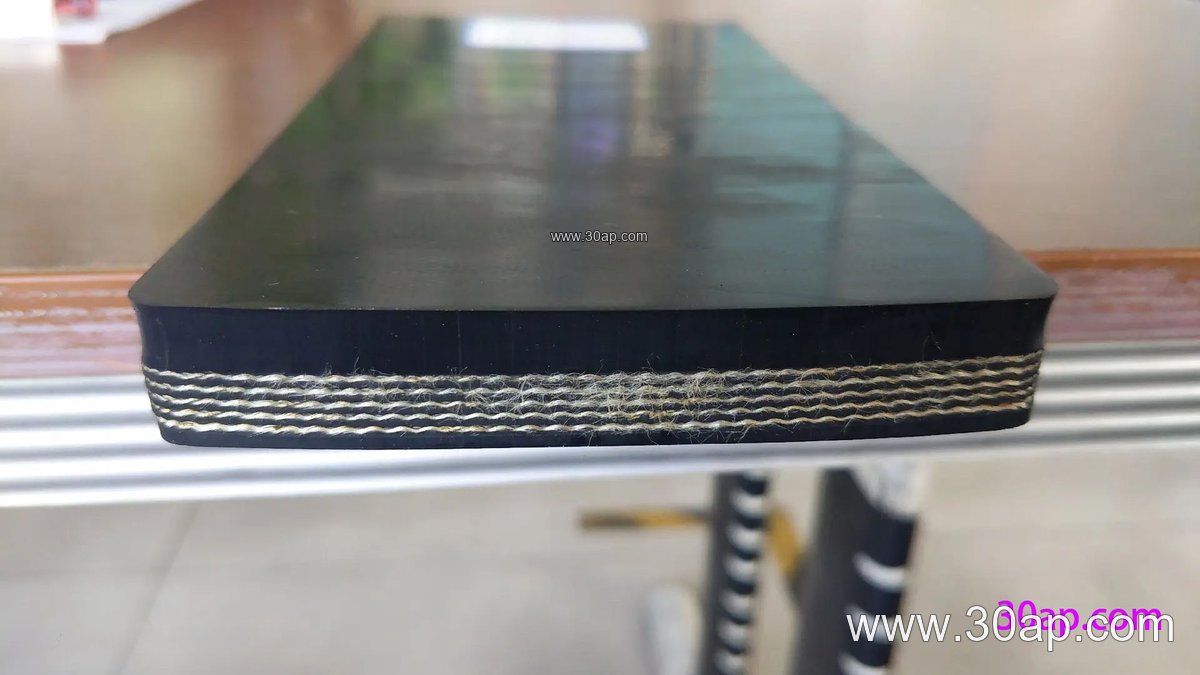
The carcass is the load-bearing part. Nylon fabric plies are bonded with rubber skim compound, then covered on both faces with abrasion-resistant rubber. Nylon stretches more than polyester under the same load, which gives good impact absorption and troughing behaviour, but it also means take-up travel and start-up tension deserve attention during engineering. A typical build includes:
- Top cover rubber, often 3 mm to 8 mm depending on lump size and wear conditions
- Multiple fabric plies, commonly 2 to 6 layers
- Bottom cover rubber, often 1.5 mm to 3 mm
- Edge protection and, where required, a breaker layer beneath the top cover
Cover compounds can be selected for specific duty, for example an Abrasion Resistant Conveyor Belt cover for crushed rock, a Heat Resistant Conveyor Belt cover for clinker or sinter, or a Flame Retardant Conveyor Belt cover for underground coal mining conveyors. Oil Resistant and Cold Resistant options are also available from many makers. These are cover choices on the same NN200 carcass, not different belt families.
Common Reference Values
The table below shows typical reference data only. Actual values are confirmed by the manufacturer against the duty and the conveyor design.
| Parameter | Typical reference range |
|---|---|
| Tensile class | NN200, with NN100, NN300 and NN400 as neighbouring grades |
| Belt width | B500, B650, B800, B1000, B1200, B1400, B1600 |
| Number of plies | 2 to 6, by design |
| Top cover thickness | 3, 4, 5, 6 or 8 mm |
| Bottom cover thickness | 1.5, 2 or 3 mm |
| Cover combination examples | 3+1.5, 4+2, 5+2, 6+2, 8+3 mm |
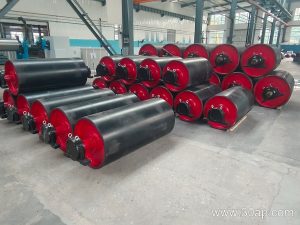
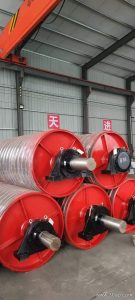
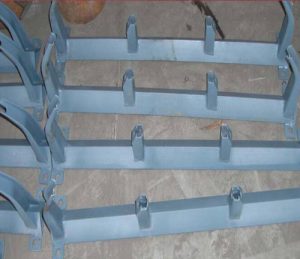
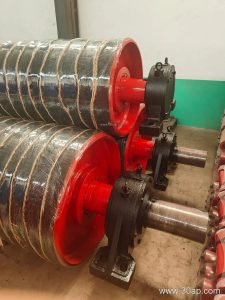
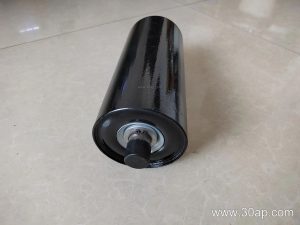
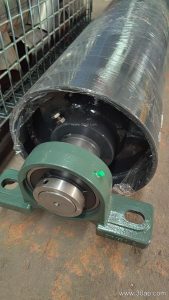
Belt width and pulley diameter are separate design decisions. A wider belt does not by itself fix the pulley size; the conveyor pulley, drive pulley and tail pulley are selected from shaft load, belt tension and wrap angle. Likewise, the belting supplier does not determine shaft diameter from width alone. Idler roller spacing, conveyor bracket layout and pulley face width all come from the conveyor designer.
Where NN200 Belting Fits
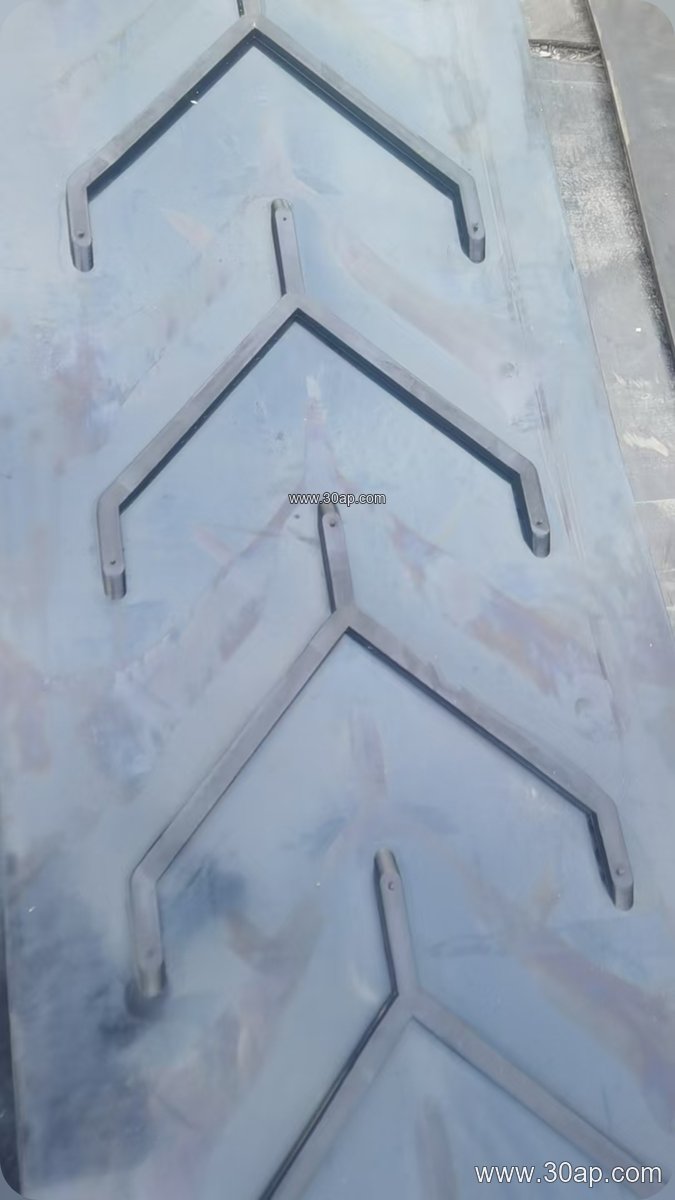
This strength class suits medium-duty bulk handling: a quarry conveyor belt moving blasted stone, an aggregate conveyor belt feeding screens, a cement plant conveyor carrying limestone or clinker, a power plant conveyor handling coal, and a sand making plant conveyor returning fines. It is also found in iron ore and copper ore circuits where the conveyor length and tonnage do not justify a steel cord carcass. When the route is steep, a Chevron Conveyor Belt or Corrugated Sidewall Conveyor Belt profile can be applied to an NN carcass to stop material roll-back, and a Skirted Conveyor Belt design helps at transfer points.
For very long overland lines or high tension drives, an EP conveyor belt or a steel cord belt is usually compared against NN200 during selection. For underground coal faces, PVG and PVC belting with fire-resistant covers may be specified instead. Those are comparisons, not replacements for the NN200 grade described here.
What to Check Before Ordering
- Confirm the required tensile class from the calculated belt tension, not from habit. NN200 may be generous on a short conveyor and marginal on a long, heavily loaded one.
- State the material, lump size, temperature and moisture so the cover compound and thickness are matched. Hot clinker and oily scrap need different covers.
- Give the pulley diameters, trough angle and idler roller pitch so the belt can be checked for flex fatigue and edge stress.
- Ask for the splice method. Vulcanised splices suit most permanent installations; mechanical fasteners are easier in temporary or hard-to-reach locations.
- Confirm the belt direction and whether the top cover needs extra thickness at impact zones under the crusher discharge.
Storage and handling also affect service life. Keep rolls upright, avoid sharp bends, and protect the edges during installation. Once running, check belt tracking, clean the conveyor pulley faces and inspect splice wear at regular intervals. For buyers comparing fabric constructions, a Multi-Ply Fabric Core Conveyor Belt in NN200 remains a practical, widely supported choice for mining, quarry and cement duty, provided the covers, plies and pulley interfaces are specified together.
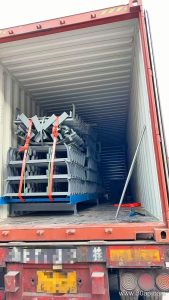
Related equipment such as conveyor pulleys, idler rollers and conveyor brackets should be reviewed alongside the belt data so the whole conveyor, not just the belting, is matched to the duty.