What a Conveyor Rubber Lagged Pulley Does
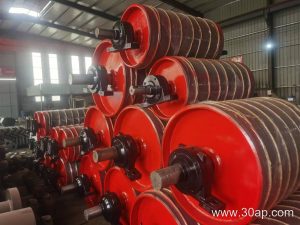
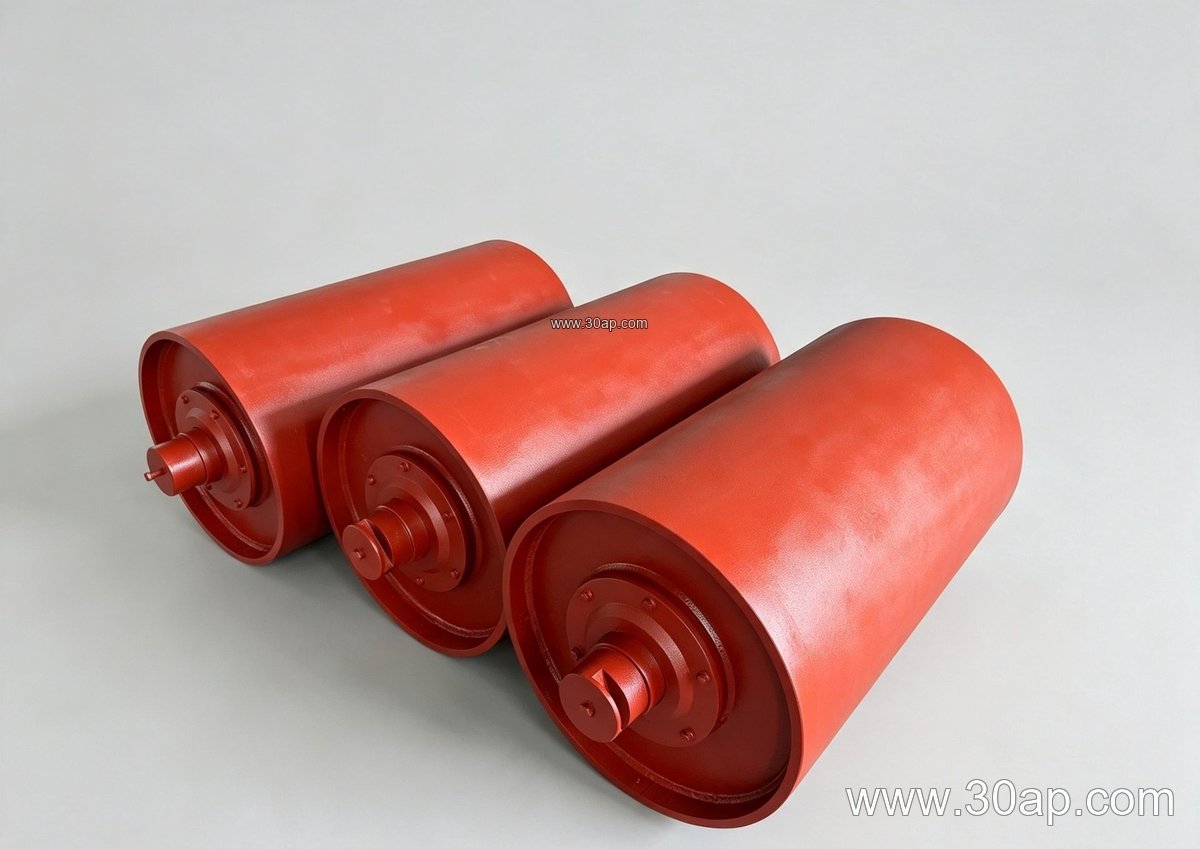
A conveyor rubber lagged pulley is a drive or tail pulley whose shell is covered with a rubber layer to improve grip and protect the belt. In a typical bulk handling line, this component works together with the conveyor belt, idler roller, and conveyor bracket to keep material moving reliably. The rubber lagging raises friction between the pulley and the belt, reducing slip under load, while also shielding the shell from abrasive dust and fines.
Lagging is not just a wear part. On a drive pulley, it helps transmit torque without excessive belt tension. On a bend or snub pulley, it can improve tracking and reduce the chance of belt damage. The same rubber-lagged design may be used on a conveyor pulley in a quarry, a coal mining conveyor belt system, or a cement plant clinker line, but the surface pattern and thickness should match the duty.
Construction and Surface Options
The base is a steel drum with welded end discs and a shaft sized by torque and load, not by belt width alone. Rubber lagging is applied in several ways: hot vulcanized rubber, cold bonded rubber, or cast rubber. Common surface forms include plain, diamond, and herringbone patterns. Diamond lagging is often chosen where wet or dusty conditions reduce grip; plain lagging suits cleaner, lighter duties. Thickness commonly ranges from 8 mm to 20 mm, with 10 mm and 12 mm being frequent choices for medium-duty conveyors.
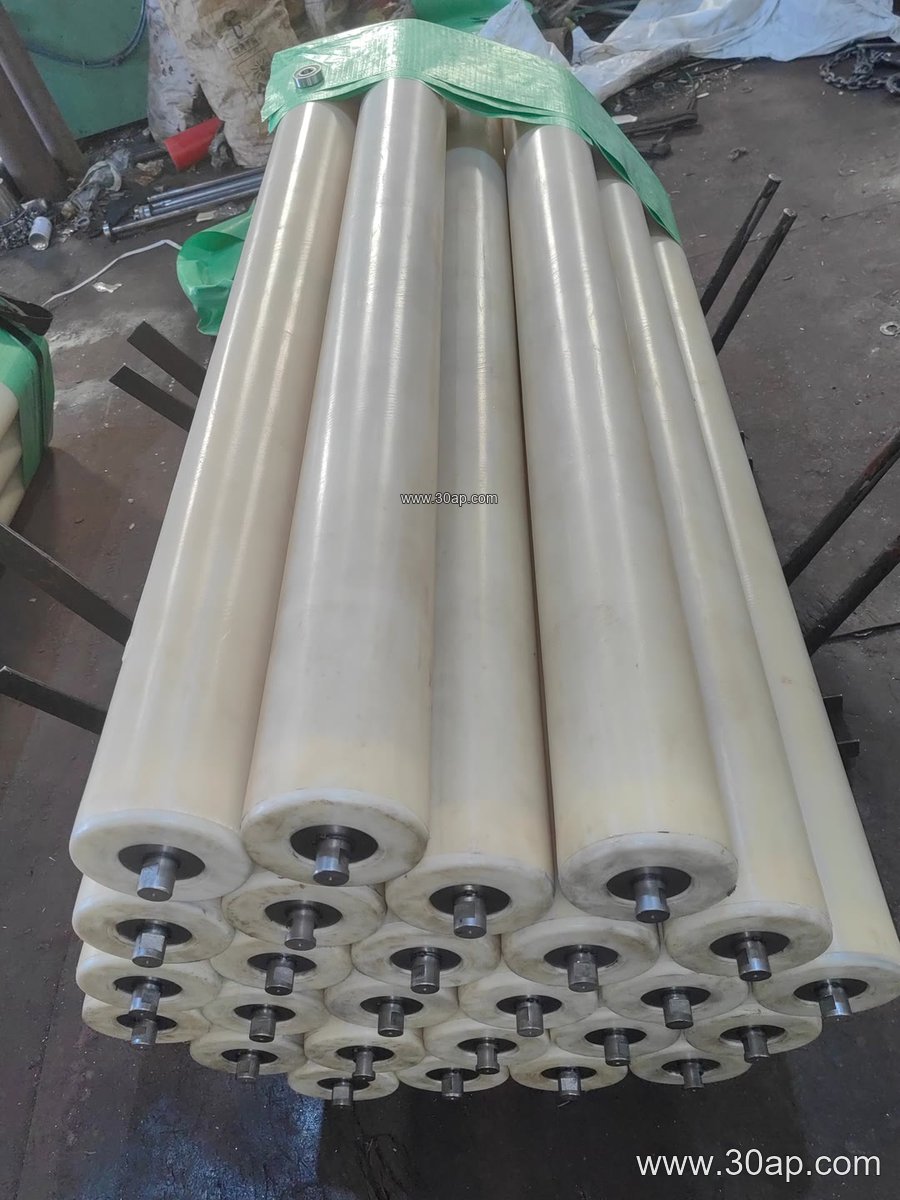
Because the lagging is a wear surface, it should be inspected for grooves, glazing, and loose edges. A worn pattern can lead to belt slip, especially on inclined conveyors carrying heavy ore or aggregate. For high abrasion service, such as iron ore or copper ore transfer, a thicker rubber cover may be justified. In coal mining or underground mining conveyor belt applications, flame retardant and anti-static properties of the belt and lagging should be considered together.
Where It Fits in the Conveyor
The same rubber-lagged pulley can appear in different positions, and the position changes what the buyer should prioritize. A drive pulley at the head needs strong grip and enough lagging thickness to handle starting torque. A tail pulley may use lagging mainly for protection against material build-up. A bend pulley in a long overland system often needs a smooth, consistent surface to avoid tracking problems. These roles are not interchangeable, and a drive pulley should not be swapped with a tail or bend pulley without checking the load and belt path.
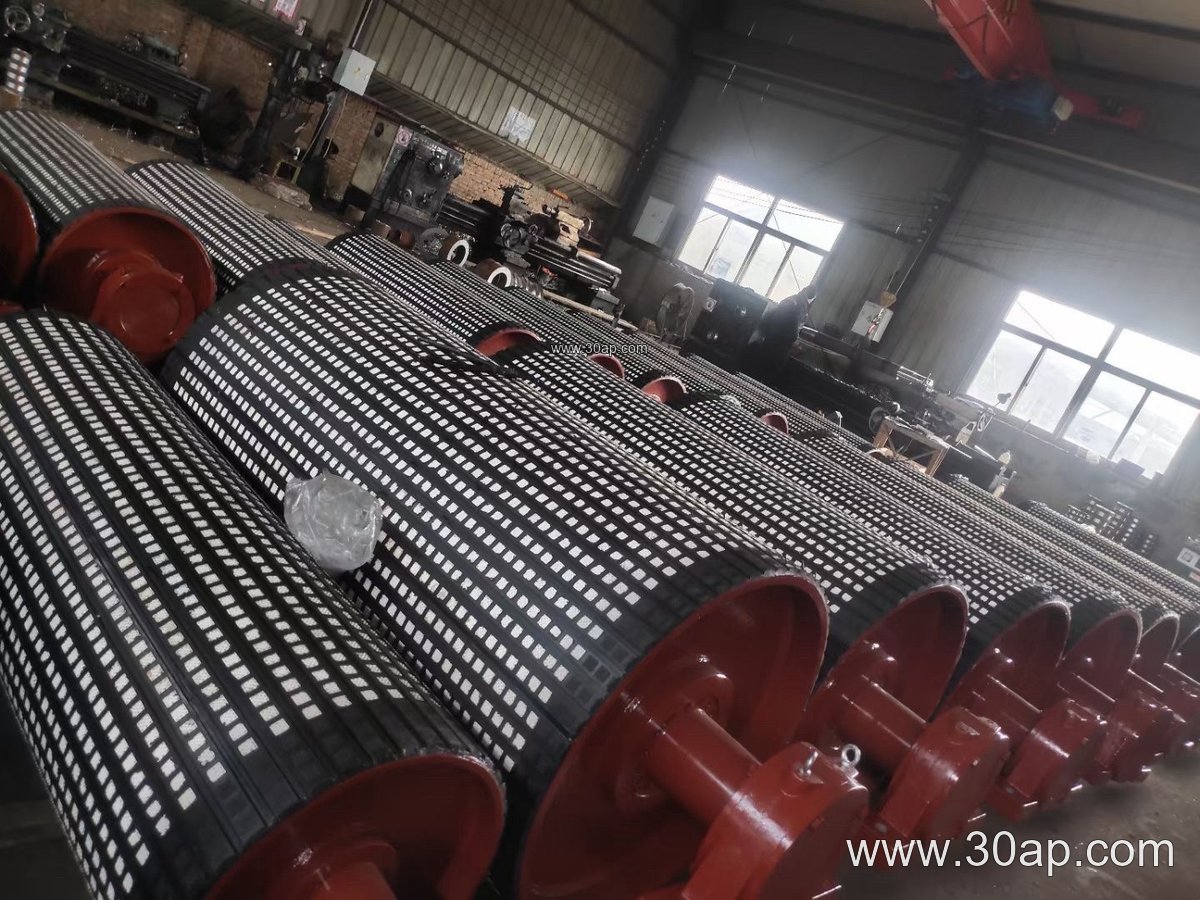
In a limestone quarry or sand and gravel plant, the pulley works alongside a heavy-duty conveyor belt, impact idler rollers, and sturdy conveyor brackets. In a power plant coal handling system, a flame retardant conveyor belt may run over rubber-lagged pulleys in dusty, enclosed galleries. The pulley diameter and face width should be selected from the belt width, belt tension, and shaft load, not from a fixed table. For example, a B800 belt may run on a Ø500 pulley in one conveyor and a different diameter in another, depending on speed and tension.
Common Reference Dimensions
Buyers often ask for a starting point on face width and diameter. The table below shows typical relationships, but final values must be confirmed by the conveyor designer. The pulley face is usually wider than the belt to allow for tracking.
| Belt width | Typical pulley face width | Example diameter range |
|---|---|---|
| B400 | About 500 mm | Ø200 to Ø315 |
| B650 | About 750 mm | Ø315 to Ø500 |
| B800 | About 950 mm | Ø400 to Ø630 |
| B1000 | About 1150 mm | Ø500 to Ø800 |
| B1200 | About 1400 mm | Ø630 to Ø1000 |
| B1400 | About 1600 mm | Ø800 to Ø1250 |
| B1600 | About 1800 mm | Ø1000 to Ø1400 |
Shaft diameters commonly fall in the range of Ø50 to Ø200 mm, but the exact size depends on torque, bearing span, and load. Do not assume a shaft size from belt width alone. For heavy-duty mining conveyor belt lines, a larger shaft and thicker lagging may be needed, while a light aggregate conveyor may use a smaller pulley with 8 mm lagging.
Buyer Checklist
Before ordering a conveyor rubber lagged pulley, confirm the belt width, belt type, and operating environment. A rubber conveyor belt with high abrasion resistance may pair well with diamond lagging, while an oil resistant conveyor belt in a recycling plant may need a lagging compound that resists swelling. Check whether the pulley is a drive, tail, bend, or take-up unit, because the lagging pattern and thickness may differ. Also verify the shaft diameter, keyway, bearing type, and bracket mounting dimensions.
Ask for the lagging method and surface pattern, not just the thickness. Hot vulcanized lagging generally offers a strong bond for high-torque drives, while cold bonded lagging can be a practical repair option. For underground coal mining conveyor belt systems, confirm flame retardant and anti-static requirements for the belt and lagging. In port bulk terminals or ship loading conveyors, consider how salt air and moisture affect the pulley surface.
Finally, keep spare lagging or a spare pulley on hand for critical conveyors. A worn rubber lagged pulley can cause belt slip, misalignment, and premature wear on the conveyor belt and idler roller. Matching the pulley to the actual duty, rather than copying a neighboring line, is the safest way to avoid downtime in mines, cement plants, power stations, and aggregate operations.