What a Guide Pulley Does on a Conveyor
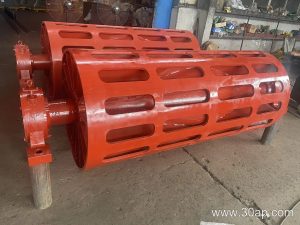
A guide pulley is a small-diameter roller assembly mounted against the return strand or the edges of the belt to keep the conveyor belt running true and to control its path between the main conveyor pulley stations. Unlike a drive pulley that transmits torque or a tail pulley that sets belt tension at the loading end, the guide pulley performs a steering and support duty. It is often grouped with the idler roller family, but its position and mounting differ: it is usually bracketed to the conveyor frame at an angle, or set vertically at the belt edge, so it can nudge the belt back toward centre without carrying the full material load.
Because the guide pulley works on the slack side, it is frequently combined with a bend pulley or a snub pulley in the same frame section. Those parts redirect the belt; the guide pulley corrects lateral drift. Keeping the functions separate helps maintenance teams diagnose tracking faults instead of replacing the wrong component.
Construction and Surface Options
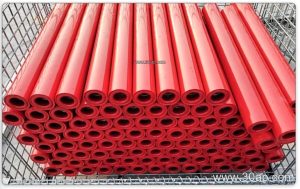
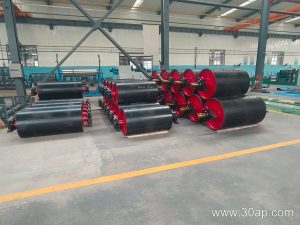
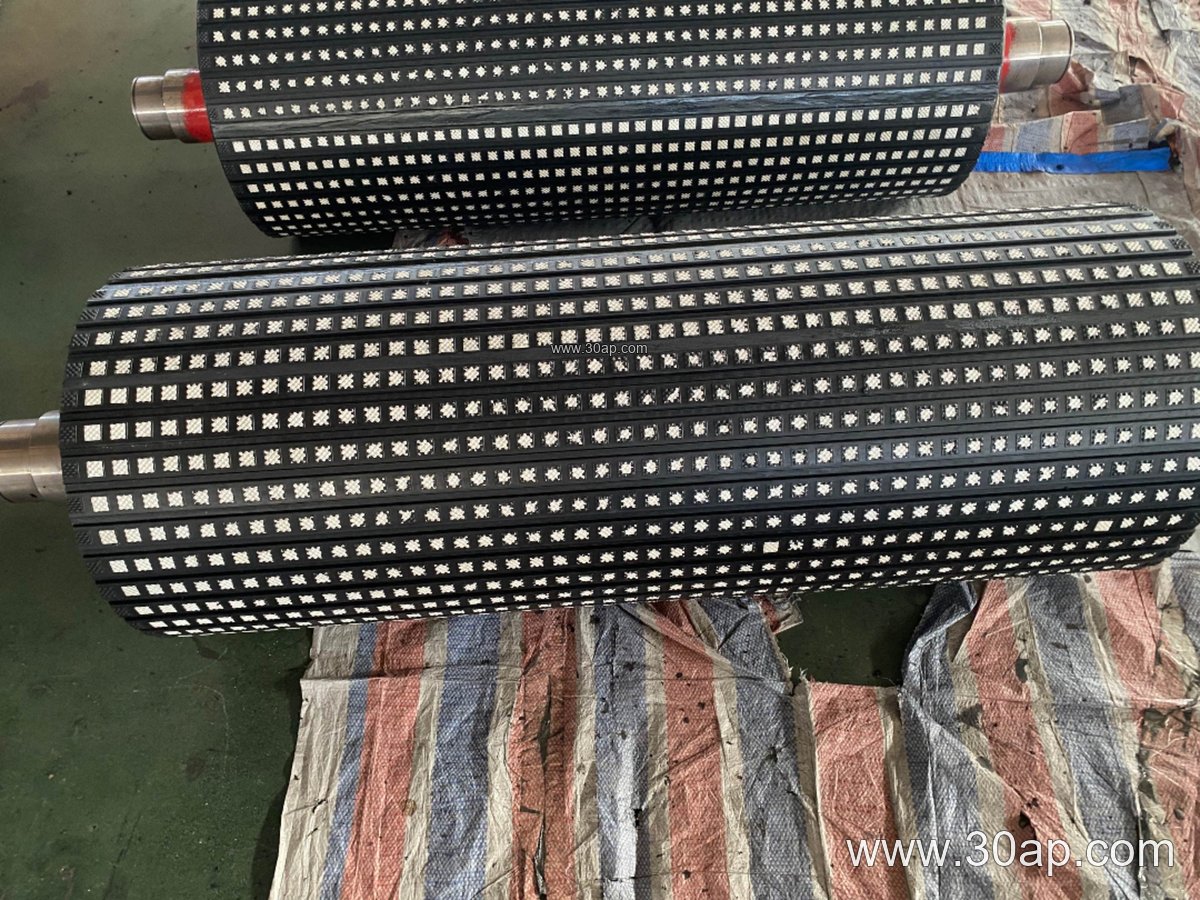
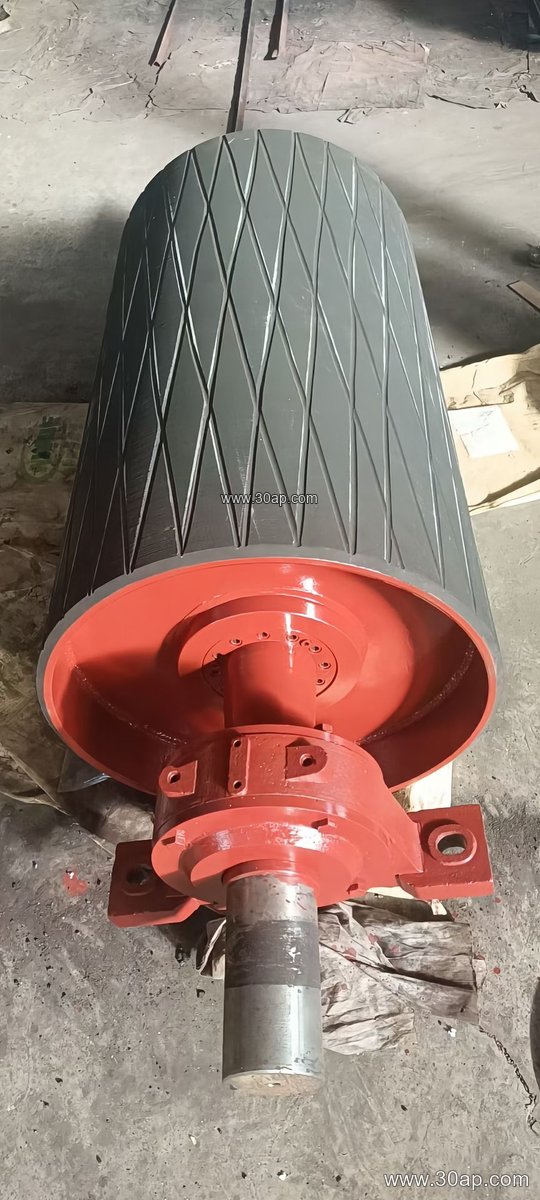
A typical guide pulley uses a steel tube shell with welded end discs and a through shaft supported by sealed bearing housings. Shell diameter is normally small, commonly Ø200 to Ø400, while the shaft diameter is set by load and torque rather than by belt width alone. Face width usually exceeds the belt width by a margin so the belt cannot walk off the edge; for example, a B800 belt often runs against a guide pulley with a face around 950 mm.
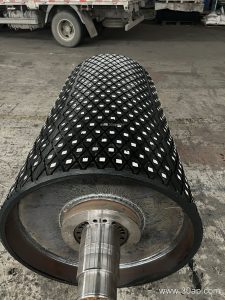
Surface treatment depends on duty. Plain finish suits light contact and easy cleaning. Rubber lagging, applied by cold bonding or hot vulcanising, improves grip and cushions the belt edge. Diamond or herringbone grooving helps shed water and fines in wet or dusty service. Ceramic lagging is chosen where abrasion is severe. Common lagging thicknesses are 8, 10, 12, 15 and 20 mm.
| Parameter | Common Range | Notes |
|---|---|---|
| Shell diameter | Ø200, Ø250, Ø315, Ø400 | Small sizes suit edge-guide duty |
| Face width | 500 to 2200 mm | Matched to belt width plus margin |
| Shaft diameter | Ø50 to Ø120 mm | Determined by torque and bearing load |
| Lagging | Plain, rubber, ceramic | Thickness 8 to 20 mm |
Where It Is Used
In a quarry or aggregate line, a guide pulley is often fitted just before the discharge point, where a misaligned belt would throw stone against the chute. In a coal handling plant or power plant coal yard, vertical edge rollers and angled guide pulleys protect the belt from rubbing the frame after a transfer tower. Similar arrangements appear in cement plants on clinker and limestone circuits, and in port bulk terminals on long shuttle conveyors.
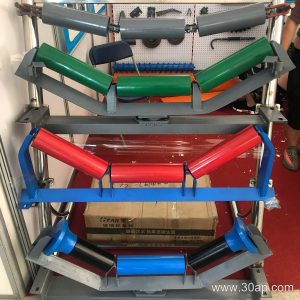
Guide pulleys also appear in tunnel spoil removal, fertiliser granulation lines and grain silos, where dust and fine particles demand sealed bearings and smooth shells. In these plants the guide pulley rarely works alone; it sits alongside conveyor brackets, idler rollers and the main conveyor pulley set, so the whole run shares the tracking load.
Matching the Guide Pulley to the Belt
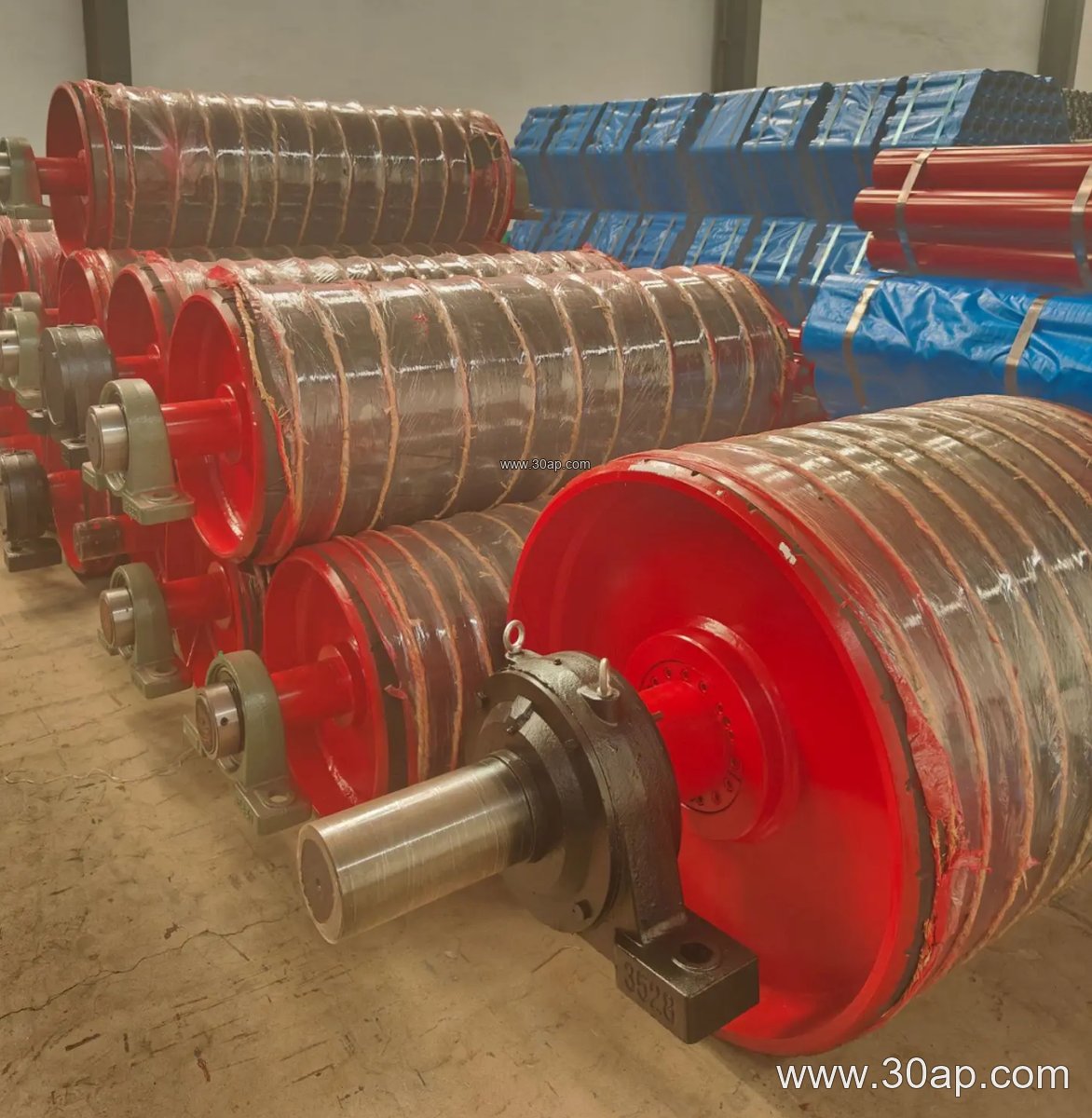
Selection starts with the belt, not the pulley. A heavy-duty mining conveyor belt such as a steel cord or high-abrasion rubber belt needs a robust guide pulley with thick lagging, while a lighter fabric core belt on a packaging line can use a plain shell. The table below shows typical combinations seen in practice; these are examples, not fixed rules.
| Belt Type | Typical Guide Pulley Size | Surface |
|---|---|---|
| EP conveyor belt, B800 | Ø250 × 950 mm face | Plain or 10 mm rubber |
| NN conveyor belt, B1000 | Ø315 × 1150 mm face | Diamond rubber |
| Steel cord belt, B1400 | Ø400 × 1600 mm face | 15 mm rubber or ceramic |
| Heat resistant belt, B1200 | Ø315 × 1400 mm face | Heat-tolerant rubber |
Belt width and pulley diameter are not locked together. A B1200 belt may run with Ø315 or Ø400 guide pulleys depending on space, belt stiffness and tracking force required. Buyers should confirm shaft size from the drive calculation, check bearing housing dimensions against the conveyor bracket, and verify that the lagging compound suits the conveyed material, whether that is abrasive ore, oily scrap or food-grade product.
Buyer Checklist
- Confirm the mounting position: return-side edge guide, angled steering roller, or vertical guide.
- State belt width, belt type and belt tension so the supplier can size the shell and shaft.
- Choose lagging by environment: abrasion resistant rubber for ore, oil resistant rubber for oily loads, plain for sticky material.
- Check that the guide pulley frame does not clash with existing idler roller stations or conveyor brackets.
- Ask for bearing sealing details for dusty coal, cement or quarry service.
- Plan periodic inspection of lagging wear and bearing play, since a worn guide pulley can itself cause belt mistracking.
Used correctly, the guide pulley is a low-cost part that protects expensive belting and keeps a conveyor line running straight from the crusher to the stockpile.