What a Waterproof Idler Is Meant to Do
A waterproof idler is a conveyor idler roller built so that water, slurry mist, and washdown spray stay out of the bearing housing. On a standard idler, the seal is mainly a dust barrier. In a wet environment that is not enough. Water enters past the labyrinth, emulsifies the grease, and the bearing fails long before the roller shell wears out. A waterproof idler roller addresses that path directly, combining a tighter seal arrangement with corrosion-conscious materials and a shell finish that tolerates constant moisture.
These rollers are common on washdown lines in a limestone quarry, on dewatering belts in a sand and gravel plant, and on outdoor inclined conveyors where rain and ground water are unavoidable. They also appear in ports and on ship loading systems exposed to salt air.
How the Sealing and Construction Differ
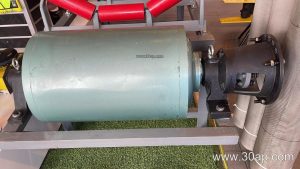
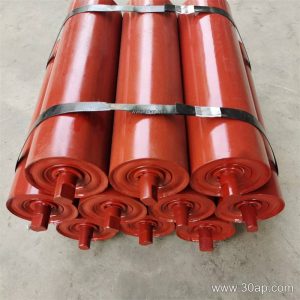
The core of the design is the end seal. A typical waterproof idler uses a multi-stage labyrinth combined with a lip seal or a contact seal, packed with water-resistant grease. Some designs add a protective end cap or a sealed bearing insert. The bearing itself is usually a sealed deep-groove ball bearing, and common sizes include 6204, 6205, 6305, 6306, 6308 and 6310. Bearing size should follow the shaft and load calculation, not the roller diameter alone.
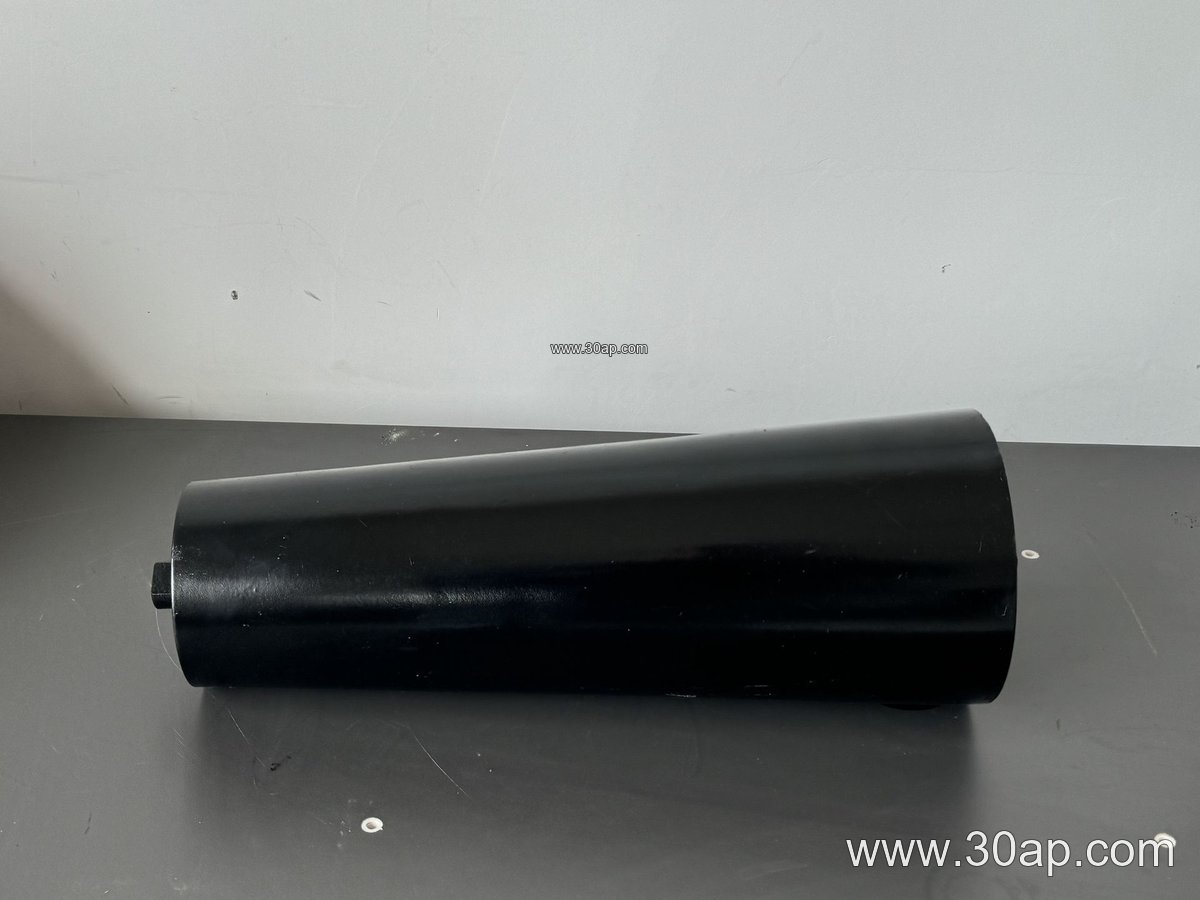
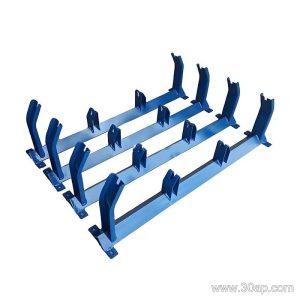
Shell and shaft materials matter as much as the seal. Painted steel is acceptable for light splash, while galvanized, stainless, or polymer-covered shells are chosen where corrosion is aggressive. Roller surfaces may be plain steel, nylon, ceramic, or rubber rings; a rubber ring version is useful where wet material sticks to the shell. The idler should also be matched to the conveyor bracket so the shaft sits correctly and the roller turns freely.
Where Waterproof Idlers Fit on the Conveyor
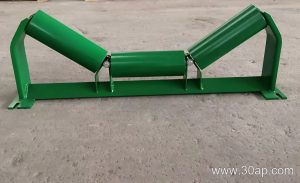
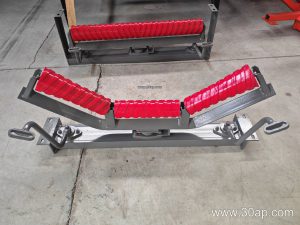
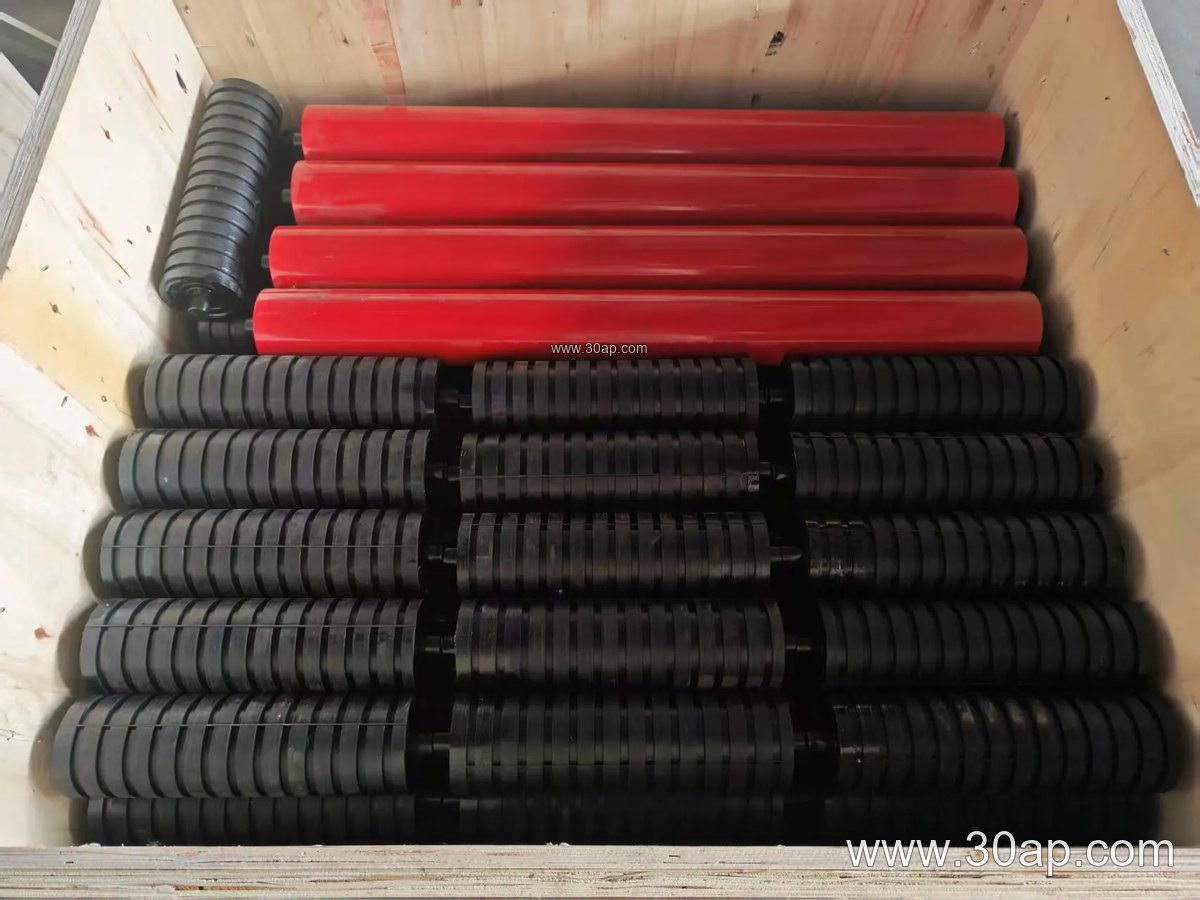
Waterproof construction can be applied to several positions, and the position dictates the form. Troughing idlers support the carrying side, return idlers support the belt on its way back, and impact idlers sit under the loading point where wet lumps fall. A V-shaped return idler helps center a wet belt that tends to misalign. These are positions on the same conveyor, not interchangeable parts, and a waterproof troughing idler cannot simply replace a return roller.
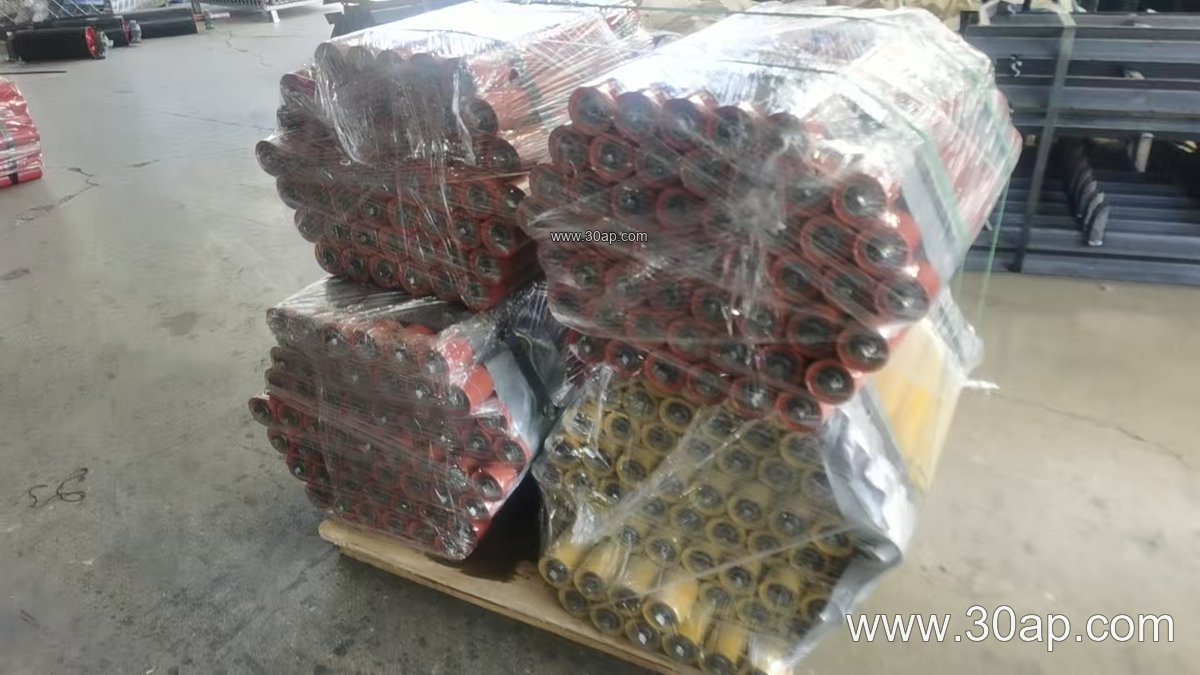
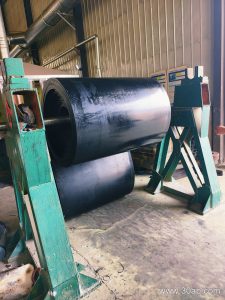
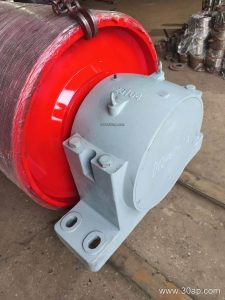
Drive pulleys, tail pulleys, and bend pulleys are separate components with their own specifications and should not be confused with idlers. The idler only supports the belt; the conveyor pulley transmits power and sets belt tension.
Sizes and Common Configurations
Waterproof idlers follow the same dimensional logic as other idlers. Diameters typically run from Ø63 up to Ø219 mm, and belt widths from B400 to B2400. Trough angle is usually 20, 30, 35 or 45 degrees, and a small forward tilt of about 1.5 to 2 degrees is used on some training idlers. Roller length depends on belt width, trough angle, and whether the set is single-roll, two-roll, or three-roll. The table below gives common examples, not fixed pairings.
| Belt width | Typical roller length, three-roll troughing | Common idler diameter range |
|---|---|---|
| B500 | about 200 mm | Ø63 to Ø108 mm |
| B650 | about 250 mm | Ø76 to Ø127 mm |
| B800 | about 315 mm | Ø89 to Ø133 mm |
| B1000 | about 380 mm | Ø102 to Ø159 mm |
| B1200 | about 465 mm | Ø108 to Ø178 mm |
| B1400 | about 530 mm | Ø127 to Ø194 mm |
| B1600 | about 600 mm | Ø133 to Ø219 mm |
| B1800 | about 670 mm | Ø159 to Ø219 mm |
Side rollers and center rollers can differ in length, and no single belt width locks a conveyor to one pulley diameter or one shaft size. The belt, load, speed, and frame design together determine the final selection.
Choosing the Right Roller for a Wet Duty
Start with the water source. Washdown spray, rain, and slurry splash demand different seal classes. Then check the material being carried: a wet, sticky ore may call for rubber rings or a self-cleaning profile, while a hot clinker line needs heat resistance before water resistance. Confirm the belt specification as well, since a heavy-duty mining conveyor belt, an abrasion resistant conveyor belt, or a flame retardant conveyor belt all place different loads on the idler set.
Grease choice is often overlooked. Water-resistant grease and a sealed bearing housing extend service life more than a thicker shell does. On coal mining conveyor belts and underground mining conveyor belts, flame retardant and anti-static properties may also apply to components, so check the full system specification rather than the roller alone.
Maintenance Notes
- Inspect seals and end caps at each scheduled stop; a damaged cap lets water in quickly.
- Watch for a stiff roller that no longer turns freely, which usually signals bearing contamination.
- Keep the conveyor bracket aligned so water drains away rather than pooling at the seal.
- Replace rollers in matched sets where the belt track has worn unevenly.
For buyers comparing suppliers, ask for the seal design, bearing type, shell material, and grease specification in writing. Those four details separate a genuinely waterproof idler roller from a painted standard roller, and they matter most on washdown lines, quarries, and coastal installations where moisture never stops.