What an Anti-Slip Lagged Pulley Does
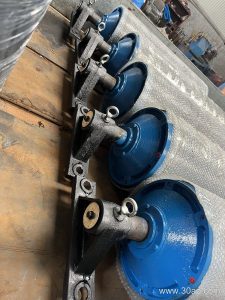
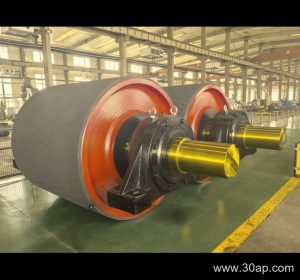
An anti-slip lagged pulley is a conveyor pulley whose shell carries a bonded rubber or ceramic lagging layer designed to raise friction between the drum and the conveyor belt. In a belt conveyor, the drive pulley must transmit torque without letting the belt slip, and the lagging is the part that converts contact pressure into grip. Plants handling wet, dusty or oily material often specify this drum type because a plain steel shell can lose traction quickly once moisture or fines work their way between belt and pulley.
The same product also appears under the accurate equivalent name anti-slip lagging pulley or anti-slip rubber lagged drum. The term describes the surface function, not a position on the conveyor, so it can be applied to a drive pulley at the head end or to a tension pulley that must hold the belt firmly.
Construction and Surface Options
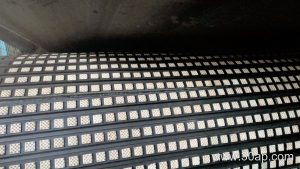
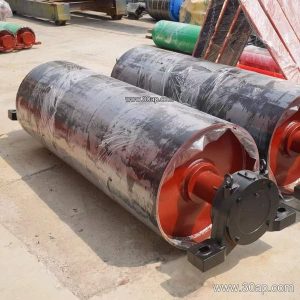
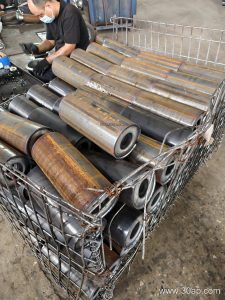
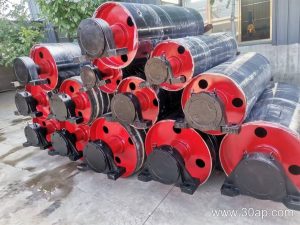
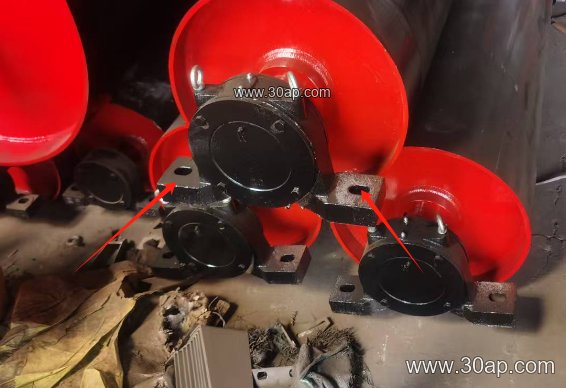
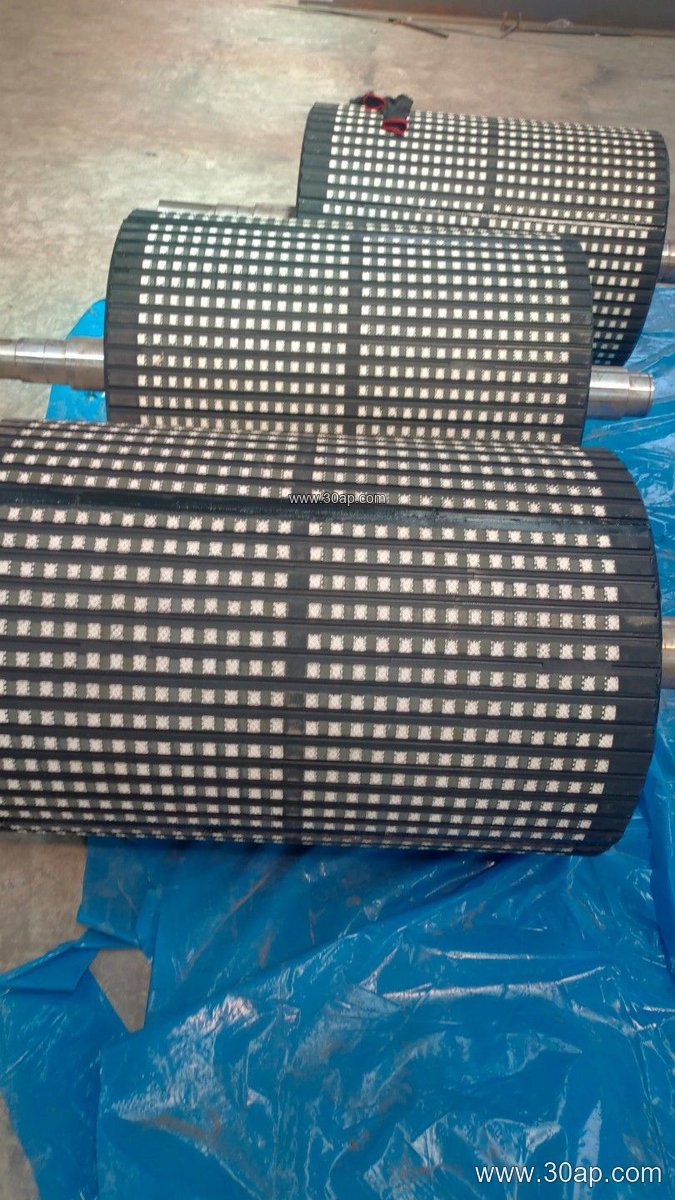
A typical unit combines a steel shell, welded end discs, a shaft and bearing housings, with the lagging bonded to the shell. Lagging thickness commonly ranges from 8 mm to 20 mm, and the pattern is chosen for the duty. Diamond lagging gives multidirectional grip and sheds water well; herringbone lagging is popular on reversing conveyors because it channels water away from the centre line; plain lagging suits cleaner duties; ceramic lagging is used where abrasion is severe. Bonding may be hot vulcanised, cold bonded or cast directly onto the shell. A buyer should confirm the bonding method, because a poorly bonded layer can peel under high torque.
Common reference dimensions
The figures below are reference values, not fixed rules. Diameter, face width and shaft size are determined by torque, belt tension and load.
| Reference | Typical values |
|---|---|
| Belt width | B400, B500, B650, B800, B1000, B1200, B1400, B1600, B1800 |
| Pulley diameter | Ø200, Ø250, Ø315, Ø400, Ø500, Ø630, Ø800, Ø1000, Ø1250 |
| Face width | Usually wider than the belt, e.g. B800 about 950 mm, B1200 about 1400 mm |
| Lagging thickness | 8, 10, 12, 15, 20 mm |
| Shaft diameter | Ø50 to Ø200, sized by torque and bearing load |
Useful combinations such as B800 × Ø500, B1200 × Ø1000 or B1400 × Ø800 describe a design point, not a rule that one belt width fits only one diameter.
Where It Is Used
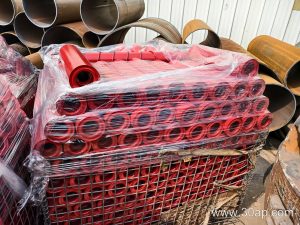
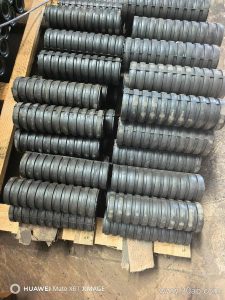
Anti-slip lagged drums are common in quarry and aggregate lines, where dust and wash water reduce friction, and in coal preparation plants where the belt may carry damp fines. They also appear in cement plants on clinker and raw meal conveyors, in power station coal handling, and in port bulk terminals. On a long overland conveyor carrying iron ore, the drive pulley may need ceramic lagging, while a coal mining conveyor belt with a flame retardant cover may use rubber lagging to protect the belt cover. In all these duties the drum works together with the conveyor belt, idler roller and conveyor bracket assembly, so alignment and belt tension matter as much as the lagging itself.
Drive, Tail and Bend Positions
Position changes the requirement. A drive or head pulley needs maximum grip and is usually the first place lagging is specified. A tail pulley at the loading point may use a plain or lightly lagged shell because its main job is support. A bend or take-up pulley may be lagged to prevent drift where the wrap angle is small. These positions are not interchangeable, and an anti-slip lagged pulley should be selected for the specific duty rather than swapped between them without checking tension and wrap angle.
Buyer Checklist
- Confirm belt width, pulley diameter and face width against the conveyor drawing.
- State the lagging pattern, thickness and bonding method.
- Provide torque and belt tension so the shaft and bearings can be sized correctly.
- Check compatibility with the belt cover, especially on a heavy-duty mining conveyor belt or a heat resistant conveyor belt.
- Ask how the lagging is finished at the edges to avoid lifting.
For matching components, a supplier of conveyor pulley, conveyor idler and conveyor bracket can review the whole assembly. More details are available at https://www.jsruiyuan.com/ for pulley and belt inquiries.
Maintenance Notes
Inspect lagging for wear, glazing, cuts and edge lift during scheduled stops. Keep the belt tracking straight, because a misaligned belt wears one side of the lagging faster and can cause slip even on a new drum. Clean material build-up from the shell and check that the take-up still provides adequate tension. Re-lagging is usually simpler than replacing the whole pulley when the shell and shaft remain sound.