What a Conveyor Idler Shaft Actually Does
A conveyor idler shaft is the stationary axle inside an idler roller. While the roller shell turns with the moving belt, the shaft stays fixed, held at both ends by a conveyor bracket. Everything the belt carries passes through this part. The shaft carries the vertical load of the belt and material, resists bending between the brackets, and keeps the roller rotating on its bearings with minimal drag. On a long overland system or a dusty coal mining conveyor belt line, a poorly made shaft shows up quickly as wobble, noise, and shortened bearing life.
In practice, the shaft is one of the least visible parts of a conveyor and one of the most consequential. It sets the mounting geometry of the whole idler roller, determines how the bearing seats are positioned, and influences how easily maintenance crews can replace a roller in the field.
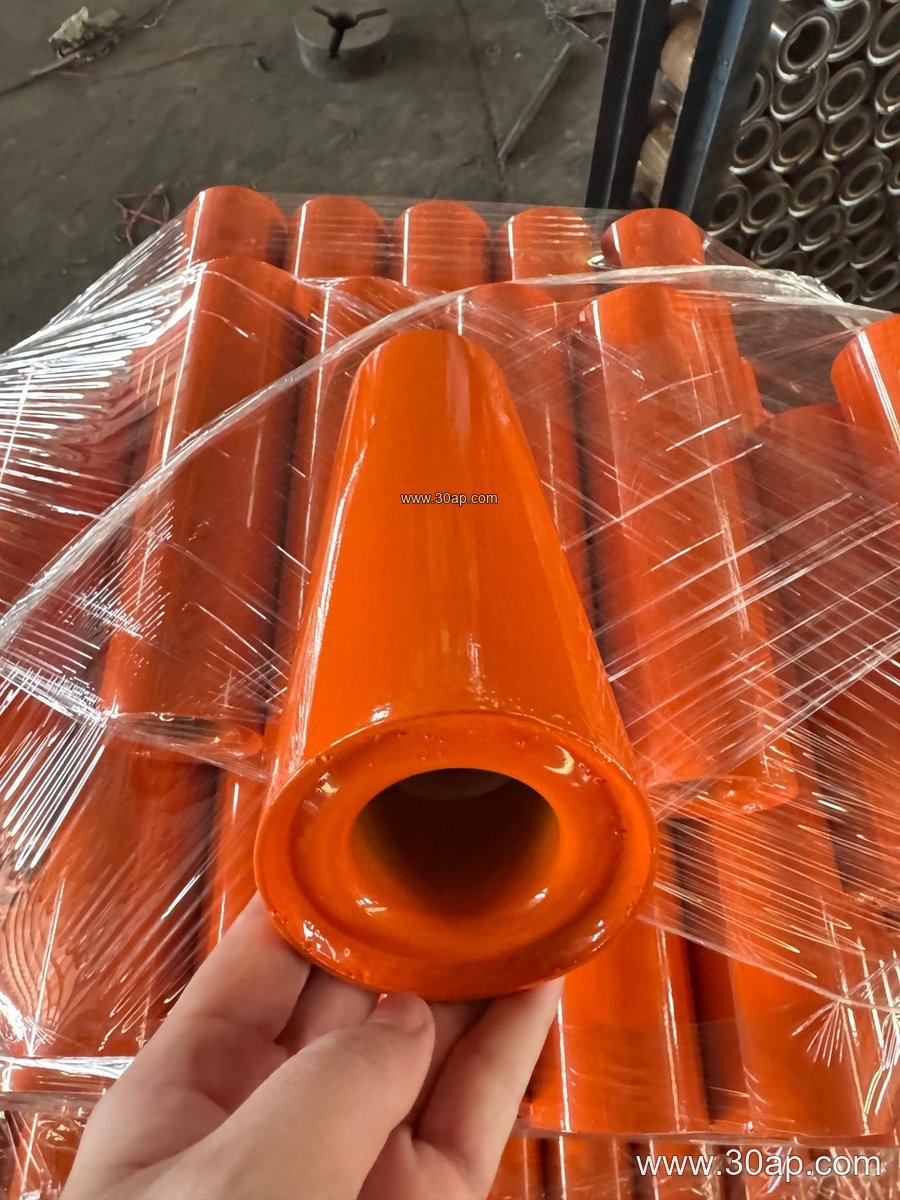
How the Shaft Is Built
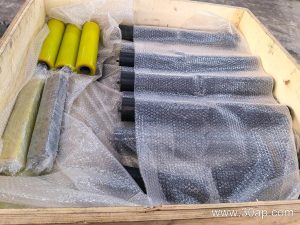
Most conveyor idler shafts are machined from round carbon steel bar, often with a cold-drawn or turned finish. The ends are stepped down to form journals that fit the bracket slots, and the middle section may be slightly larger to stiffen the span. Flat milled sections or machined grooves at each end lock the shaft against rotation inside the bracket, preventing the axle from spinning with the shell.
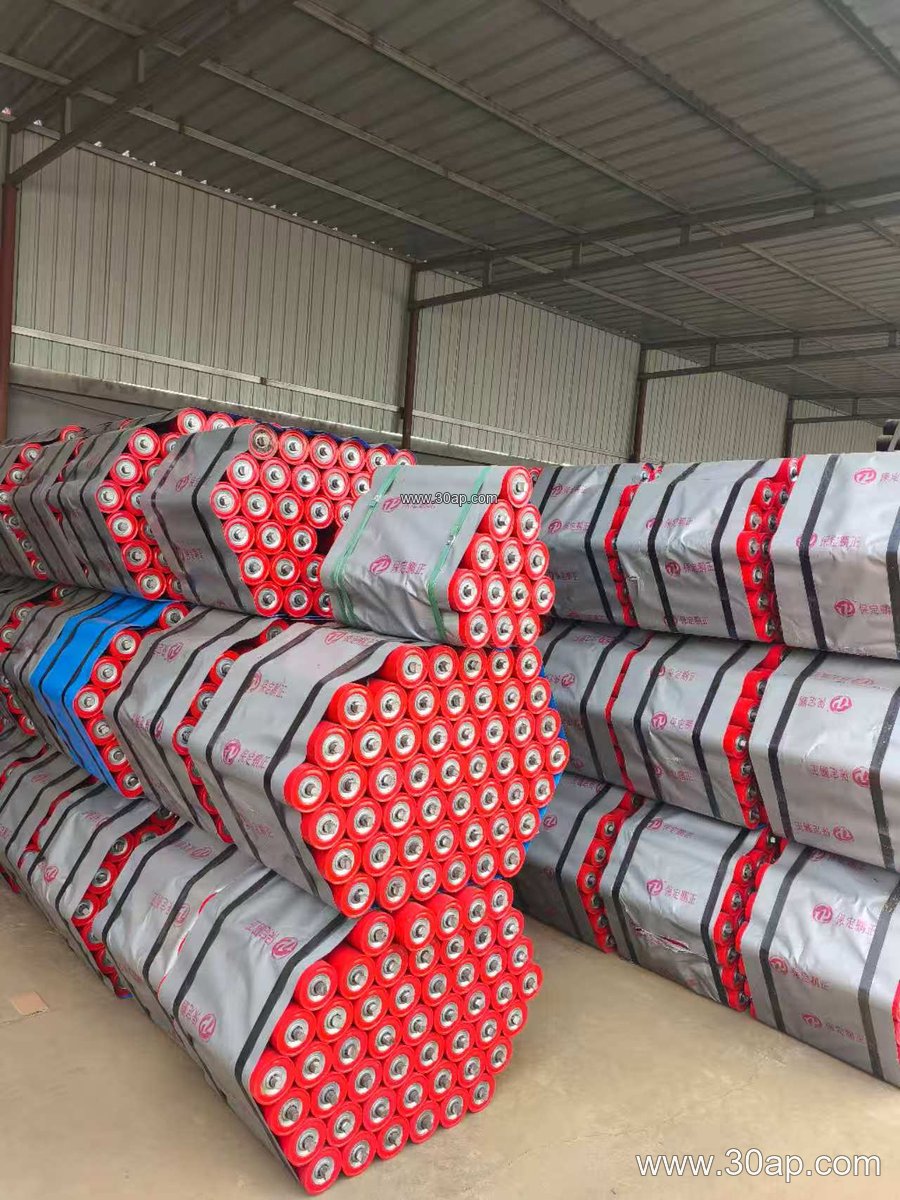
Bearing seats are turned to a close tolerance so the bearing inner ring sits firmly without play. Common bearing sizes found in idler rollers include 6204, 6205, 6305, 6306, 6308 and 6310, and the shaft journal is machined to match whichever bearing the roller design uses. The shaft is not interchangeable across bearing sizes, so the journal diameter and shoulder position must be specified together with the bearing.
Surface treatment matters in wet or corrosive service. Paint, zinc plating, or a protective coating on the exposed ends helps resist rust where the shaft meets the bracket. Sealed bearing housings and labyrinth seals work with the shaft to keep grit away from the bearing seats.
Where It Fits on the Conveyor
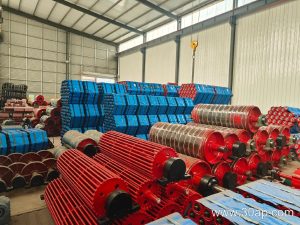
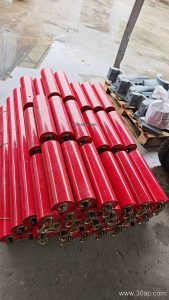
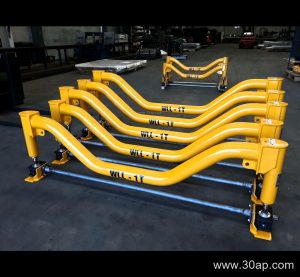
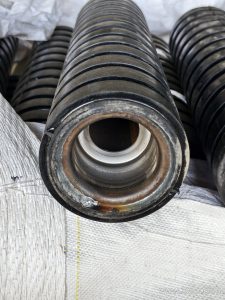
The shaft is common to every idler position. Troughing idlers on the carrying side use three-roll arrangements where each roll has its own shaft, set at trough angles of 20, 30, 35 or 45 degrees. Transition idlers near the head and tail use the same shaft principle with different roll lengths. Return idlers, including flat and V-type, use shafts mounted in a simpler frame. Impact idlers under a loading point use heavier shafts and rubber ring rolls to absorb falling material.
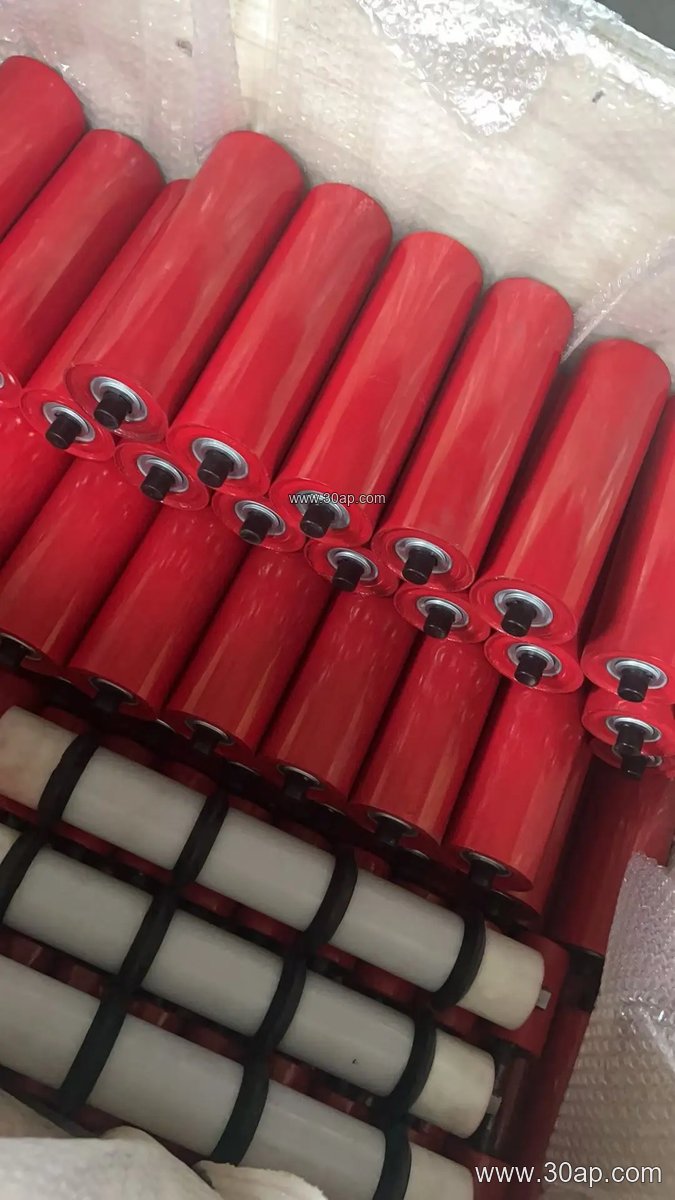
Typical applications include a quarry conveyor belt moving crushed stone, a cement plant handling clinker, a power plant coal conveyor belt, and an iron ore or copper ore line in a mining conveyor belt system. The same part also appears in sand and aggregate plants, port ship loading systems, and steel plant sinter lines.
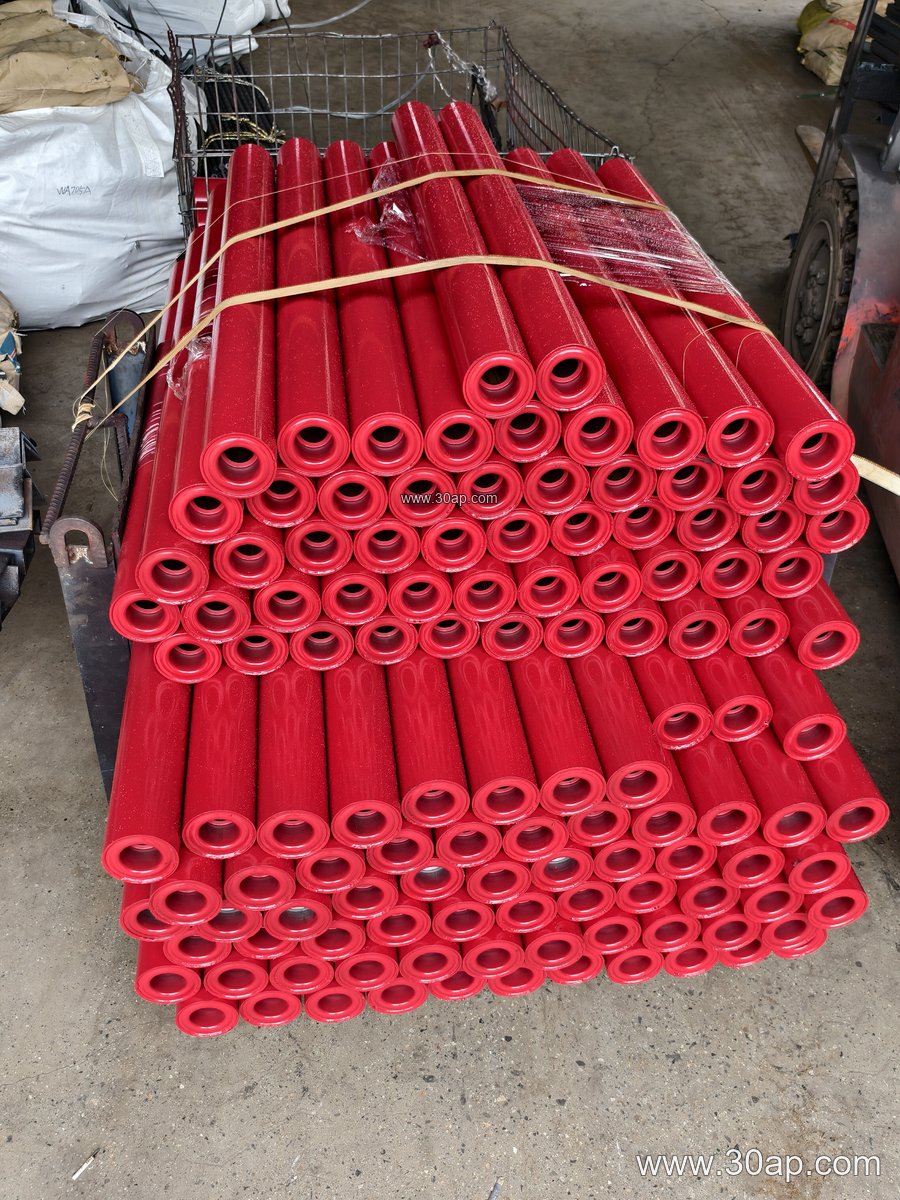
Matching Shaft and Roller Dimensions
Shaft length and journal size follow the roller and bracket design, not a single universal rule. Roll length changes with belt width, trough angle and roll position, so the shaft span changes with it. The table below gives common examples of roll length for three-roll troughing sets; these are reference values, not fixed pairings.
- B500 belt width: roll length about 200 mm
- B650: about 250 mm
- B800: about 315 mm
- B1000: about 380 mm
- B1200: about 465 mm
- B1400: about 530 mm
- B1600: about 600 mm
- B1800: about 670 mm
- B2000: about 750 mm
Side rolls and center rolls can differ, and a wider belt does not dictate one shaft diameter. Shaft diameter is chosen from load, span and deflection limits, then matched to the bearing and roller shell. Buyers should confirm the journal diameter, bearing number, flat or groove position, overall length, and coating before ordering.
Buyer Checklist and Maintenance Notes
Ask for the shaft material grade, the bearing seat tolerance, and the end configuration. Check that the shaft fits the existing conveyor bracket rather than assuming a standard. When replacing rollers on a line carrying an EP conveyor belt or a steel cord conveyor belt, keep the same shaft and bearing specification to avoid mismatched rotation. Inspect shafts for wear at the bearing seats and for bent spans after a belt jam. A straight, well-seated shaft is the foundation of quiet idler operation.