What an Adjustable Conveyor Bracket Does
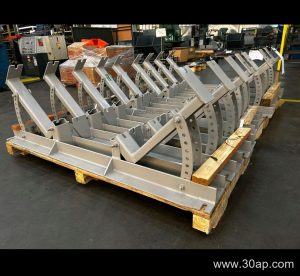
An adjustable conveyor bracket is the support component that lets a belt conveyor’s carrying idlers sit at more than one trough angle instead of locking the rolls into a single profile. On a standard fixed bracket the rolls are welded or bolted to a frame at one angle, while the adjustable version provides slotted or pivoting mounting positions so maintenance teams can change the trough shape as the duty changes. In a quarry, a limestone mine or a crushing and screening line, that flexibility matters because the same conveyor may run different materials over its service life.
The bracket is also written as an adjustable idler bracket or adjustable roller support, and it belongs to the wider family of conveyor brackets that hold idlers, guide the belt and keep the frame stiff. It should not be confused with a drive pulley bracket, a tail pulley bracket or a bend pulley bracket, which carry pulleys rather than idler rolls.
Construction and Mounting
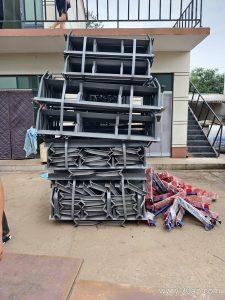
Most units are fabricated from angle steel, channel steel or folded steel plate, with the roll seats drilled or slotted to allow repositioning. A typical adjustable assembly includes a base crossbeam, two side brackets that pivot or slide, and locking bolts that hold the chosen angle once it is set. The crossbeam length and hole spacing follow the belt width and the design trough angle, so they are determined per project rather than sold as one universal number.
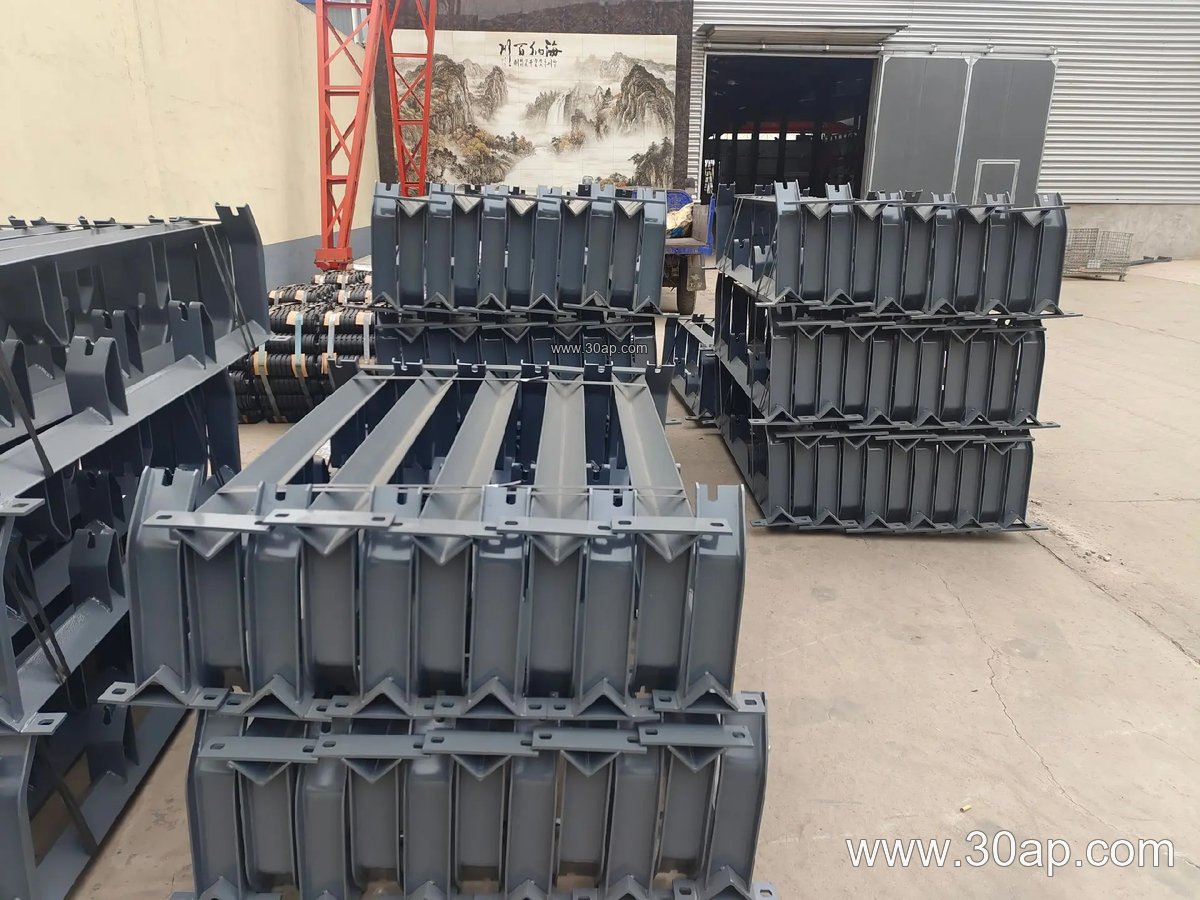
Common belt widths for these brackets include B500, B650, B800, B1000, B1200, B1400, B1600 and B1800, with wider frames available for B2000 and B2200 conveyors. Matching idler roll diameters are usually Ø89, Ø108, Ø133, Ø159 or Ø194. A setup such as B800 at 35 degrees with Ø108 rolls, or B1200 at 45 degrees with Ø133 rolls, is a common way to describe a configuration, but no single belt width is limited to one angle or one roll diameter.
| Parameter | Typical range |
|---|---|
| Belt width | B500 to B2200 |
| Trough angle | 20, 30, 35, 45 degrees |
| Idler diameter | Ø89, Ø108, Ø133, Ø159, Ø194 |
| Frame material | Angle steel, channel steel, folded plate |
| Forward tilt (where used) | About 1.5 to 2 degrees |
Where It Fits on the Conveyor
The adjustable bracket is most often used on the carrying side, where the trough angle controls how much material the belt can hold and how well the load stays centred. It can also appear on transition sections between the flat tail area and the full trough, and on return-side frames where a V-shaped or flat return arrangement is required. Buffer brackets and self-aligning brackets are separate designs; a plant may combine them with adjustable units, but they are not interchangeable with the adjustable type.
Typical sites include a coal washing plant, a cement plant, a power station coal handling line, a port bulk terminal or a steel plant sinter line. On these conveyors the bracket works together with the conveyor belt, the idler roller set and the conveyor pulley, and small angle changes can reduce spillage or belt edge wear.
Selection Notes for Buyers
Buyers should confirm the belt width, the required trough angle range, the idler diameter and the frame material before ordering. It also helps to state the belt type, since a heavy-duty mining conveyor belt, an abrasion resistant conveyor belt or a corrugated sidewall conveyor belt may need different clearance around the rolls. For long overland lines carrying iron ore or copper ore, the bracket should be matched to the load and the idler load rating rather than chosen by width alone.
Ask for the mounting hole pattern and the crossbeam length as project data, and check that the locking arrangement will hold the angle under vibration. For a food grade conveyor belt or a heat resistant conveyor belt application, confirm that the bracket finish and clearance suit the environment. Further details on matching brackets with conveyor belt and idler roller selections are available at www.beltconveyorparts.com, and users comparing frame options at www.beltconveyorparts.com often start with the adjustable bracket.
Installation and Maintenance
- Set the trough angle with the belt unloaded, then tighten the locking bolts evenly.
- Check roll alignment across the frame so the belt trains without edge rubbing.
- Inspect slots and pivots for wear during scheduled shutdowns, especially in abrasive quarry or cement duty.
- Re-check the angle after the first weeks of running, since vibration can loosen fasteners.
Used correctly, an adjustable conveyor bracket gives a plant a practical way to tune trough shape on site without replacing the whole idler frame. More bracket and conveyor component notes can be found at www.beltconveyorparts.com for reference during selection.