What the EP1000 Conveyor Belt Is
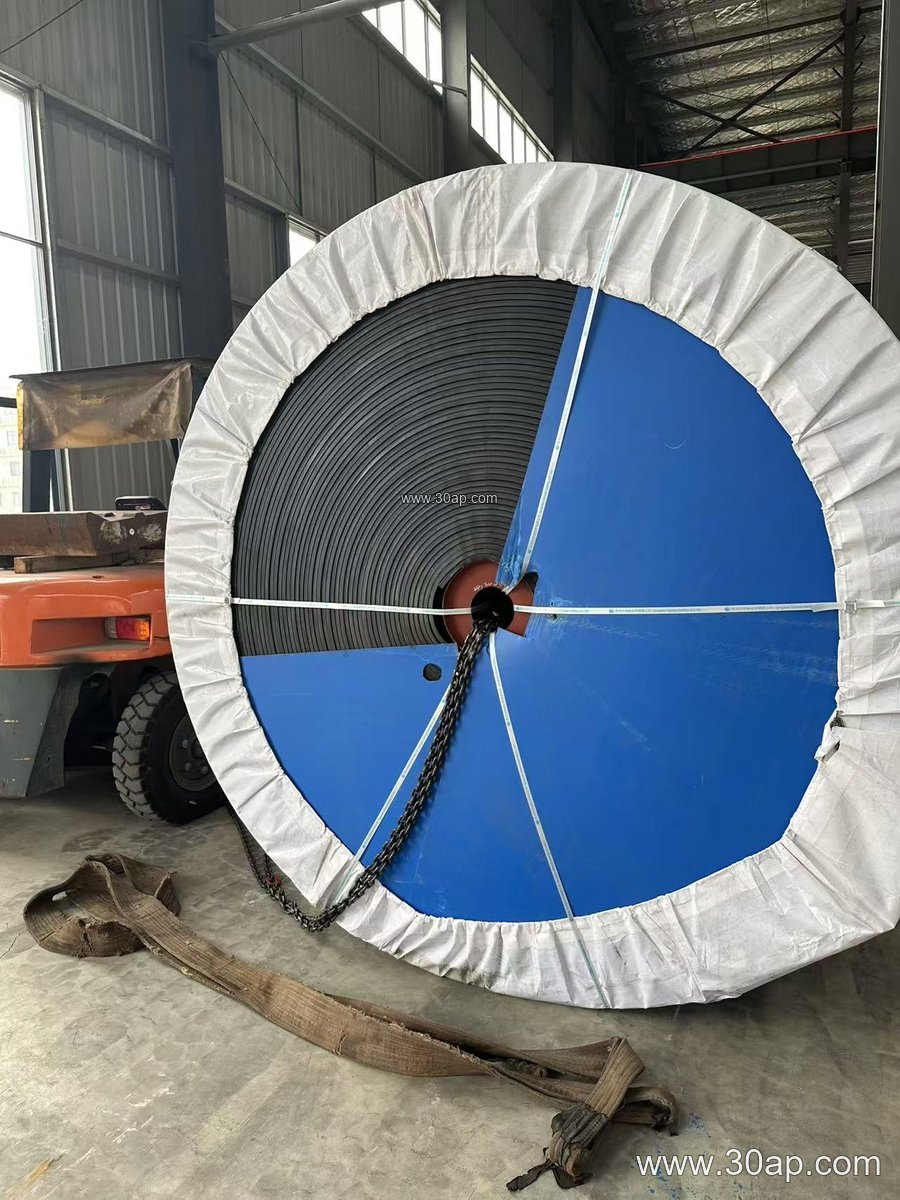
The EP1000 Conveyor Belt is a fabric-reinforced rubber belt built around polyester-polyamide (EP) carcass plies. The designation EP1000 refers to the nominal tensile strength of the carcass, commonly expressed in newtons per millimeter of belt width. In practical terms, this is a high-strength fabric core belt positioned above general-purpose EP200 or EP400 grades and below steel cord constructions, which makes it a frequent choice for demanding bulk material lines in mining, cement, power generation, quarrying and port handling.
Because the load-bearing element is a multi-ply fabric core, the belt is often described as an EP Fabric Core Conveyor Belt or simply an EP Conveyor Belt. It is not a steel cord belt, and it is not a solid-woven PVC or PVG belt; those belong to different families and are selected on different criteria.
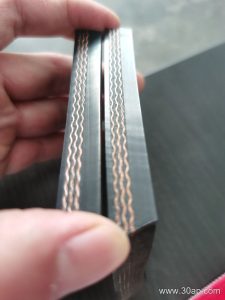
Construction and Build
A typical EP1000 Conveyor Belt combines several layers:
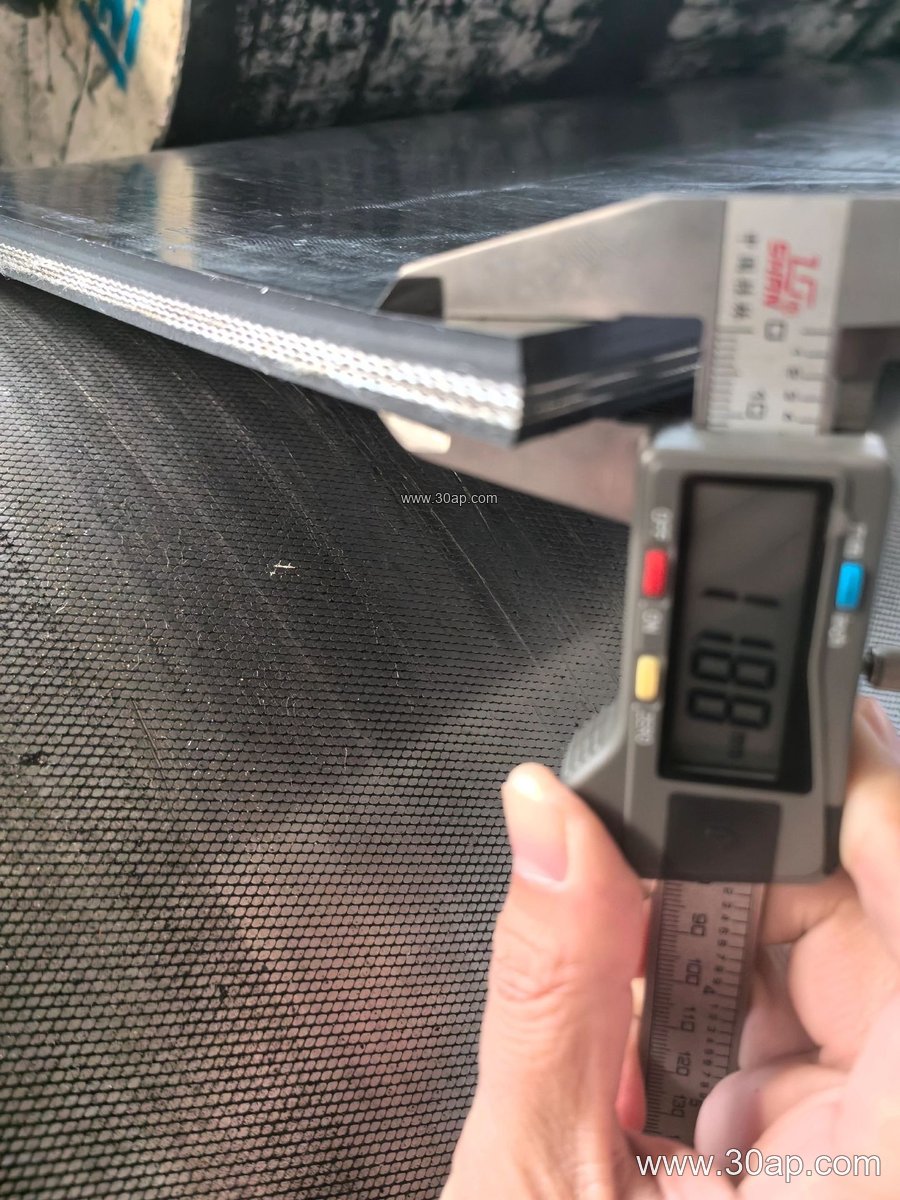
- Carcass: multiple EP fabric plies, frequently 2 to 6 layers depending on strength and design requirements, bonded with rubber skim compound.
- Top cover: abrasion resistant, heat resistant, oil resistant, flame retardant or anti-static rubber, selected to match the conveyed material and site conditions.
- Bottom cover: usually a thinner rubber layer that protects the carcass on the return side and runs against the idler roller.
- Edges: cut edges or molded edges, depending on the manufacturer and application.
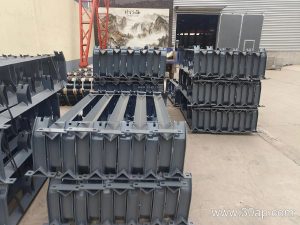
Cover thickness is normally quoted as a top-plus-bottom figure, for example 4+2 mm, 5+2 mm, 6+2 mm or 8+3 mm. These are common reference combinations rather than a fixed rule for every belt. The final construction is confirmed by the belt designer together with the conveyor pulley and conveyor bracket layout.
Where It Fits in the Conveyor
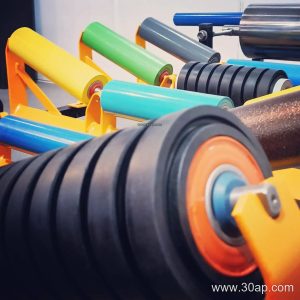
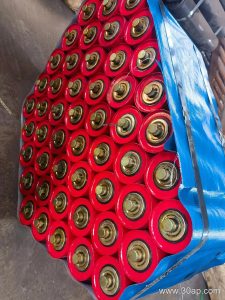
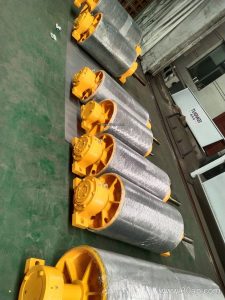
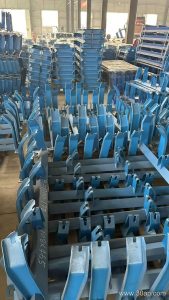
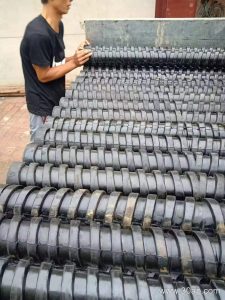
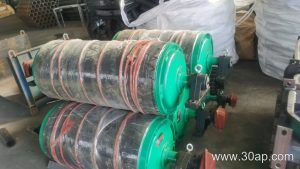
An EP1000 belt runs over a drive pulley, tail pulley and bend pulleys, supported on the carrying side by troughing idlers and on the return side by return idlers. Each pulley has a distinct role and should not be treated as interchangeable. Belt width, pulley face width, shaft size and take-up arrangement are matched during engineering, so a given belt width does not automatically dictate one pulley diameter or one shaft dimension.
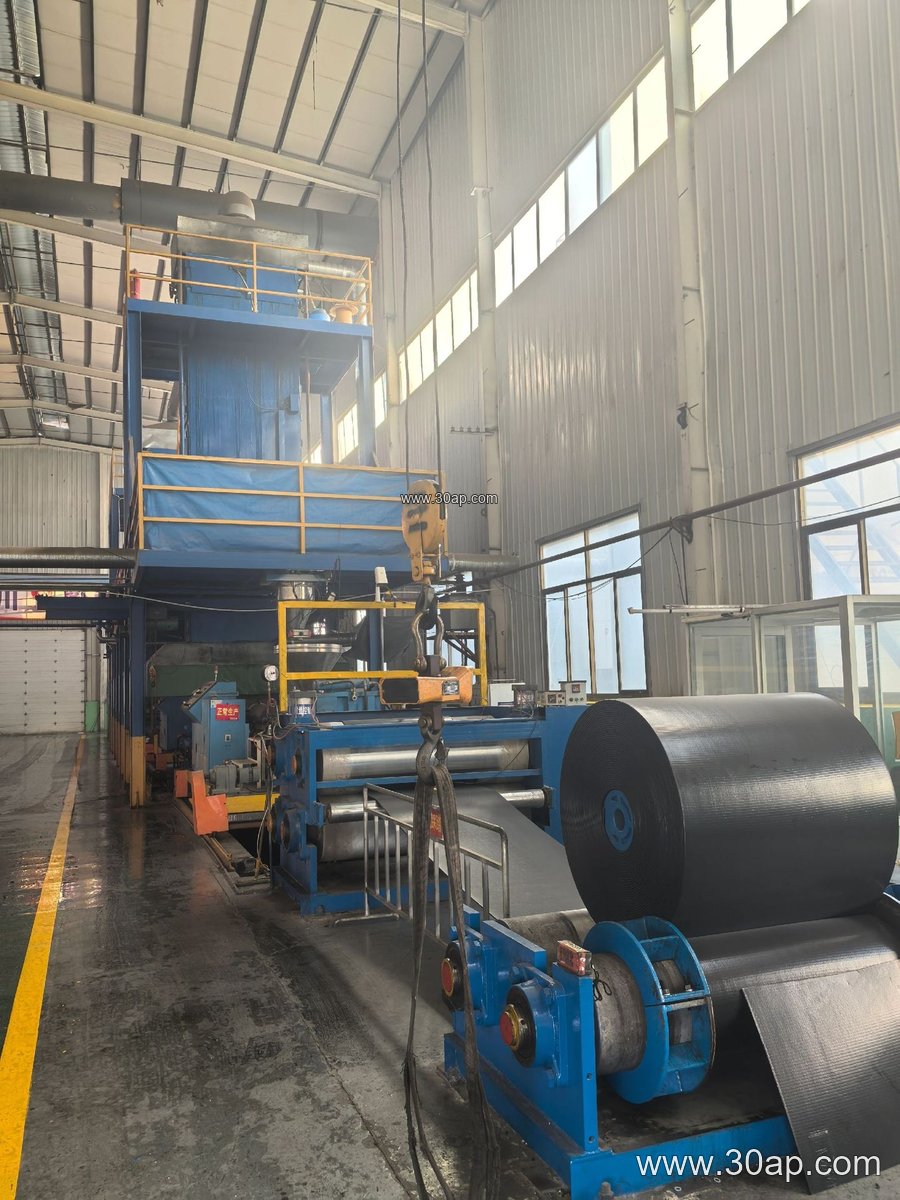
Typical duty locations include primary and secondary crushing circuits, cement kiln feed lines, coal handling systems, power plant coal yards, quarry conveyors, aggregate plants and ship loading stations. In these environments the belt may be specified as a Mining Conveyor Belt, Quarry Conveyor Belt or Heavy-Duty Conveyor Belt, with cover compounds chosen for abrasion, impact or flame resistance as needed.
Common Reference Data
The table below summarizes typical reference values. Actual values vary by manufacturer and by project design.
| Parameter | Typical Reference |
|---|---|
| Carcass type | EP fabric, multi-ply |
| Nominal strength grades in the EP family | EP200, EP315, EP400, EP500, EP630, EP800, EP1000, EP1250, EP1600, EP2000 |
| Belt width | B500, B650, B800, B1000, B1200, B1400, B1600, B1800, B2000 |
| Cover thickness combinations | 3+1.5, 4+2, 5+2, 6+2, 8+3 mm |
| Carcass plies | Commonly 2 to 6 layers |
For example, an EP1000 belt at 1200 mm width is a common configuration in medium-to-heavy duty plants, while wider builds such as 1400 mm or 1600 mm appear where throughput is high. These are examples, not mandatory pairings.
Selection and Comparison Notes
When comparing options, buyers sometimes look at an NN Conveyor Belt (nylon-nylon carcass) for its elasticity and impact absorption, or at a Steel Cord Conveyor Belt for very long runs and extreme tension. The EP1000 grade sits between these in many projects: it offers good troughability, lower elongation than all-nylon constructions and easier splicing than steel cord belts. Special constructions such as a Chevron Conveyor Belt, Corrugated Sidewall Conveyor Belt or Pipe Conveyor Belt solve specific problems like inclined transport, material containment or dust control, but they are separate designs rather than replacements for a standard EP1000 belt.
Environmental and safety requirements also shape the specification. A Flame Retardant Conveyor Belt or Fire Resistant Conveyor Belt is often requested for coal mining and underground mining conveyors, while a Heat Resistant Conveyor Belt suits cement clinker and sinter lines. An Abrasion Resistant Conveyor Belt is standard for ore and rock, and an Oil Resistant Conveyor Belt may be needed where lubricants or oily feedstock are present. Anti-static properties are frequently specified alongside flame resistance.
Buyer Checklist
- Confirm the required strength grade, belt width and cover thickness against the conveyor design.
- State the material, lump size, temperature and any oil, chemical or flame exposure.
- Check pulley diameters, idler roller spacing and conveyor bracket dimensions before ordering.
- Decide on splicing method and whether an Endless Conveyor Belt is preferred for the installation.
- Ask for the manufacturer’s data sheet for the exact construction, since EP1000 belts differ in ply count, cover compound and edge finish.
Matching the belt to the full conveyor system, rather than to a single number, keeps tension, tracking and service life predictable in mining, cement, power and aggregate operations.