What a Trough Idler Does on a Conveyor
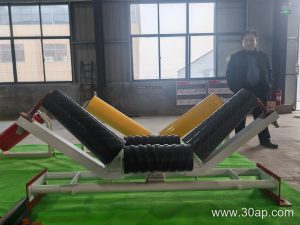
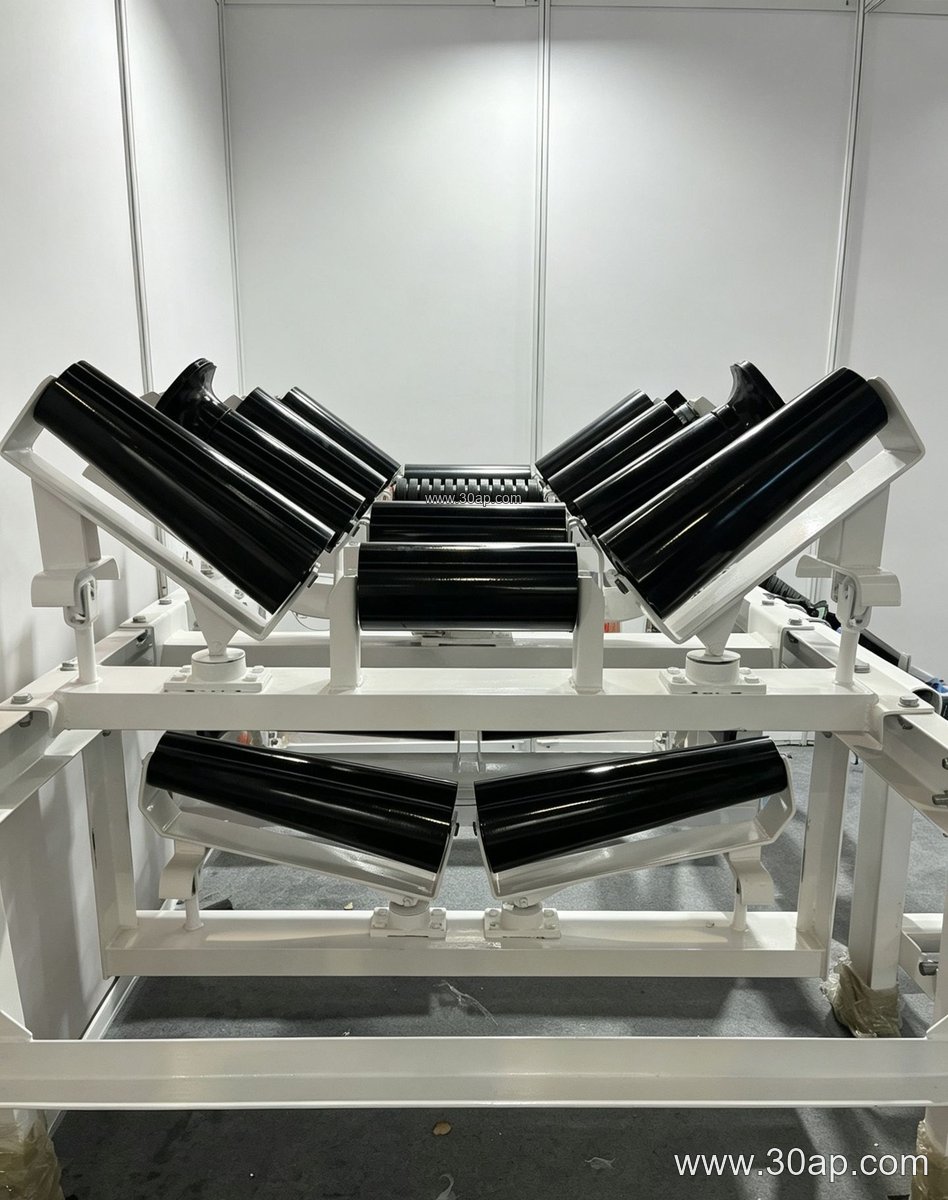
A belt conveyor trough idler is the rotating support that shapes the carrying run of the belt into a trough, so loose material stays centered instead of spilling over the edges. In a typical three-roll arrangement, the two side rolls angle upward while the center roll stays flat, forming the trough profile that cradles the load. This is the same product often called a troughing idler or carrying idler, and it sits between the loading point and the head pulley, supporting the conveyor belt along its entire carry side.
The trough idler is not a drive component. Drive, tail and bend pulleys pull and redirect the belt; the trough idler only supports it. That distinction matters when ordering spares, because a troughing idler and a conveyor pulley serve completely different functions and are not interchangeable. A conveyor bracket or frame holds each idler station in place, and the spacing between stations depends on belt width, material weight and impact conditions.
How the Troughing Idler Is Built
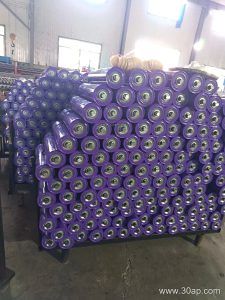
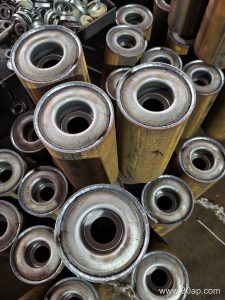
A standard trough idler consists of a steel tube shell, bearing housings at each end, a shaft, and a sealing arrangement that keeps dust and water away from the bearings. Roller surfaces may be plain steel, nylon, ceramic or rubber rings, and the choice depends on whether the belt carries abrasive rock, sticky material or hot clinker.
- Shell: welded steel tube, machined at the ends for bearing fit
- Bearing: common sizes include 6204, 6205, 6305, 6306, 6308 and 6310, matched to load and roll diameter rather than to belt width alone
- Seal: labyrinth or contact seal for dusty quarry and coal handling duty
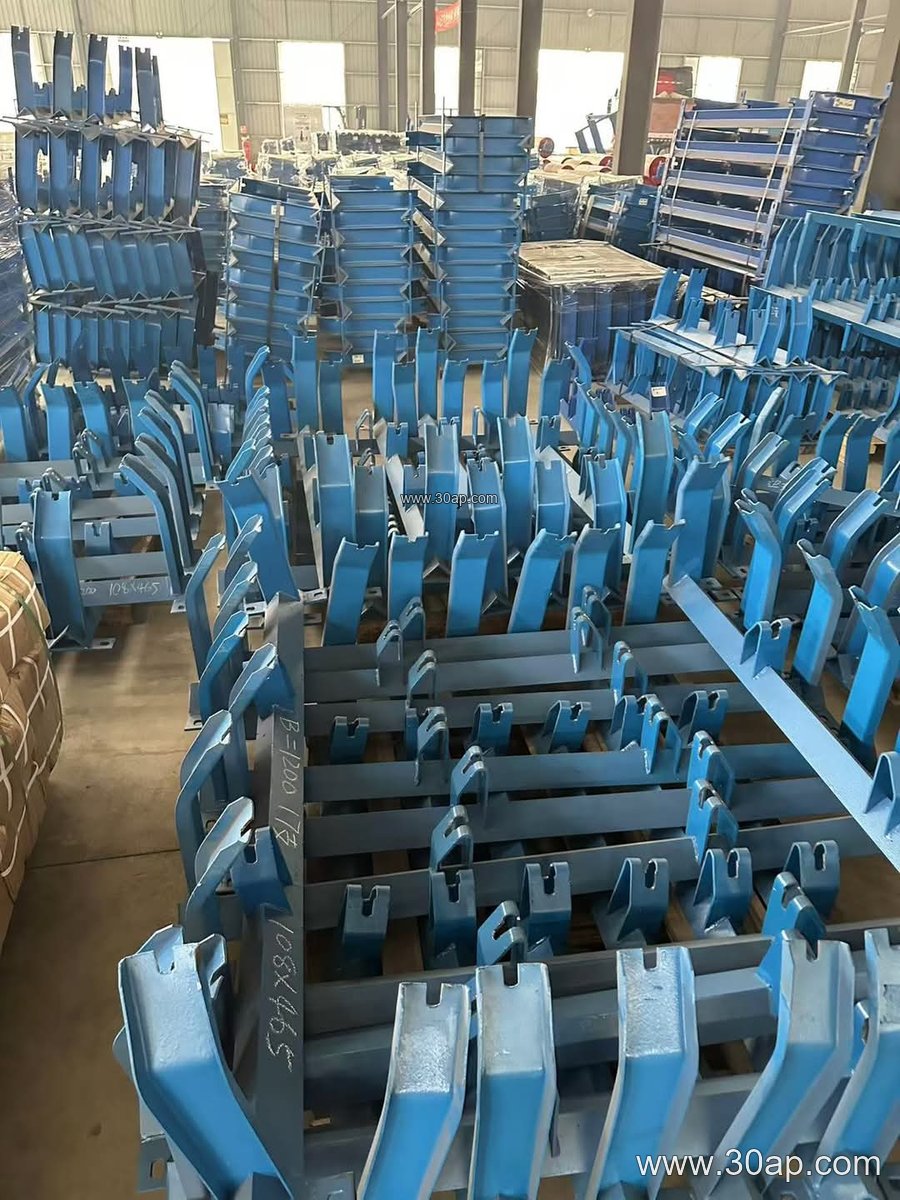
- Frame: fixed or suspended stations, bolted to the conveyor bracket
Common roll diameters range from Ø63 and Ø76 for light duty up to Ø159, Ø178, Ø194 and Ø219 for heavy mining service. Trough angles are usually 20, 30, 35 or 45 degrees, and a slight forward tilt of about 1.5 to 2 degrees is sometimes used on training idlers to help the belt track.
Matching Idler Size to Belt Width
Roll length changes with belt width, trough angle and the number of rolls in the station. The table below gives typical examples for three-roll troughing stations; side rolls and center rolls may differ, and final dimensions should follow the conveyor design.
| Belt width | Typical roll length (three-roll trough) | Common roll diameter range |
|---|---|---|
| B500 | about 200 mm | Ø63 to Ø89 |
| B650 | about 250 mm | Ø76 to Ø108 |
| B800 | about 315 mm | Ø89 to Ø127 |
| B1000 | about 380 mm | Ø102 to Ø133 |
| B1200 | about 465 mm | Ø108 to Ø159 |
| B1400 | about 530 mm | Ø127 to Ø178 |
| B1600 | about 600 mm | Ø133 to Ø194 |
| B1800 | about 670 mm | Ø159 to Ø219 |
| B2000 | about 750 mm | Ø178 to Ø219 |
These are reference values, not fixed pairings. A 1200mm wide conveyor belt may run on several roll diameters depending on load and speed, and shaft size is set by the idler manufacturer’s design, not by belt width alone.
Where Trough Idlers Are Used
Troughing idlers appear wherever bulk material moves on a belt. In a limestone quarry or aggregate line, they carry crushed stone after the crusher. In a coal washing plant or power station coal yard, sealed trough idlers resist fine dust. Cement plants use them on clinker and raw meal lines, where heat and abrasion both matter. Port terminals and ship loading systems rely on long trains of trough idlers under wide belts, often paired with an EP conveyor belt or a steel cord conveyor belt for high tension.
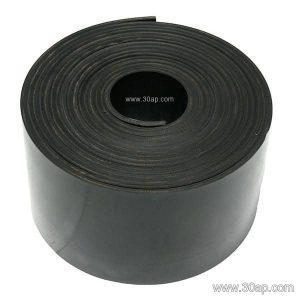
The material being carried also guides belt choice. An abrasion resistant conveyor belt suits sharp ore, a heat resistant conveyor belt suits clinker, and a flame retardant conveyor belt is common in underground coal mining conveyor systems. The trough idler itself must match that duty through its seal, shell thickness and roll diameter.
Buyer Checklist Before Ordering
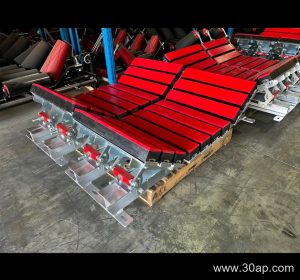
Confirm the belt width, trough angle and number of rolls per station. Check the required roll diameter and bearing size against the actual load, not against a rule of thumb. Ask how the idler seals against dust and water, especially for washdown or underground service. Verify the bracket hole pattern and shaft ends so new stations fit existing frames. For impact zones below a chute, consider a buffer or impact idler with rubber rings instead of a standard trough roll; for the return run, a V-shaped or flat return idler is the correct comparison, not a troughing roll.
Finally, keep spare trough idlers in the same roll diameter and bearing size as the installed set. Mixing sizes on one conveyor causes uneven belt support and shortens belt life. More details on idler rollers and conveyor belt matching are available at https://www.jsruiyuan.com for buyers comparing components for mining, cement and port projects.