What a Conveyor Support Leg Does on a Belt Line
A conveyor support leg is the vertical member that carries the weight of the idler frames, rollers, and loaded belt down to the floor or foundation. It is a quiet component compared with the belt itself, yet the whole profile of a conveyor depends on it. In a quarry, a cement plant, or a power plant coal yard, the leg is what keeps the troughing frame at the right height and angle so the belt runs true. The same part is often called a conveyor stand leg or belt conveyor support leg, and those names describe the same structural piece.
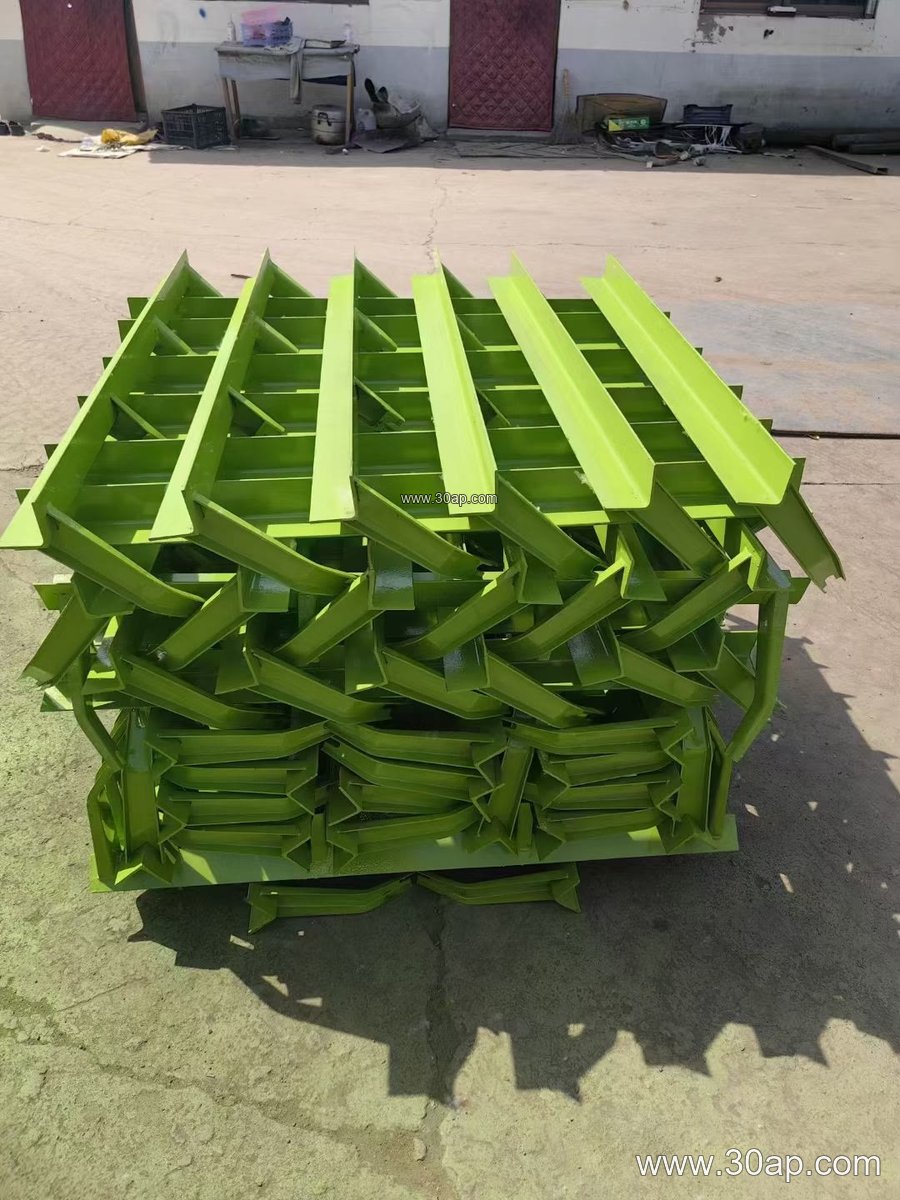
Legs are usually made from angle steel, channel steel, or folded steel plate. A pair of legs plus a cross beam forms the frame that holds the idler roller group. On a long overland line the legs may be bolted to a concrete plinth, while on a mobile or modular plant they can be welded to a skid base. The design choice affects stiffness, corrosion allowance, and how easily the line can be extended later.
How the Leg Connects to Frames and Rollers
The leg does not work alone. It pairs with a conveyor bracket that fixes the idler frame, and the frame in turn holds the troughing idlers that shape the belt. A common arrangement uses a leg on each side, tied by a cross member, with slotted holes so the trough angle can be set during installation. The mounting hole spacing and beam length change with belt width and trough angle, so they are normally confirmed from the conveyor drawing rather than assumed.
Typical reference values used in layout work include:
- Belt width: B500, B650, B800, B1000, B1200, B1400, B1600, B1800, B2000
- Trough angle: 20 degrees, 30 degrees, 35 degrees, 45 degrees
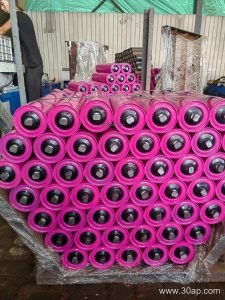
- Idler diameter: 89 mm, 108 mm, 133 mm, 159 mm, 194 mm
For example, a frame at B800 with a 35 degree trough and 108 mm rollers is a common mid-duty combination, while B1200 with 45 degrees and 133 mm rollers suits a wider, more heavily loaded line. These are reference points, not fixed rules; a given belt width can be matched with more than one trough angle or roller diameter depending on tonnage and material.
Types of Support Legs and Where They Fit
Support legs appear in several frame families. Troughing frame legs carry the upper carrying rollers; return legs sit lower and hold the return idlers or a V-return set. Transition legs are placed where the belt changes from flat to troughed, and impact legs are placed under loading points to take the shock of falling material. Adjustable legs allow the frame height or trough angle to be trimmed on site, while fixed legs are simpler and stiffer. A self-aligning frame may use its own leg pattern so the frame can pivot slightly and correct belt wander.
On an inclined conveyor the leg height changes along the line, so the leg drawing usually follows the incline profile. On a portable crushing and screening plant, shorter legs on skids are preferred over tall foundations. The choice depends on how the line is built and how often it will be moved.
Installation and Buyer Checks
Before ordering, a buyer should confirm the belt width, trough angle, idler diameter, and the frame type the leg will carry. The material and finish matter too: a wash plant or a port terminal near salt water calls for a heavier corrosion allowance than a dry aggregate line. Bolt grade, base plate size, and whether the leg is welded or bolted to the frame should be agreed clearly.
On site, check that the legs are plumb and that the top of the frame sits level across the belt. A leg that is out of line will tilt the idler set, and the belt will run off center. During maintenance, look for loose bolts, bent legs after impact, and corrosion at the base. Re-tightening and replacing a damaged leg early is cheaper than replacing the belt edge or a conveyor pulley damaged by misalignment.
Working Alongside the Rest of the Line
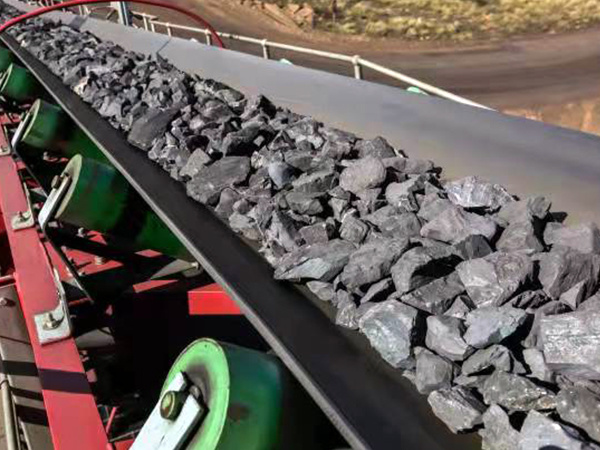
The support leg is one part of a system. The belt itself may be a rubber conveyor belt, an EP conveyor belt, or a steel cord conveyor belt, and each has its own weight and tension that the frame must carry. In a coal mine, a flame retardant conveyor belt and an anti-static conveyor belt are common, and the legs must be rated for the same duty. A heat resistant conveyor belt in a cement kiln area, or an abrasion resistant conveyor belt in an iron ore transfer, changes the load and the environment the legs see. The leg, the idler roller, the conveyor bracket, and the belt are selected together, and a small change in one usually affects the others.
Whether the job is a limestone quarry, a coal washing plant, or a fertilizer silo, the support leg is a low-cost part that decides how well the whole conveyor frame performs. Getting the height, stiffness, and fixing right at the start saves adjustment work for years.