What a Motorized Pulley Is
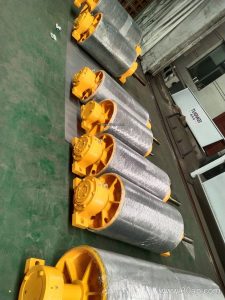
A motorized pulley is a self-contained drive unit in which the electric motor, gear reducer, and bearings are built inside the pulley shell. Instead of mounting a motor on a frame beside the conveyor and coupling it to a separate drive pulley, the power train sits inside the drum itself. The conveyor belt runs over the shell, and the rotating shell moves the belt. Because the drive is enclosed, the unit suits dusty, wet, and cramped locations where an external drive would need guards, alignment work, and extra floor space.
Buyers also call this product a drum motor or a motorized drum. Those names describe the same equipment, and they are not the same as a drive pulley, a tail pulley, or a bend pulley. A drive pulley may be driven by an external gearbox, while a tail pulley and a bend pulley guide or tension the belt without providing power. A motorized pulley combines the drive function and the pulley body in one component.
How the Unit Is Built
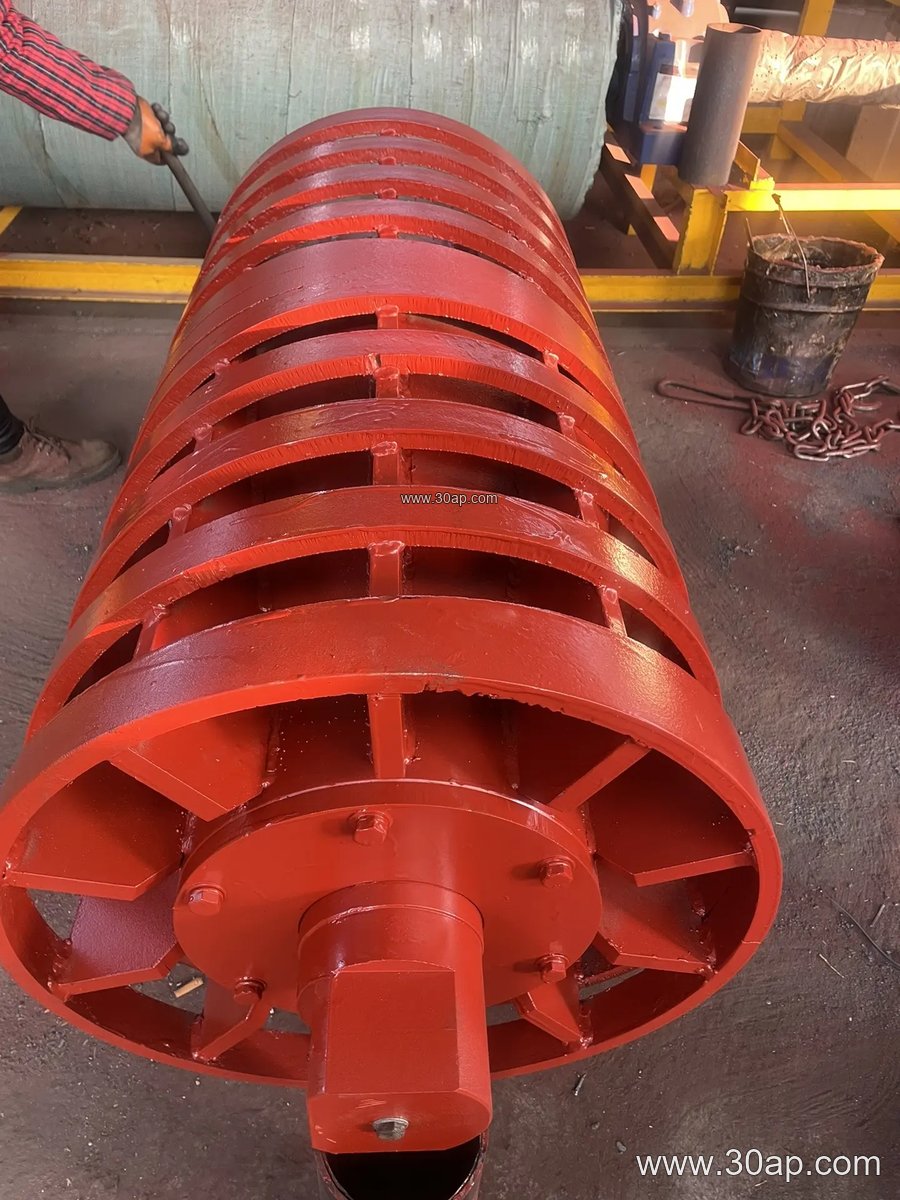
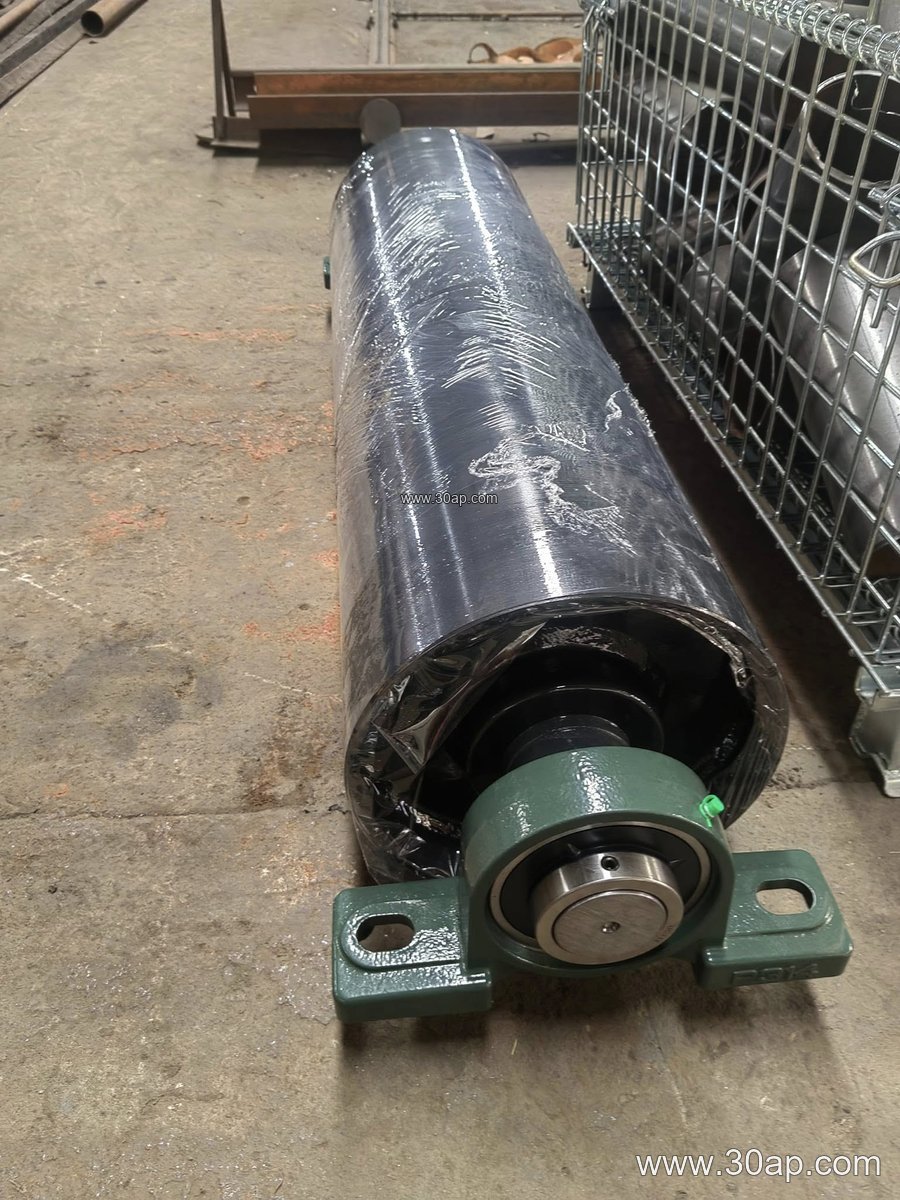
The shell is usually a steel drum with machined end faces. Inside it, a stator and rotor, a planetary or helical gear stage, and bearing supports are arranged along the shaft. Oil or grease lubrication keeps the gears and bearings working, and seals protect the interior from dust and water. The shaft does not rotate in most designs; the shell turns around it, and the shaft ends mount into conveyor brackets or a frame.
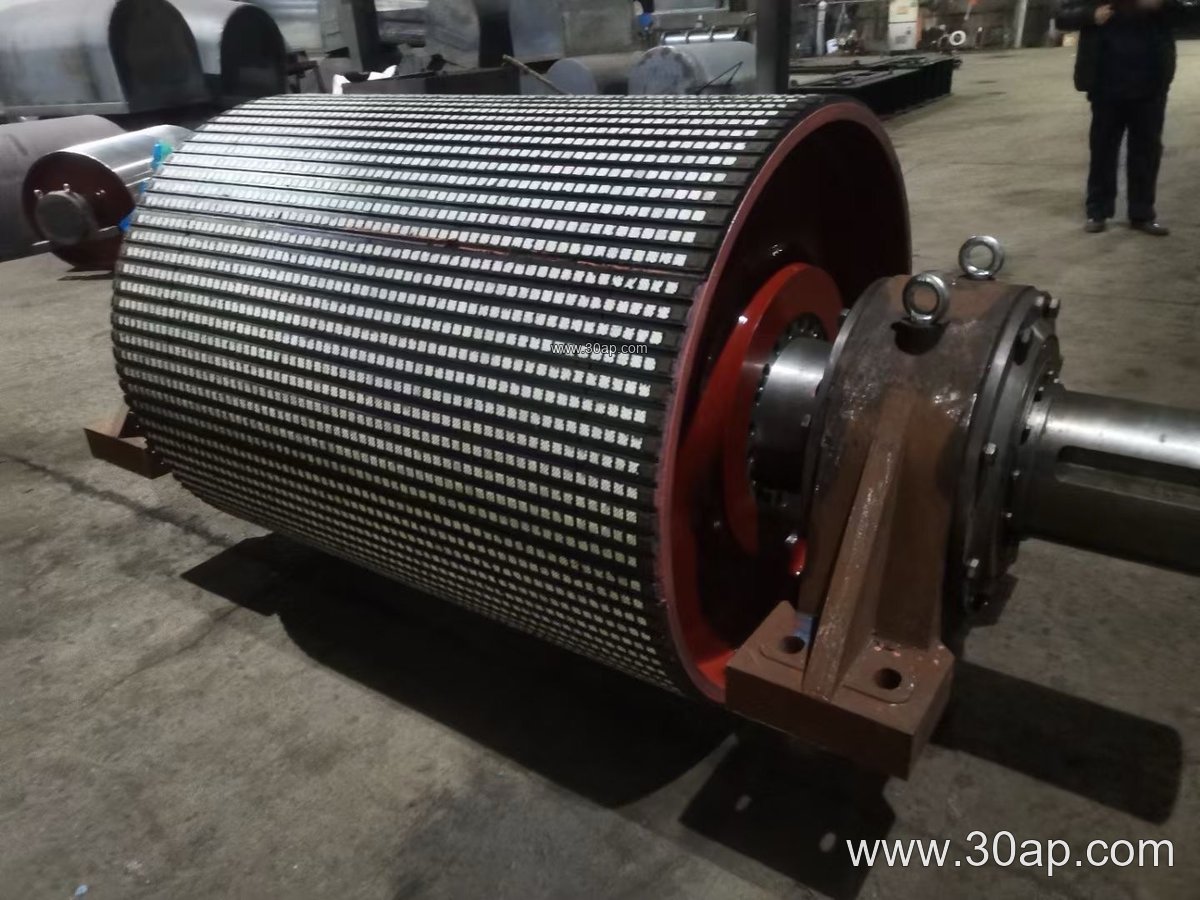
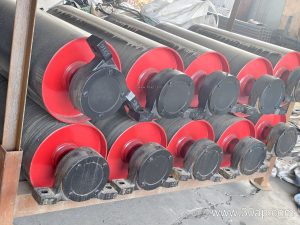
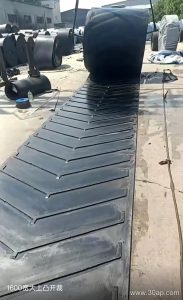
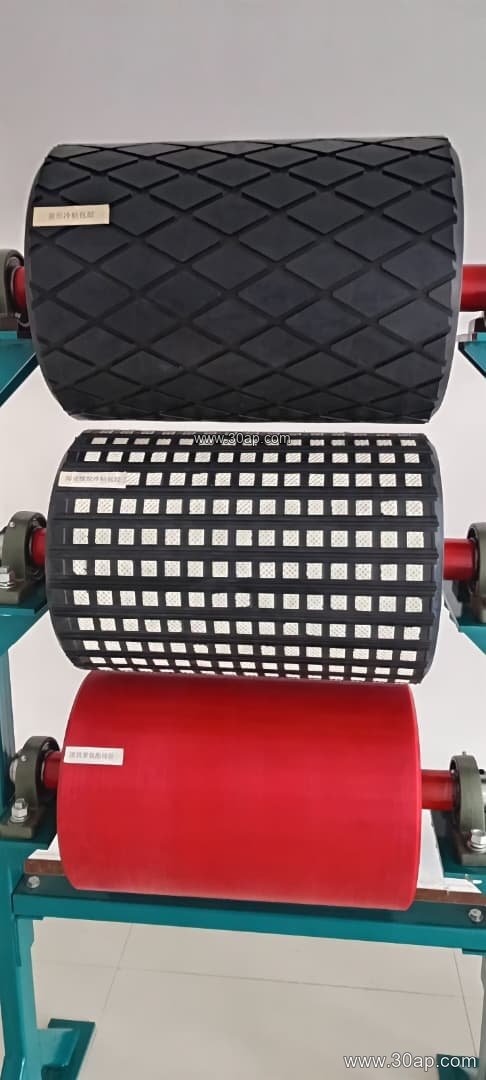
The outer surface may be plain, rubber lagged, or ceramic lagged. Lagging improves grip between the shell and the belt, which matters when the conveyor starts under load or carries wet material. Common lagging thicknesses are 8, 10, 12, 15, and 20 mm. Diamond and herringbone patterns can help shed water, while plain rubber suits cleaner duties. Surface choice should follow the belt, the material, and the ambient conditions rather than a single default.
Where It Fits in a Conveyor
This drive type appears in quarry and aggregate lines, cement plants, power plant coal handling, and sand and gravel operations. It also works in ship loading, recycling, and tunnel muck removal. A motorized pulley is often installed at the head position, where it pulls the loaded belt, but it can also serve at other points in a short conveyor or a package handling line.
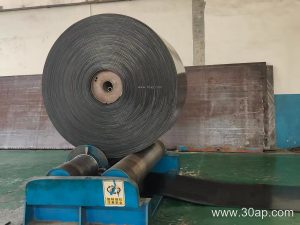
The belt itself must match the duty. A heavy-duty mining conveyor belt carrying ore needs a robust shell and lagging, while a food grade conveyor belt or a lightweight endless conveyor belt calls for a cleaner, more compact unit. In a coal mining conveyor belt system, flame retardant conveyor belt grades and anti-static conveyor belt properties are usually specified together with the drive. Abrasion resistant conveyor belt covers are common in crusher conveyor belt and quarry conveyor belt service, and a heat resistant conveyor belt may be needed near kilns or sinter coolers. The pulley does not replace the belt specification, but the two must be selected as a pair.
Matching Belt Width and Pulley Dimensions
Face width is normally a little wider than the belt so the belt is supported across its full width. A B800 belt, for example, is commonly used with a pulley face around 950 mm, and a B1200 belt with a face near 1400 mm. These are reference proportions, not fixed rules, and a wider face may be chosen for belt tracking. Diameter depends on belt tension, wrap angle, belt thickness, and the space available. A B800 × Ø500 unit and a B1200 × Ø1000 unit are both plausible combinations, but no single belt width locks the pulley to one diameter.
| Belt width | Typical pulley face width | Possible diameter range |
|---|---|---|
| B500 | About 600 mm | Ø200 to Ø400 |
| B650 | About 750 mm | Ø250 to Ø500 |
| B1000 | About 1150 mm | Ø400 to Ø800 |
| B1400 | About 1600 mm | Ø500 to Ø1000 |
| B1800 | About 2000 mm | Ø630 to Ø1250 |
Shaft diameter is set by torque and radial load, not by belt width alone. Common shaft sizes include Ø50, Ø60, Ø70, Ø80, Ø100, Ø120, and Ø140, but the final value should come from the drive calculation. The same logic applies to the conveyor pulley selection: check the belt pull, the starting torque, and the bearing life before fixing the shaft.
What Buyers Should Check
- Confirm the mounting position and whether the unit is a head drive or an intermediate drive.
- State the belt type and width, including whether it is an EP conveyor belt, an NN conveyor belt, or a steel cord conveyor belt.
- Describe the material, moisture, temperature, and dust level so the lagging and sealing are suitable.
- Give the required belt speed and the duty cycle, including starts per hour.
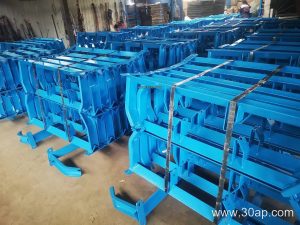
- Check that the conveyor bracket and frame can carry the unit weight and reaction forces.
- Plan lubrication and inspection access before installation, since the drive is enclosed.
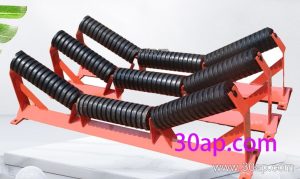
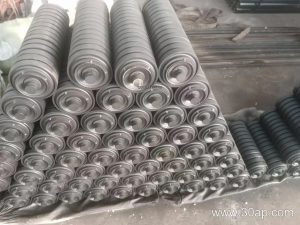
Maintenance is mainly about oil condition, seal integrity, and shell wear. A motorized pulley that runs hot, leaks, or slips should be checked before the belt or the lagging is damaged. Used with the right conveyor belt, idler roller set, and conveyor bracket arrangement, a well-matched motorized pulley can simplify a conveyor drive and reduce the number of exposed parts on site.