Understanding the Five-Roll Idler Bracket
A five-roll idler bracket is a support frame that holds five idler rollers in a specific arrangement, typically used on the carrying side of a conveyor belt to form a deep trough. This bracket is also known as a five-roll troughing idler bracket or five-roll support frame. It is distinct from other bracket types such as transition brackets, return brackets, or self-aligning brackets, and it should not be confused with drive, tail, or bend pulleys. The five-roll configuration provides superior belt support and material containment, especially for high-capacity conveying in industries like mining, quarrying, and aggregate processing.
Construction and Design Features
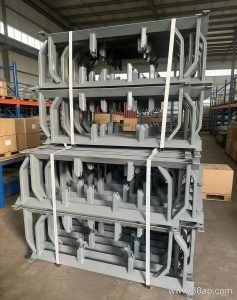
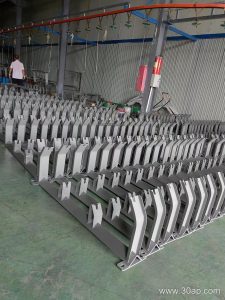
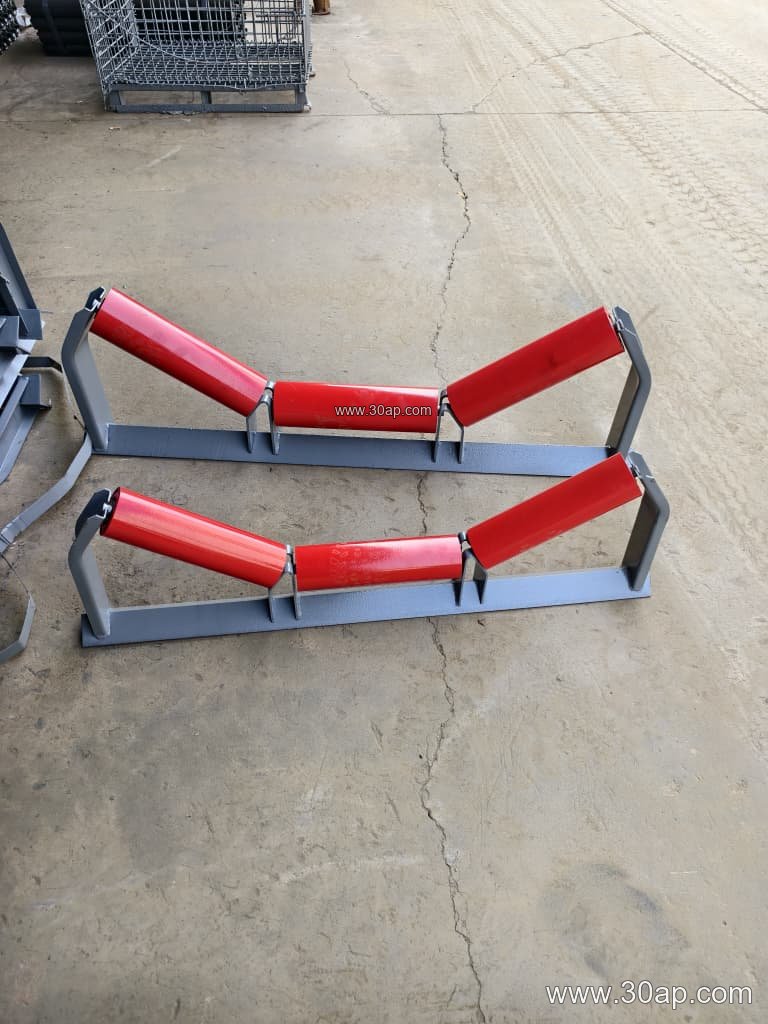
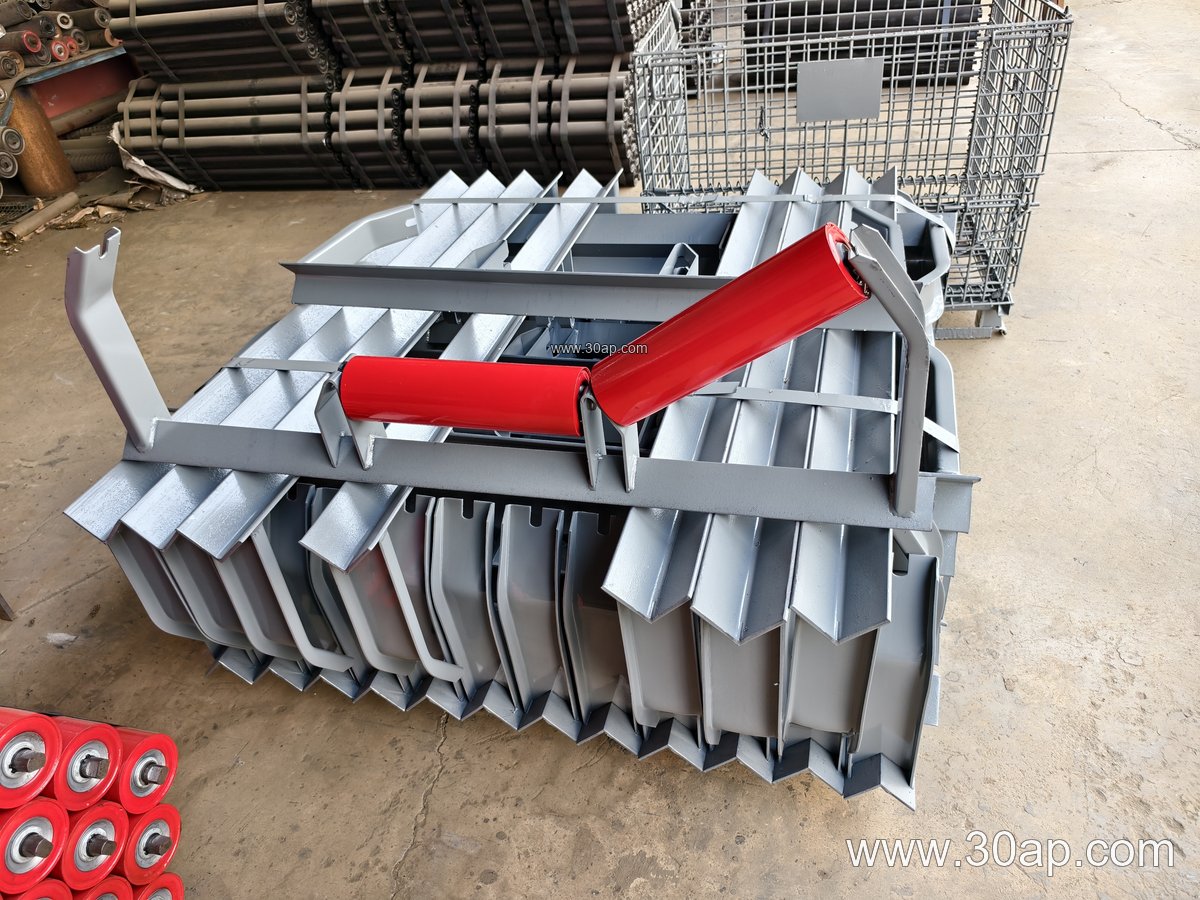
Five-roll idler brackets are commonly fabricated from angle steel, channel steel, or bent steel plate. The design incorporates mounting points for five idler rollers arranged to create a deep trough profile. The two outer rolls are inclined at a steeper angle, while the three central rolls form the main trough. This arrangement helps to center the belt and reduce spillage. The bracket may be fixed or adjustable, allowing the trough angle to be set between common values such as 20, 30, 35, or 45 degrees. Some designs include a slight forward tilt of about 1.5 to 2 degrees on the outer rolls to aid belt tracking. Installation hole spacing and beam length are determined by belt width and trough angle, and these dimensions are not fixed.
Where Five-Roll Idler Brackets Are Used
These brackets are typically found in bulk material handling operations where belt widths range from B500 to B2200 and beyond. They are particularly beneficial in applications requiring maximum material containment, such as in coal mining, iron ore processing, and cement plants. For example, a five-roll bracket with a 45-degree trough angle and Ø133 idler rollers might be used on a B1200 conveyor belt to handle high-tonnage loads. In quarry and aggregate lines, the deep trough helps to prevent material spillage and extend belt life. The bracket works in conjunction with idler rollers and the conveyor belt to maintain proper belt alignment and reduce wear.
Key Selection Factors for Buyers
When selecting a five-roll idler bracket, buyers should consider the belt width, desired trough angle, idler roller diameter, and the specific material being conveyed. Common belt widths include B800, B1000, B1200, B1400, B1600, B1800, and B2000. Idler roller diameters often range from Ø89 to Ø194, with Ø108 and Ø133 being typical for many applications. The bracket material and construction should match the load and environmental conditions. Adjustable brackets offer flexibility in setting the trough angle, while fixed brackets provide simplicity and rigidity. It is important to verify mounting dimensions with the conveyor design, as these vary with belt width and trough angle.
Compatibility with Conveyor Components
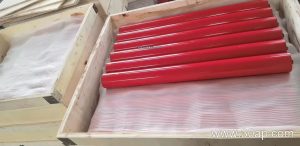
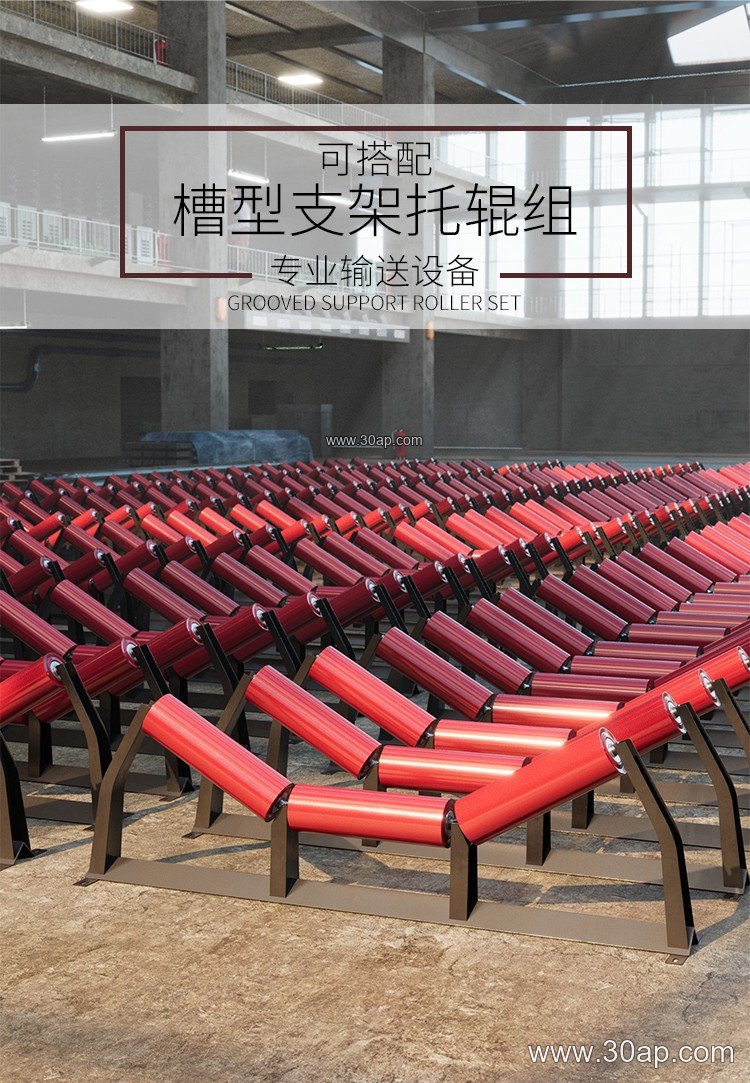
The five-roll idler bracket is designed to work seamlessly with conveyor idler rollers and the conveyor belt. Proper matching of roller diameter and bracket geometry ensures smooth rotation and minimal belt stress. In heavy-duty applications, such as those using a high abrasion resistant conveyor belt or a flame retardant conveyor belt, the bracket must be robust enough to withstand the load. The bracket also interacts with other components like conveyor pulleys, but it is not a substitute for drive, tail, or bend pulleys. For efficient operation, regular inspection of the bracket and rollers is recommended to prevent misalignment and premature wear.
Maintenance and Long-Term Reliability
Five-roll idler brackets require periodic inspection for structural integrity, corrosion, and fastener tightness. In dusty or wet environments, such as underground coal mining or port operations, brackets may need additional protection or more frequent checks. Replacing worn idler rollers promptly helps to maintain the bracket’s performance and prevents belt damage. By choosing the appropriate bracket type and maintaining it properly, operators can achieve reliable conveyor performance and extended service life.