What a Belt Conveyor Pulley Does
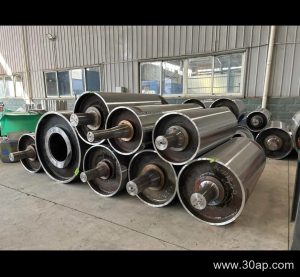
A belt conveyor pulley is the rotating drum that carries the conveyor belt, sets its direction, and passes drive force into the belt. On a long overland line, a short quarry feeder, or a coal handling gallery, the pulley is one of the few components that touches the belt along its full width, so its condition shapes both belt life and operating cost. Buyers often shorten the name to conveyor pulley, but the job differs by position: a drive pulley transmits torque, while a tail or bend pulley mainly guides and tensions the belt, and these roles should not be treated as interchangeable.
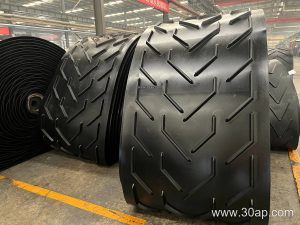
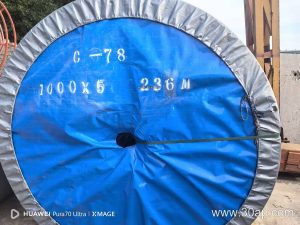
The belt itself may be a heavy-duty mining conveyor belt, an abrasion resistant conveyor belt moving crushed rock, or a flame retardant conveyor belt in a coal plant. Whatever the belt construction, the pulley must match its width and tension so the belt tracks without edge damage.
Construction and Surface Options
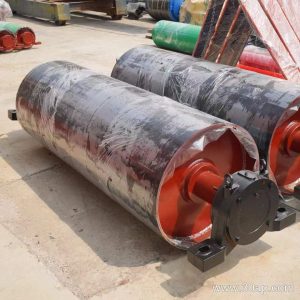
A typical drum is built from a rolled steel shell, end discs, and a shaft, with hubs and keyways transmitting torque. Larger units may use a welded or bolted hub design for easier replacement. The surface is usually one of the following:
- Plain machined face for light duty or where slip is not a concern.
- Rubber lagging, applied cold or hot vulcanized, to raise friction and protect the shell.
- Diamond or herringbone grooved lagging to shed water and fines.
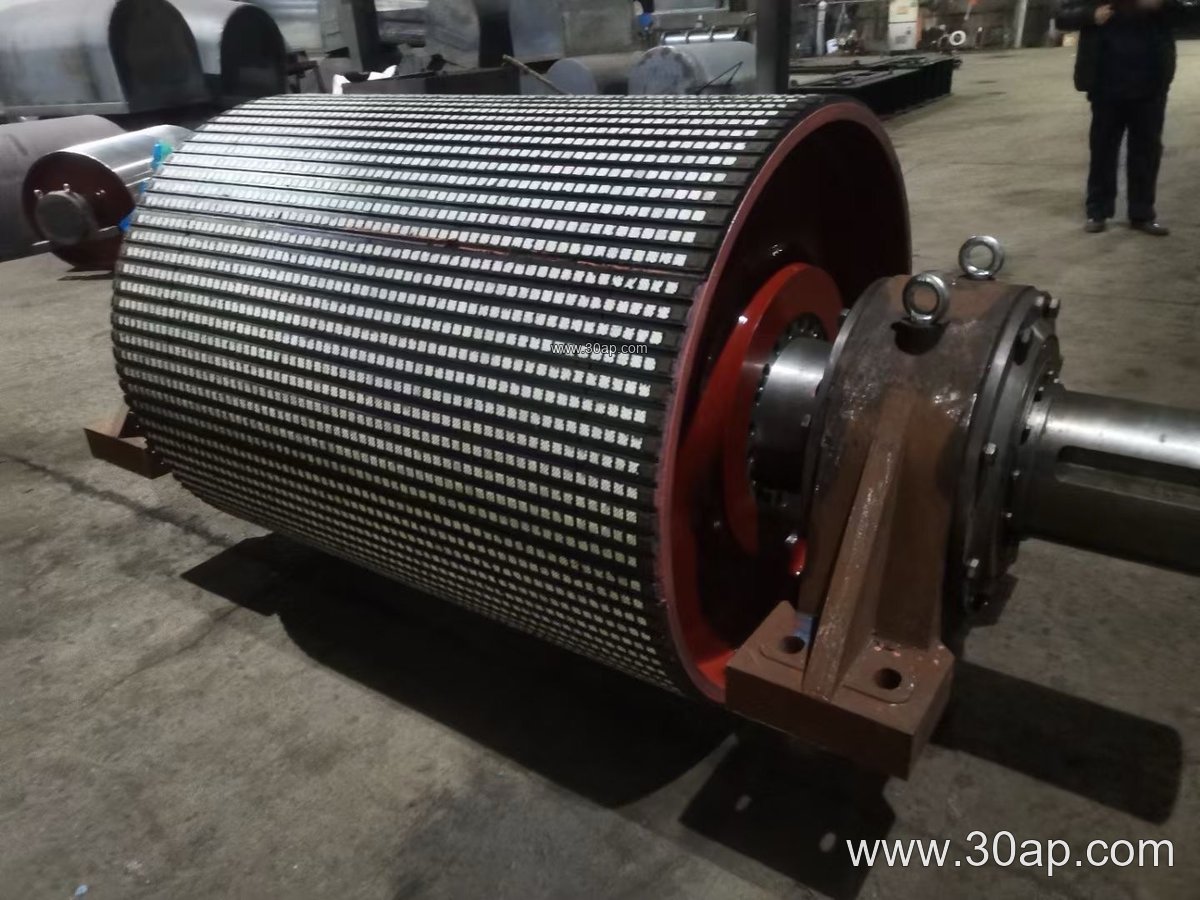
- Ceramic lagging for high-torque drives in wet or gritty service.
Lagging thickness of 8, 10, 12, 15, or 20 mm is common, chosen with the drive duty rather than by habit. The shell face is normally wider than the belt, for example about 1400 mm of face for a 1200 mm belt or about 950 mm for an 800 mm belt, so the belt has room to wander slightly without running off the edge.
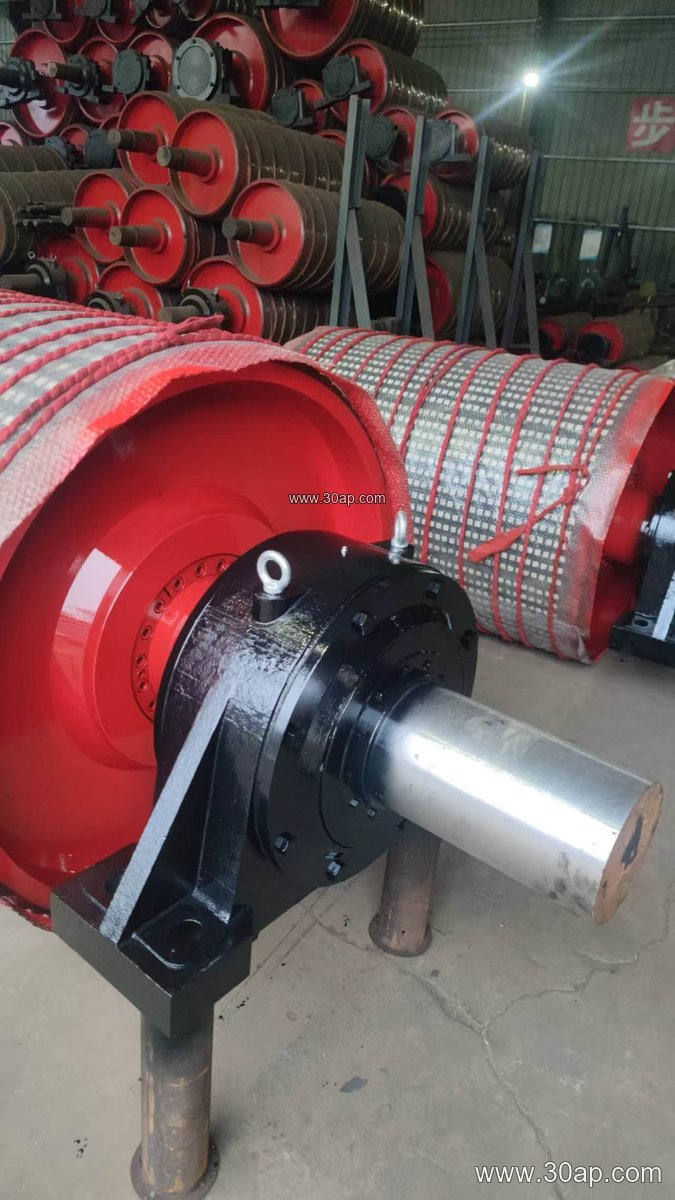
Matching Diameter and Shaft to the Duty
Diameter affects belt wrap angle, bending stress in the belt, and the space the pulley needs. Common sizes run from Ø200 up to Ø1800, and a combination such as B1200 × Ø1000 or B1400 × Ø800 appears in real layouts, but there is no rule that one belt width fits only one diameter. The shaft is sized from torque and bearing load, not from belt width alone; shaft diameters from Ø50 to Ø200 are common, and the final figure should come from the conveyor designer.
Reference data below shows typical ranges, not fixed supply commitments:
| Item | Common range |
|---|---|
| Belt width | B400 to B2400 |
| Pulley diameter | Ø200 to Ø1800 |
| Face width | Belt width plus roughly 100 to 200 mm |
| Shaft diameter | Ø50 to Ø200, by torque and load |
| Lagging thickness | 8, 10, 12, 15, 20 mm |
Where a plant runs an EP conveyor belt or a steel cord conveyor belt at high tension, the drive pulley diameter and lagging pattern deserve extra attention, because a small drum on a stiff belt increases bending fatigue.
Where It Sits in the Line
Position decides function. At the head, the drive or head pulley pulls the loaded belt and often serves as the discharge point. At the tail, the tail pulley returns the belt and may carry a tensioning function. Bend pulleys change direction around take-up systems, while snub and pressure pulleys increase wrap on the drive. Each location has its own bearing arrangement, and mixing them up during procurement leads to the wrong shaft or the wrong lagging.
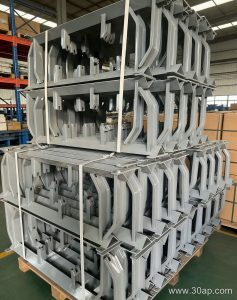
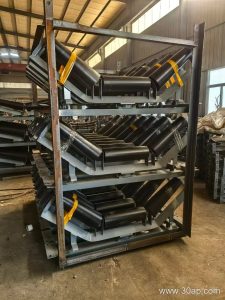
In a limestone quarry, a stone crushing line, or a cement plant clinker gallery, the pulley works beside idler rollers and conveyor brackets that support the belt between drums. A damaged pulley face quickly shows up as belt edge wear, so alignment and lagging inspection belong in the routine.
Buyer Checklist
- Confirm the position and duty: drive, tail, bend, or tension.
- State belt width, belt type, and measured belt tension.
- Give the required diameter and face width, and check available space.
- Choose the lagging surface for the material, moisture, and slip risk.
- Ask for the shaft and bearing calculation, not just a nominal size.
- Check balance, runout, and the method of lagging attachment.
A pulley that suits the belt and the layout will outlast one chosen by guesswork. For related components such as the conveyor belt, idler roller, and conveyor bracket, keep the same data sheet so the whole conveyor is specified together. More reference on belt conveyor pulley selection and on conveyor belt matching can help buyers compare options before ordering.