What a Heavy-Duty Conveyor Pulley Does in a Bulk Handling System
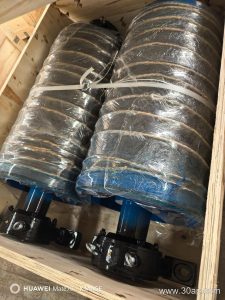
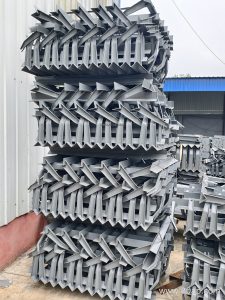
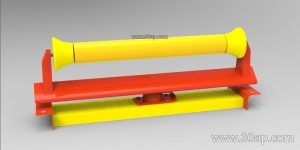
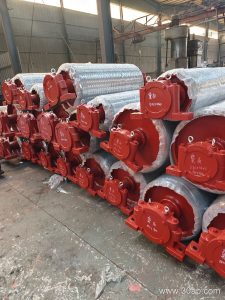
In a quarry, limestone mine or cement clinker line, the conveyor pulley at the head or tail end is more than a rotating drum. A heavy-duty conveyor pulley is the robust, often rubber-lagged drum that transmits drive torque, maintains belt tension, or changes belt direction while carrying the full load of a bulk material conveyor. Unlike a standard-duty pulley, this class of drum is built for high tension, abrasive dust, and continuous operation. It works together with the conveyor belt, idler roller, and conveyor bracket to keep material moving from crusher to stockpile.
Construction and Surface Options That Matter
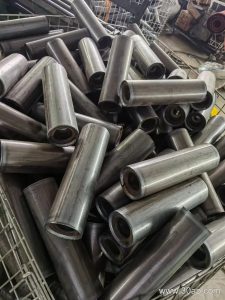
A heavy-duty conveyor pulley typically combines a thick steel shell, reinforced end discs, and a shaft sized by torque and radial load — not by belt width alone. Common shaft diameters range from Ø50 to Ø200 mm, and the shaft diameter should always be confirmed against the actual drive load and bearing life calculation. The pulley face width usually exceeds the belt width to allow for belt tracking: for example, a B800 belt often pairs with a pulley face around 950 mm, and a B1200 belt with about 1400 mm. These are reference relationships, not fixed rules.
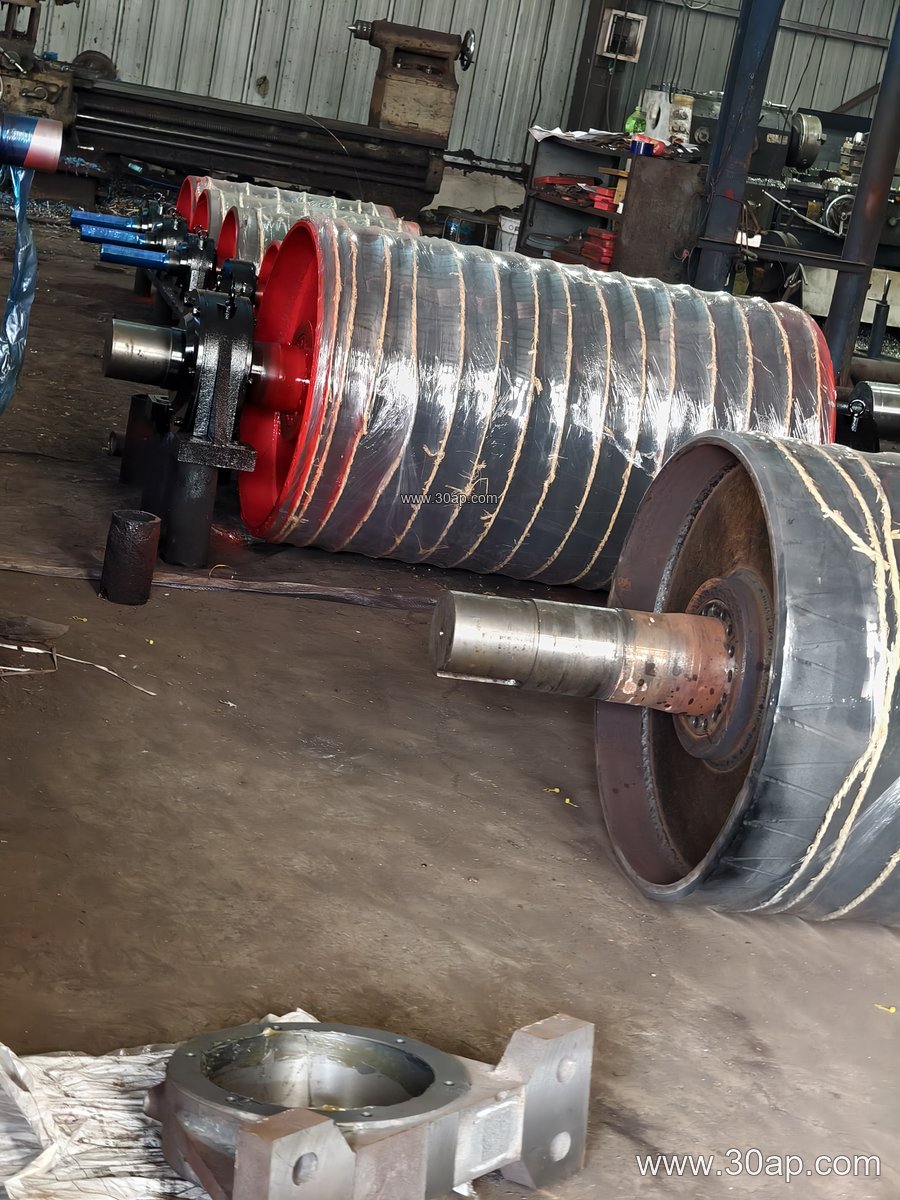
Surface treatment is critical for grip and wear life. Common options include plain face, hot-vulcanized rubber lagging, cold-bonded rubber, diamond grooving, herringbone lagging, and ceramic lagging. Lagging thickness is often 8, 10, 12, 15, or 20 mm. In a coal mining conveyor or underground mining conveyor, flame retardant and anti-static properties of the lagging and belt are often specified together. For abrasive ore or rock, ceramic lagging can extend service life, while a smooth rubber surface may suit a tail pulley where material buildup is a concern.
Where Heavy-Duty Pulleys Are Used
You will find these pulleys in primary crushing circuits, ship loading conveyors, power plant coal handling, and steel plant sinter lines. In a sand and aggregate plant, a heavy-duty conveyor pulley at the head of a long overland conveyor must handle both the belt tension and the impact of coarse stone. In a cement plant, heat resistant conveyor belt may run alongside a pulley that is protected from hot clinker dust. The same drum type can serve as a drive pulley, tail pulley, or bend pulley, but these roles are not interchangeable — each position has its own load profile and lagging requirement.
Matching the Pulley to the Belt and the Duty
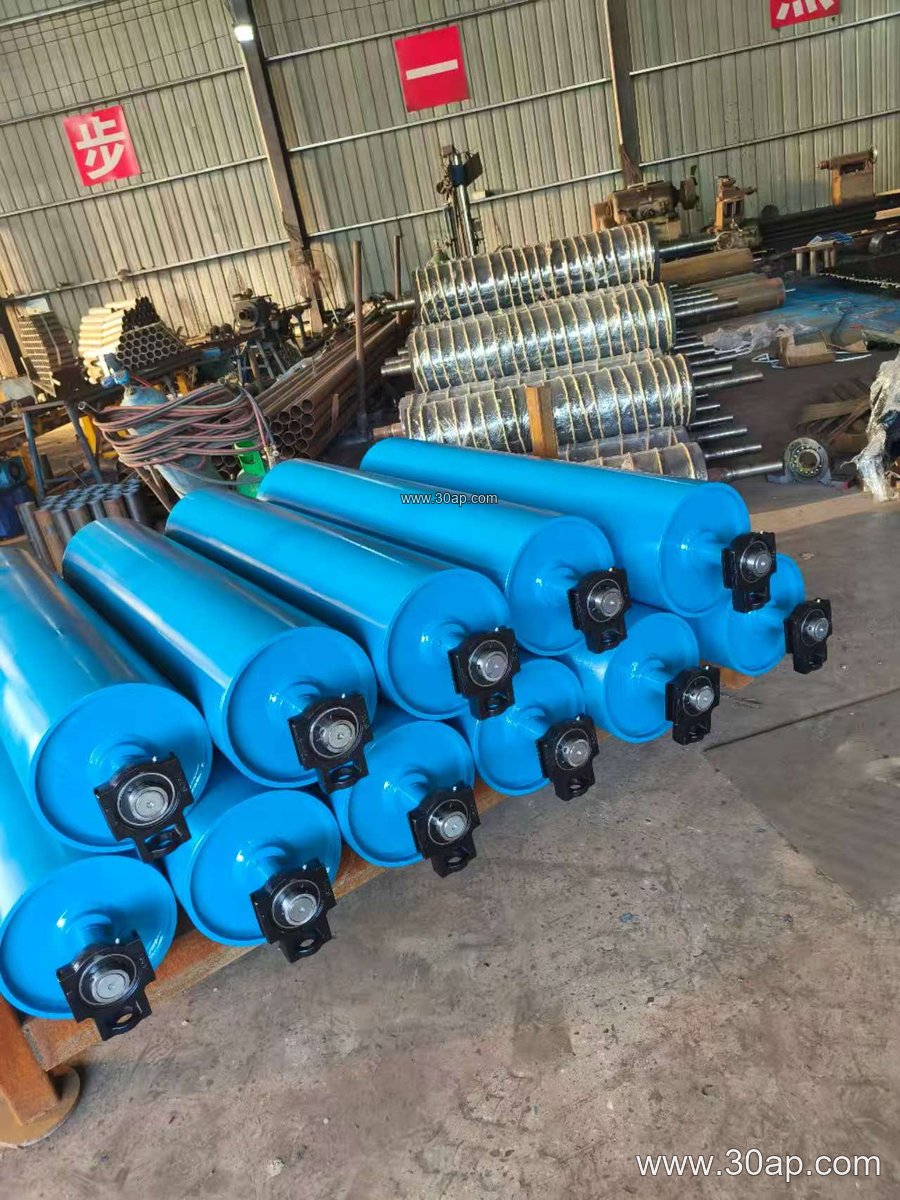
Belt construction influences pulley selection. A steel cord conveyor belt or a high-strength fabric core belt such as EP1000 or NN300 requires a pulley with sufficient shell thickness and a shaft that can carry the resulting tension. A pipe conveyor belt or a corrugated sidewall conveyor belt may need a different face profile and careful alignment. When selecting a heavy-duty conveyor pulley, consider:
- Belt width and pulley face width (for example, B650 with roughly 750 mm face, or B1400 with about 1600 mm face).
- Pulley diameter range — Ø200 to Ø1800 mm are common, with larger diameters reducing belt bending stress.
- Lagging type and thickness (8–20 mm), matched to abrasion, oil, or heat exposure.
- Shaft diameter (Ø50–Ø200 mm) determined by torque and bearing load, not by belt width alone.
- Bearing and locking assembly access for maintenance in confined spaces.
For a heavy-duty mining conveyor belt or an abrasion resistant conveyor belt, a lagged drive pulley with diamond pattern is often chosen to maintain grip in wet or dusty conditions. In a port or ship loading facility, a larger diameter pulley may be preferred to reduce belt fatigue over millions of cycles.
Buyer Checklist and Maintenance Notes
Ask for the pulley drawing with shell thickness, shaft material, lagging specification, and balancing grade. Confirm that the pulley face width suits your belt width and that the lagging is compatible with the conveyor environment — for instance, oil resistant conveyor belt in a recycling plant may require oil-resistant lagging. Check that the conveyor bracket and bearing housings match the pulley shaft and that the idler roller spacing near the pulley supports the belt through the transition zone. Regular inspection of lagging wear, bolt torque, and shaft alignment will prevent unplanned downtime. A heavy-duty conveyor pulley is a long-term investment; correct specification at the start is the best way to protect the entire conveyor system.