What a Take-Up Wheel Pulley Does
A take-up wheel pulley is the rotating wheel that carries the belt at the tensioning point of a conveyor. Its job is not to drive the belt, but to hold it under controlled tension while the take-up frame moves back and forth to absorb slack. In a quarry, a cement plant or a coal handling line, this pulley often sits at the tail end or in a separate tensioning tower, where it works together with a conveyor bracket, a slide frame or a counterweight arrangement.
The same component is also known as a tension pulley or take-up pulley. It should not be confused with the drive pulley at the head, the tail pulley that returns the belt, or a bend pulley that simply changes belt direction. Each has a distinct role, and mixing them up leads to wrong ordering and poor belt tracking.
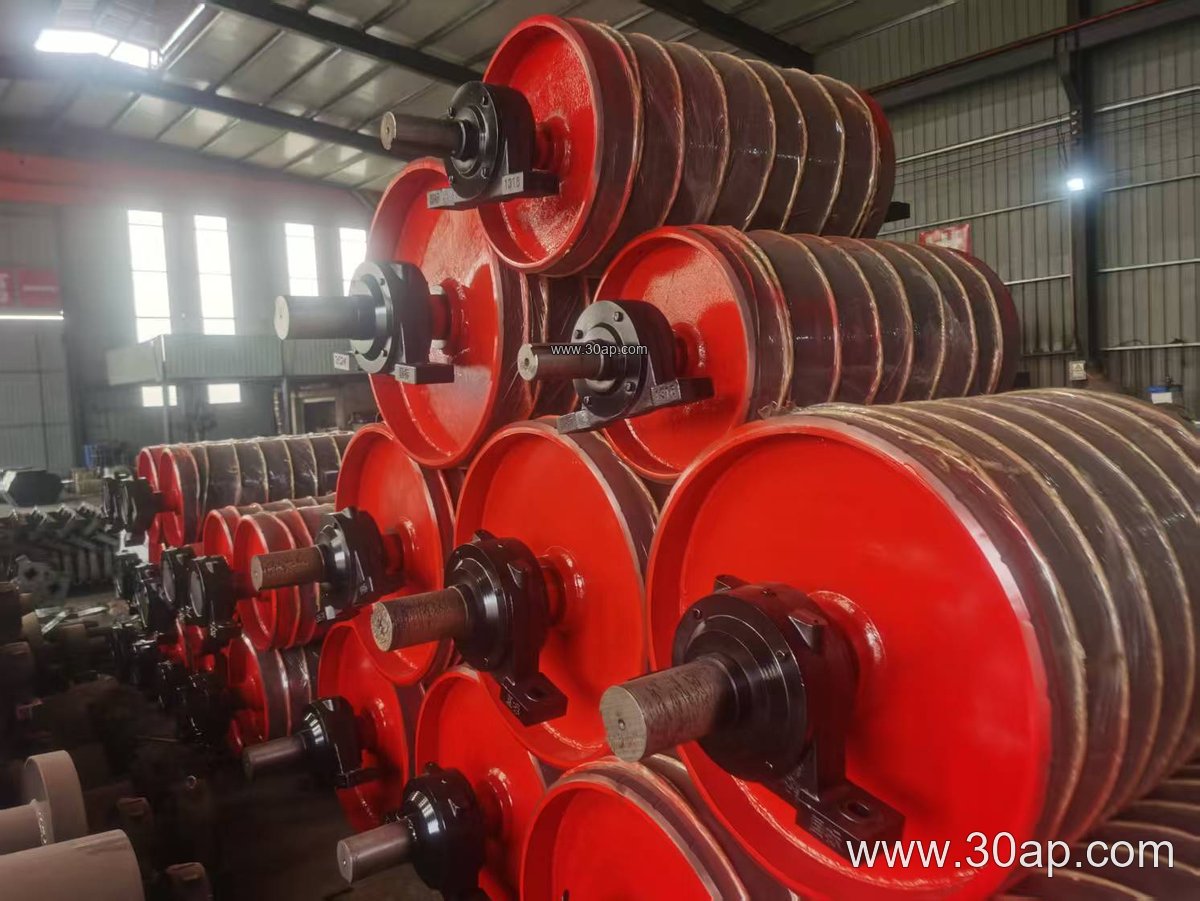
Construction and Surface Options
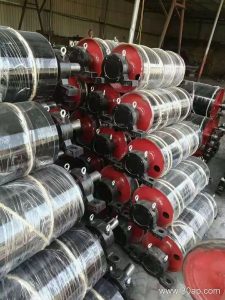
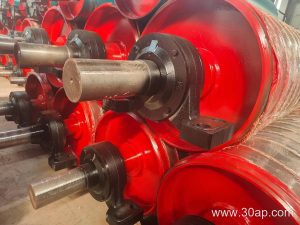
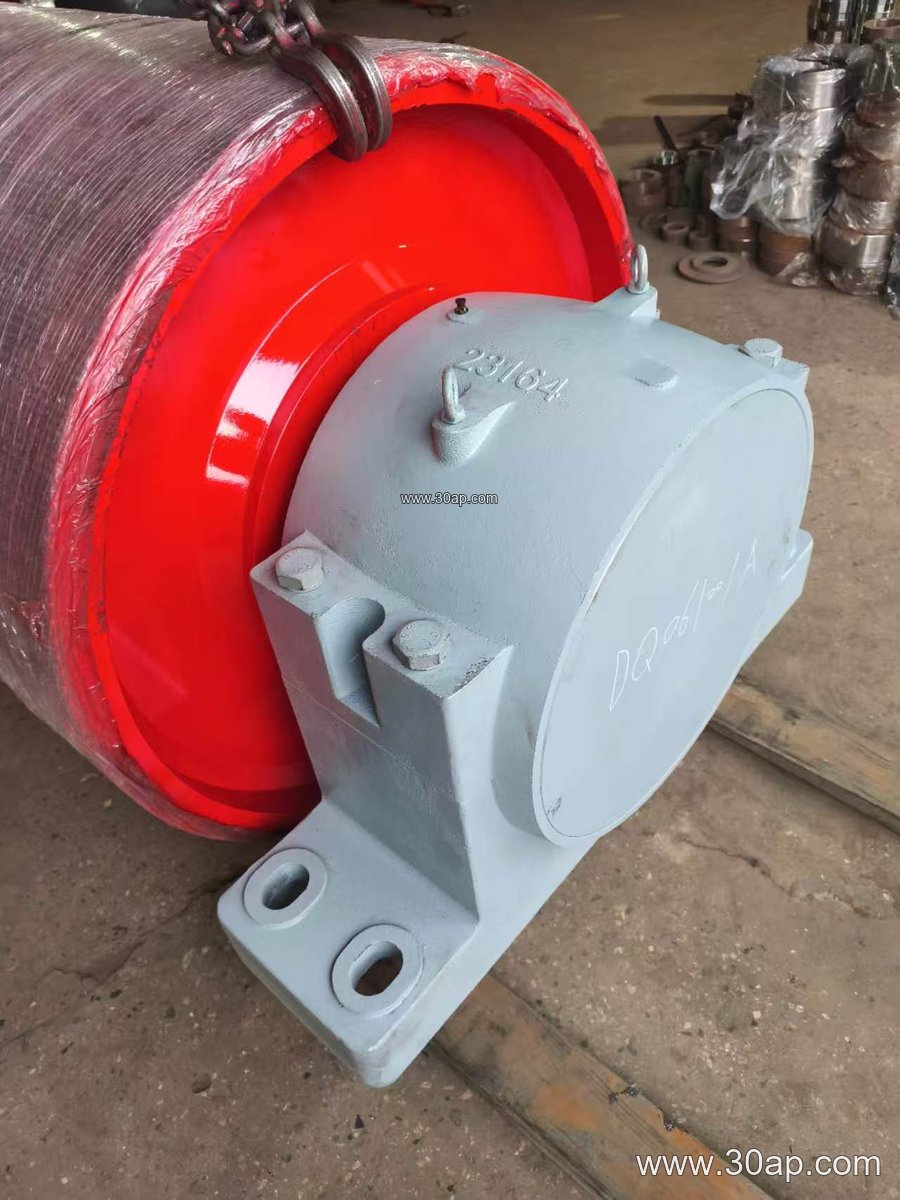
The body is usually a welded steel drum with a machined face, fitted with shafts, bearing housings and a hub connection. Because the take-up position sees continuous belt movement and often a certain amount of grit, the surface treatment matters. Common choices include plain finish, hot vulcanized rubber, cold bonded rubber, diamond grooving, herringbone grooving and ceramic lagging. Lagging thickness is frequently 8, 10, 12, 15 or 20 mm depending on the duty.
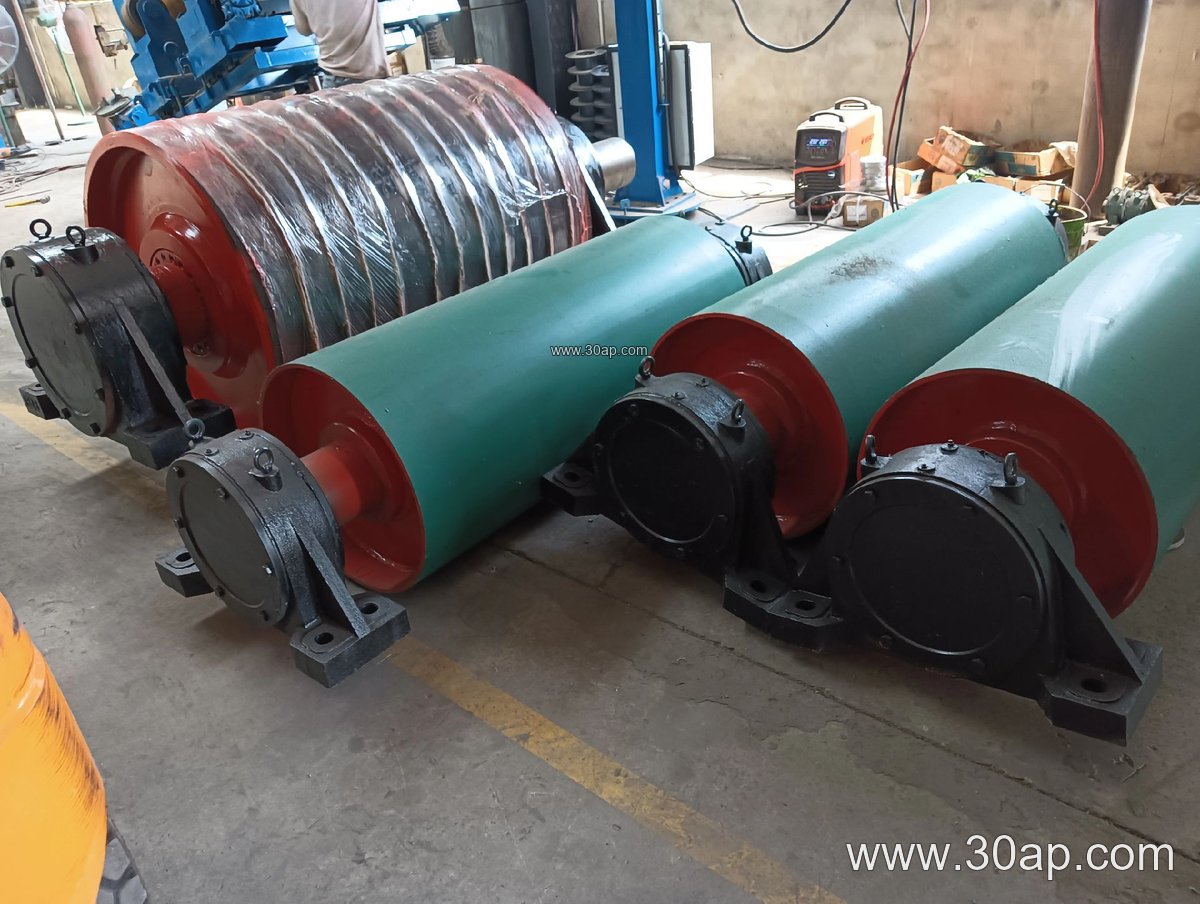
Face width is normally a little wider than the belt. For example, a B800 belt may run on a pulley face of about 950 mm, while a B1200 belt may use a face near 1400 mm. Diameter and shaft size are decided by torque, belt tension and bearing load, not by belt width alone. A B800 x Ø500 unit and a B1200 x Ø1000 unit are both realistic combinations, but they are not fixed rules.
| Parameter | Typical range | Notes |
|---|---|---|
| Belt width | B400 to B2400 | Face width usually greater than belt width |
| Pulley diameter | Ø200 to Ø1800 | Selected by tension and belt stiffness |
| Shaft diameter | Ø50 to Ø200 | Based on torque and load, not belt width |
| Lagging thickness | 8, 10, 12, 15, 20 mm | Rubber, ceramic or grooved surface |
Where It Fits in the Line
In a limestone mine or a sand and aggregate plant, the take-up wheel pulley is often installed on a movable carriage at the tail. As the belt stretches, the carriage moves and keeps tension steady. In a power plant coal yard, a similar pulley may be part of a gravity take-up tower. The same principle applies in a fertilizer granulation line or a grain silo conveyor, where gentle belt tension reduces slip and spillage.
Because the pulley runs against the belt, it should be matched with a suitable conveyor belt. A heavy-duty mining conveyor belt or an abrasion resistant conveyor belt will behave differently from a thin food grade conveyor belt, and the lagging choice should follow the belt surface. For dusty stone crushing lines, a rubber lagged take-up wheel pulley gives better grip than a plain face. For sticky materials, a grooved or ceramic surface may help release fines.
Buyer Checklist
- Confirm the belt width, pulley diameter and shaft diameter as a set, not as separate guesses.
- State the take-up travel and whether the frame is screw type, gravity type or hydraulic.
- Choose lagging by material: rubber for general grip, ceramic for abrasive ore, grooved for wet or sticky cargo.
- Check bearing housing fit with the conveyor bracket and confirm lubrication access.
- Match the pulley to the belt construction, such as EP conveyor belt, NN conveyor belt or steel cord conveyor belt, especially where tension is high.
- Ask for dynamic balance and face runout data when the pulley is large or runs at speed.
A take-up wheel pulley is a small part of the whole conveyor, but it controls belt tension, tracking and belt life. Whether the plant handles iron ore, copper ore, clinker or port bulk cargo, correct sizing and a suitable surface keep the belt running straight and reduce downtime.