What Conveyor Bracket Fabrication Involves
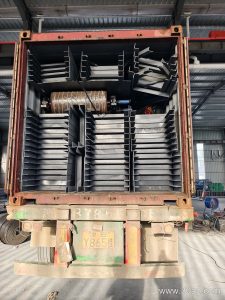
Conveyor bracket fabrication is the process of cutting, forming, drilling and welding the steel frames that hold idler rollers in position along a conveyor. These brackets, often called idler frames or roller supports, sit between the conveyor structure and the rotating components, so their geometry directly affects belt tracking, load distribution and service life. In a quarry, a coal preparation plant or a cement kiln line, a poorly made bracket shows up quickly as misaligned belts, edge wear or premature roller failure.
The work is not simply bending a piece of angle iron. A fabricator has to translate the conveyor design into accurate hole spacing, consistent trough angles and square mounting faces, then deliver frames that survive vibration and dust for years.
Materials and Build Methods
Most brackets are made from angle steel, channel steel or folded steel plate. Angle and channel sections are common for carrying and return frames because they resist bending and are easy to bolt to the stringer. Folded plate is often chosen where a cleaner profile or higher stiffness-to-weight ratio is wanted.
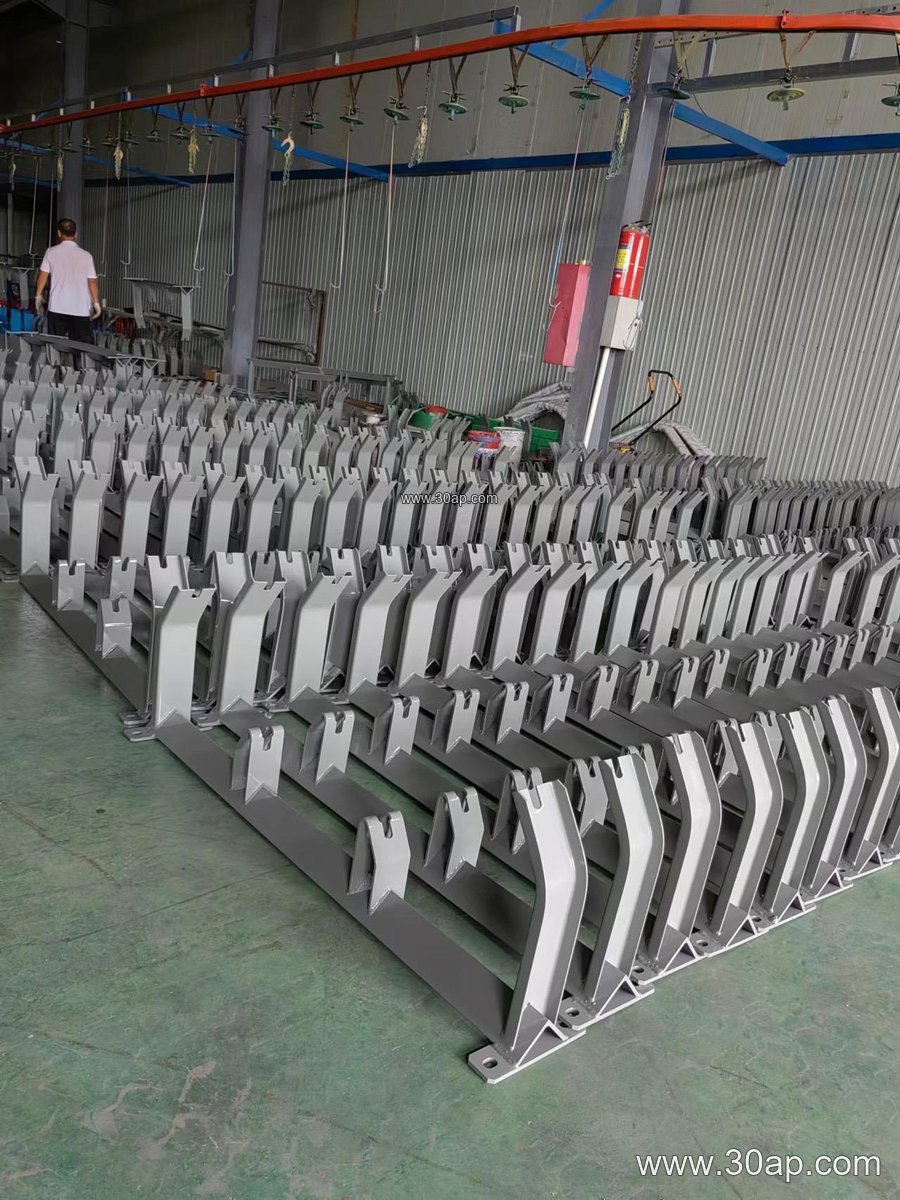
Fabrication usually follows a straightforward sequence:
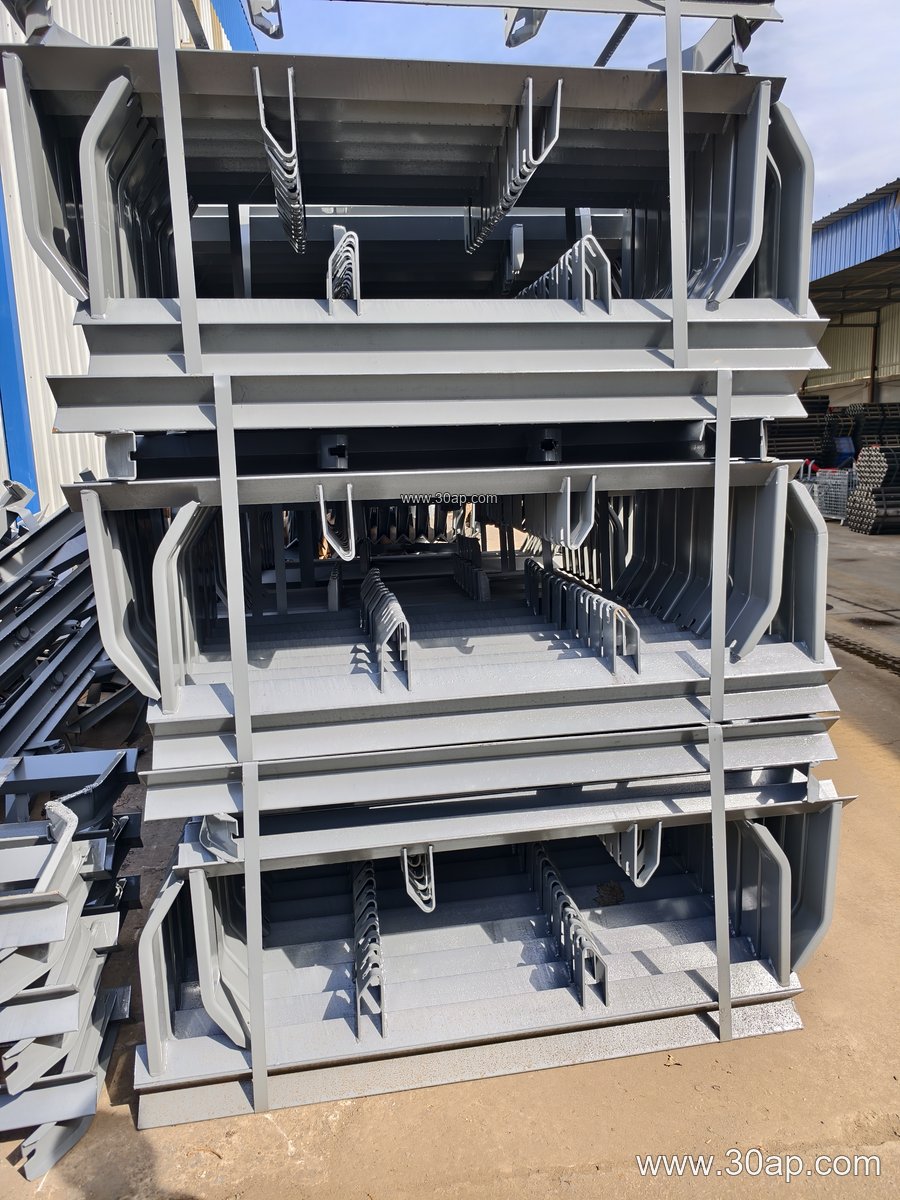
- Cutting sections to length according to the belt width and frame layout
- Punching or drilling mounting holes for the idler roller shafts and the structure bolts
- Forming the trough profile, including the side wing angles
- Welding or bolting the assembly, with attention to squareness
- Surface preparation and painting or galvanizing
Hole pitch and crossbeam length are not fixed numbers; they change with belt width, trough angle and roller diameter, so each batch should be checked against the drawing rather than copied from a previous job.
Common Bracket Types in a Conveying Line
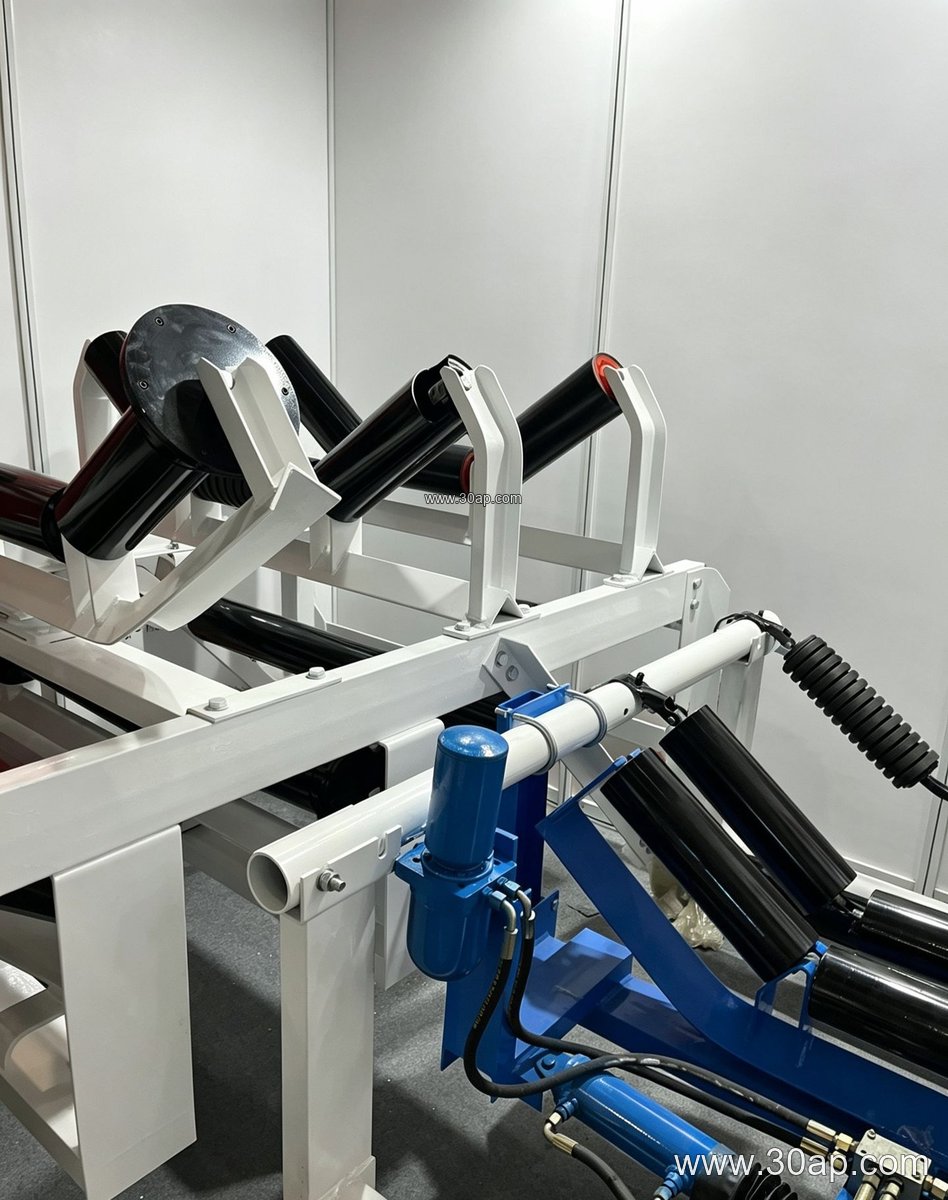
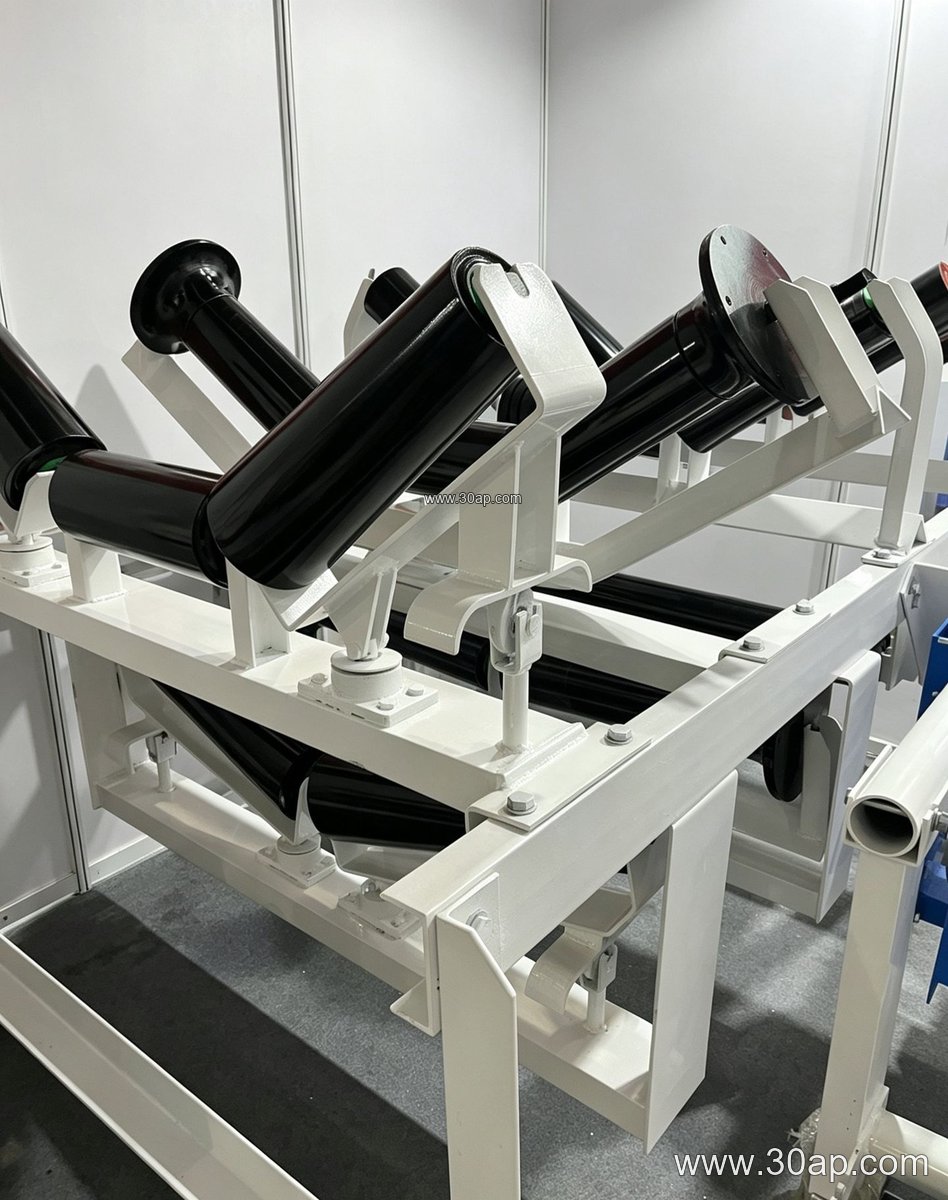
Fabrication covers several frame families, and each has a defined place in the system. Troughing brackets support the carrying side and set the trough angle. Transition brackets ease the belt from a flat pulley into the trough section. Return brackets hold the lower rollers, and V-return frames help center the belt on the return strand. Impact brackets sit under loading points, while self-aligning and forward-leaning frames correct tracking. Adjustable frames allow the trough angle to be changed on site.
These are different components and are not interchangeable. A return bracket cannot substitute for a troughing bracket, and a bend pulley is a different item from a drive or tail pulley. Where a comparison helps, a fabricator might note that an impact bracket uses resilient mounts similar in principle to a buffer roller station, but the bracket remains its own part.
Typical Dimensions and Reference Data
The table below gives common reference ranges for fabricated frames. Treat these as design references, not verified universal specifications.
| Parameter | Common Reference Values |
|---|---|
| Belt width (B) | B500, B650, B800, B1000, B1200, B1400, B1600, B1800, B2000, B2200 |
| Trough angle | 20°, 30°, 35°, 45°; adjustable frames can move between these |
| Roller diameter | Ø89, Ø108, Ø133, Ø159, Ø194 |
| Forward lean (self-aligning) | about 1.5° to 2° |
| Material | angle steel, channel steel, folded plate |
Useful combinations are written in the form B800, 35°, Ø108 or B1200, 45°, Ø133. A wider belt does not automatically dictate one trough angle or one roller size; the choice depends on material, speed and loading.
Where Fabricated Brackets Are Used
In an iron ore terminal, heavy-duty frames carry high-tonnage belts and must resist abrasion and impact. In a limestone quarry or aggregate crushing line, dust and frequent starts place a premium on accurate hole alignment so rollers sit flat. Coal handling plants often specify flame retardant conveyor belt and anti-static components alongside sturdy frames, while power plant coal yards favor rugged troughing sets that keep the belt centered through long transfers.
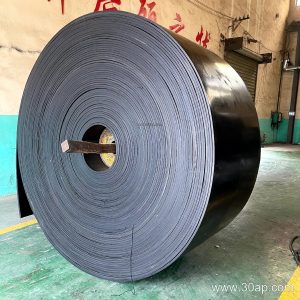
Whatever the site, the bracket should suit the conveyor belt it carries, whether that is an EP conveyor belt, an NN conveyor belt, a steel cord conveyor belt or a multi-ply fabric core conveyor belt. A rigid, square frame helps an abrasion resistant conveyor belt run straighter and last longer.
What Buyers Should Confirm Before Ordering
Before placing a fabrication order, confirm the belt width, required trough angle, roller diameter and mounting hole pattern. Ask how the frame will be finished and how squareness is checked. For adjustable designs, clarify the range of angle movement. For fixed frames, confirm the exact angle and whether a transition version is needed near pulleys.
Also check that the bracket drawing matches the rest of the conveyor, including the idler roller and conveyor pulley locations, so the frames bolt up without field modification. Good fabrication is quiet, accurate and built to the drawing, and that is what keeps a conveying line running.