What the Loading Point Impact Idler Does
At every transfer chute, the conveyor belt takes a beating. Rock, ore, clinker, or aggregate drops from a height and hits the belt surface with concentrated force. The Loading Point Impact Idler is the roll assembly placed directly under that landing zone to absorb the shock, protect the belt carcass, and keep the belt line stable as material settles into its trough shape.
This idler is not a general carrying roll. It is a purpose-built buffer station, and it works together with the belt, the conveyor bracket, and the frame structure around the chute. In a quarry, a coal washing plant, a cement kiln feed line, or a power plant coal handling system, the difference between a protected loading point and an unprotected one shows up quickly in belt life and downtime.
How an Impact Idler Is Built
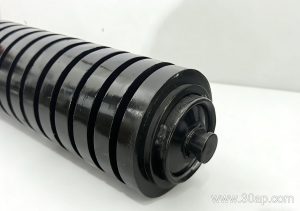
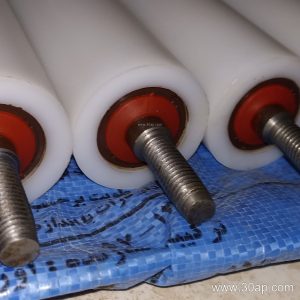
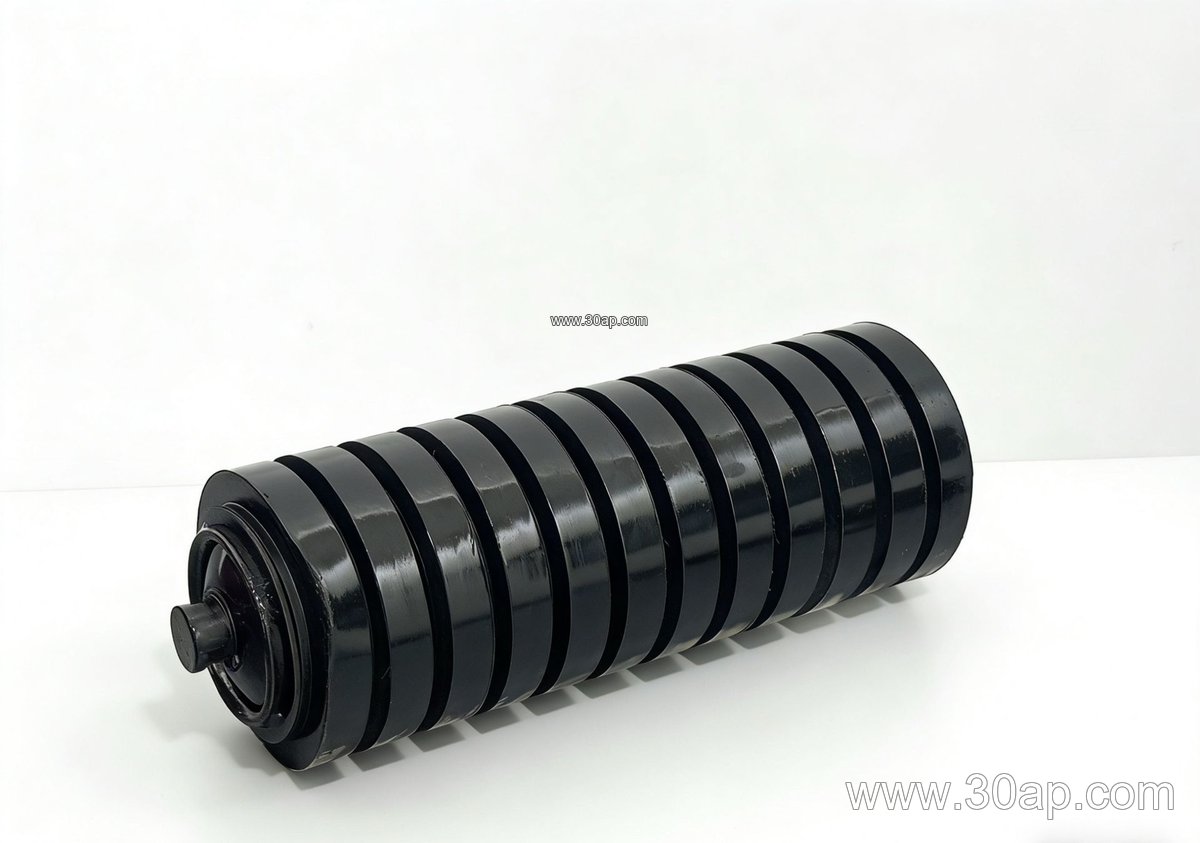
The core of the design is a rubber-covered roll body. Instead of a bare steel shell, the impact roller carries a series of rubber rings or a rubber sleeve that compresses under falling material and then recovers. This elastic layer spreads the impact energy over a wider area of the belt, reducing point stress on the fabric or steel cord carcass.
Typical construction details include:
- Heavy-gauge steel tube body with welded end discs
- Rubber rings or a bonded rubber lagging, often abrasion resistant
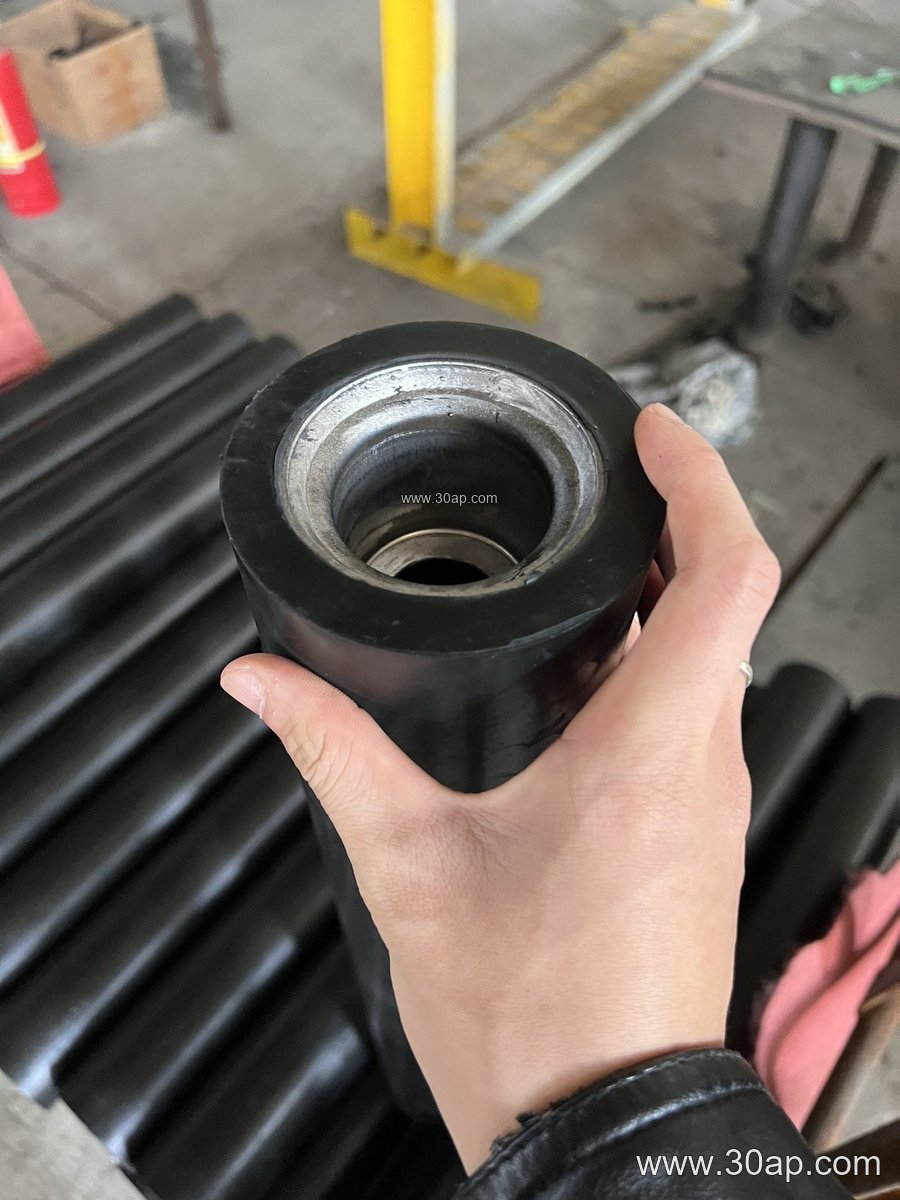
- Sealed ball bearings, commonly 6205, 6305, 6306, or 6308 depending on roll diameter and load
- Labyrinth or multi-stage seals to keep out dust and water
- Fixed or resilient mounting to the conveyor bracket and frame
Roll diameters for this duty usually run from Ø89 up to Ø159 or larger, with Ø127 and Ø133 being common in medium-duty transfer points. The roll length follows belt width, trough angle, and the number of rolls in the station. A three-roll trough set at B800 might use rolls around 315 mm long, while a B1400 set commonly sits near 530 mm. These are reference values, not fixed pairings, and final dimensions should follow the conveyor design.
Where It Sits on the Conveyor
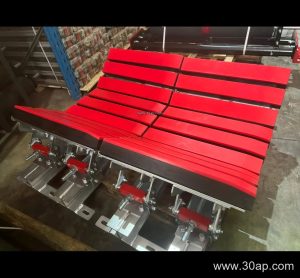
The impact station is installed at the load point, usually just downstream of the skirtboards and before the first standard carrying idler. It is often arranged as a two-roll or three-roll trough set with a 20, 30, 35, or 45 degree trough angle, matching the profile of the adjacent carrying idlers so the belt transitions smoothly.
In hard-rock crushing circuits, the impact rolls sit under the crusher discharge. In a sand and gravel line, they protect the belt beneath the screen feed. In underground coal mining and tunnel muck removal, they absorb lumpy, heavy falls where space is tight. The same principle applies on a ship loading conveyor at a port, where large tonnage arrives in a short drop.
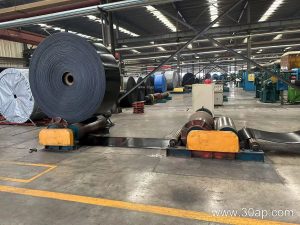
For a conveyor carrying an Impact Resistant Conveyor Belt or a heavy-duty EP Conveyor Belt, the impact idler extends the benefit of that belt construction. On a steel cord line, the buffer rolls reduce the risk of carcass damage at the chute.
Impact Rolls Versus Standard Carrying Idlers
A standard troughing idler uses a steel or nylon roll surface and is designed for steady load, not shock. The impact version trades some rolling efficiency for elasticity and durability at the hit zone. It is usually shorter in service length than the carrying run and is placed only where falling material actually lands.
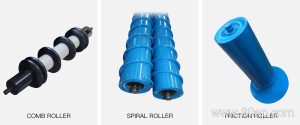
Other roll types serve different jobs and should not be substituted for the impact station. A return roll supports the empty belt. A self-aligning idler corrects belt tracking. A spiral roll sheds sticky material. Each has its place, but none absorbs the vertical impact of a chute discharge the way a rubber-ring buffer roll does.
Selection Points for Buyers
Before ordering, confirm the belt width, the trough angle of the adjacent idlers, the drop height and lump size, and the expected tonnage. Larger lumps and higher drops call for thicker rubber rings and a larger roll diameter. Dusty or wet conditions make seal quality and bearing protection more important.
Check that the mounting dimensions match the existing conveyor bracket and frame. Roll length, shaft ends, and fixing centers vary between manufacturers, so a drawing is more reliable than a nominal size alone. Also consider the belt type in service, whether a Flame Retardant Conveyor Belt in a coal mine or a heat resistant belt near a cement cooler, since the idler rubber should suit the ambient conditions.
Ask for the rubber hardness and ring thickness, bearing brand and seal design, and the recommended inspection interval. A practical maintenance routine includes checking ring wear, looking for loose or seized rolls, and confirming that material buildup is not lifting the belt off the impact station.
Installation and Long-Term Care
Set the impact rolls slightly higher than the standard carrying rolls so the belt rests on them at the load point without a step. Align the station square to the belt centerline and tighten the conveyor bracket bolts evenly. After the first weeks of operation, recheck for settling and re-torque as needed.
Replace worn rubber rings before the steel body contacts the belt. Keep the chute centered so material does not strike one side of the roll set. With correct sizing and routine checks, the Loading Point Impact Idler becomes a low-cost guard for the most expensive part of the conveyor, the belt itself.