What a Conveyor Idler Frame Does on a Belt Line
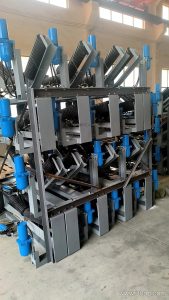
A conveyor idler frame is the structural element that holds idler rollers in the correct position under or above the conveyor belt. It is not the roller itself and it is not a conveyor pulley. The frame carries the load path from the belt and material down into the conveyor stringer or support structure, and it keeps each idler roller aligned so the belt runs smoothly.
Also called an idler support frame or idler bracket assembly, this component is usually fabricated from angle steel, channel steel, or folded steel plate. On a quarry conveyor belt or a cement plant line, the frame is often the part that decides whether the belt tracks cleanly or wanders.
How the Frame Is Built
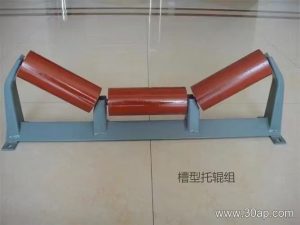
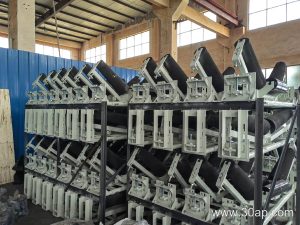
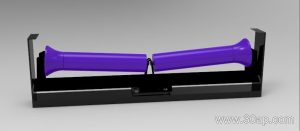
Most frames are welded or bolted assemblies. A troughing idler frame has angled arms that set the trough angle. A return frame is flatter and supports the belt on its return side. Installation hole spacing and crossbeam length change with belt width and trough angle, so they are determined by design rather than fixed.
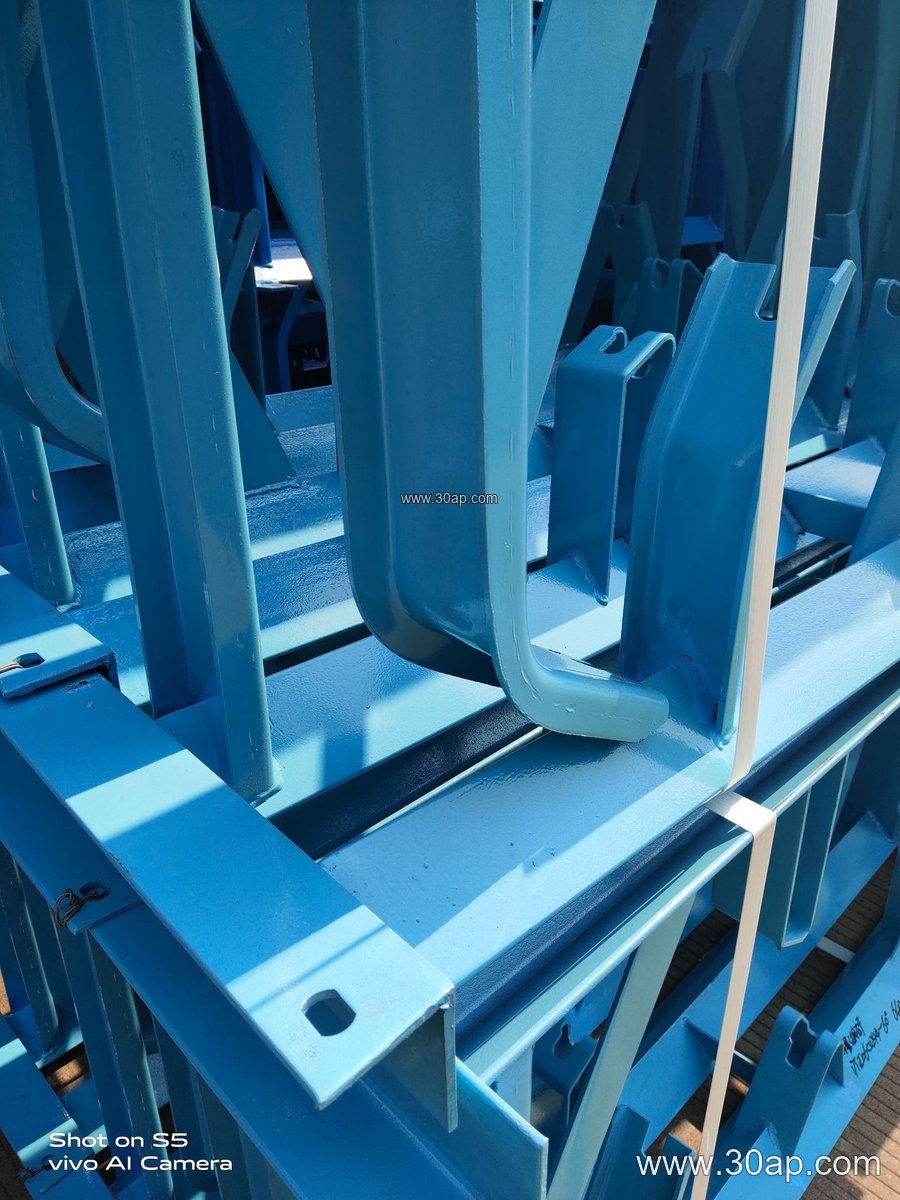
- Material: angle steel, channel steel, or bent steel plate
- Common trough angles: 20, 30, 35, and 45 degrees
- Adjustable frames can shift between these angles
- Forward-leaning frames often use about 1.5 to 2 degrees of tilt
- Typical roller diameters: Ø89, Ø108, Ø133, Ø159, Ø194
Surface treatment matters in wet or dusty plants. A coal mining conveyor belt line may call for galvanized or painted frames, while a power plant coal yard may prefer heavy paint systems against corrosion.
Where Frames Are Used
These frames appear wherever a conveyor belt needs support, including limestone mines, iron ore plants, sand and gravel lines, crushing and screening circuits, and port loading systems. In a wash plant, return frames and V-return frames help keep the belt centered. In a tunnel spoil line, impact frames protect the belt at the loading point.
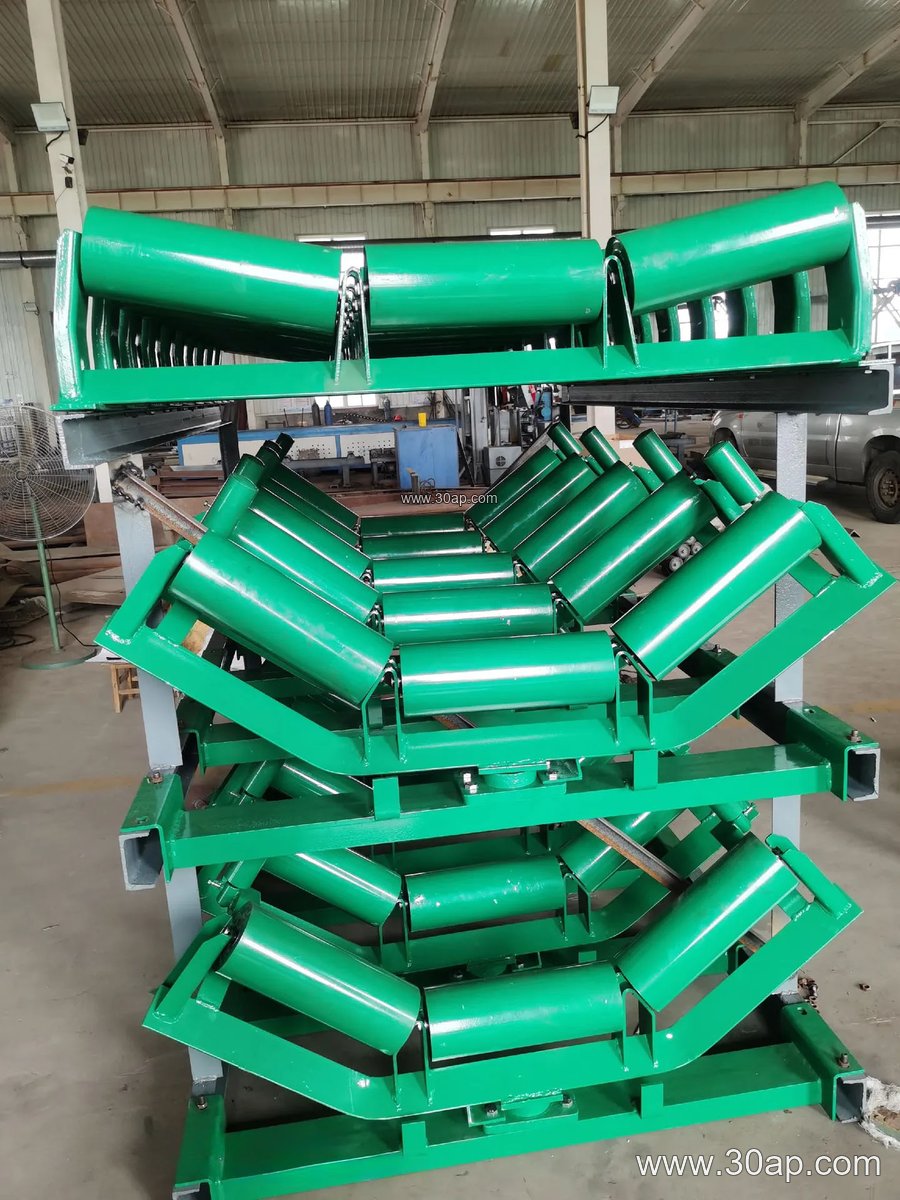
Frames work together with the conveyor belt, idler roller, conveyor pulley, and conveyor bracket. A troughing frame on the carrying side and a flat return frame on the return side form the basic support set. A bend pulley at a curve is a different component and should not be confused with the idler frame.
Frame Types and Typical Matching
Different frame types suit different duties. Troughing frames support the loaded belt; transition frames ease the belt from flat to troughed; impact frames carry shock at transfer points; self-aligning frames correct tracking; and suspended frames suit certain structures. The table below shows reference combinations only, not fixed rules.
| Frame type | Belt width (reference) | Trough angle | Roller dia. (reference) |
|---|---|---|---|
| Troughing frame | B650 | 30 degrees | Ø89 |
| Troughing frame | B800 | 35 degrees | Ø108 |
| Troughing frame | B1200 | 45 degrees | Ø133 |
| Return frame | B1000 | Flat | Ø108 |
| Impact frame | B1400 | 35 degrees | Ø159 |
Belt width and roller diameter are matched by design, not by a single fixed rule. A B1000 frame may carry Ø108 or Ø133 rollers depending on load and speed. An EP conveyor belt or steel cord conveyor belt with a heavy load may need larger rollers and stronger frames.
Buyer Checklist
Before ordering, confirm belt width, trough angle, roller diameter, mounting hole spacing, and crossbeam length. Check whether the frame is fixed or adjustable, and whether the plant needs corrosion protection. For a coal mining conveyor belt or a cement plant conveyor belt, ask about dust and moisture resistance. Also confirm that the frame fits the existing conveyor bracket and stringer.
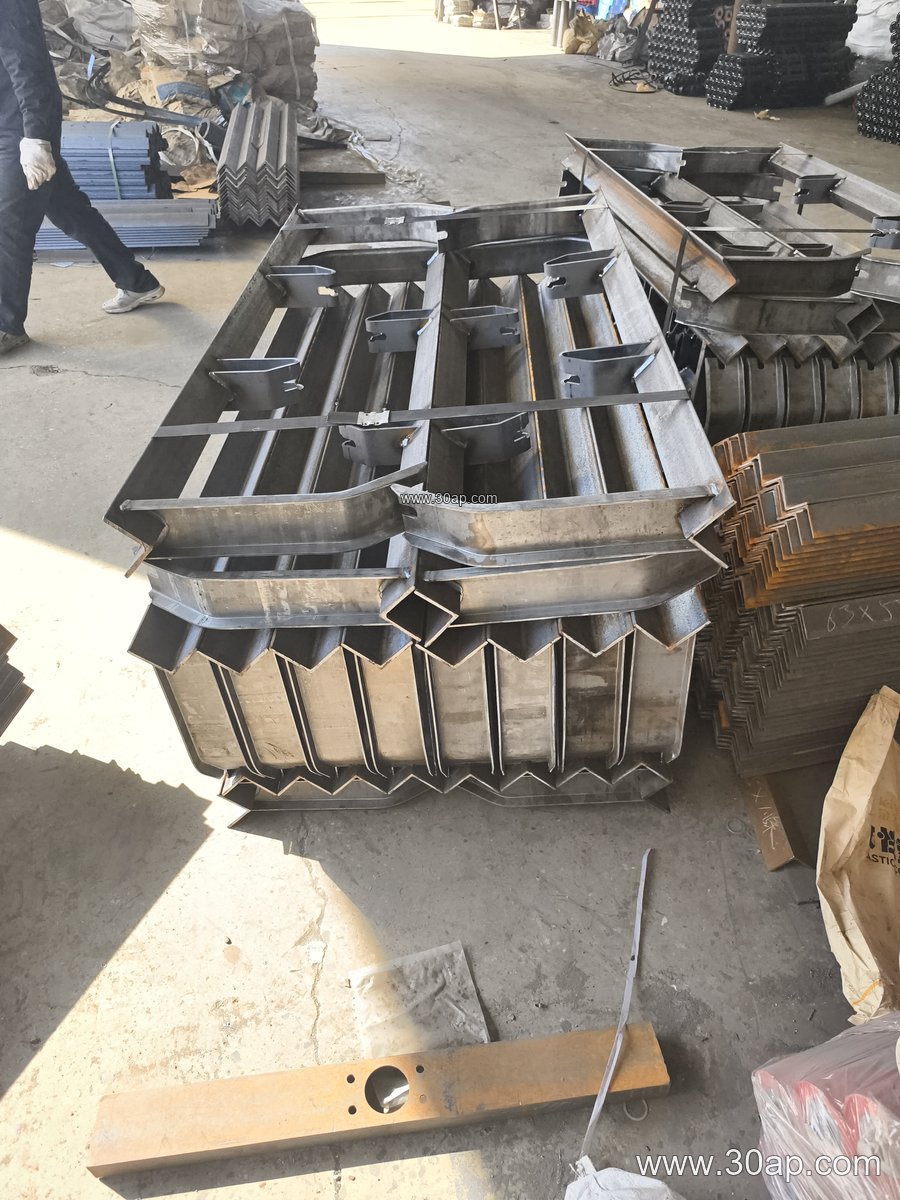
Ask for drawings that show the frame in relation to the idler roller and conveyor belt. A frame that is slightly out of alignment can cause belt edge wear and roller damage. In a sand making plant or aggregate conveyor belt line, a small tracking error becomes costly over time.
Maintenance Notes
Inspect frames for bent arms, loose bolts, and worn mounting holes. Replace frames that no longer hold the roller square to the belt. Keep the frame clean so material buildup does not push the belt off center. On a heat resistant conveyor belt line, check that frame paint has not burned away near hot material.
For more information on related conveyor components, visit conveyor idler frame, rubber conveyor belt, and conveyor pulley pages.