What Belt Conveyor Pulley Lagging Does
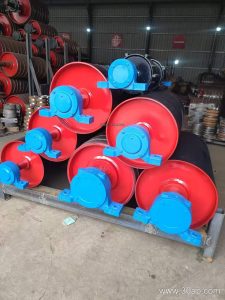
Belt Conveyor Pulley Lagging is the rubber or composite layer applied to the shell of a conveyor pulley where the belt wraps around it. Its job sounds simple, but it decides a lot about how a conveyor behaves. The lagging raises friction between the pulley face and the belt, protects the steel shell from wear and material build-up, and helps keep the belt centred during operation. In a quarry, a cement plant, or a power station coal yard, a pulley without proper lagging often shows up first as belt slip, then as premature belt cover wear.
The product is also called pulley lagging rubber or conveyor pulley rubber lagging. It is a wear part, not a structural one, so it is replaced periodically while the pulley itself stays in service.
How the Lagging Is Built and Fitted
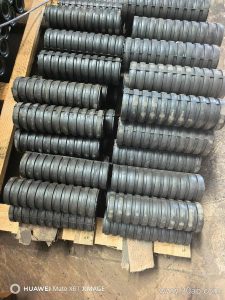
Most lagging starts as a rubber sheet with a fabric or cord reinforcement layer inside. The surface may be plain, diamond-patterned, herringbone, or ceramic-tiled, and thickness commonly falls in the 8, 10, 12, 15, or 20 mm range. Thicker grades suit high-torque drives and abrasive duty; thinner grades are common on bend and take-up positions.
There are three usual fitting routes:
- Hot vulcanised lagging — applied in a workshop or on site with heat and pressure, giving a strong bond and a seamless joint.
- Cold bonded lagging — glued with a two-part adhesive, practical for field replacement when downtime is short.
- Cast or moulded lagging — rubber poured or formed directly onto the shell, often with grooves built in.
Whatever the method, the shell should be cleaned and checked for roundness first. A poor bond or trapped air leads to edge lift, and once water and fines get underneath, the lagging peels quickly.
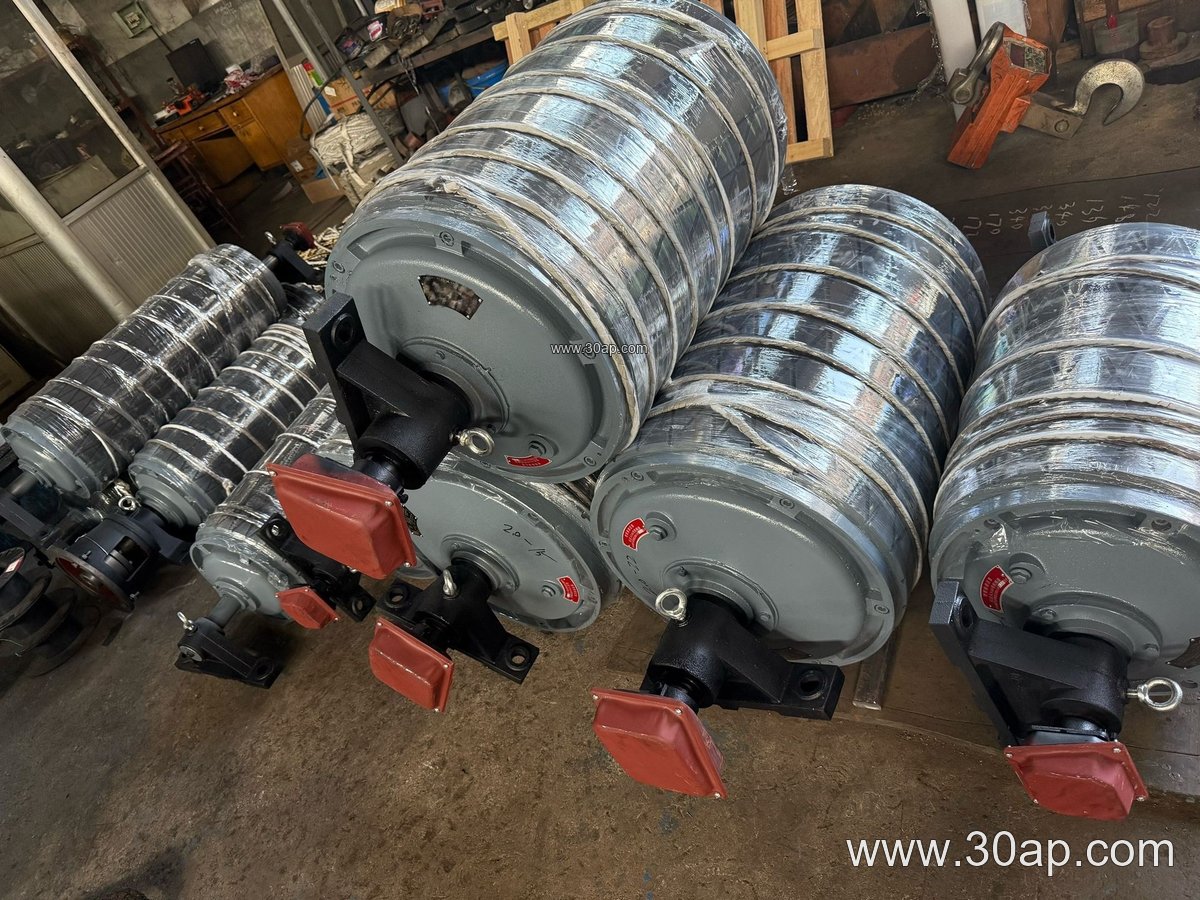
Surface Forms and Where Each One Fits
The surface pattern is chosen for the material and the position. Plain lagging gives even contact and is easy to clean; diamond lagging channels water and fines away and is a common general-purpose choice; herringbone patterns push debris toward the edges; ceramic lagging is used where abrasion is severe and slip must be controlled. On a conveyor pulley at the head or drive position, grip matters most, while a tail or bend pulley may only need protection.
It is worth remembering that drive, tail, and bend pulleys are different duties, not interchangeable names. A drive pulley transmits torque and needs a surface that will not slip under load. A tail pulley mainly guides the belt return. A bend pulley changes direction with little torque. Matching the lagging to the duty is more useful than buying one grade for the whole conveyor.
Typical Size Pairings
Lagging is ordered against the pulley diameter and face width, not the belt width alone. The table below shows common reference combinations; final dimensions are set by the conveyor designer.
| Belt width | Typical pulley face width | Common pulley diameter | Lagging thickness |
|---|---|---|---|
| B800 | about 950 mm | Ø500 | 10–12 mm |
| B1000 | about 1150 mm | Ø630 | 10–15 mm |
| B1200 | about 1400 mm | Ø800–Ø1000 | 12–15 mm |
| B1400 | about 1600 mm | Ø800 | 12–15 mm |
| B1600 | about 1800 mm | Ø1000–Ø1250 | 15–20 mm |
| B1800 | about 2000 mm | Ø1250 | 15–20 mm |
Shaft diameter is a separate decision based on torque and bearing load, commonly Ø80 to Ø200 on heavy conveyors, and should never be guessed from belt width. The belt itself also matters: a stiff steel cord belt behaves differently from a flexible multi-ply fabric core belt, and the lagging surface should suit the belt cover compound.
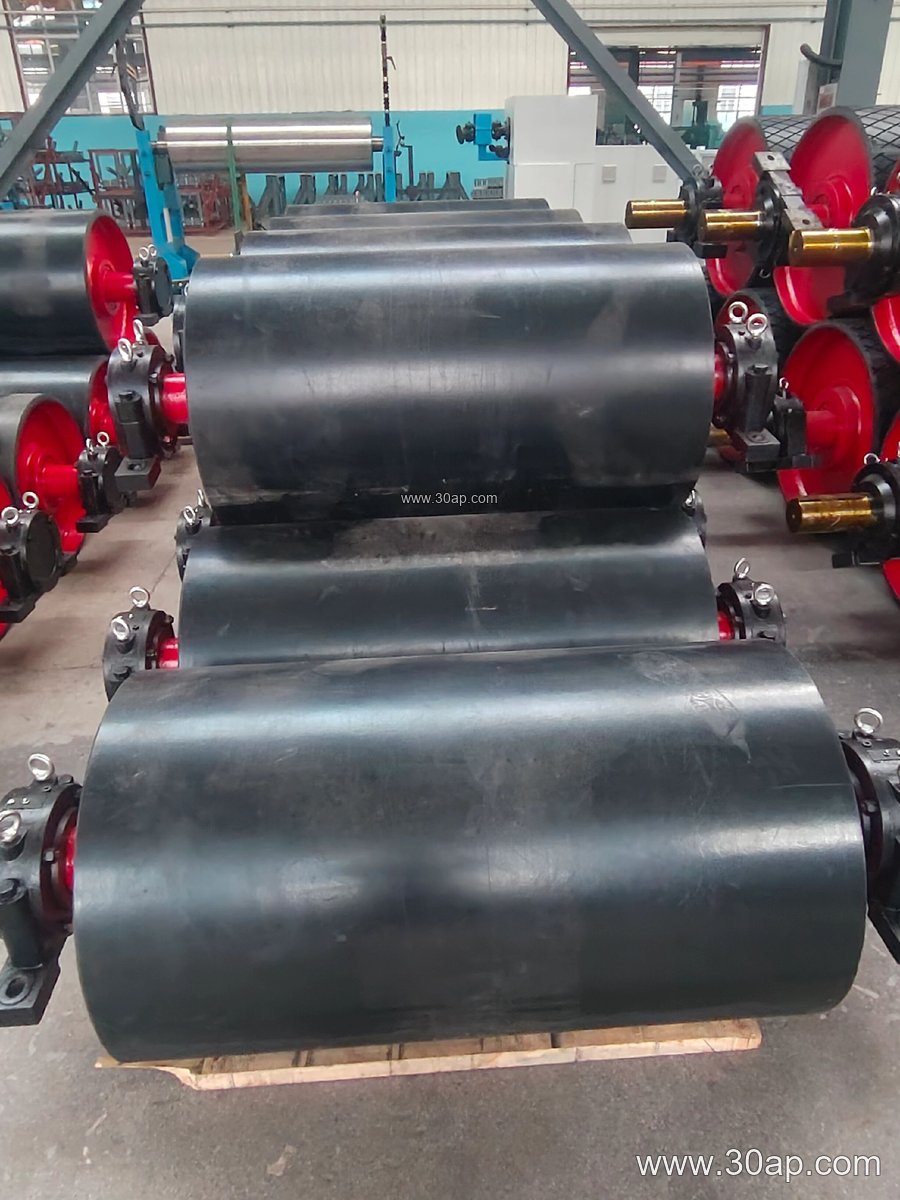
Where It Is Used
Pulley lagging appears wherever a conveyor moves bulk material under load. In a coal washing plant it helps keep slip down on wet, fine coal; in a limestone or iron ore operation it protects the shell from sharp rock; in a cement plant it is often specified with heat-tolerant compounds where clinker is conveyed. Port bulk terminals and aggregate lines use it on long overland conveyors, where a single slipping drive can stop the whole circuit.
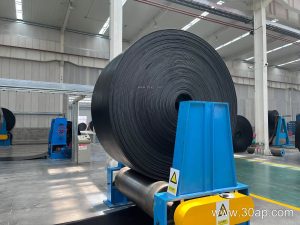
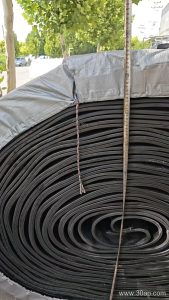
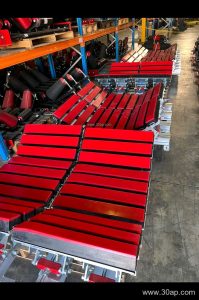
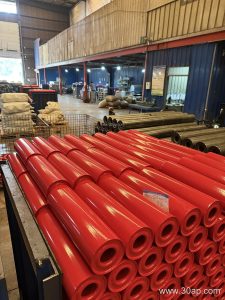
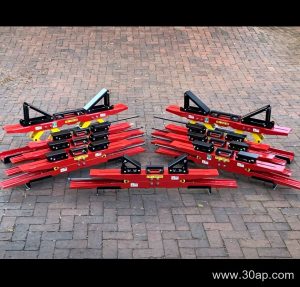
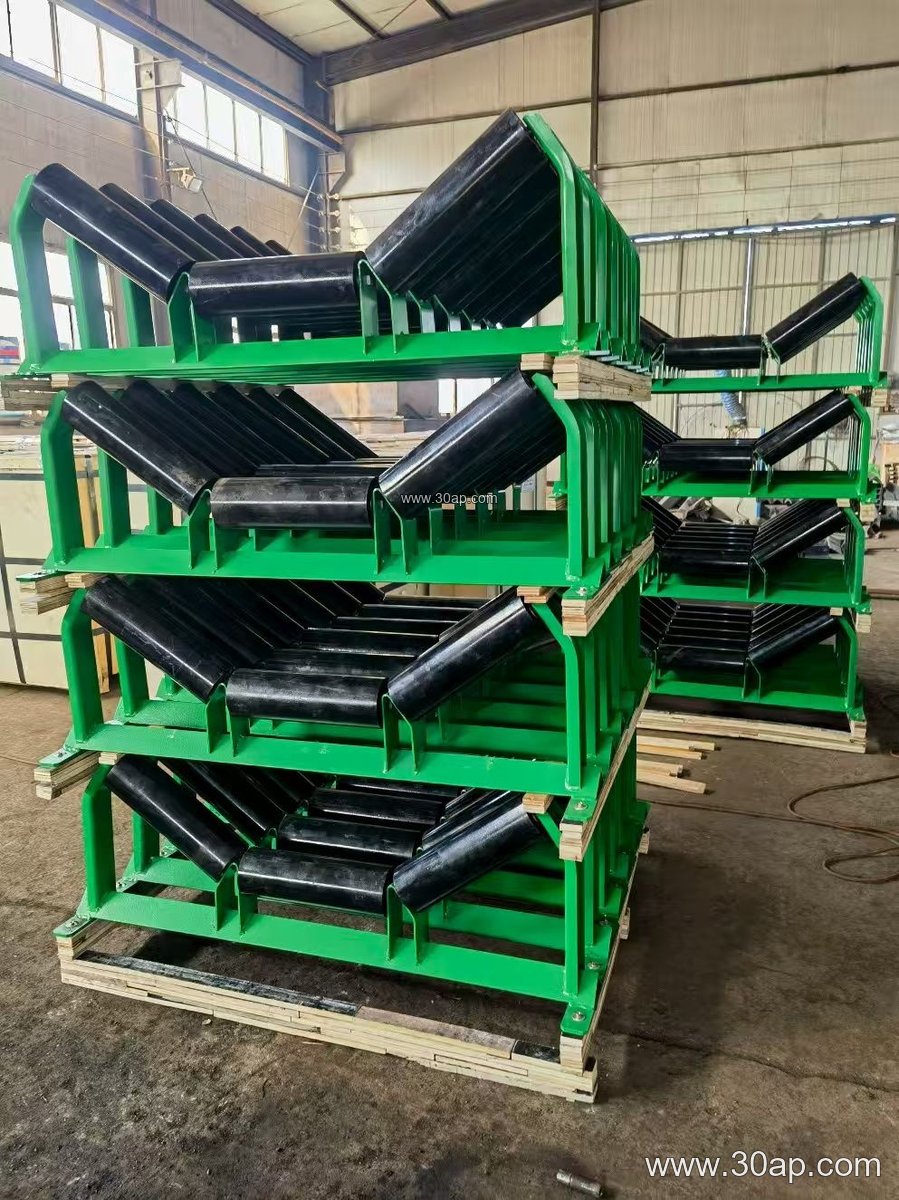
On the belt side, the pairing is usually with an abrasion resistant conveyor belt or, in underground coal mining, a flame retardant conveyor belt. Above the belt, idler rollers and conveyor brackets carry the load, while the pulley does the pulling.
What a Buyer Should Check
- Pulley diameter, face width, and shaft size, confirmed against the drawing.
- Duty: drive, tail, bend, or take-up, and the torque or wrap angle involved.
- Rubber grade and hardness, plus oil, heat, or fire requirements for the site.
- Surface pattern and thickness, matched to belt cover and material abrasiveness.
- Fixing method: hot vulcanised, cold bonded, or cast, and whether site work is possible.
- Joint quality and edge sealing, since most failures begin at the edges.
Inspection is simple: look for polished or glazed areas that signal slip, check for edge lift, and measure remaining thickness during planned shutdowns. Replacing lagging before the shell is exposed is far cheaper than replacing a pulley — and much cheaper than losing a shift in a mine or a cement kiln line.