What a Belt Conveyor Trough Idler Does
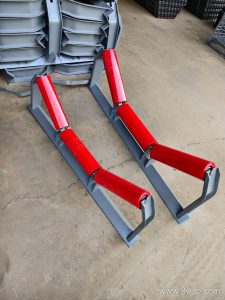
A belt conveyor trough idler is the group of rollers that supports the carrying side of a conveyor belt and shapes it into a trough. That troughing shape keeps bulk material centered, reduces spillage, and helps the belt run smoothly between the head and tail of the conveyor. In a quarry, a limestone mine, or a cement plant, these idlers are among the most numerous wear parts on the whole line, so understanding how they are built and specified matters for anyone buying or maintaining them.
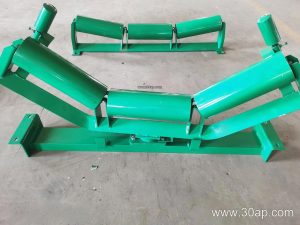
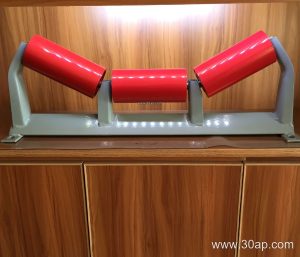
The same product is often called a troughing idler or carrying idler set. In a three-roll arrangement the center roll sits flat while the two side rolls angle upward, and this is the form most people mean when they talk about a trough idler on a bulk handling conveyor.
How the Assembly Is Built
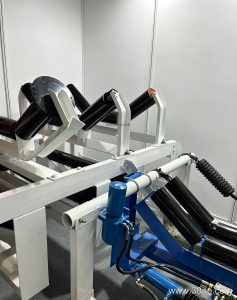
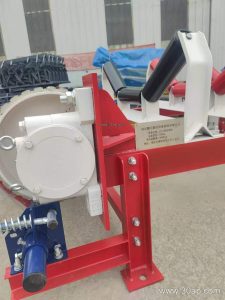
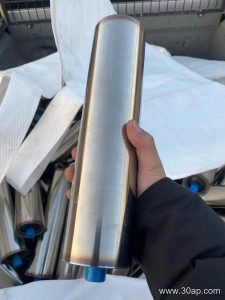
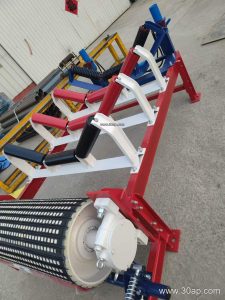
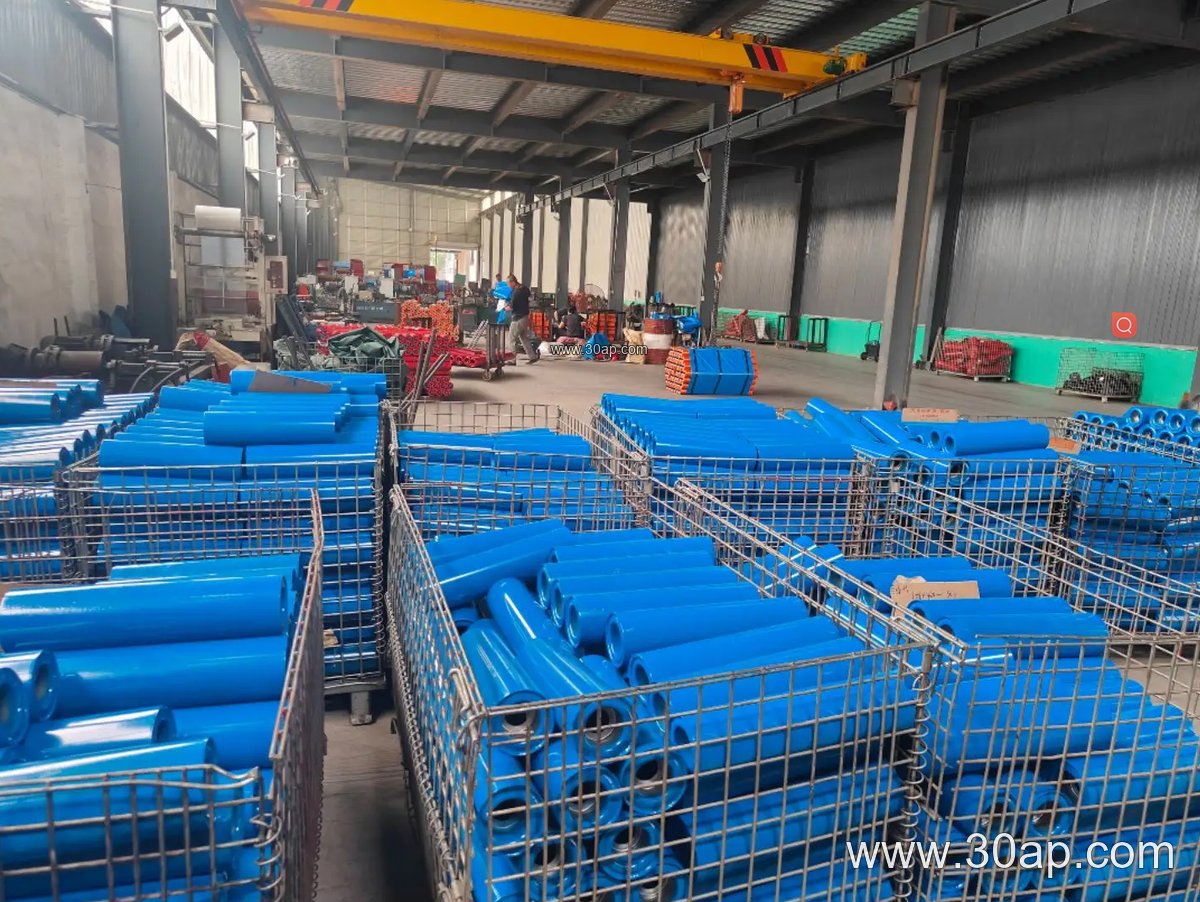
A typical trough idler set combines several parts. The rollers themselves are usually steel tube with a shaft running through sealed bearings at each end. The rolls are held in a frame, often called a conveyor bracket or idler frame, which fixes the trough angle and the spacing between rolls. Common roll diameters include Ø89, Ø108, Ø127, Ø133, and Ø159, and larger sizes such as Ø178 or Ø194 appear on heavy belts. Bearings are frequently 6204, 6205, 6305, 6306, 6308, or 6310, matched to load and speed by the designer rather than to one fixed roll size.
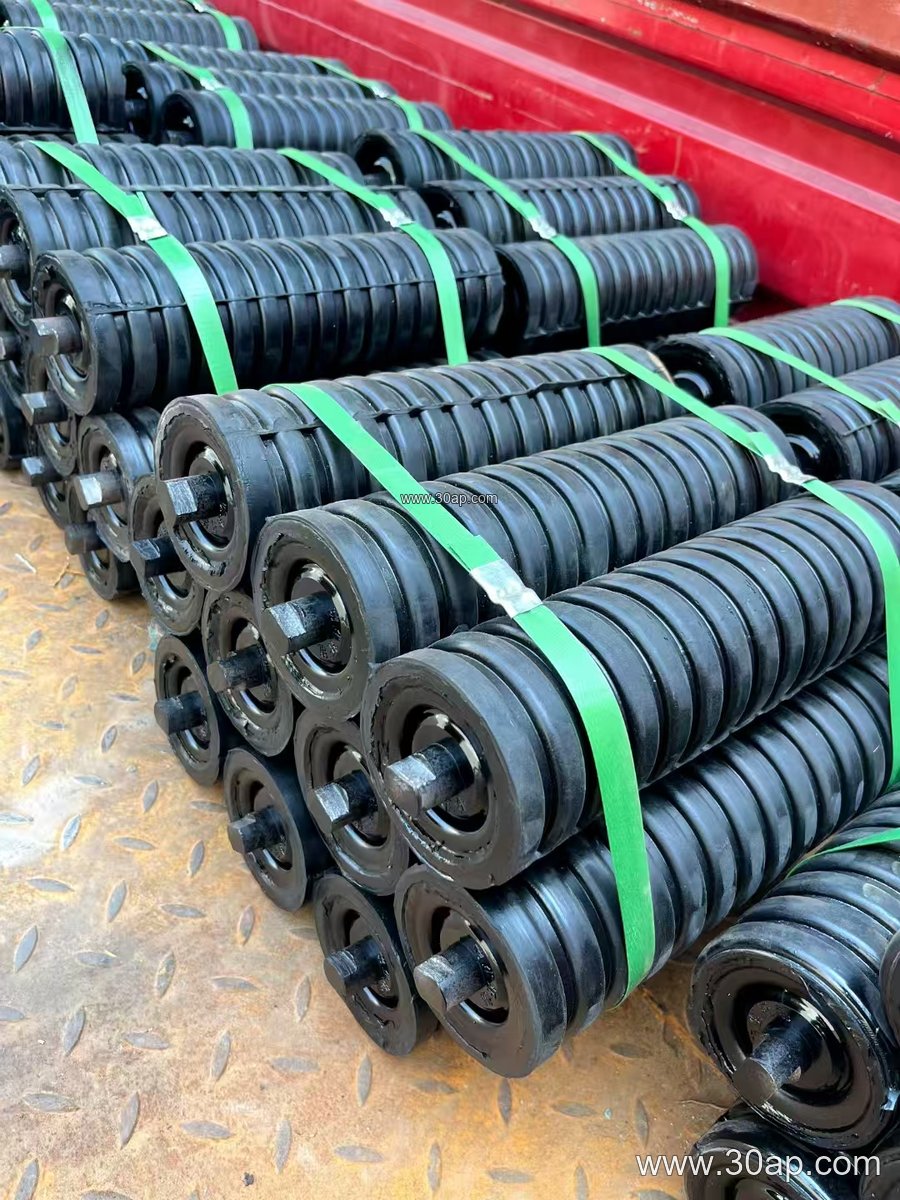
Roll surfaces vary with the duty. Plain steel suits general service, rubber rings help absorb impact at loading points, and nylon or ceramic covers are chosen where sticking or abrasion is a concern. Seals and bearing protection are what usually decide service life in dusty conditions such as a coal washing plant or a crushing and screening circuit.
Trough Angles and Belt Width
The trough angle affects how much material the belt can carry and how stable the load sits. Common angles are 20, 30, 35, and 45 degrees. A deeper trough holds more material on the same belt width but can increase friction on some materials. Roll length changes with belt width, trough angle, and the number of rolls in the set, so the values below are examples only and should be confirmed against the conveyor design.
| Belt width | Typical center roll length (three-roll set) | Common trough angle |
|---|---|---|
| B500 | about 200 mm | 20–35 degrees |
| B650 | about 250 mm | 20–35 degrees |
| B800 | about 315 mm | 30–35 degrees |
| B1000 | about 380 mm | 30–35 degrees |
| B1200 | about 465 mm | 30–35 degrees |
| B1400 | about 530 mm | 30–45 degrees |
| B1600 | about 600 mm | 35–45 degrees |
| B1800 | about 670 mm | 35–45 degrees |
| B2000 | about 750 mm | 35–45 degrees |
Side rolls and center rolls can differ in length, and a two-roll set follows its own proportions. No single belt width should be tied to one pulley diameter or one shaft size; those choices come from the full conveyor calculation.
Where Trough Idlers Are Used
These idlers appear wherever a conveyor belt carries loose material. In a power plant coal yard or an underground coal mining conveyor, flame retardant and anti-static belt grades are common, and the trough idlers must tolerate fine dust. In an iron ore or copper ore operation, heavy-duty idlers and abrasion resistant belting work together under high loads. Sand and aggregate lines, fertilizer plants, and port ship loading systems all rely on troughing sets to keep the belt profile steady.
At transfer points, impact idlers with rubber rings are often used instead of standard trough idlers to cushion falling rock. On the return side, a flat or V-return idler does a different job. These are comparisons, not replacements: the carrying trough idler remains the main support on the loaded run.
What Buyers Should Check
- Confirm belt width, trough angle, and roll length against the conveyor drawing.
- Match roll diameter and bearing to load, speed, and environment, not to habit alone.
- Ask about seal type and bearing protection for dusty or wet sites.
- Check frame spacing and bracket dimensions so the set fits existing mounts.
- Review belt grade together with the idler, since a steel cord conveyor belt or a heavy fabric core belt may need different support spacing.
- For hot material such as clinker or sinter, consider heat resistant belt grades and heat-tolerant idler choices.
Good trough idler selection is a small decision with a large effect on belt life, spillage, and downtime. Treated as part of the whole conveyor design rather than a standalone part, a well-matched troughing idler keeps material moving cleanly from the mine or quarry to the stockpile or port.