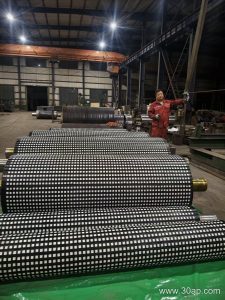
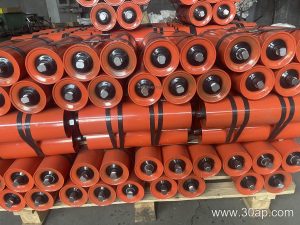
What Conveyor Bracket Fabrication Involves
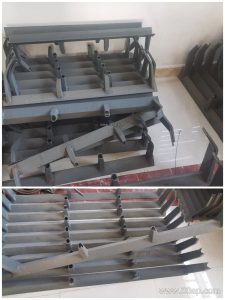
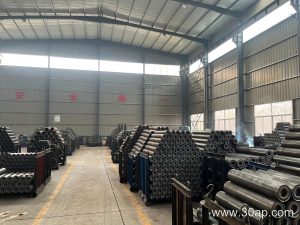
Conveyor bracket fabrication is the process of cutting, bending, welding, and finishing the structural supports that hold idler rollers and shape the conveyor belt. These brackets, often called idler frames or stands, are the backbone of the load-carrying section. A well-fabricated bracket keeps the conveyor belt tracking correctly, maintains the desired trough angle, and absorbs the constant vibration of bulk material handling. In a quarry or a cement plant, a poorly made bracket can lead to misalignment, spillage, and premature roller wear.
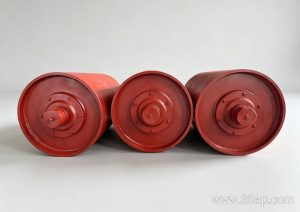
Fabrication starts with material selection. Common choices include angle steel, channel steel, and folded steel plate. The design must match the belt width and the load profile. For instance, a B800 belt running at 35 degrees with Ø108 rollers needs a bracket with specific mounting hole spacing and crossbeam length. These dimensions are not universal; they are determined by the conveyor’s overall design and the belt’s rated tension.
Structural Forms and Their Fabrication Details
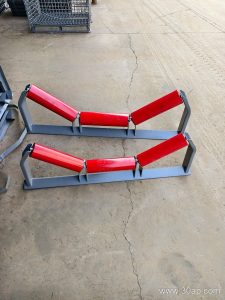
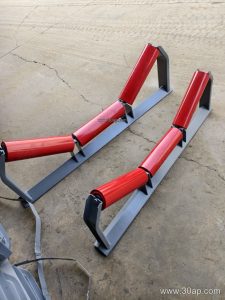
Different sections of a conveyor require different bracket types, and each has its own fabrication logic. Trough brackets, also called carrying brackets, are the most common. They are built to hold three or more idlers at a fixed trough angle, typically 20, 30, 35, or 45 degrees. The fabrication must ensure that all idler mounts are perfectly aligned so the belt forms a smooth curve without pinch points.
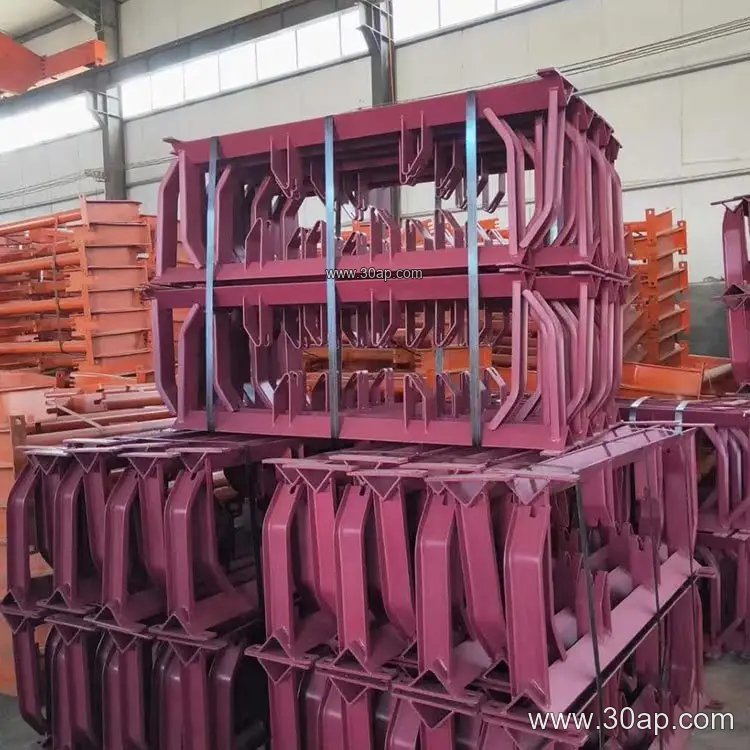
Transition brackets are used where the belt changes from flat to troughed. These are often fabricated with adjustable or graduated angles to guide the belt gently. Return brackets, including V-type and flat return brackets, support the empty side of the belt. Their fabrication focuses on rigidity and easy roller replacement. Impact brackets, placed under loading points, are reinforced with extra gussets or thicker steel to withstand falling material.
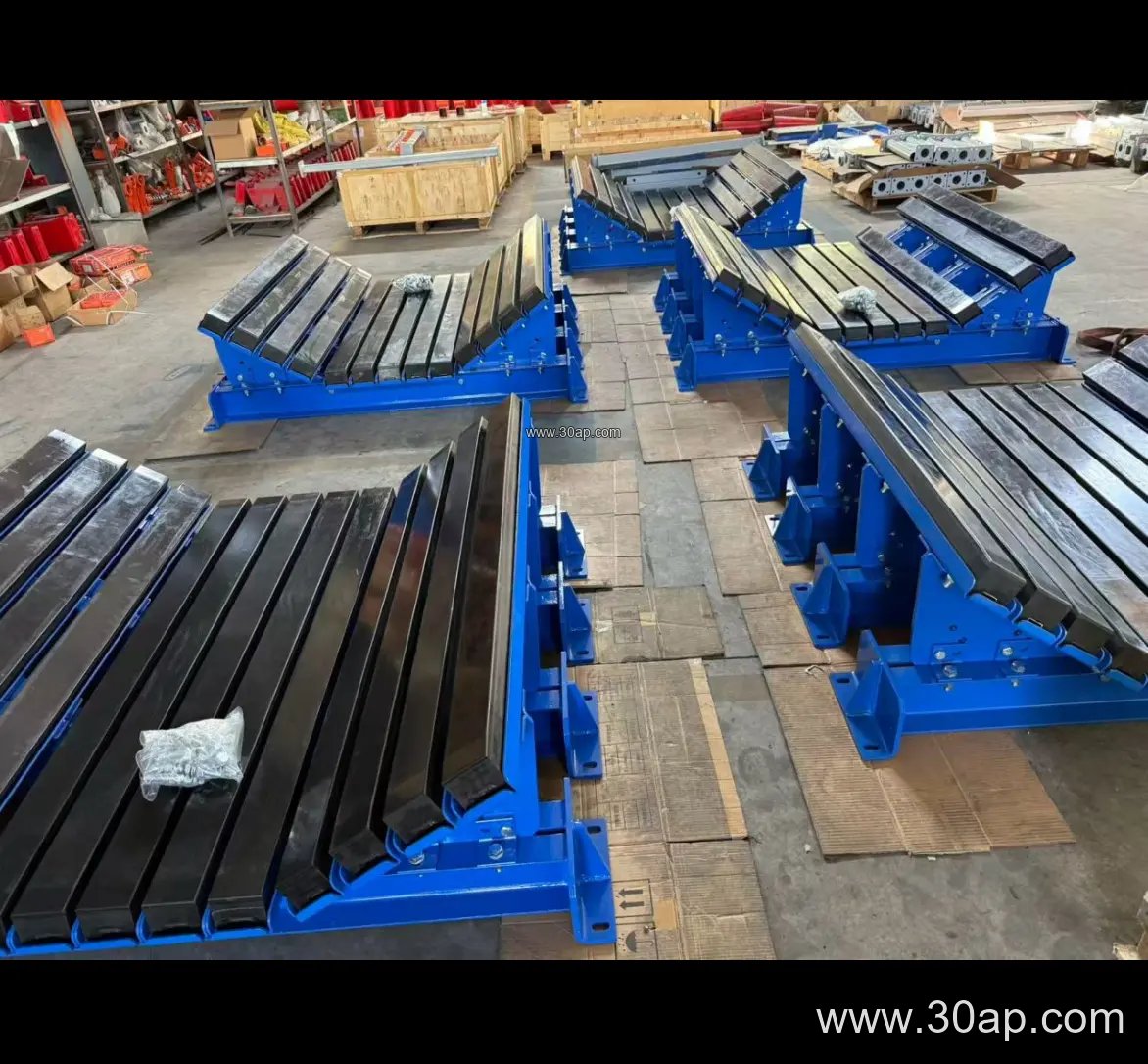
Adjustable brackets are a special category. They allow the trough angle to be changed on site, usually between 20 and 45 degrees. This flexibility is useful for conveyors that handle different materials or need fine-tuning for belt tracking. The fabrication of adjustable brackets requires precise slotting and robust locking mechanisms to hold the setting under vibration.
Key Parameters in Bracket Fabrication
When fabricating or specifying conveyor brackets, several parameters must be coordinated. The table below lists common reference values, but actual dimensions depend on the conveyor design and should be confirmed with the manufacturer.
| Parameter | Common Options | Notes |
|---|---|---|
| Belt width (B) | B500, B650, B800, B1000, B1200, B1400, B1600, B1800, B2000, B2200 | Bracket length and hole spacing vary with width. |
| Trough angle | 20°, 30°, 35°, 45° | Adjustable brackets can cover a range. |
| Roller diameter | Ø89, Ø108, Ø133, Ø159, Ø194 | Match to belt speed and load. |
| Material | Angle steel, channel steel, folded plate | Thickness selected per load. |
| Forward tilt | About 1.5° to 2° | Used on forward-tilt brackets for tracking. |
For example, a B1200 conveyor with a 45-degree trough and Ø133 rollers would use a heavy-duty bracket with a wide crossbeam. A B650 conveyor with a 30-degree trough and Ø89 rollers would use a lighter bracket. There is no fixed rule that one belt width must use only one roller diameter or trough angle; the combination is chosen based on capacity, material lump size, and belt tension.
Where These Brackets Are Used
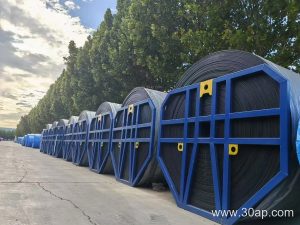
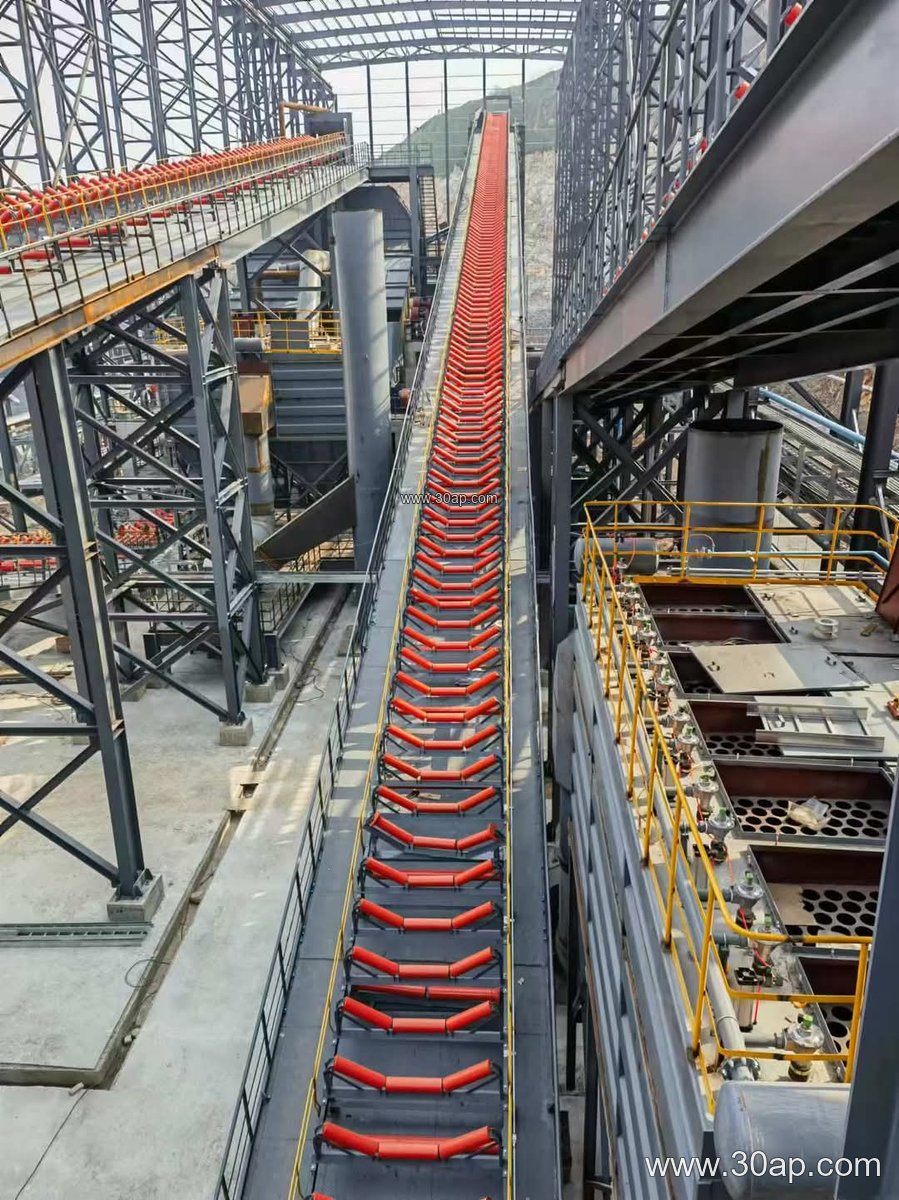
Fabricated conveyor brackets are found wherever bulk materials move on a belt. In a limestone mine, carrying brackets support the conveyor belt under heavy rock loads, while impact brackets cushion the fall at transfer points. In a coal washing plant, flame-retardant and anti-static belts are often paired with robust return brackets that resist corrosion and fines buildup. The same fabrication principles apply to idler roller supports in a sand and gravel line or a fertilizer silo.
Port facilities and power plant coal yards use wide belts (B1800, B2000) with heavy-duty trough brackets to handle high tonnages. In these settings, the bracket must be fabricated to tight tolerances so that the conveyor pulley and belt remain aligned over long spans. The choice between fixed and adjustable brackets often comes down to whether the conveyor handles a single material or needs flexibility.
Buyer Checklist for Conveyor Bracket Fabrication
Before ordering fabricated brackets, confirm the belt width, trough angle, and roller diameter with the conveyor designer. Ask for the mounting hole pattern and crossbeam length, as these are not interchangeable across widths. Specify the material and surface treatment (painted, galvanized, or bare) based on the environment. For dusty or wet conditions, consider how the bracket design sheds material. Finally, verify that the fabrication drawings match the conveyor bracket mounting points on the existing structure. A small mismatch in hole spacing can cause significant installation delays.