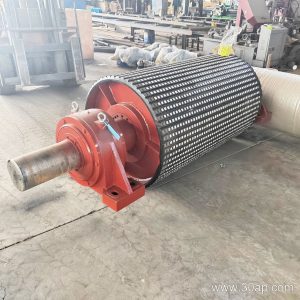
What a Heavy-Duty Welded Pulley Is
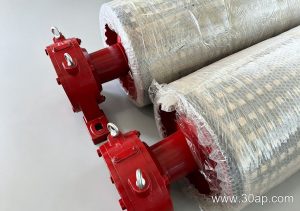
A heavy-duty welded pulley is the robust drum at the heart of a conveyor’s drive, tail, or bend station, fabricated from rolled steel shell sections joined by full-penetration welds rather than lighter formed or cast alternatives. In bulk handling plants, this welded conveyor pulley is expected to carry high belt tension, absorb shock from lumpy feed, and stay round through years of continuous rotation. The welded construction is what separates it from lighter drums: the shell, end discs, and hub assembly act as one stiff unit, which keeps the belt tracking stable and reduces flexing fatigue at the weld toes.
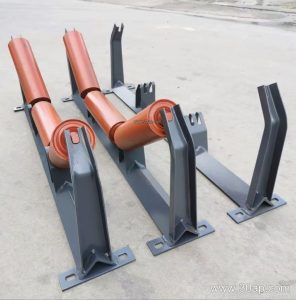
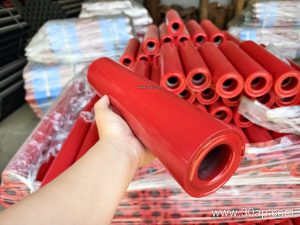
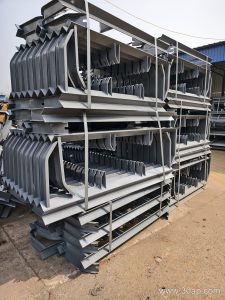
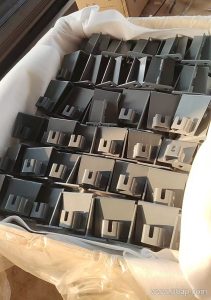
Where a quarry conveyor or a power plant coal line runs a wide, heavily loaded belt, the drum is usually specified as a heavy-duty welded pulley rather than a general-purpose roller. It works together with the conveyor belt, the idler roller sets along the carry side, and the conveyor bracket that anchors each station, so the pulley is only one part of a system that must be matched as a whole.
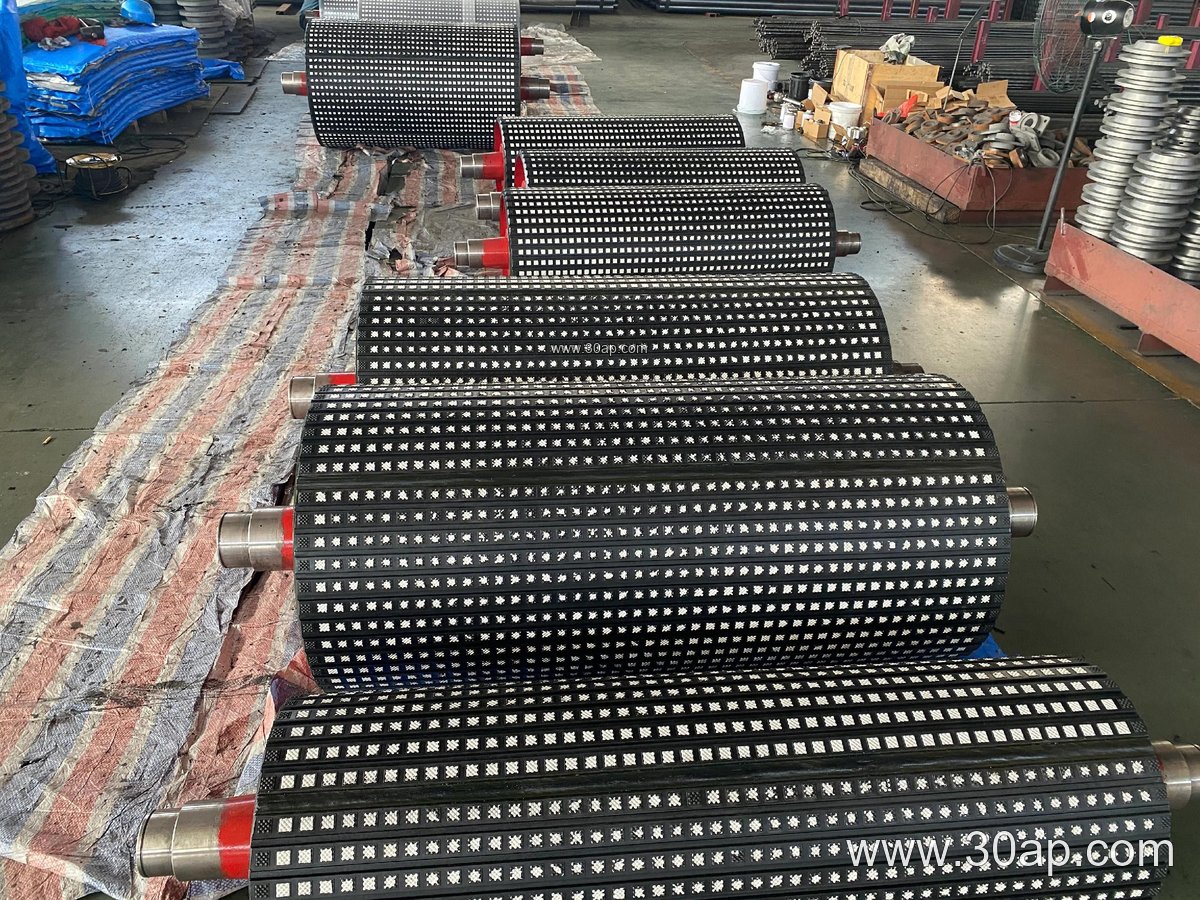
How the Drum Is Built
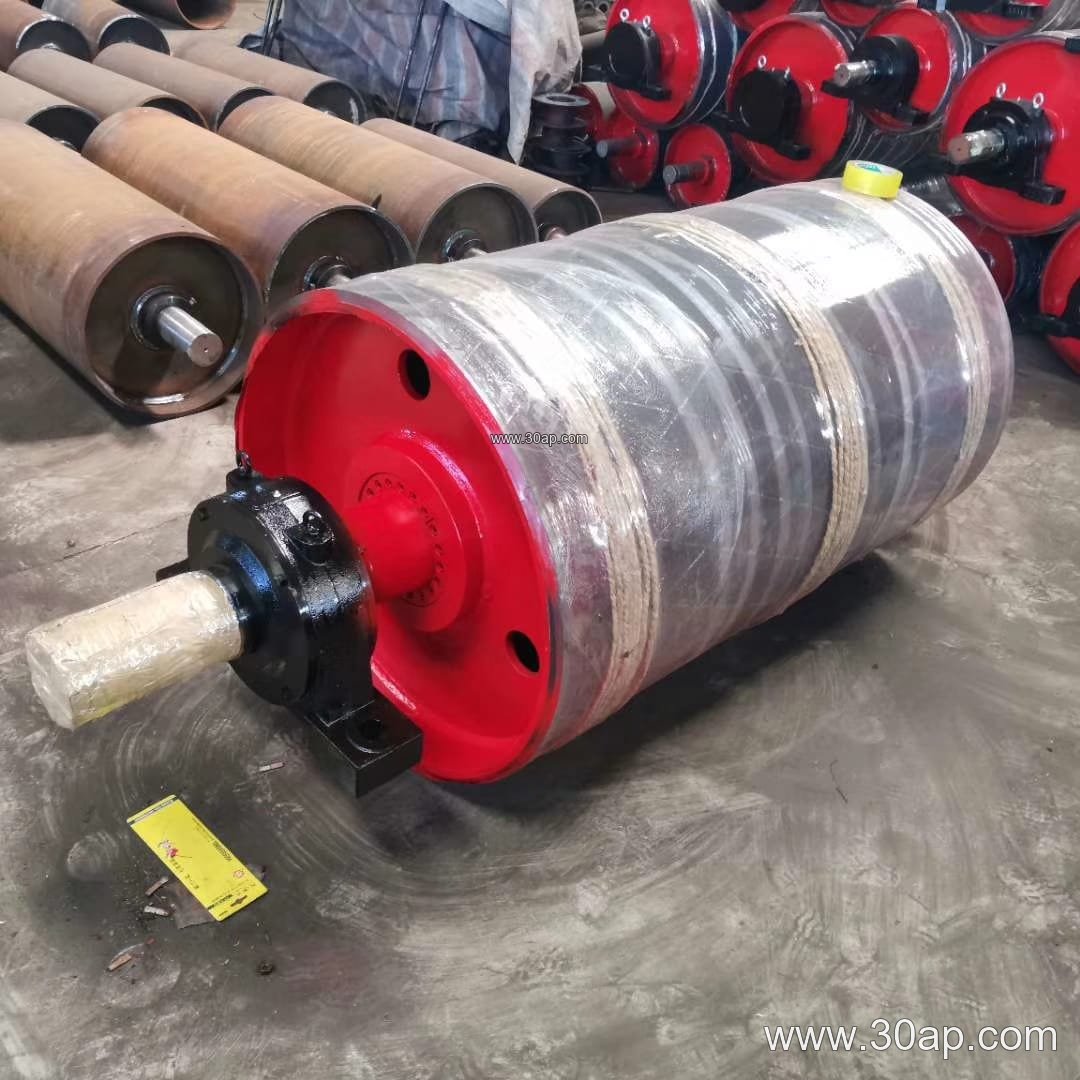
Manufacture starts with a rolled steel shell, machined end discs, and a shaft that is either shrink-fitted or keyed into the hubs. Circumferential and longitudinal welds are then laid down and inspected, and the finished drum is machined to control runout and balance before any lagging is applied. Because the shaft diameter is set by torque and radial load, not by belt width alone, the shaft is selected from a stress calculation for the actual duty cycle.
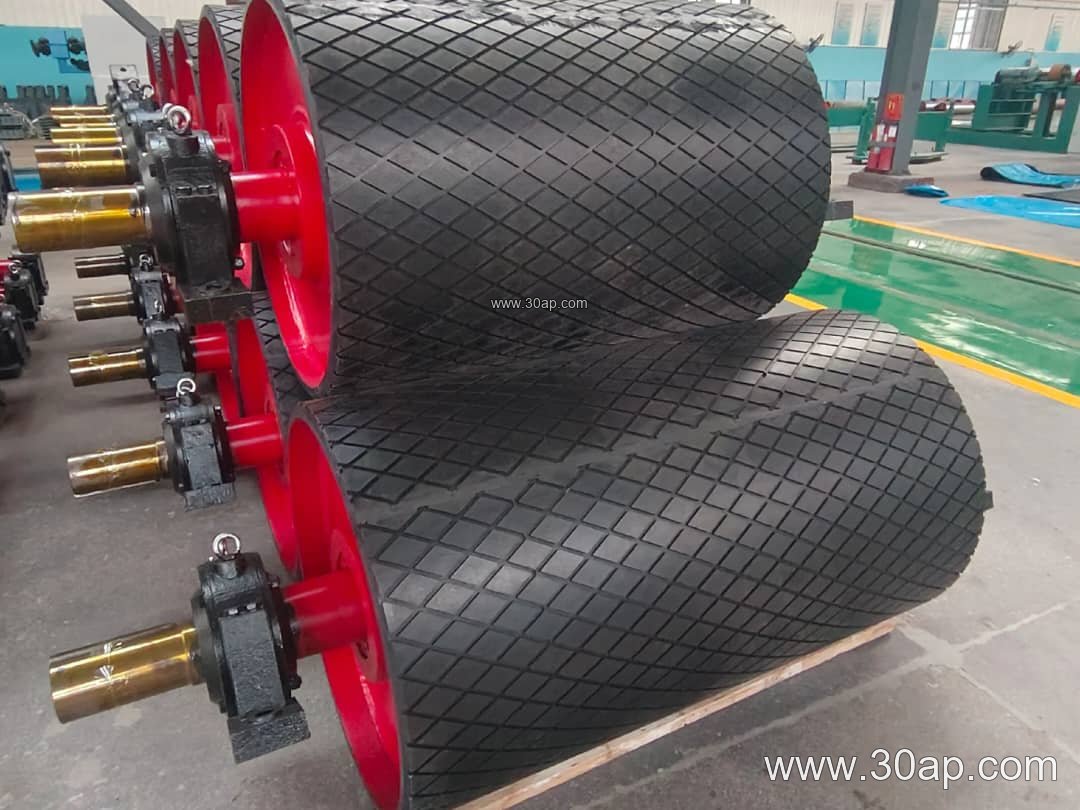
Surface treatment is a separate decision. Plain finish suits clean, low-slip duty; rubber lagging improves grip on the drive drum; ceramic or grooved lagging helps where the belt is wet or oily. Common lagging thicknesses run 8, 10, 12, 15, and 20 mm, and the choice should follow the friction demand at the drive, not simply the belt size.
Typical Reference Dimensions
The values below are common reference ranges, not fixed pairings. A given belt width can be matched with several drum diameters depending on tension and wrap angle, and the final combination is confirmed by design.
- Belt widths: B400, B500, B650, B800, B1000, B1200, B1400, B1600, B1800, B2000
- Drum diameters: Ø200, Ø250, Ø315, Ø320, Ø400, Ø500, Ø630, Ø800, Ø1000, Ø1250, Ø1400
- Face widths slightly exceed belt width, for example B800 around 950 mm and B1200 around 1400 mm
- Shaft diameters: Ø50, Ø60, Ø70, Ø80, Ø90, Ø100, Ø120, Ø140, Ø160, Ø180, Ø200, sized by load
Where It Fits on the Conveyor
The same welded drum family appears at several stations, and the role changes the specification. The head or drive pulley transmits power and usually carries lagging for grip; the tail pulley guides the return belt and often runs plain; a bend or snub pulley increases wrap angle around the drive. These positions are not interchangeable, and a drum ordered for one station should not be swapped into another without checking tension, wrap, and lagging.
Typical duty sites include limestone and iron ore crushing circuits, washed coal plants, cement clinker lines, power station coal yards, port bulk terminals, and aggregate plants feeding a crusher. In these places the drum may sit behind a heavy-duty mining conveyor belt or a steel cord conveyor belt carrying ore, while a fabric core conveyor belt serves the shorter transfer runs. A flame retardant conveyor belt is common underground, and a heat resistant conveyor belt appears near sinter or clinker cooling.
Reference Data at a Glance
- Common face width versus belt: B650 about 750 mm, B1000 about 1150 mm, B1400 about 1600 mm, B1800 about 2000 mm
- Example combinations seen in design sheets: B800 × Ø500, B1200 × Ø1000, B1400 × Ø800
- Lagging options: plain, cold-bonded rubber, hot-vulcanized rubber, diamond groove, chevron groove, ceramic tile
What a Buyer Should Check
Before ordering, confirm the duty point, the belt width and type, the calculated belt tension, the wrap angle, and the shaft load. Ask for the weld procedure and inspection record, the balance and runout tolerance, and the lagging specification if grip is critical. Check that the face width suits the belt and that the bearing and hub arrangement matches the conveyor bracket on site.
The drum should also be considered alongside the rest of the line: the conveyor belt tension rating, the spacing and condition of each idler roller, and the alignment of every conveyor bracket. A heavy-duty welded pulley is a long-life component only when it is sized to the real load and installed square to the belt. Buyers who treat diameter, shaft, and lagging as one calculation rather than three separate guesses usually get the quieter, longer-running result.