What a Mining Belt Conveyor Idler Does
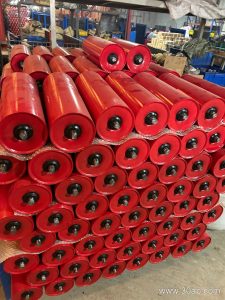
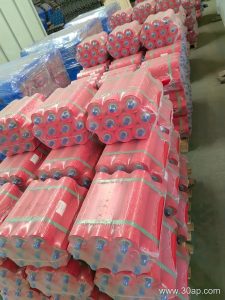
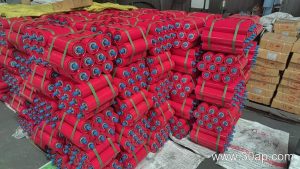
A mining belt conveyor idler is the rotating roller assembly that supports the conveyor belt along its carrying and return runs. In a quarry, limestone mine or crushing circuit, these rollers hold the belt in a stable trough, reduce friction and keep material moving without spillage. The idler is not a drive component; it is a support element, and its condition directly affects belt tracking, power draw and belt life. A worn or seized idler roller can wear through a conveyor belt quickly, so matching the roller to the duty is part of keeping a line productive.
The same product is also called a conveyor idler or carrying roller in day-to-day site language. Different positions on the conveyor use different forms, and the choice depends on belt width, load, material and environment.
Construction and Main Parts
A typical idler consists of a steel tube shell, a shaft, bearing housings, bearings and a sealing arrangement. The shell is often steel pipe, while roller surfaces may be nylon, ceramic or rubber rings depending on the application. Common bearing sizes include 6204, 6205, 6305, 6306, 6308 and 6310, but bearing selection follows load and speed rather than a fixed rule tied to one roller diameter. Sealing is critical in dusty quarry and coal handling conditions, since fine grit is the main cause of premature bearing failure.
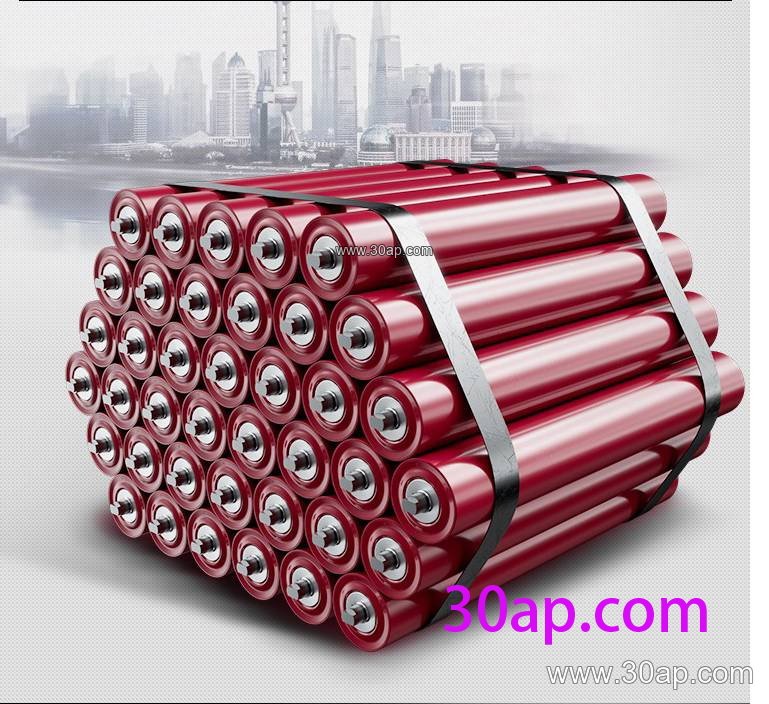
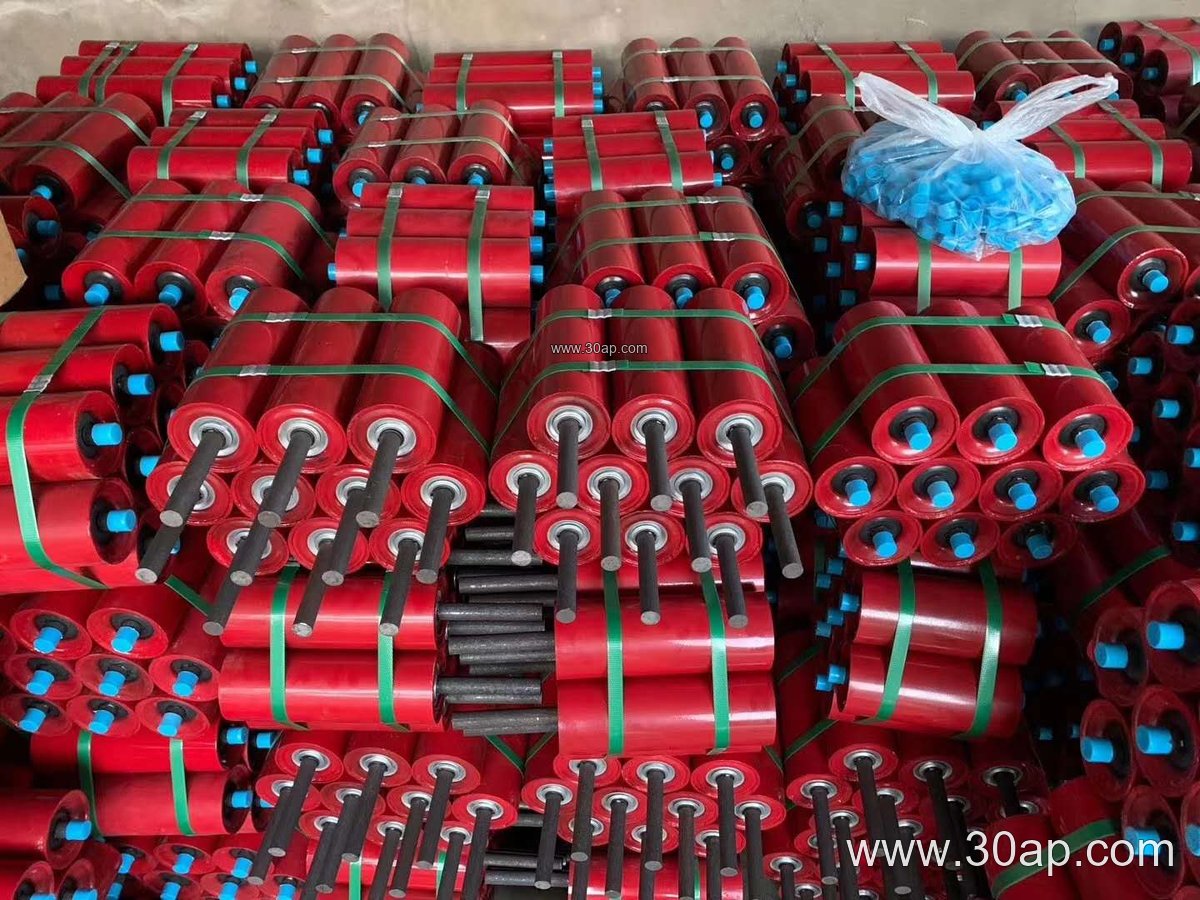
Idler diameter is usually chosen from a range such as Ø63, Ø76, Ø89, Ø102, Ø108, Ø127, Ø133, Ø159, Ø178, Ø194 or Ø219 mm. Larger diameters generally suit higher loads and wider belts, while smaller rollers are common on lighter runs. The roller length changes with belt width, trough angle and the idler set arrangement, so it should be confirmed against the conveyor design.
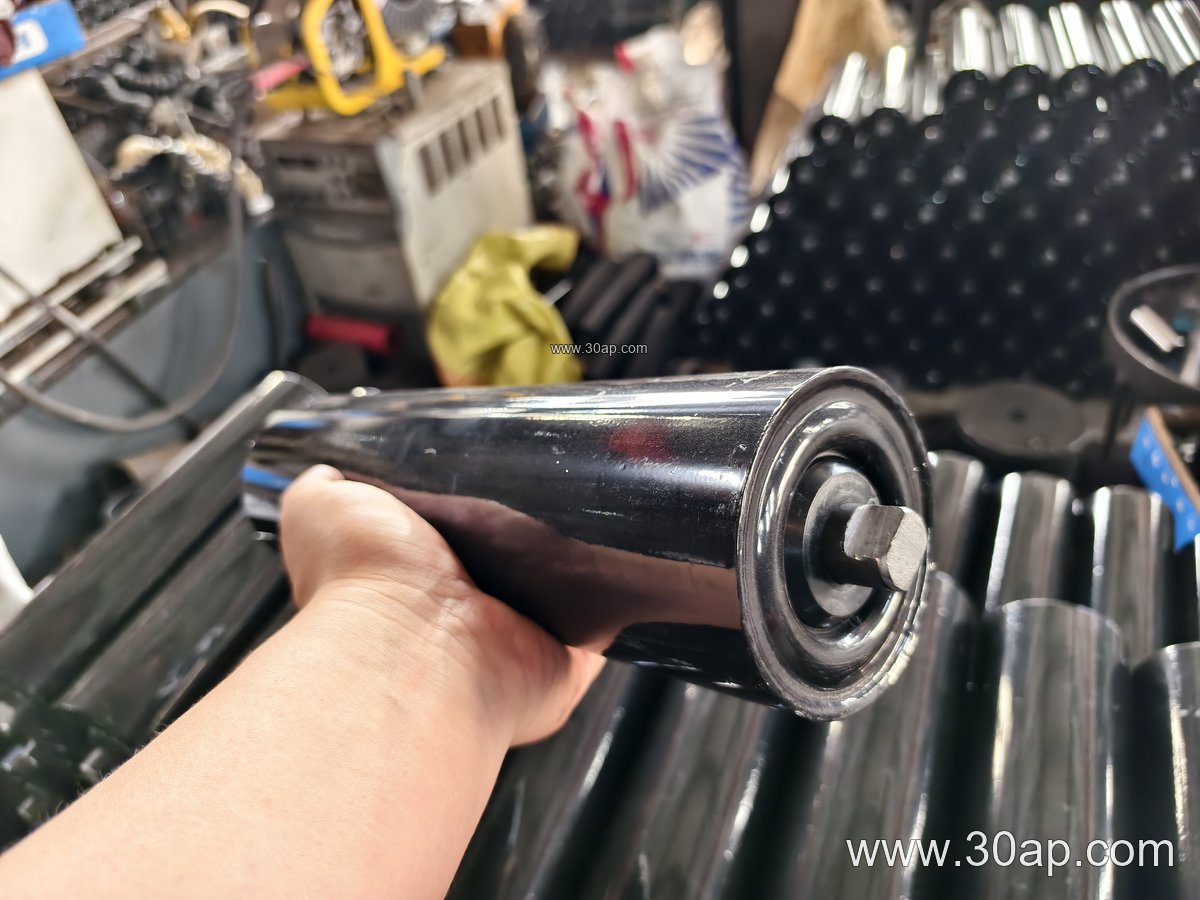
Common Types and Where They Sit
Troughing idlers form the carrying side and are usually supplied as single-roll, two-roll or three-roll sets. Three-roll troughing sets at 20, 30, 35 or 45 degrees are common in aggregate and ore conveying. Transition idlers ease the belt from flat to troughed profile near pulleys, while return idlers support the empty belt underneath. V-return and flat return rollers are both used, and impact idlers with rubber rings are placed under loading points to absorb fall energy. Self-aligning idlers, including friction and tapered types, help correct belt wander on long runs.
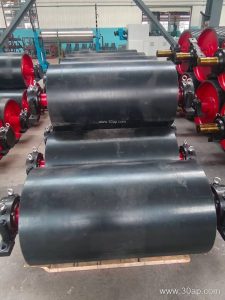
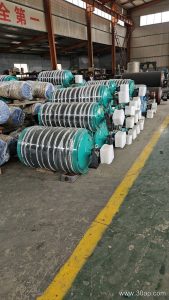
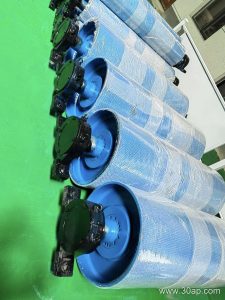
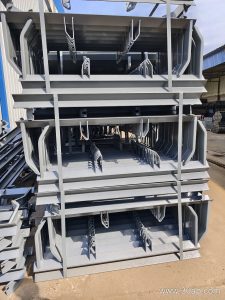
It is worth noting that a conveyor pulley at the drive, tail or bend position is a separate product and is not interchangeable with an idler. The pulley transmits or redirects belt tension, while the idler only supports the belt. A conveyor bracket or frame holds the idler in place, and the whole assembly must match the belt line.
Typical Sizes and Reference Data
The following values are common examples for reference, not fixed combinations. Final selection should follow the conveyor design and the actual belt specification.
| Item | Common reference values |
|---|---|
| Idler diameter | Ø63, Ø76, Ø89, Ø102, Ø108, Ø127, Ø133, Ø159, Ø178, Ø194, Ø219 mm |
| Belt width | B400, B500, B650, B800, B1000, B1200, B1400, B1600, B1800, B2000, B2200, B2400 |
| Trough angle | 20°, 30°, 35°, 45° |
| Roller surface | Steel, nylon, ceramic, rubber ring |
| Bearing examples | 6204, 6205, 6305, 6306, 6308, 6310 |
| Three-roll length examples | B500 about 200 mm, B650 about 250 mm, B800 about 315 mm, B1000 about 380 mm, B1200 about 465 mm, B1400 about 530 mm, B1600 about 600 mm, B1800 about 670 mm, B2000 about 750 mm |
Side rollers and center rollers can differ in length within the same set, so the figures above are only a starting point.
Where These Idlers Are Used
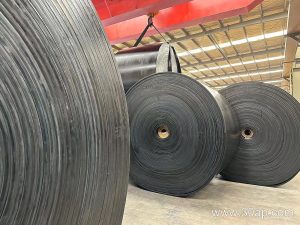
Mining belt conveyor idlers appear in limestone and iron ore operations, coal preparation plants, cement plants and power station coal yards. They also serve sand and aggregate lines, crushing and screening plants, and port bulk handling. In a coal mine, flame retardant and anti-static properties are usually required from the belt, and the idler must tolerate fine coal dust. In a cement plant, abrasive clinker and high temperatures place demands on sealing and roller surface choice. The belt itself may be an EP conveyor belt, steel cord conveyor belt or a heavy-duty rubber conveyor belt, and the idler set should suit the belt width and load.
What Buyers Should Check
- Confirm belt width, trough angle and idler set form before ordering.
- Match roller diameter and bearing to load, speed and duty, not to a single rule.
- Ask about sealing and lubrication for dusty or wet conditions.
- Check that the idler frame or conveyor bracket fits the existing structure.
- Review roller surface choice for impact, abrasion or material build-up.
- Keep spare rollers for high-wear positions such as loading and transition zones.
For more on related conveyor components, see conveyor belt, idler roller and conveyor pulley options, and confirm every dimension against the actual conveyor layout before purchase.