What a Conveyor Belt Lagged Pulley Does
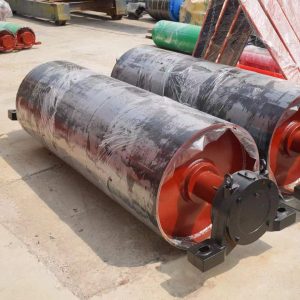
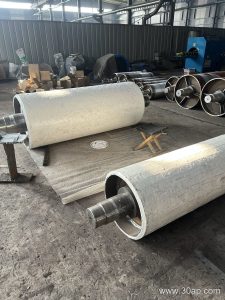
A conveyor belt lagged pulley is a conveyor pulley whose shell is covered with a rubber or ceramic layer to improve grip on the belt. In a typical bulk handling line, this lagged pulley is often the drive pulley at the head end, where torque must pass from the shell to the belt without slipping. The lagging raises friction, protects the shell from wear, and can help shed water and fine dust. The same product is also called a rubber lagged conveyor pulley or a lagged drum pulley, and those names describe the same item.
The word “lagged” refers to the covering, not to the pulley position. A drive pulley, a tail pulley and a bend pulley are separate roles; a lagged pulley is simply one that carries a lagging layer. That distinction matters when a buyer is comparing quotations, because a smooth bend pulley and a lagged drive pulley are not interchangeable parts even if the shell diameters look the same.
Construction and Surface Options
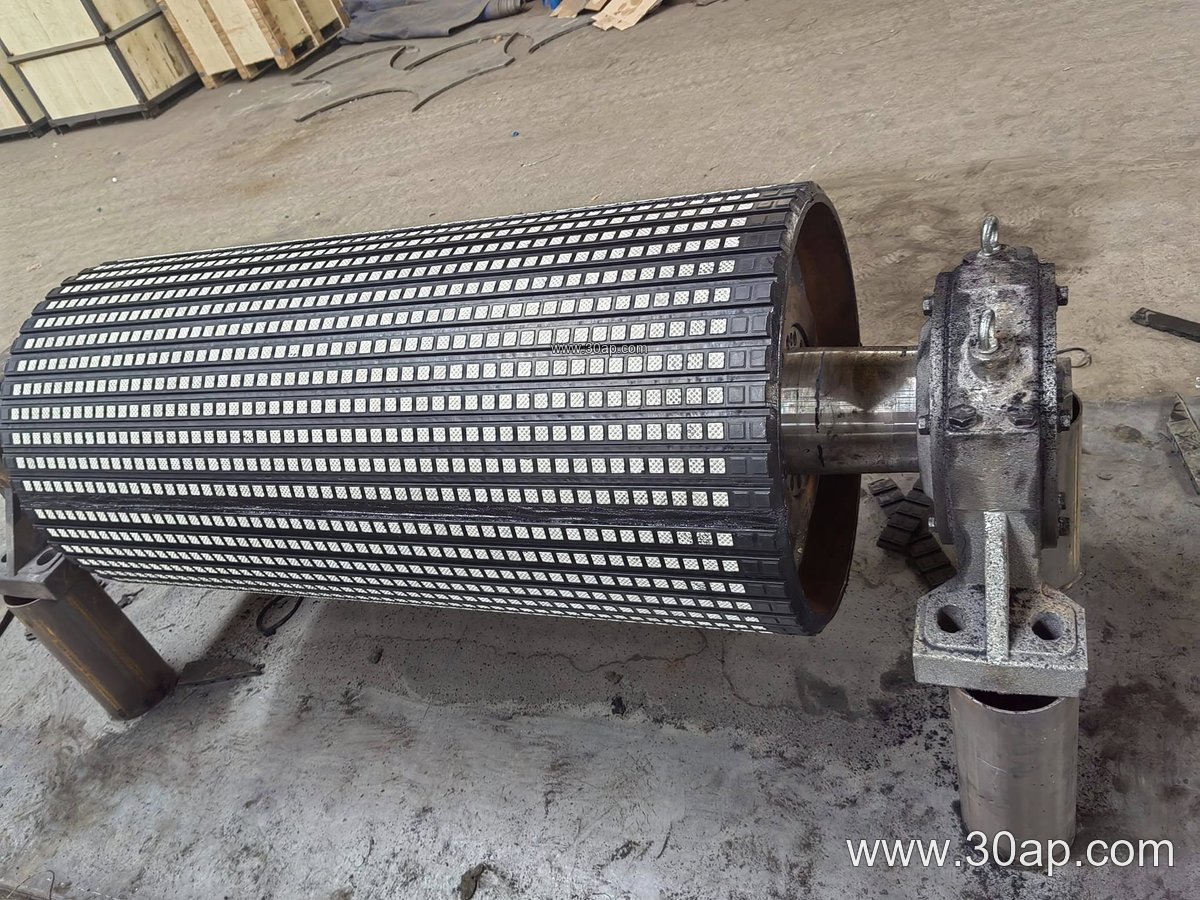
The base is a welded steel shell with shafts, hubs and end discs, balanced for rotation. Lagging is applied in several ways: hot vulcanized rubber, cold bonded rubber, cast rubber, diamond grooved rubber, herringbone grooved rubber, ceramic tiles, or a plain flat rubber sheet. Grooved patterns help channel water away in wet conditions, while plain lagging suits dry, clean duty. Common lagging thicknesses are 8, 10, 12, 15 and 20 mm, selected by torque and belt contact pressure rather than by habit.
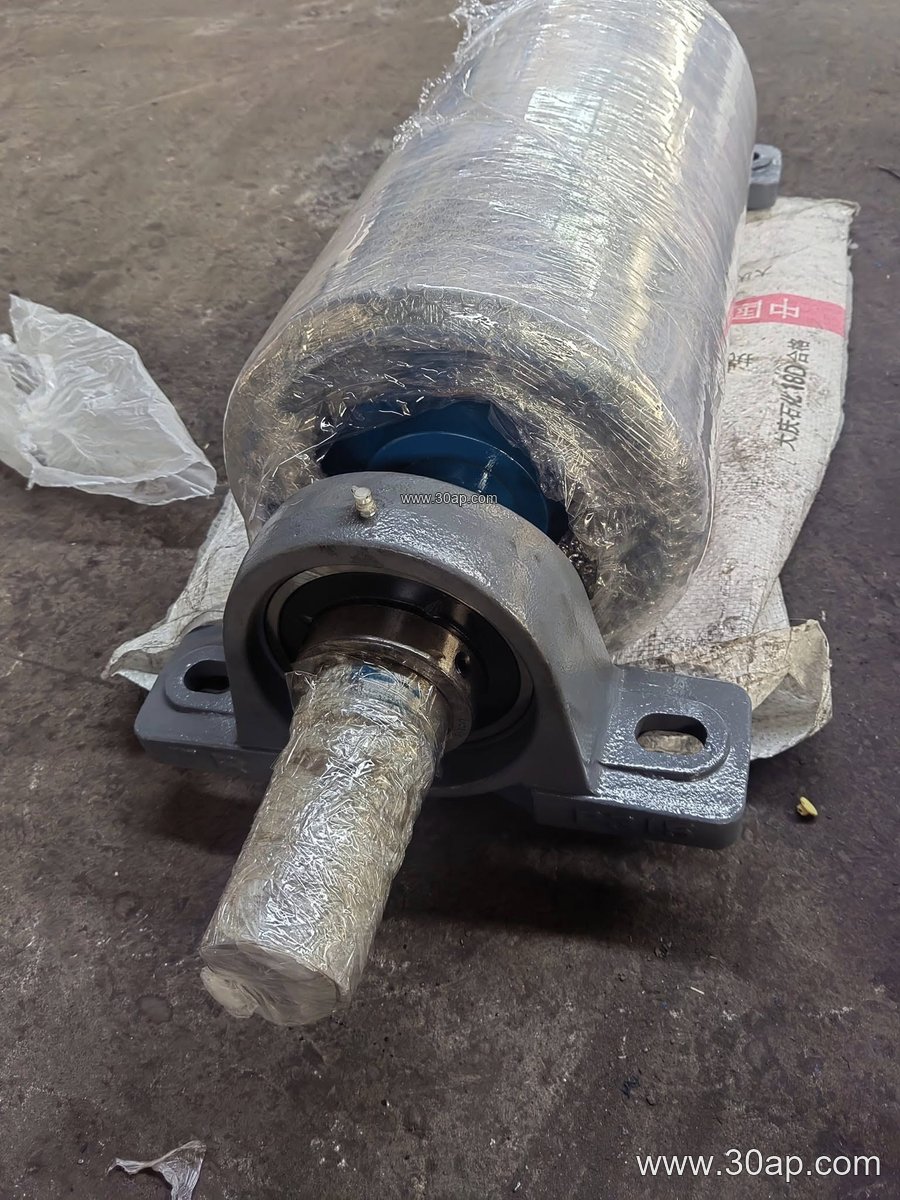
Shaft diameter is set by torque and load, so it should be confirmed by the pulley designer. Common shaft sizes range from Ø50 up to Ø200, but a given belt width does not fix a shaft size. Likewise, one belt width can be paired with more than one shell diameter depending on wrap angle, belt speed and tension.
Reference Dimensions
The table below lists typical shell widths and diameters as reference data, not as fixed supply promises. Final values are confirmed by design.
| Belt width | Typical pulley face width | Common shell diameter |
|---|---|---|
| B400 | about 500 mm | Ø200 to Ø315 |
| B650 | about 750 mm | Ø250 to Ø400 |
| B800 | about 950 mm | Ø315 to Ø500 |
| B1000 | about 1150 mm | Ø400 to Ø630 |
| B1200 | about 1400 mm | Ø500 to Ø800 |
| B1400 | about 1600 mm | Ø630 to Ø1000 |
| B1600 | about 1800 mm | Ø800 to Ø1250 |
| B1800 | about 2000 mm | Ø1000 to Ø1400 |
| B2000 | about 2200 mm | Ø1250 to Ø1600 |
Useful combinations include B800 × Ø500, B1200 × Ø1000 and B1400 × Ø800. A wide belt such as B2000 or B2400 needs a large shell and a heavy shaft, but the exact match still comes from the conveyor calculation.
Where It Is Used
In a coal preparation plant, a lagged drive pulley on the main incline keeps the belt tracking under wet, dusty conditions. In a quarry or aggregate line, the head pulley often runs with diamond lagging to resist abrasive stone dust, while a crusher discharge conveyor may use thicker lagging for shock loads. Other common sites include cement plants, power station coal yards, iron ore terminals and port shiploading systems.
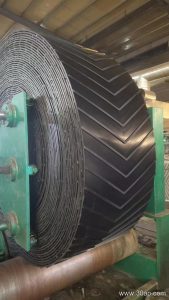
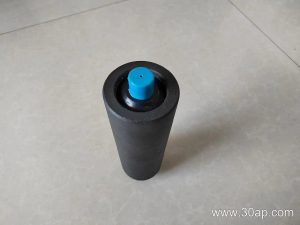
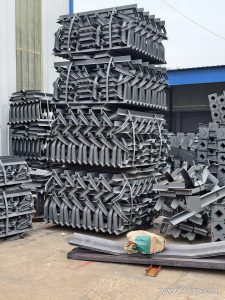
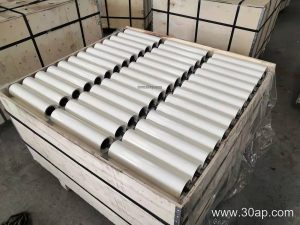
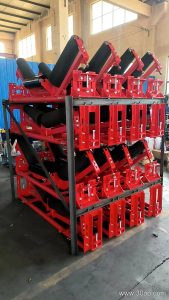
The belt itself matters too. A heavy-duty mining conveyor belt or a steel cord conveyor belt carries high tension, so the lagged pulley must be matched to belt tension, not only to width. Where oil mist or heat is present, an oil resistant conveyor belt or heat resistant conveyor belt may be used, and the lagging compound should be checked for compatibility. Related parts such as the idler roller, conveyor bracket and conveyor pulley frame complete the same line.
Buyer Checklist
- Confirm the pulley role: drive, tail, bend, take-up or snub. Only the drive and some tension positions normally need lagging.
- State the belt width, belt type and maximum tension, for example a flame retardant conveyor belt in an underground mine or an abrasion resistant conveyor belt in a stone plant.
- Choose a lagging pattern and thickness that fit the environment: grooved for wet duty, plain for dry, ceramic for severe slip.
- Ask for the shaft diameter and bearing size from the design, not from a rule of thumb.
- Check balancing, keyway and hub details, and confirm that the face width suits the belt.
For more on matched belts and pulleys, see conveyor belt and conveyor pulley references, and compare lagging options with your idler roller and frame supplier before ordering.