What an Adjustable Conveyor Bracket Does
In a quarry or a cement plant, the conveyor structure often needs to handle more than one belt width or trough angle over its service life. An adjustable conveyor bracket is the component that makes this possible. Instead of welding a fixed-angle idler support, the bracket allows the trough angle to be changed between common settings such as 20, 30, 35, and 45 degrees. This flexibility helps when a line is upgraded, when different materials need different belt loading profiles, or when a spare bracket must fit several conveyor sections.
The bracket is not a pulley or a roller. It is the structural interface that holds the conveyor idler roller in position. Drive pulleys, tail pulleys, and bend pulleys remain separate components with their own adjustment needs. The adjustable bracket focuses on the carrying side or the return side of the belt line, depending on the subtype.
Construction and Typical Materials
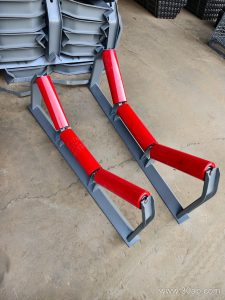
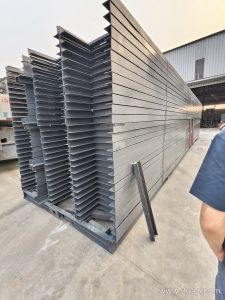
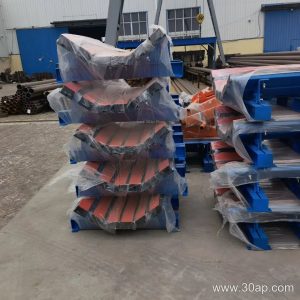
Most adjustable conveyor brackets are built from angle steel, channel steel, or folded steel plate. The adjustment feature usually comes from slotted holes, multiple bolt positions, or a pivoting arm that locks at the chosen angle. A locking bolt or a set of locating holes keeps the setting fixed after adjustment.
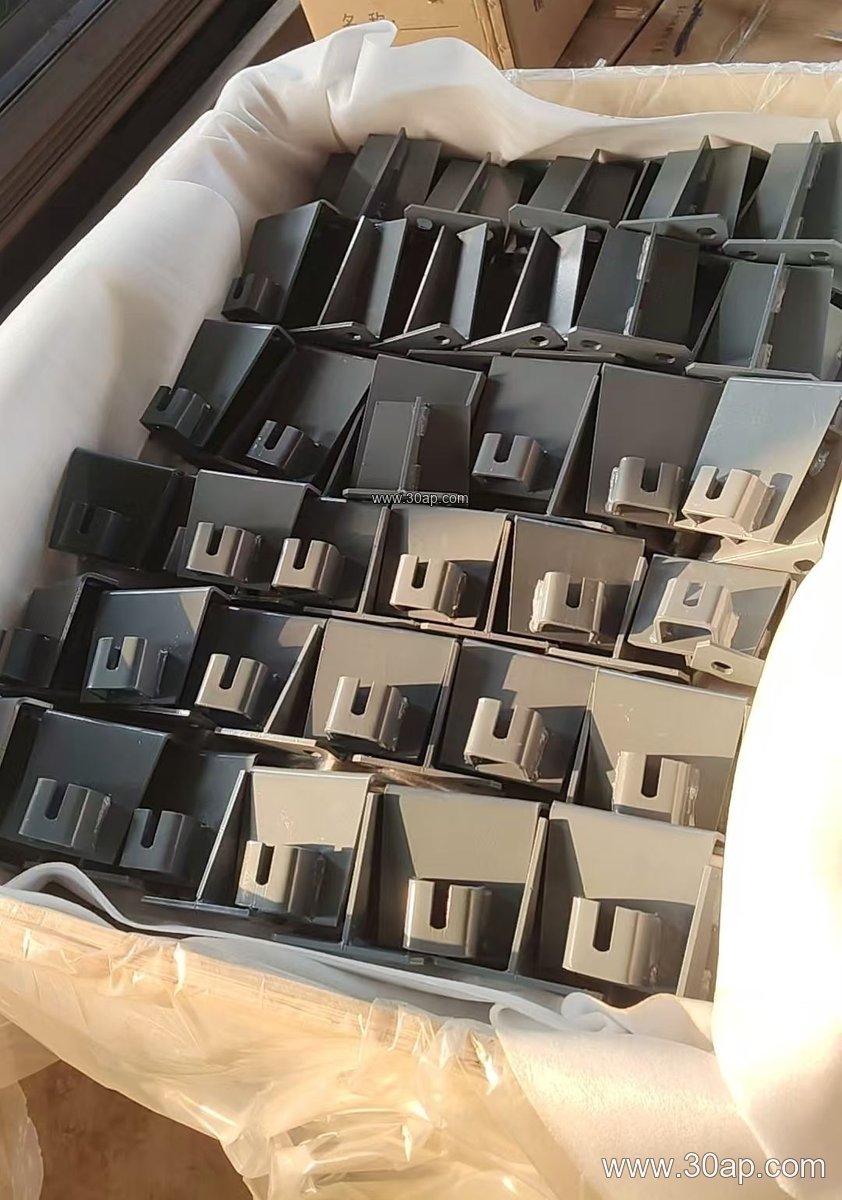
The frame must resist vibration from the belt and the load. For a heavy-duty mining conveyor belt or a crusher conveyor belt, the bracket thickness and bolt grade matter as much as the angle range. A light-duty bracket from a small aggregate line may not suit an iron ore conveyor belt that carries dense, abrasive material.
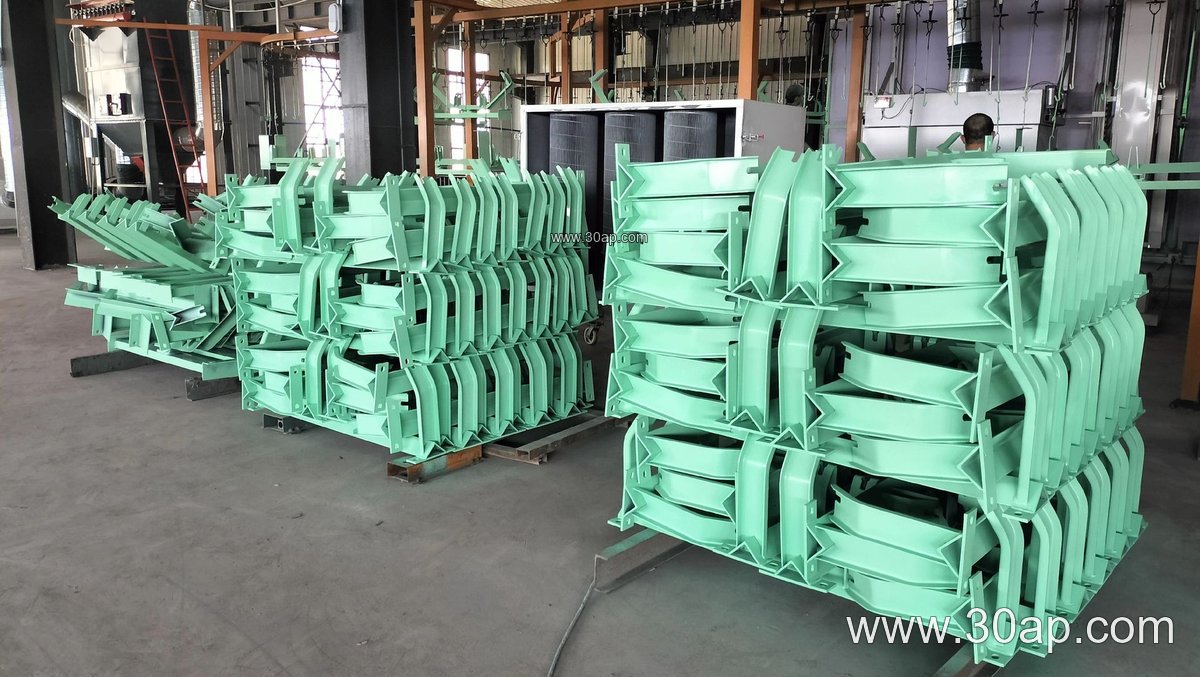
Common surface treatments include painting or galvanizing. The bracket should be checked for fit with the chosen idler roller diameter. Typical roller diameters include Ø89, Ø108, Ø133, Ø159, and Ø194, but the bracket design and the belt width together determine the correct mounting hole spacing and beam length.
Types and Where They Fit
Adjustable brackets appear in several forms, and each has a specific place on the conveyor:
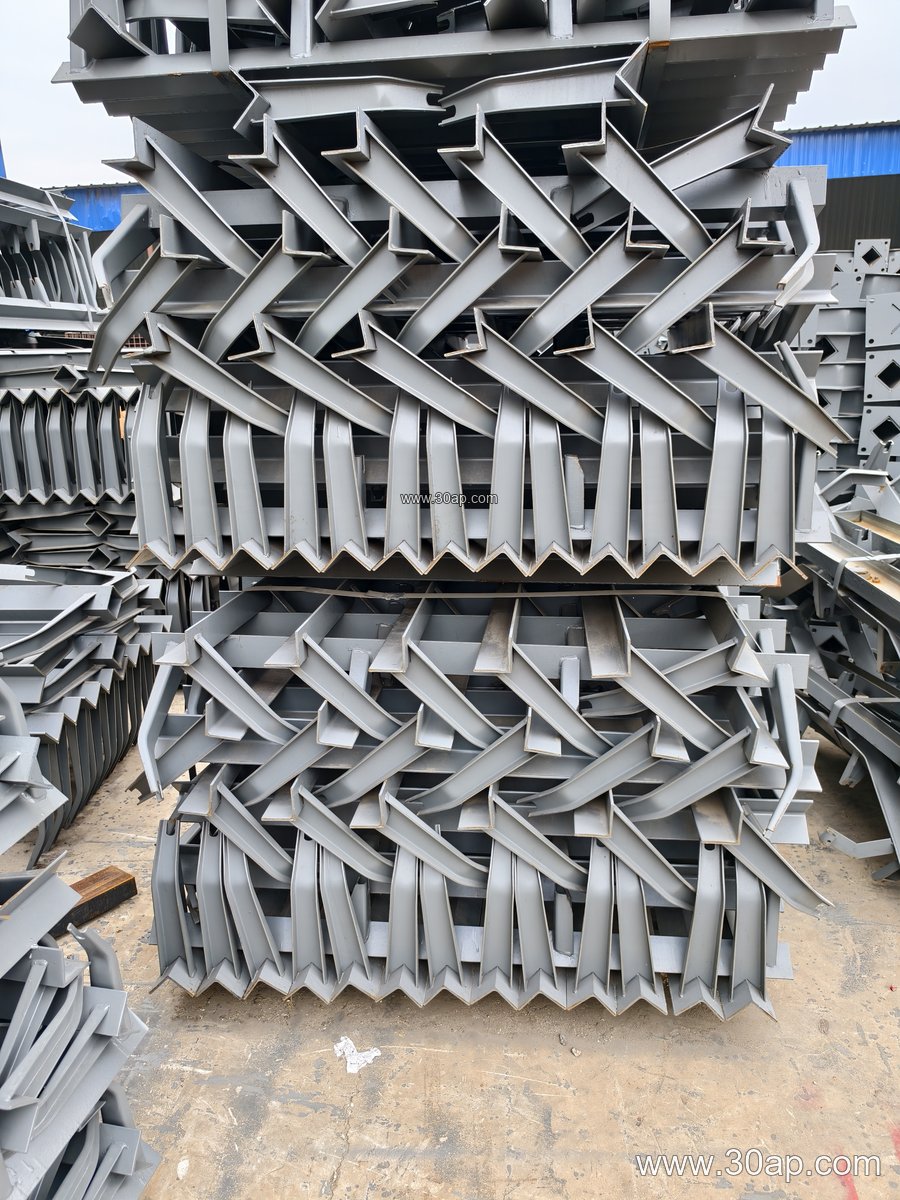
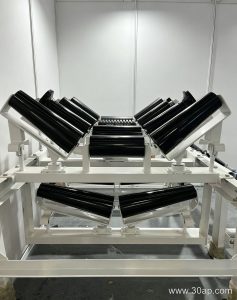
- Troughing bracket – supports the carrying idlers and sets the trough angle. An adjustable version can move between 20 and 45 degrees.
- Transition bracket – used near the tail or head to guide the belt from flat to troughed. Adjustment helps match the transition distance.
- Return bracket – holds the return idlers. A V-return bracket may also be adjustable for belt tracking.
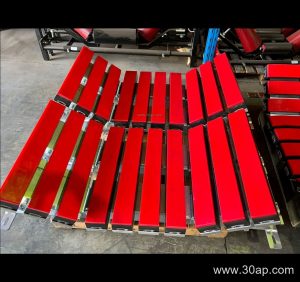
- Impact bracket – used under a loading point, often with buffer idlers. Adjustment allows the impact bed to be aligned with the belt path.
- Self-aligning bracket – includes a pivot that helps correct belt misalignment. It is not the same as a fixed bracket and should be selected for the specific tracking problem.
These subtypes are not interchangeable. A return bracket cannot replace a troughing bracket, and a transition bracket serves a different purpose from a standard carrying bracket. The adjustable feature is the common thread, but the mounting position and idler type differ.
Matching Belt Width, Trough Angle, and Roller Diameter
Buyers often ask which bracket fits a given belt width. The answer depends on the conveyor design, not on a single fixed rule. A B800 belt may run at 30 degrees with Ø108 idlers in one plant and at 35 degrees with Ø133 idlers in another. The bracket must be ordered with the correct beam length and hole pattern for the actual conveyor frame.
The table below shows common reference combinations. These are examples, not mandatory pairings.
| Belt Width | Trough Angle | Idler Diameter | Typical Bracket Use |
|---|---|---|---|
| B500 | 20°–30° | Ø89 | Light aggregate line |
| B650 | 30° | Ø89 / Ø108 | Sand and gravel conveyor |
| B800 | 35° | Ø108 | Quarry conveyor belt |
| B1000 | 35°–45° | Ø133 | Cement plant clinker line |
| B1200 | 45° | Ø133 / Ø159 | Coal mining conveyor belt |
| B1400 | 35°–45° | Ø159 | Iron ore conveyor |
| B1600 | 45° | Ø159 / Ø194 | Heavy-duty mining conveyor |
| B1800 | 45° | Ø194 | Large port or power plant line |
For wider belts such as B2000 or B2200, the bracket design is usually custom. The same applies to special belt types like a pipe conveyor belt or a corrugated sidewall conveyor belt, where the bracket must clear the belt edge and any cleats.
Installation and Selection Notes
Before ordering an adjustable conveyor bracket, confirm the belt width, the required trough angle range, the idler roller diameter, and the mounting hole spacing on the conveyor frame. Check whether the bracket is for the carrying side or the return side. For a steel cord conveyor belt or a high-strength conveyor belt under high tension, the bracket and its fasteners must be rated for the load.
During installation, set the angle and tighten the locking bolts to the recommended torque. Recheck alignment after the first few hours of running. A bracket that slips can cause the belt to mistrack and wear the edge. In dusty locations such as a coal handling plant or a limestone mine, clean the adjustment slots periodically so the bracket can still be moved when needed.
Adjustable brackets are a practical choice for plants that expect changes in belt width, trough angle, or idler size. They are not a substitute for proper conveyor design, but they add useful flexibility to the structure that supports the conveyor belt and its idlers.