What a Herringbone Grooved Lagged Pulley Does
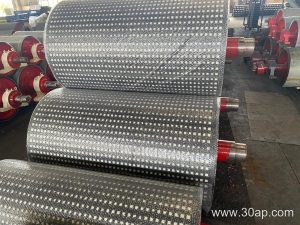
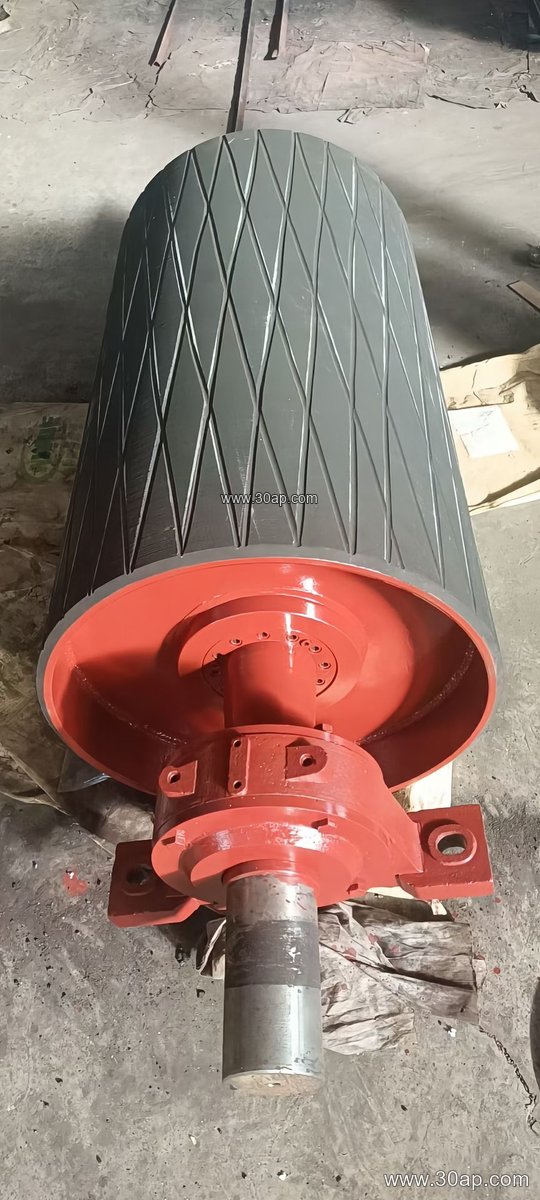
A herringbone grooved lagged pulley is a conveyor pulley whose rubber lagging carries a V-shaped groove pattern that points in the direction of belt travel. The grooves are cut or molded into the lagging so that the rubber surface sheds water, fines and slurry while the raised ribs press into the belt cover to increase friction. This is not a drive pulley by default; it is a surface form that can be applied to a drive pulley, a bend pulley or a tail pulley depending on where extra grip or self-cleaning is needed. The herringbone pattern is distinct from diamond lagging because the grooves form a continuous chevron that helps center the belt and reduces the chance of material packing into the rubber.
How the Grooved Lagging Is Built
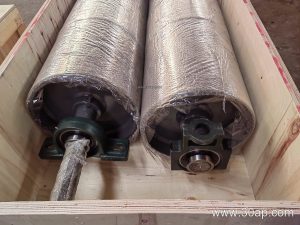
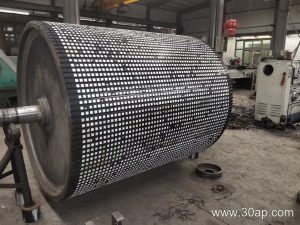
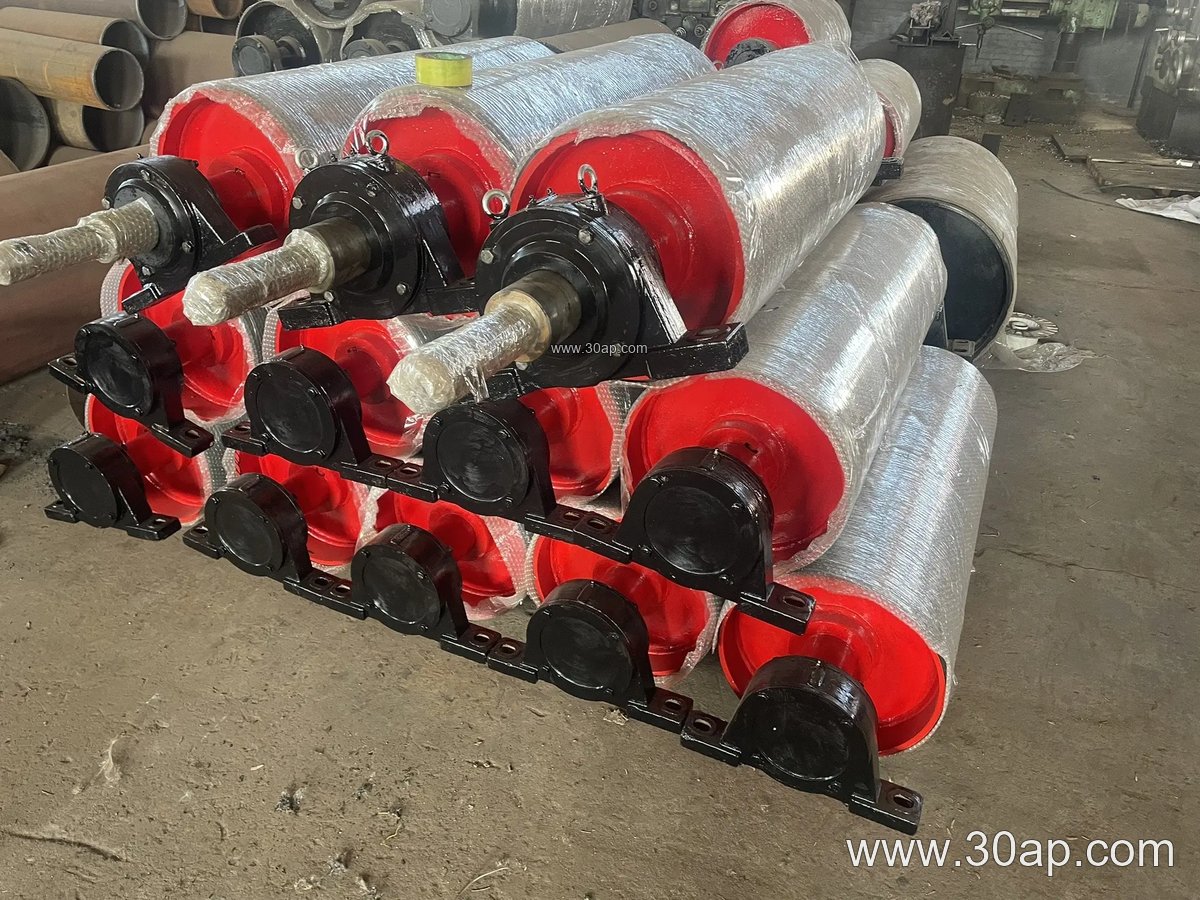
The pulley body is usually a welded steel drum with machined end discs and a shaft sized by torque and radial load, not by belt width alone. Lagging is applied in one of several ways: hot vulcanized rubber, cold bonded rubber sheet, or cast rubber. The herringbone grooves are then cut or molded to a typical depth that leaves enough rubber for wear life. Common lagging thicknesses are 8, 10, 12, 15 and 20 mm, with 10 to 15 mm being frequent for medium-duty service. The groove pattern runs in a herringbone or chevron layout, with the point of the V facing the belt’s direction of travel so that water and debris are pushed toward the pulley edges instead of being trapped under the belt.
Where It Fits in a Conveyor
In a quarry or sand and gravel line, a herringbone grooved lagged pulley is often used on a bend pulley or tail pulley where dust and moisture are present. In a coal washing plant or a cement plant’s clinker handling section, the same surface helps maintain contact when the belt cover is wet. It can also appear on a drive pulley in a power plant coal yard or a port bulk terminal when the belt is exposed to rain and the friction coefficient must stay stable. Unlike a plain drive pulley, the grooved surface is not intended to replace proper belt tensioning; it is a traction aid and a self-cleaning feature. A tail pulley with this lagging can reduce material buildup, while a bend pulley may use it to keep the belt tracking through a wet section.
Matching the Pulley to the Belt and Duty
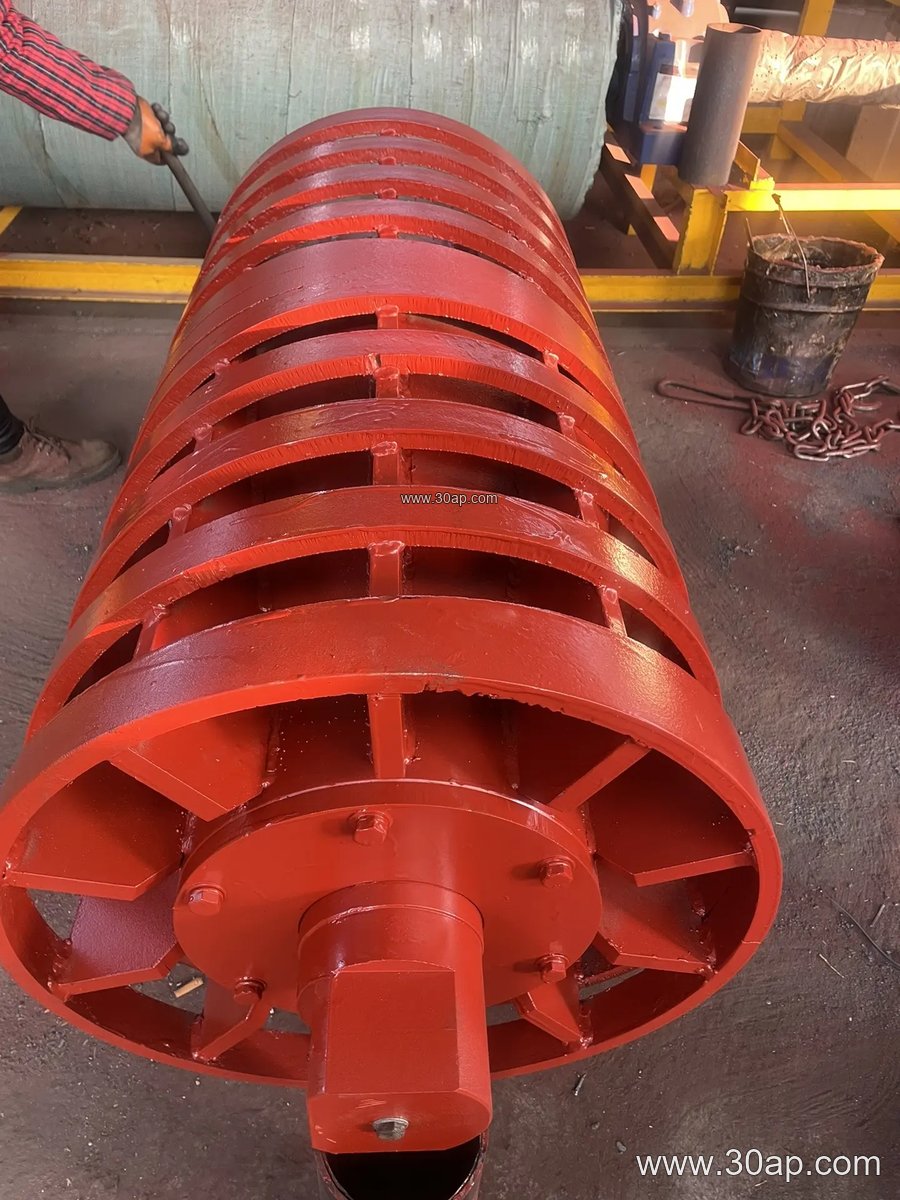
Selection starts with belt width, belt tension and the amount of water or fines expected. A B800 belt on a quarry conveyor might use a pulley with a 500 mm diameter and 950 mm face width, while a B1200 belt on a cement plant conveyor could use a 1000 mm diameter pulley with a 1400 mm face width. These are common combinations, not fixed rules; a smaller diameter can work if the belt construction allows it, and a larger diameter may be needed for high tension. Shaft diameter is determined by torque and bearing load, with common sizes such as Ø80, Ø100, Ø120 and Ø140 mm. The lagging thickness and groove depth should be specified with the pulley maker, because a deep groove in soft rubber wears faster than a shallow groove in tough rubber.
Common Reference Dimensions
| Belt width | Typical pulley face width | Example diameter | Lagging thickness |
|---|---|---|---|
| B650 | 750 mm | Ø400 mm | 10 mm |
| B800 | 950 mm | Ø500 mm | 10–12 mm |
| B1000 | 1150 mm | Ø630 mm | 12–15 mm |
| B1200 | 1400 mm | Ø800 mm | 12–15 mm |
| B1400 | 1600 mm | Ø1000 mm | 15 mm |
These values are reference data for layout discussion. The final shaft size, bearing span and lagging grade should be confirmed against the conveyor’s actual tension and starting torque.
Buyer Checklist
- Confirm whether the pulley is a drive, tail or bend position, because the herringbone pattern is a surface option, not a position type.
- Specify belt width and belt type, such as an EP conveyor belt or a steel cord conveyor belt, so the face width and lagging hardness can be matched.
- State the environment: wet, dusty, oily or high temperature. A flame retardant conveyor belt in an underground coal mine may need a different rubber compound than an abrasion resistant conveyor belt in a quarry.
- Ask for the groove depth and pattern orientation relative to belt travel.
- Check that the pulley bracket and bearing assembly match the shaft diameter and load.
For a conveyor system that also uses idler rollers and conveyor brackets, the grooved lagged pulley should be reviewed together with the belt’s cover quality. A worn belt cover will not hold traction even with a good herringbone pattern, and a belt that is over-tensioned will wear the lagging faster. In a crushing circuit or a bulk material conveyor belt line, the pulley is one part of the drive train, not a substitute for correct take-up tension or belt training.
Maintenance Notes
Inspect the groove pattern for embedded stone or metal that can cut the rubber. Clean the grooves when material packs into the chevron, especially in a limestone quarry or a fertilizer plant where fines can cake. Check lagging thickness at the edges, where wear is often fastest, and replace the lagging before the pulley body is exposed. Keep the conveyor belt and idler roller alignment in good condition so the belt does not run off-center and wear one side of the herringbone pattern.