What a Large Belt Conveyor Idler Is
A large belt conveyor idler is a heavy-duty roller assembly that supports the conveyor belt and the material load along the carrying and return sides of a bulk handling system. In practice, the term usually refers to idlers built for wider belts and higher loads, where roller diameter, shell thickness, bearing selection and frame rigidity all matter more than they do on a small package conveyor. You will also see the same product called a large conveyor idler roller or a heavy-duty belt conveyor idler. These are accurate equivalent names for the same item. A large belt conveyor idler is not a drive pulley, a tail pulley or a bend pulley; those are separate components that transmit power or change belt direction.
How It Is Built
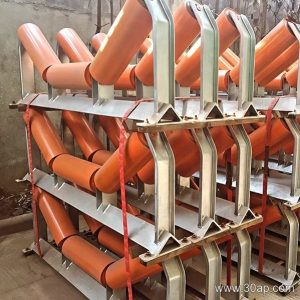
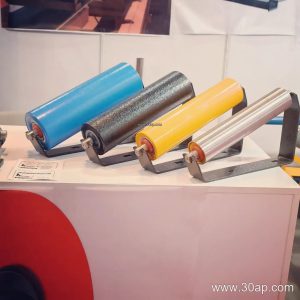
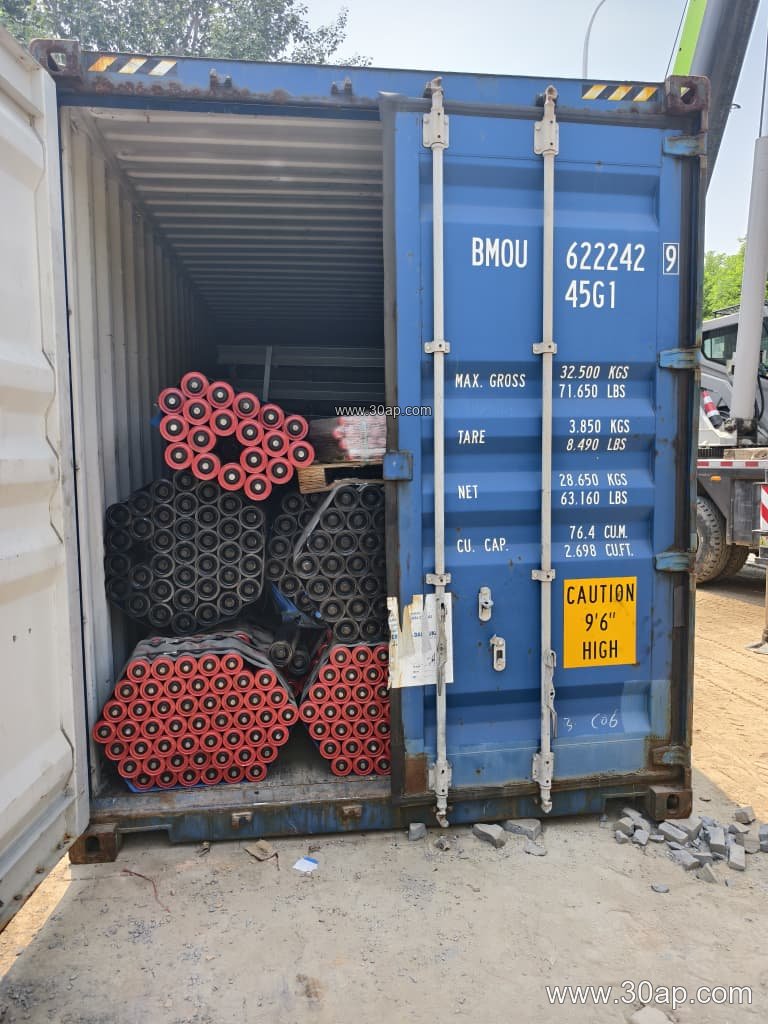
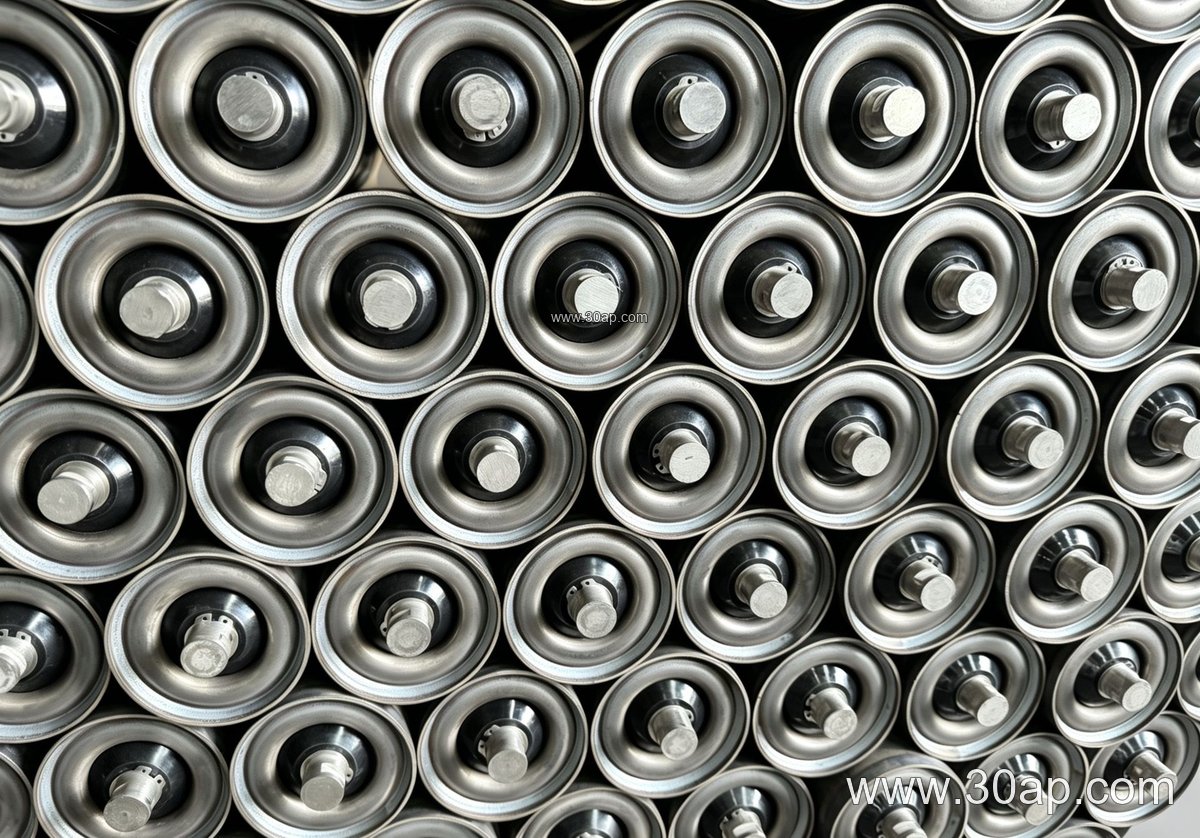
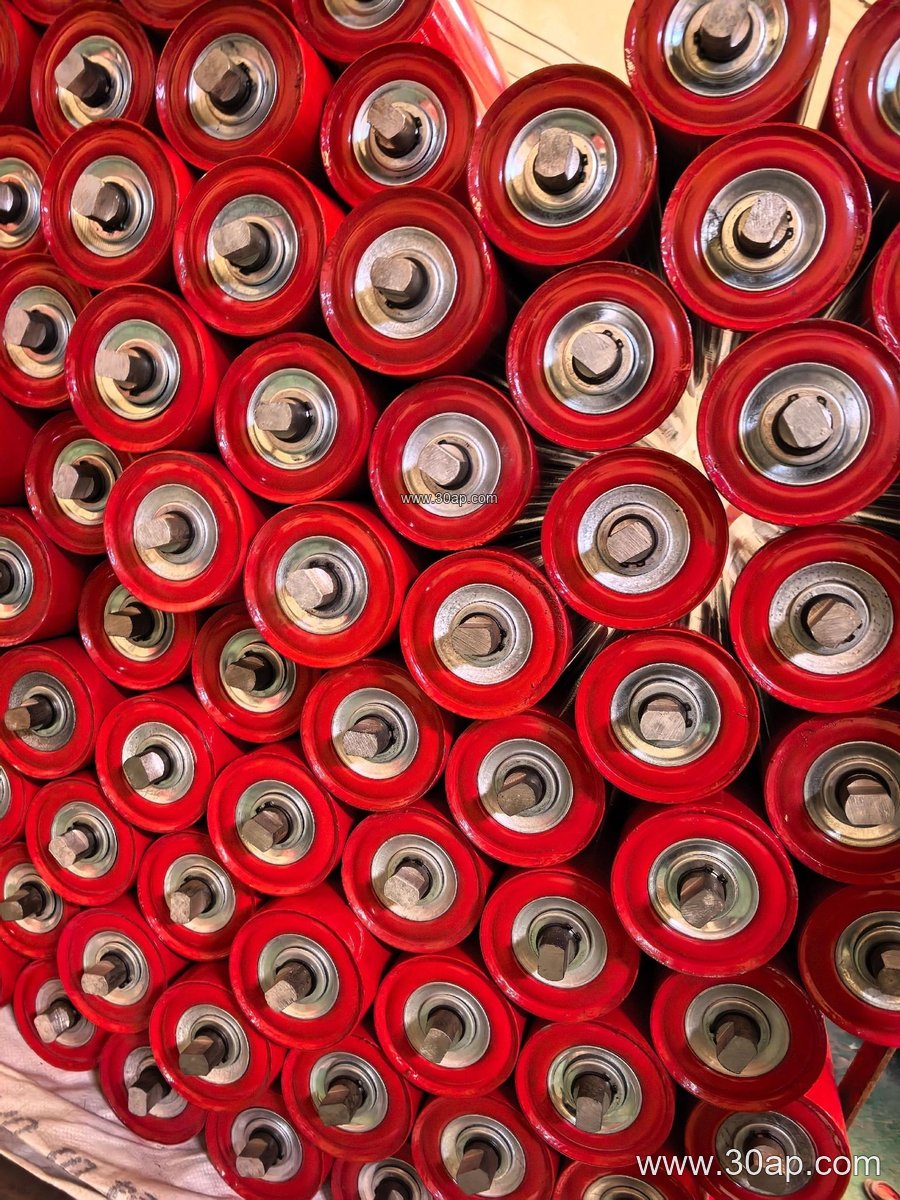
The structure is straightforward but the details decide service life. A typical unit consists of a steel tube shell, bearing housings at each end, a shaft, and a sealing arrangement that keeps dust and water away from the bearings. Roller surfaces may be plain steel, nylon, ceramic or rubber rings, depending on whether the goal is general support, impact absorption or material build-up control. Common bearing numbers include 6204, 6205, 6305, 6306, 6308 and 6310, but bearing choice should follow the actual load and speed rather than a single rule. Shell diameter is usually selected from a range such as Ø63, Ø76, Ø89, Ø102, Ø108, Ø127, Ø133, Ø159, Ø178, Ø194 or Ø219 mm. The shaft and bearing housing are matched to the calculated load, not simply to belt width.
Where Large Idlers Are Used
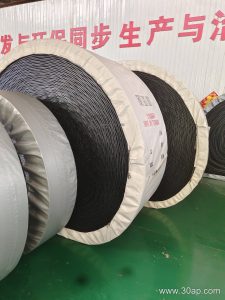
These assemblies appear wherever a conveyor carries abrasive or heavy bulk material. In a quarry or stone crushing line, a large belt conveyor idler supports belts moving crushed rock from the primary crusher toward screening. In a coal preparation plant or a power plant coal yard, the same idler type keeps the belt aligned under varying loads. Cement plants use them on clinker and raw meal circuits, while iron ore and copper ore operations rely on them for long overland runs. The surrounding equipment usually includes a rubber conveyor belt, conveyor pulley, conveyor bracket and a full idler roller set, and the idler must be compatible with that belt and frame design.
Common Configurations and Reference Dimensions
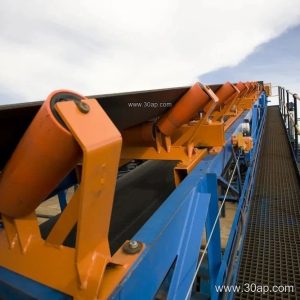
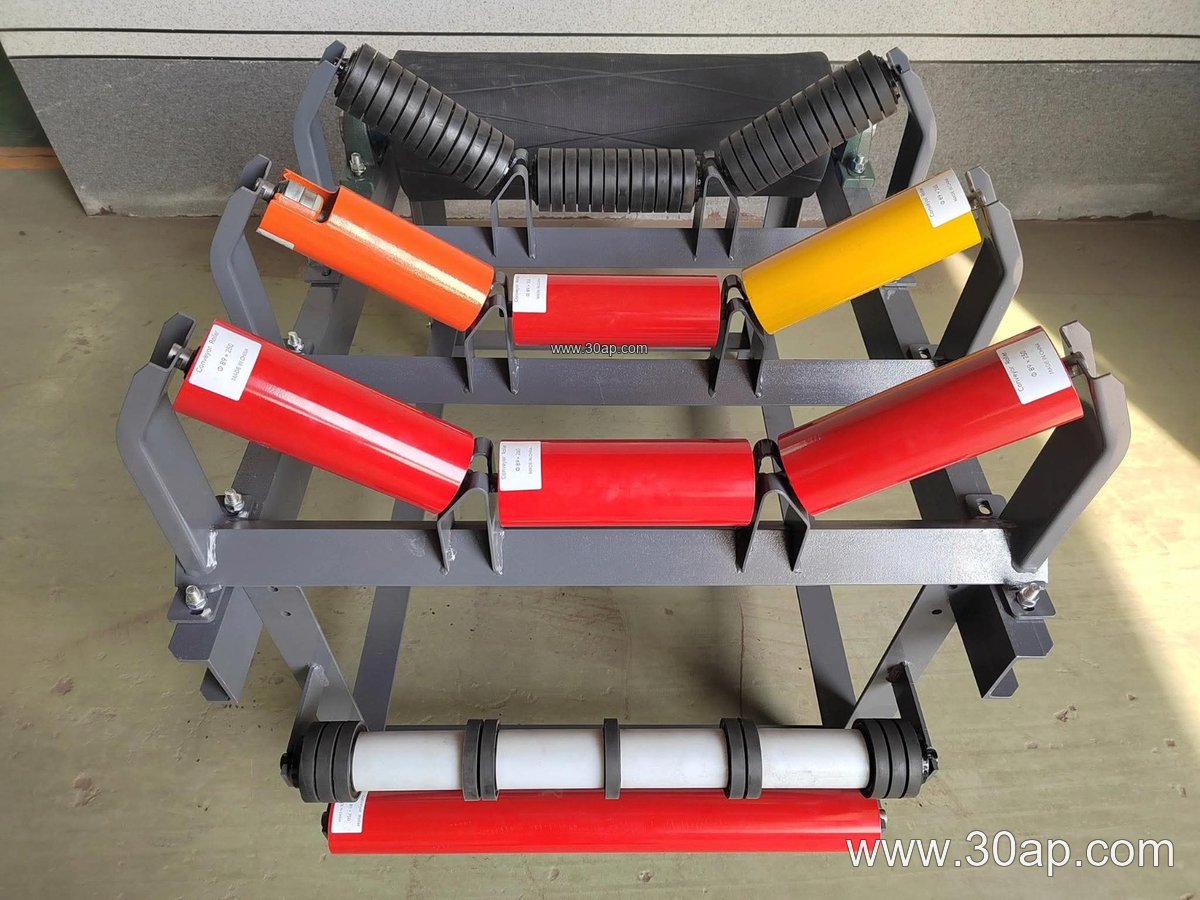
Troughing sets are often supplied as single-roller, two-roller or three-roller arrangements. The three-roller troughing set is common on wide belts, with trough angles of 20, 30, 35 or 45 degrees. Return sides may use a flat return idler, a V-return idler or a spiral return roller. The table below gives reference values for roller length in three-roller troughing sets; these are examples, not fixed matches, and side rollers can differ from the centre roller.
| Belt width | Typical roller length (three-roller troughing) |
|---|---|
| B500 | about 200 mm |
| B650 | about 250 mm |
| B800 | about 315 mm |
| B1000 | about 380 mm |
| B1200 | about 465 mm |
| B1400 | about 530 mm |
| B1600 | about 600 mm |
| B1800 | about 670 mm |
| B2000 | about 750 mm |
Belt widths in the wider range include B1400, B1600, B1800, B2000, B2200 and B2400. A large belt conveyor idler for these widths usually needs a larger roller diameter and a stronger frame, but the final combination is determined by load, speed and belt tension. Impact zones may use rubber-ring impact idlers, while training sections may use friction or tapered self-aligning idlers. These are subtypes of the same idler family and are chosen for a specific duty, not as a replacement for the main carrying idler.
What Buyers Should Check
- Confirm the belt width and the actual trough angle before ordering a set.
- State the material, lump size and expected load so the roller diameter and bearing can be checked.
- Ask for the sealing arrangement and shaft details, especially in dusty or wet conditions.
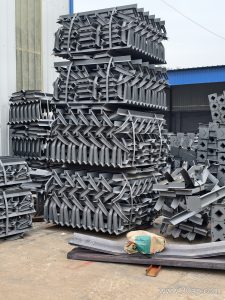
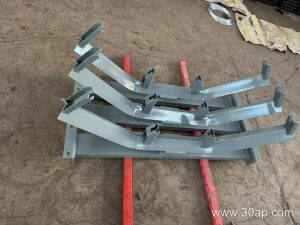
- Check that the idler frame and conveyor bracket match the existing conveyor structure.
- For abrasive duties, consider a high abrasion resistant conveyor belt and wear-resistant roller surface together.
- For hot material, a heat resistant conveyor belt may be needed, but the idler itself must also tolerate the ambient temperature.
A large belt conveyor idler is a simple component, yet it controls belt life, energy use and downtime. Matching it to the conveyor belt, the pulley layout and the bracket system is more important than choosing the largest size available. Whether the site is a sand and gravel plant, a steel plant or a port terminal, the right idler specification starts with the actual duty.