What a Take-Up Wheel Pulley Does
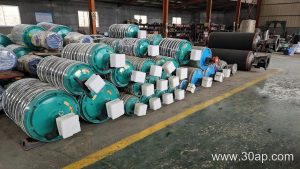
A take-up wheel pulley is the rotating drum used in the tensioning section of a belt conveyor. Its job is to hold the belt under controlled tension as it returns from the head end, so the belt stays wrapped around the drive pulley and does not slip or sag between supports. In many layouts this drum is mounted on a sliding carriage or a pivoting arm, and the take-up frame pulls it backward to remove slack. The same product is also called a take-up pulley or tension pulley, and those names describe the same component.
It should not be confused with the drive pulley that transmits power, the tail pulley that forms the return end, or a bend pulley that simply changes belt direction. Those are separate positions in the conveyor and are not interchangeable with a take-up drum. A bend pulley may sit near the take-up assembly to route the belt, but it does not perform the tensioning function itself.
Construction and Surface Options
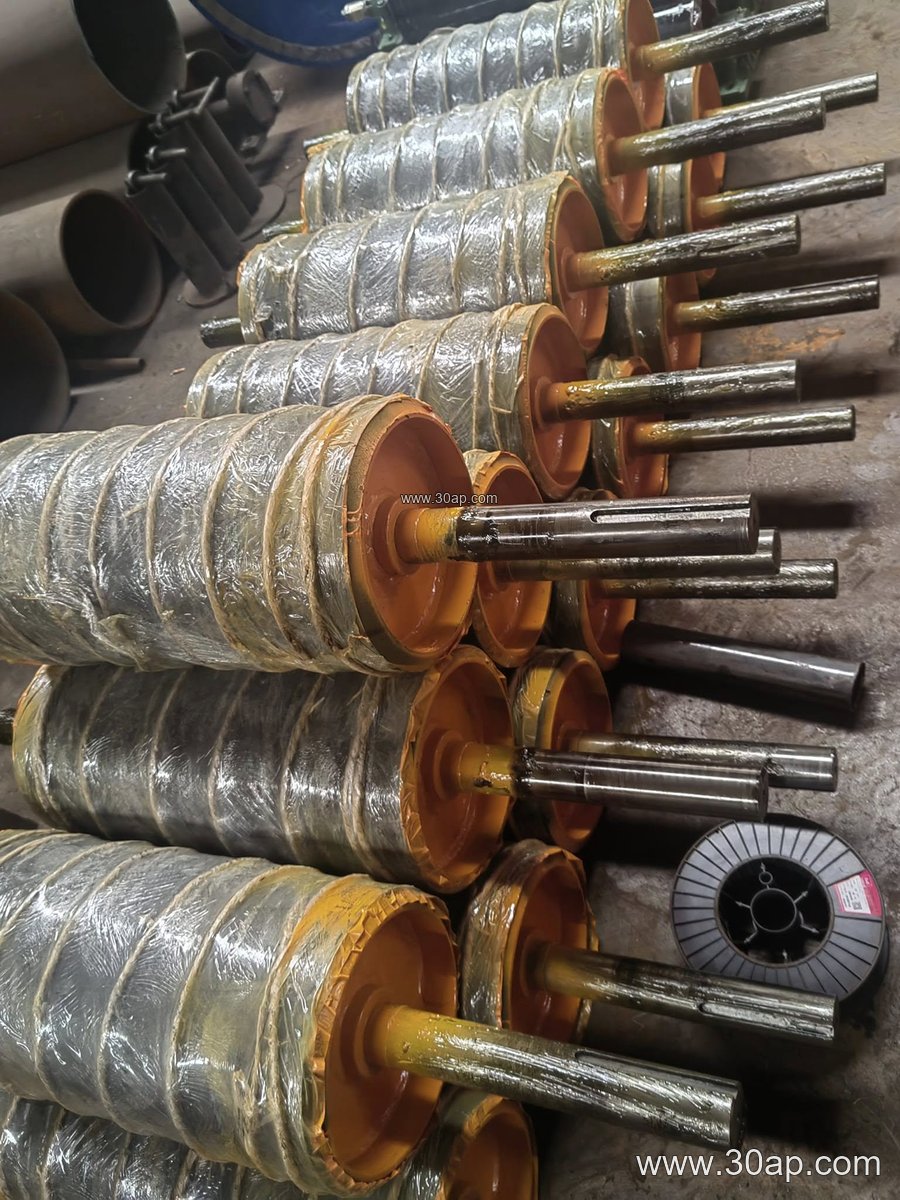
The drum is usually built from a rolled steel shell with welded end discs and a through shaft, supported by bearing housings on both sides. Shell thickness, shaft diameter and bearing size are selected from the calculated belt pull and the take-up travel, not from belt width alone. Common shaft sizes include Ø80, Ø100, Ø120 and Ø140 mm, but the final value should follow the torque and load case given by the conveyor designer.
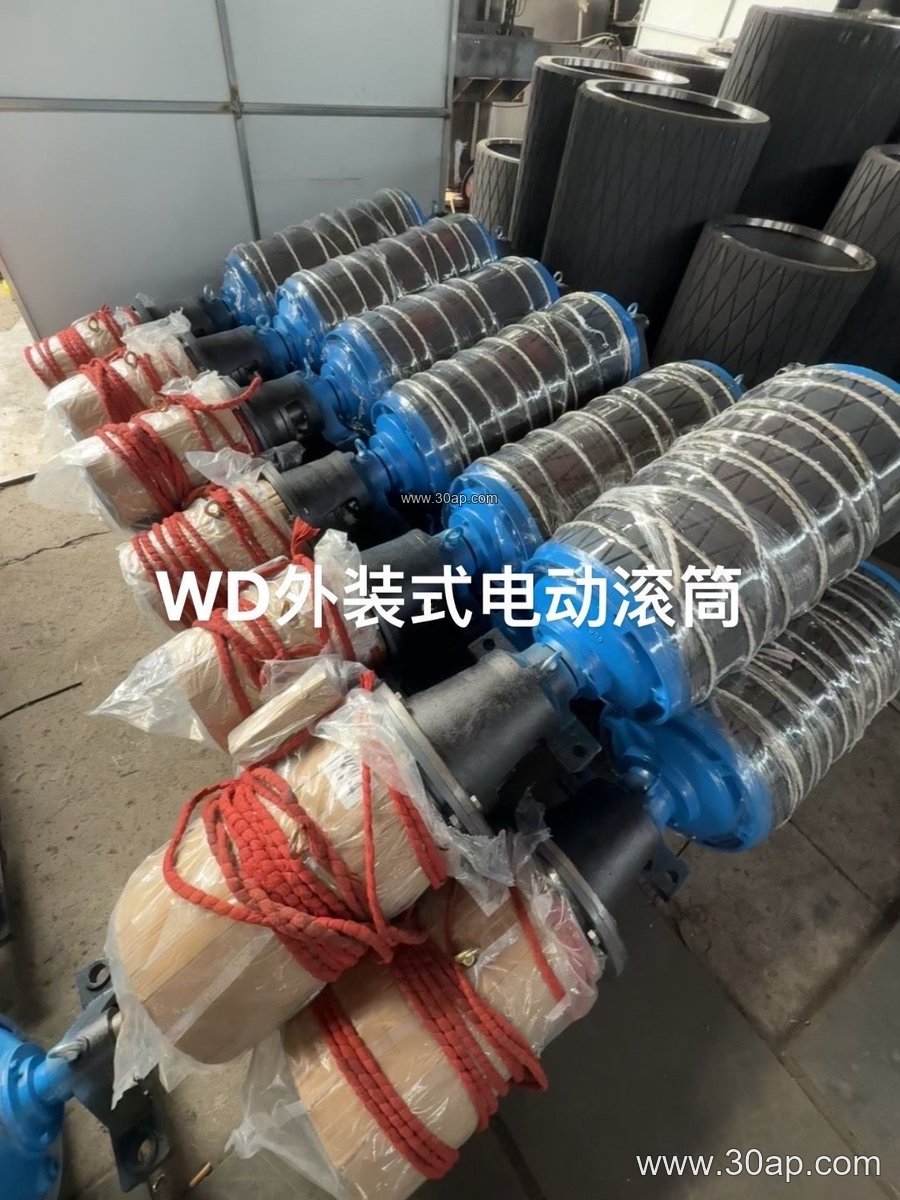
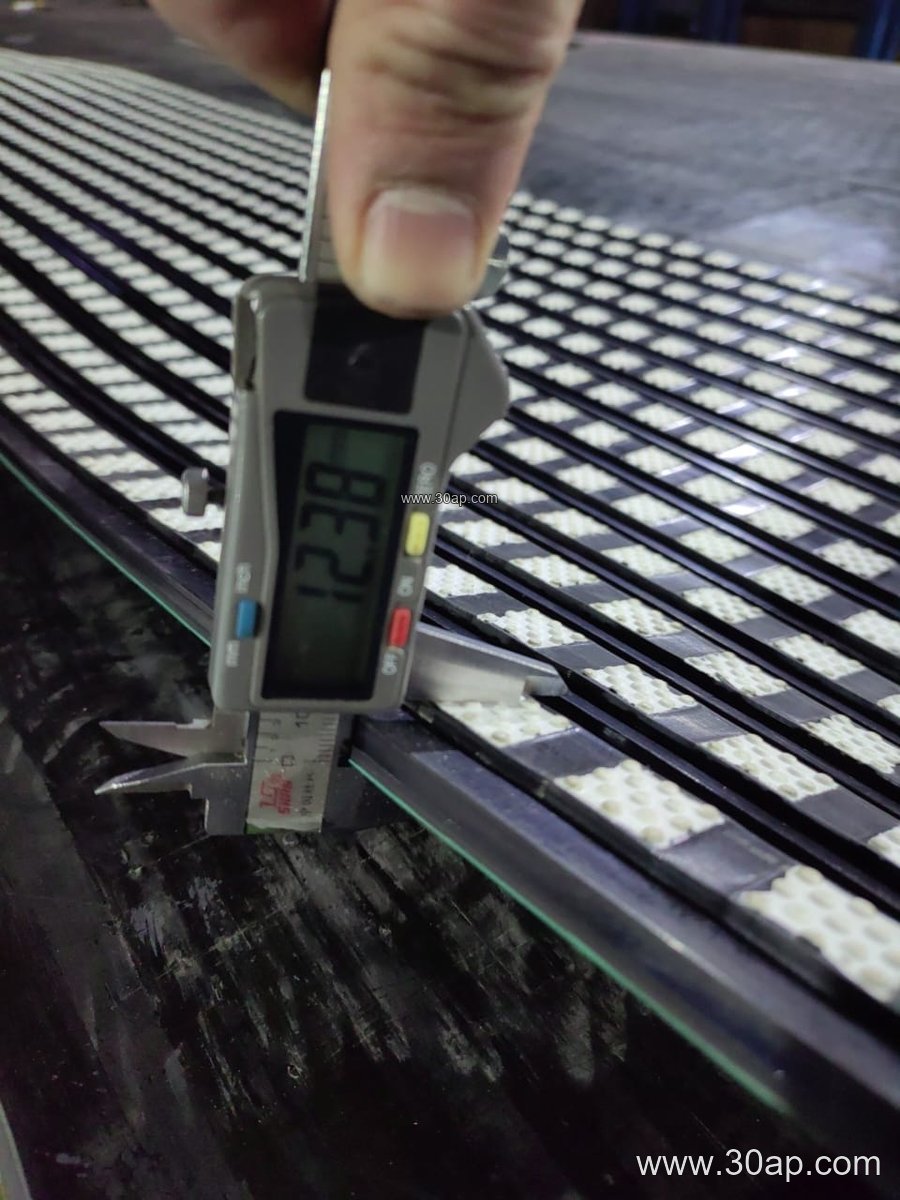
The surface can be plain, rubber lagged or ceramic lagged. Rubber lagging in 8, 10, 12 or 15 mm thickness is often used to protect the shell and improve grip where the belt wraps the drum. Diamond or herringbone patterns help shed water and fines. In a coal preparation plant or a wet sand and gravel line, a lagged surface reduces the chance of material building up on the face.
Typical Reference Dimensions
The figures below are reference values, not a fixed matching rule. Face width is normally a little wider than the belt, and diameter is chosen by the tension and wrap angle.
| Belt width | Typical face width | Common diameter range | Common shaft range |
|---|---|---|---|
| B500 | about 600 mm | Ø200 to Ø400 | Ø60 to Ø80 |
| B650 | about 750 mm | Ø250 to Ø500 | Ø70 to Ø100 |
| B800 | about 950 mm | Ø315 to Ø630 | Ø80 to Ø120 |
| B1000 | about 1150 mm | Ø400 to Ø800 | Ø100 to Ø140 |
| B1200 | about 1400 mm | Ø500 to Ø1000 | Ø120 to Ø160 |
| B1400 | about 1600 mm | Ø630 to Ø1000 | Ø140 to Ø180 |
For example, a B800 × Ø500 take-up wheel pulley and a B1200 × Ø1000 unit can both be correct in different installations. The combination depends on belt tension, take-up stroke and available space.
Where It Is Used
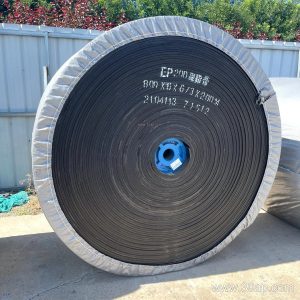
You will find this drum in almost any long conveyor circuit. In an iron ore or copper ore concentrator it keeps the belt tight on a heavy-duty incline. In a cement plant it may sit at the return end of a clinker or limestone conveyor, working alongside a rubber conveyor belt and a set of idler rollers. Power plant coal handling systems and port bulk terminals also rely on it, especially where the belt length changes with load and temperature.
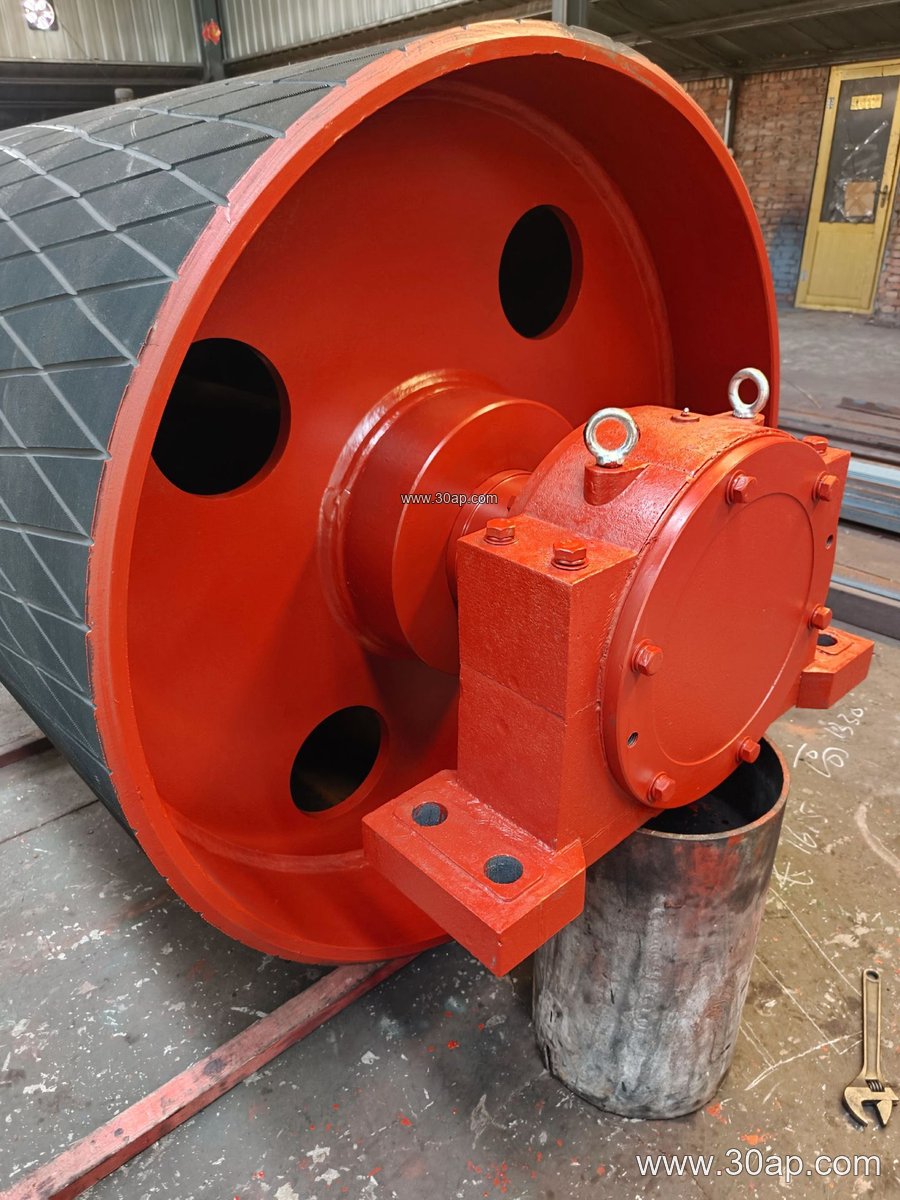
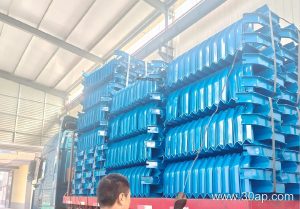
The tensioning drum works together with the belt, the conveyor pulley set and the conveyor bracket that holds the bearing housings. A worn or undersized take-up pulley can cause belt wander, edge damage and premature splice failure, so alignment with the adjacent idler roller frames matters as much as the drum itself.
Buyer Checklist
- Confirm the mounting style: sliding carriage, gravity take-up or screw take-up.
- State the belt width, the required take-up travel and the belt tension at the drum.
- Choose lagging type and thickness for the environment, such as abrasion resistant or oil resistant service.
- Check shaft diameter and bearing size against the calculated load, not against belt width alone.
- Ask for the balance grade and runout tolerance, since a take-up drum runs continuously.
- Plan inspection access, because bearing lubrication and lagging wear are the main maintenance points.
Matching the drum to the rest of the conveyor, including the conveyor bracket and the belt tracking, is the best way to avoid repeated adjustment and downtime.