What a Custom Conveyor Bracket Does on the Line
A custom conveyor bracket is the fabricated support that holds idler rollers in the correct position under or over the conveyor belt. Instead of forcing a standard frame to fit an awkward transition point, a made-to-order bracket is built around the actual belt width, trough angle and roller diameter of the installation. In a quarry, a cement plant or a coal handling system, this small steel component decides how evenly the belt runs and how long the rollers last.
Because the bracket is usually the interface between the roller and the main frame, its geometry matters. A poorly matched bracket can tilt a roller slightly, which shows up as edge wear on the belt or as a wandering load. That is why many operators order the bracket together with the roller set rather than treating it as a minor spare.
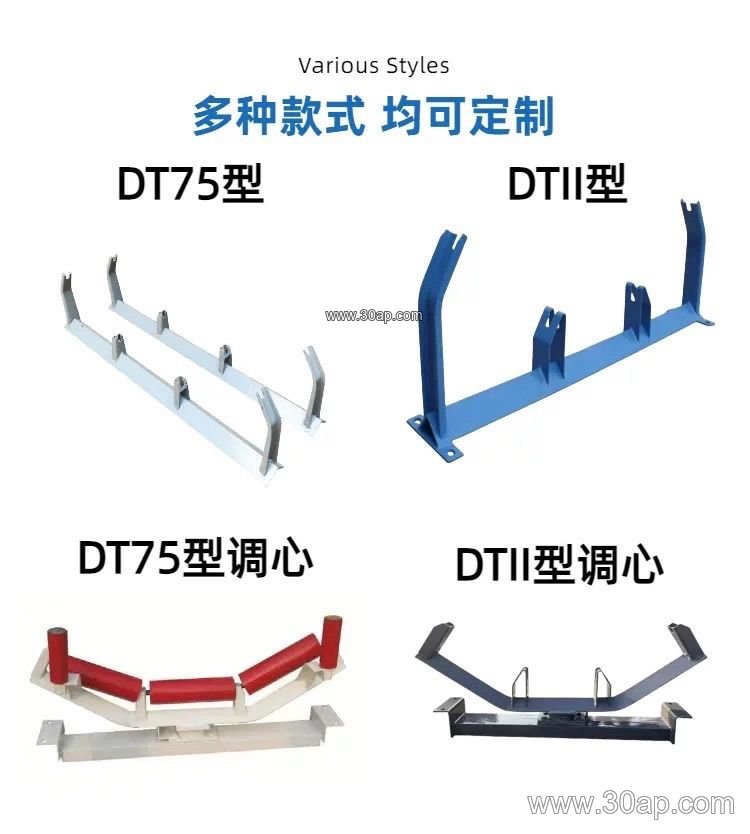
How the Bracket Is Built
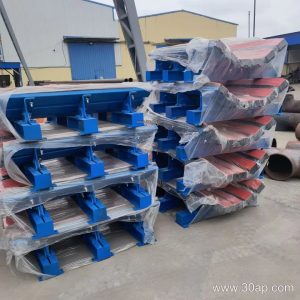
Most units are fabricated from angle steel, channel steel or folded steel plate, then drilled and welded to suit the mounting pattern. The fabrication route is straightforward but tolerance-sensitive: hole spacing, crossbeam length and the height of the roller seat all follow the belt width and trough angle. Common belt widths in the reference range run from B500 and B650 through B800, B1000 and B1200 to B1400, B1600, B1800 and beyond, and each width usually needs its own crossbeam length.
Trough angles are typically 20, 30, 35 or 45 degrees. Adjustable brackets allow the same frame to be set at several of these angles, while fixed brackets are welded or bolted at one angle. Forward-leaning designs are often set at about 1.5 to 2 degrees to help center the belt. Roller diameters such as Ø89, Ø108, Ø133, Ø159 and Ø194 are matched to the load and belt speed, so a B800 frame at 35 degrees with Ø108 rollers is a normal combination, while a B1200 line at 45 degrees may use Ø133 rollers. These are examples, not fixed pairings.
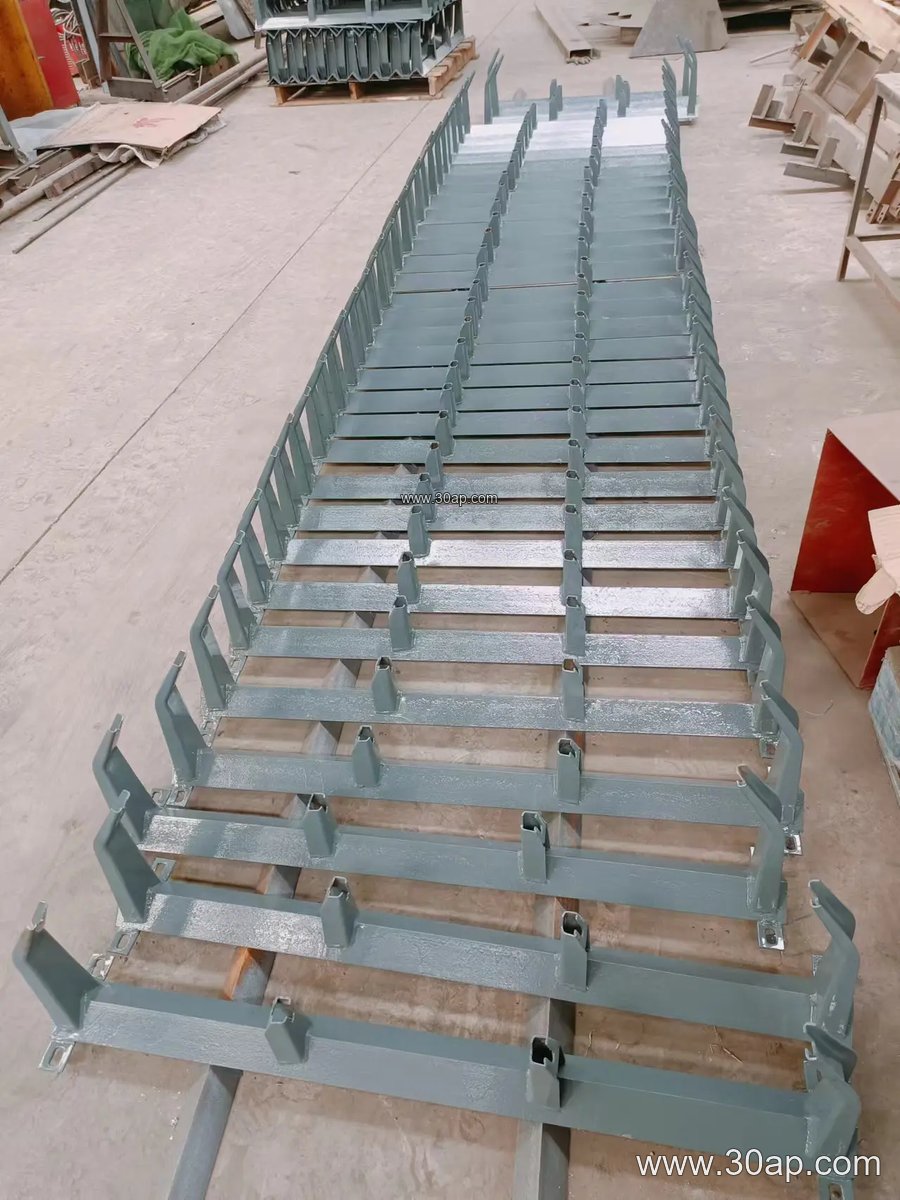
Common Bracket Types and Where They Sit
- Troughing brackets carry the loaded side of the belt and set the trough angle.
- Transition brackets ease the belt from flat to troughed shape near pulleys.
- Return brackets and V-return brackets support the empty strand.
- Impact brackets sit under loading points and carry buffer rollers.
- Self-aligning and forward-leaning brackets help correct belt tracking.
- Suspended and adjustable brackets suit structures where height or angle must change on site.
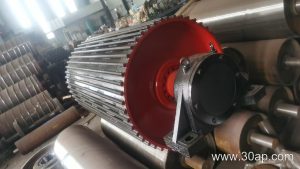
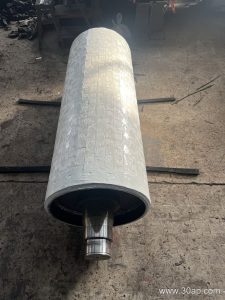
These are not interchangeable. A return bracket cannot replace a troughing bracket, and a bend pulley is a different component from a drive or tail pulley. The bracket only positions the roller; the pulley drives or redirects the belt.
Where These Brackets Are Used
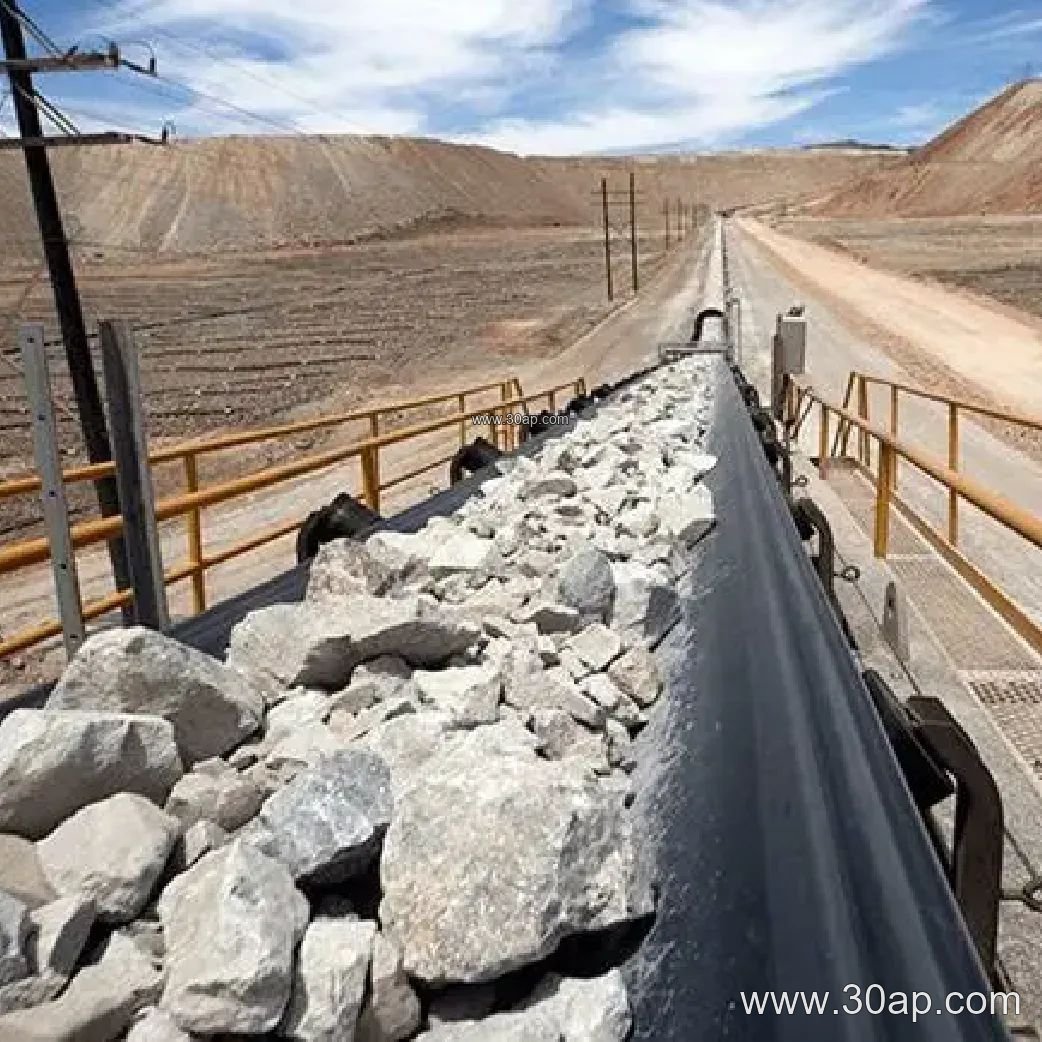
In a limestone quarry or a sand and gravel line, dust and shock loading make impact brackets and heavy troughing frames the usual choice. In a coal preparation plant or a power station coal yard, flame retardant belt grades are common, and the brackets must resist vibration from constant starting and stopping. A crusher discharge point is another place where a custom bracket earns its keep, because the belt there is often wider and the rollers larger than on the rest of the line.
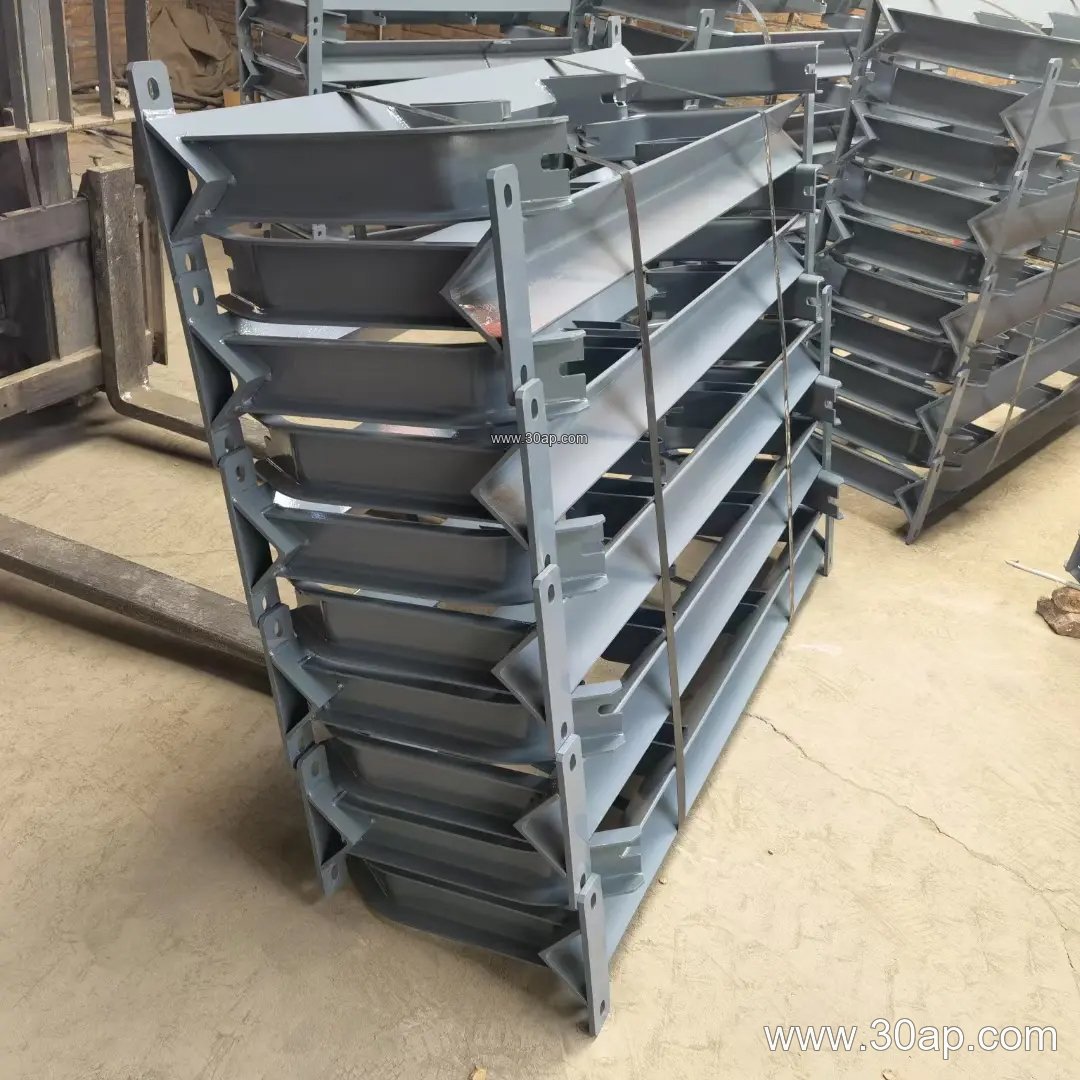
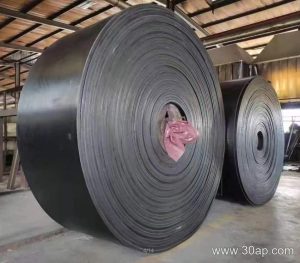
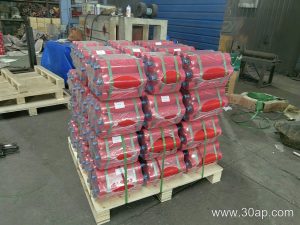
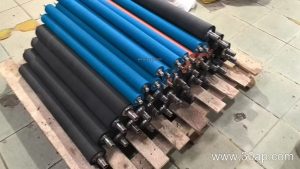
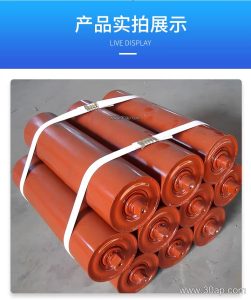
Brackets also work alongside other components: the conveyor belt carries the material, the idler roller turns under it, and the conveyor pulley at each end keeps the loop moving. Matching all four avoids the small misalignments that turn into belt edge damage.
What Buyers Should Confirm Before Ordering
Accurate drawings save rework. A buyer should confirm belt width, required trough angle, roller diameter and the mounting hole pattern on the existing frame. It also helps to state the environment: a dusty quarry, a wet wash plant and a hot cement kiln area place different demands on the steel and on the roller seals. Where the belt is a heavy-duty mining conveyor belt or a steel cord conveyor belt, the bracket should be sized for the extra tension and weight rather than copied from a lighter line.
Surface treatment, weld quality and the adjustability range are worth checking on the drawing. Adjustable brackets are useful where the trough angle may be tuned later, but a fixed bracket is simpler and stiffer where the angle is already settled. Neither is universally better.
Reference Dimensions at a Glance
The table below shows typical reference values. Actual crossbeam length and hole spacing are determined by design, not by a single standard.
- Belt width: B500, B650, B800, B1000, B1200, B1400, B1600, B1800, B2000, B2200
- Trough angle: 20°, 30°, 35°, 45°
- Roller diameter: Ø89, Ø108, Ø133, Ø159, Ø194
- Material: angle steel, channel steel, folded plate
Keeping the bracket, roller and belt specification on one drawing is the simplest way to avoid a mismatch on site, whether the line runs in a tunnel, a port terminal or a grain silo.