What an Anti-Slip Lagged Pulley Does
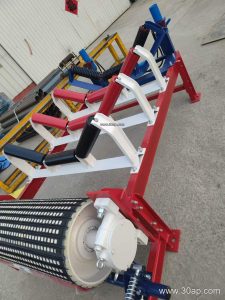
An anti-slip lagged pulley is a conveyor pulley whose shell is covered with a rubber or ceramic lagging layer to raise friction between the drum face and the belt. In a quarry, a cement plant or a power plant coal yard, the drive pulley has to turn a loaded belt without visible slip; that grip comes from the lagging, not from the bare steel shell. The same anti-slip rubber lagged pulley idea is also used on tail and tension positions where belt wrap is short and traction is marginal.
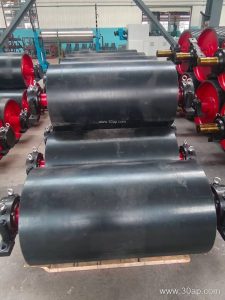
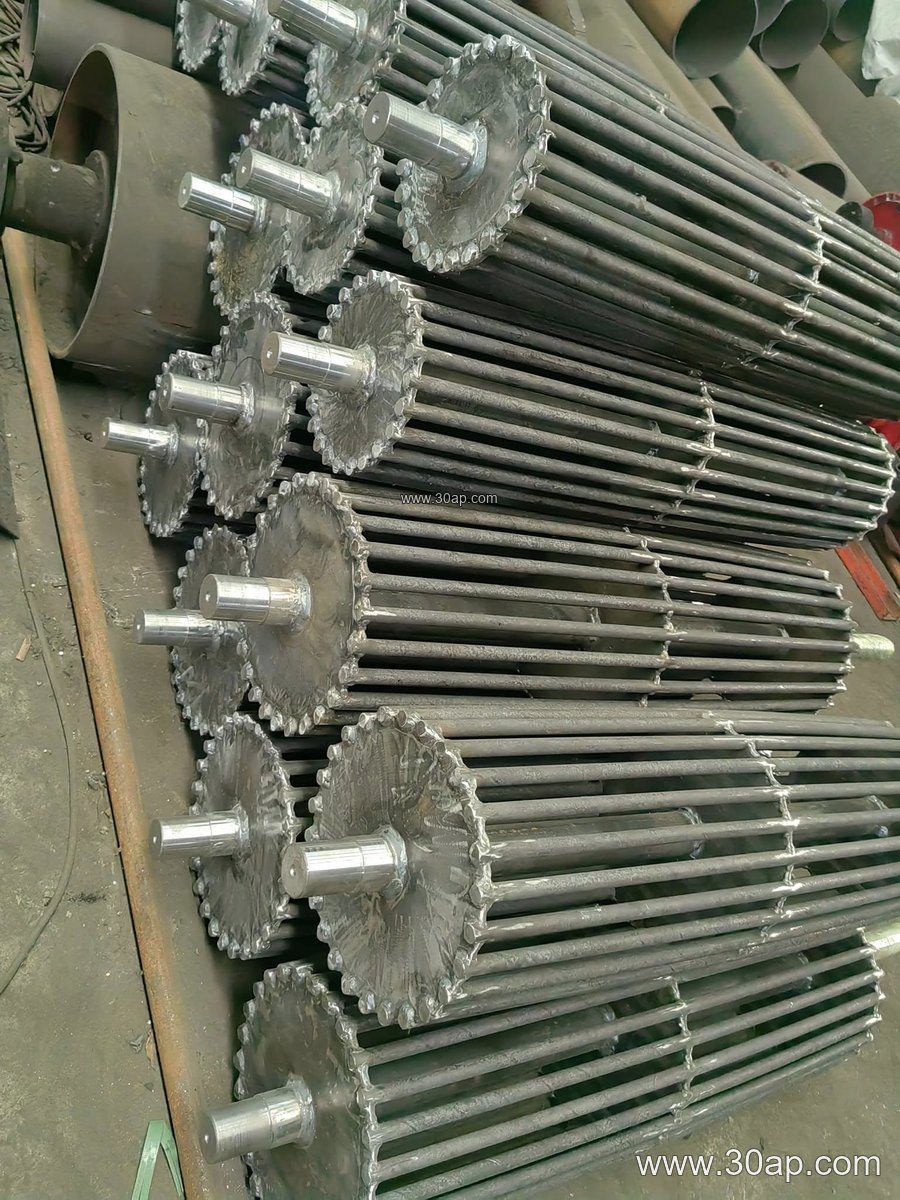
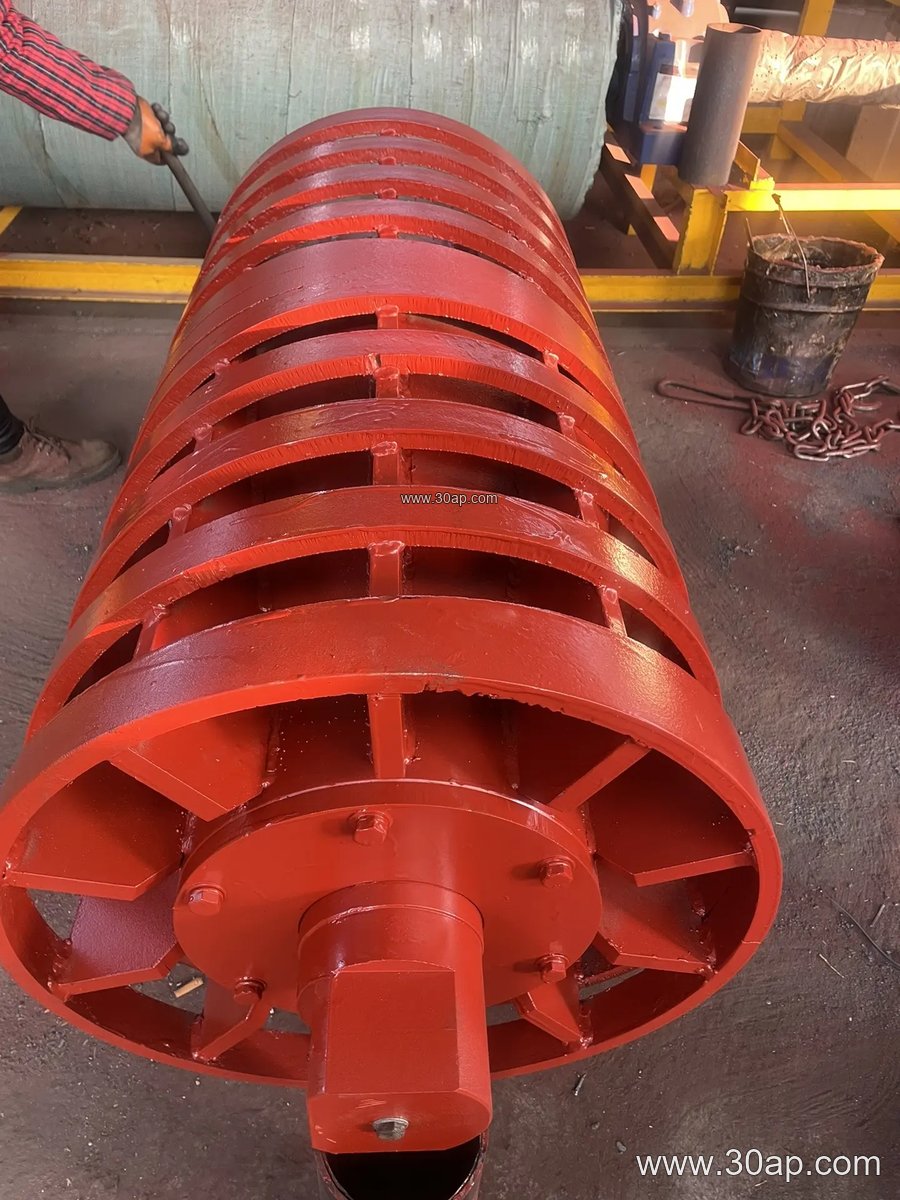
It is a drum-shaped component, machined, balanced and usually fitted with bearing housings that sit in a conveyor bracket. The lagging is the working surface, and it is the part that wears, so the design should allow replacement without scrapping the whole pulley.
How the Lagging Is Built
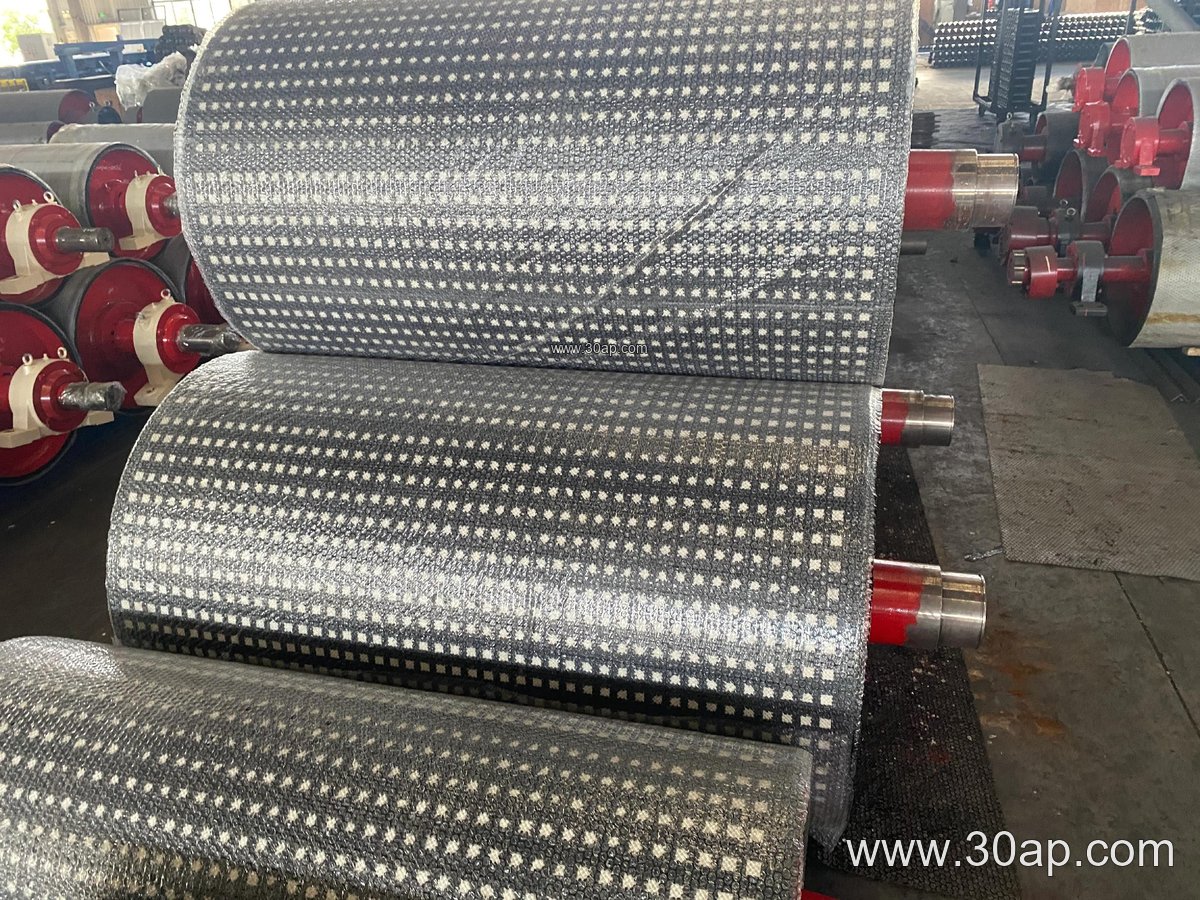
Three surface routes are common. Cold-bonded rubber sheet is glued and rolled onto a prepared shell. Hot-vulcanised rubber is cured in place and gives a tighter, more uniform bond. Ceramic lagging uses embedded tiles in a rubber matrix, which suits very abrasive duty. Grooving matters too: diamond and herringbone patterns help water, fines and mud escape from the nip instead of forming a slippery film. Plain lagging is easier to clean and is often chosen where sticky material builds up.
Typical lagging thicknesses are 8, 10, 12, 15 and 20 mm. Thicker layers last longer under high torque but change the pulley diameter, so check the effective diameter when setting belt speed and take-up travel. Shell, shaft and hub are sized from torque and load, not from belt width alone; a shaft of Ø100 or Ø120 on one B800 pulley says nothing about the shaft on the next one.
Where It Fits on the Conveyor
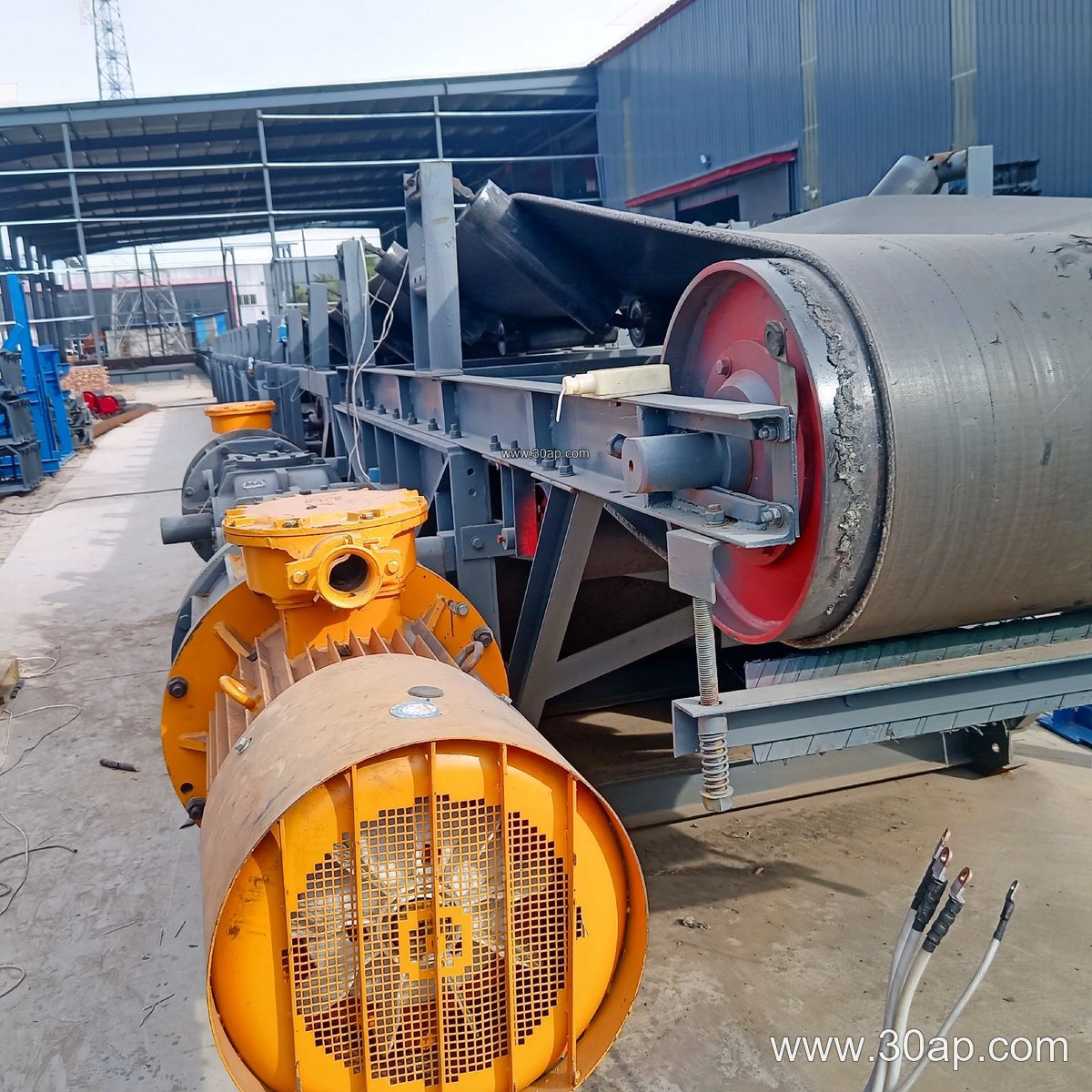
The most demanding location is the head or drive position, where the anti-slip lagged pulley transmits full motor torque into a conveyor belt carrying ore, clinker or aggregate. A tail pulley with lagging is common where the belt is short or the belt path leaves little wrap angle. Tension pulleys in a take-up frame also benefit, because a slipping tension drum lets the belt creep and the counterweight lose its setting.
Do not confuse these roles. A bend pulley changes belt direction and usually carries low torque, so a plain surface may be enough. A drive pulley and a tail pulley are not interchangeable, and a lagged tail drum is not a substitute for a properly designed drive drum.
Common Size Envelopes
The table below is reference data for early planning only. Final dimensions depend on belt tension, torque, belt speed and the pulley’s position in the conveyor.
| Belt width | Typical face width | Common diameters |
|---|---|---|
| B500 | about 600 mm | Ø250, Ø315, Ø400 |
| B650 | about 750 mm | Ø315, Ø400, Ø500 |
| B800 | about 950 mm | Ø400, Ø500, Ø630 |
| B1000 | about 1150 mm | Ø500, Ø630, Ø800 |
| B1200 | about 1400 mm | Ø630, Ø800, Ø1000 |
| B1400 | about 1600 mm | Ø800, Ø1000, Ø1250 |
| B1600 | about 1800 mm | Ø1000, Ø1250, Ø1400 |
Face width is normally a little wider than the belt, so B1200 x Ø1000 and B800 x Ø500 are sensible pairings, but no single diameter is compulsory for a given width. Larger diameters increase wrap arc and reduce belt bending stress; smaller ones save space.
Matching the Lagging to the Duty
Choose the surface from the material, not from habit. A wet, muddy mining conveyor belt in a wash plant needs grooved rubber so water can escape. A dry, abrasive stream of crushed rock in a quarry or a crusher discharge line favours ceramic or thick rubber lagging. In a coal yard, flame retardant grades of lagging and belt are often specified together. Where oil or fine dust is present, check that the rubber compound resists swelling and that grooves will not pack solid.
Belt construction also matters. A heavy steel cord conveyor belt needs a pulley shell and lagging that can carry high tension without crushing the cover, while a lighter fabric carcass tolerates a thinner lagging. Belt cleaners, idler roller alignment and skirt rubber all affect how much traction the pulley actually gets.
Buyer Checklist
- State the pulley role: drive, tail, tension or bend, and the belt width and speed.
- Give the calculated belt tension and motor torque so shaft and shell can be sized.
- Specify lagging type, thickness and groove pattern, plus whether field replacement is needed.
- Confirm bearing type, housing centres and mounting dimensions against the existing bracket.
- Ask for the balancing grade and runout, since vibration shortens bearing life.
- Plan inspection: check lagging wear, groove depth and bolt torque at each shutdown.
A well-chosen anti-slip lagged pulley is a wear part with a defined service life, not a permanent fixture. Recording lagging thickness at every inspection lets maintenance plan replacement before slip causes belt damage or a stoppage.