What a Conveyor Frame Does on a Belt Line
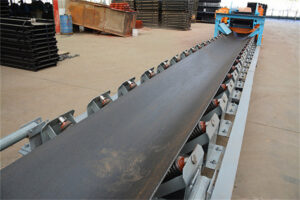
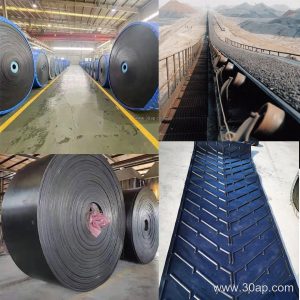
A conveyor frame is the structural backbone that holds the idlers and pulleys in the right position along a belt conveyor. It carries the weight of the belt, the material and the rotating parts, and it keeps everything aligned so the belt tracks straight. Without a rigid, well-aligned frame, even a high-quality Rubber Conveyor Belt will wander, spill material and wear unevenly. The frame is not one part but a system of cross members, side rails, brackets and supports that work together.
In a quarry, a stone crushing line or a cement plant, the frame also has to absorb shock from lumpy feed and resist dust and grit. The same basic idea applies whether the line moves limestone, clinker or sand.
How the Frame Is Built
Most frames use formed steel: angle iron, channel steel or folded plate. The choice depends on span, load and belt width. Typical components include:
- Longitudinal side rails that run the length of the conveyor
- Cross beams carrying the idler stations
- Mounting brackets that fix the idlers and pulleys
- Legs or trestles supporting the whole line
Welded or bolted frames are both common. Bolted designs are easier to ship and adjust on site; welded frames are stiffer where heavy impact is expected. The connection points between the frame and the conveyor pulley must be square and level, because misalignment at the drive or tail end puts extra load on the belt splice.
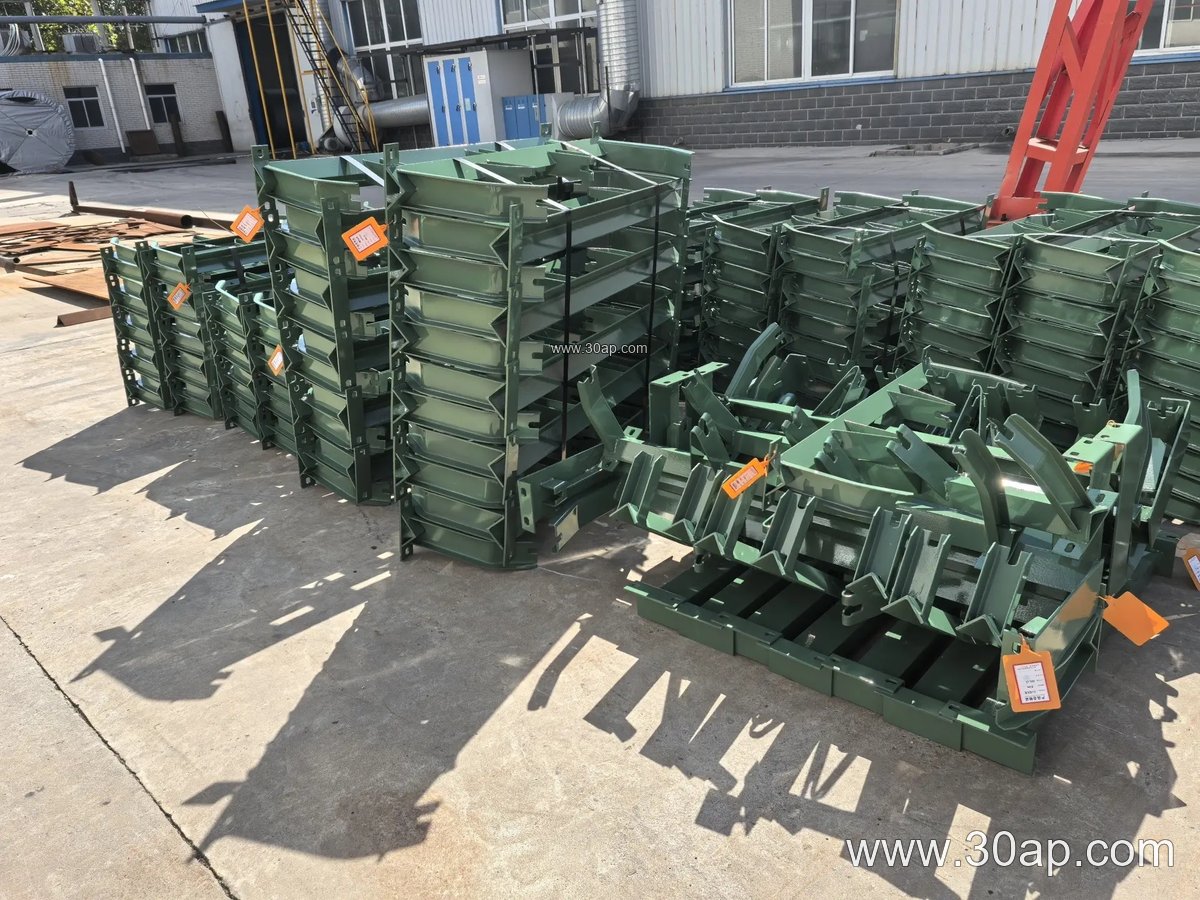
Frame Types and Where They Fit
Frames are shaped by the job each station performs. Troughing frames support the carrying side with three or more rolls set at a trough angle. Return frames support the empty belt underneath, often as a flat or V-shaped arrangement. Transition frames ease the belt from flat to troughed profile near the pulleys. Impact frames sit under the loading point and carry cushioning idlers. Self-aligning frames help correct belt drift on long runs.
For example, a troughing frame with a 35 degree angle is common on a B800 line, while a B1200 line with heavy ore may use 45 degrees. These are typical arrangements, not fixed rules; the right angle and roll diameter are set by the belt width, material and design.
Matching Frame, Idlers and Belt
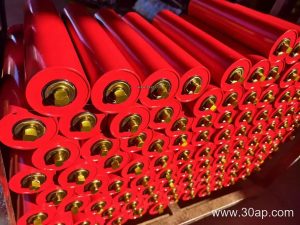
The frame must match the idler roller spacing and the belt width. Common belt widths include B500, B650, B800, B1000, B1200, B1400 and B1600. Roll diameters such as Ø89, Ø108, Ø133, Ø159 and Ø194 are matched to load and belt speed. A small frame on a narrow belt can use Ø89 idlers; a heavy-duty line may need Ø159 or larger.
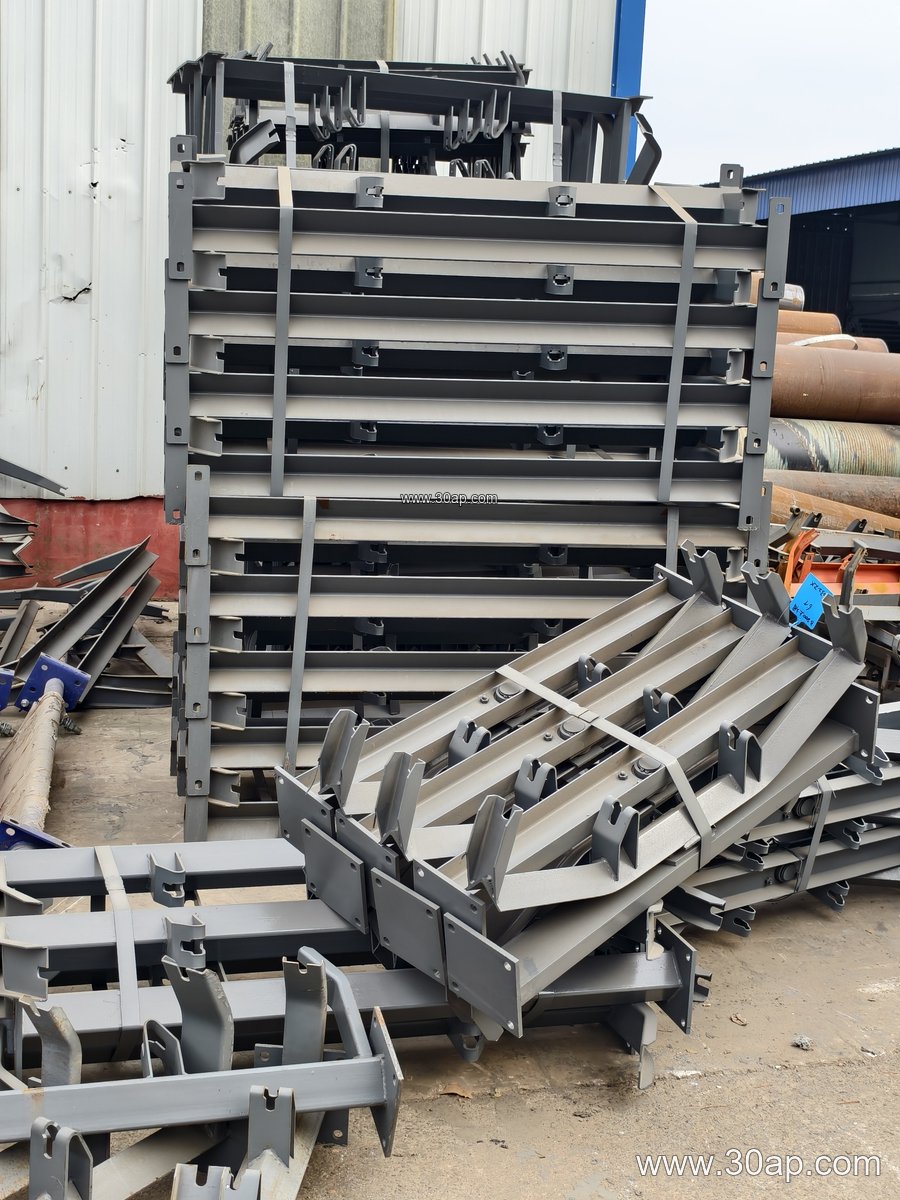
On a line carrying abrasive rock, an Abrasion Resistant Conveyor Belt reduces wear, but the frame still has to keep the belt centred. At the loading point, impact frames and cushion idlers protect both belt and frame from falling lumps.
Specification Reference
The table below shows typical ranges, not a fixed catalogue. Mounting hole spacing and beam length change with belt width and trough angle.
| Item | Typical Range |
|---|---|
| Belt width | B500 to B1600 (wider by design) |
| Trough angle | 20°, 30°, 35°, 45° |
| Idler diameter | Ø89, Ø108, Ø133, Ø159, Ø194 |
| Material | Angle steel, channel steel, folded plate |
| Forward tilt | About 1.5° to 2° |
Buyer Checklist
Before ordering, confirm the belt width, the trough angle, the idler diameter and the pulley positions. Ask whether the frame is fixed or adjustable, and check the surface treatment for the site. In a coal mine or power plant coal yard, flame retardant properties of the belt matter, while the frame needs sturdy brackets and easy access for maintenance. A Flame Retardant Conveyor Belt and a well-built frame together give a safer, longer-lasting line.
Also check that the frame can be levelled after installation and that spare brackets are available. Good alignment at the start saves hours of belt training later.