What a Self-Aligning Idler Bracket Does
A self-aligning idler bracket is a carrier frame that pivots or shifts its rollers in response to a belt that starts to wander. Instead of holding the troughing rolls in a rigid position, the bracket lets them steer the belt back toward the center line. On a long conveyor belt run, small tracking errors add up quickly; a bracket like this corrects them before the edge rubs the structure. It is common in quarry, cement plant and power plant coal handling lines where dust and uneven loading disturb belt alignment.
The same product is also called a self-tracking idler bracket or self-aligning roller bracket. All three names describe the same component; they are not different product types.
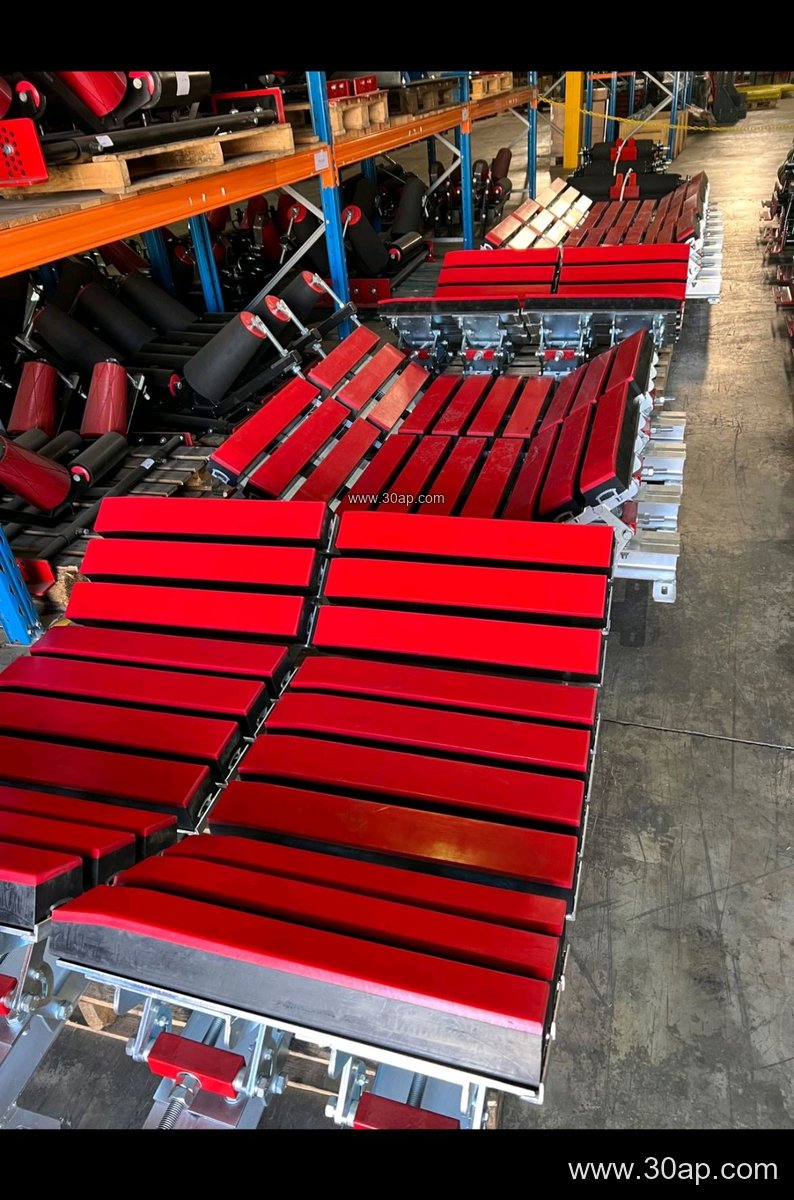
Construction and Mounting Position
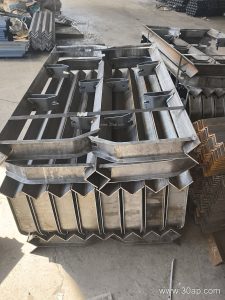
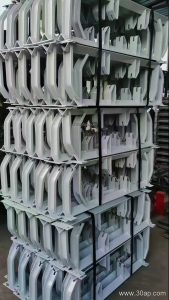
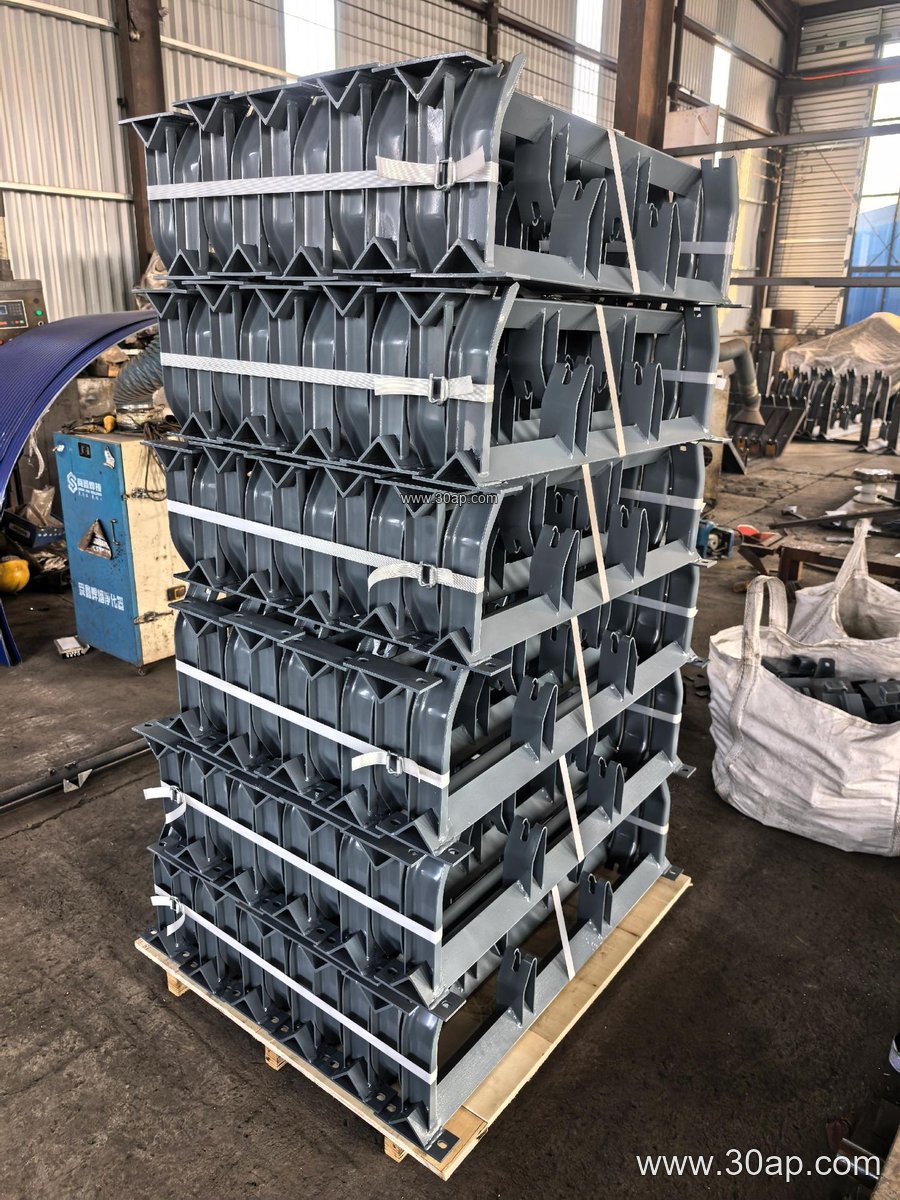
- Fabricated from angle steel, channel steel or bent steel plate, welded into a frame that carries two or three troughing rollers.
- Fitted with a pivot base or a rotating center that lets the frame swing a few degrees when the belt edge pushes against a guide roller.
- Installed on the carrying side, usually after the loading point and at intervals along the run; return-side self-aligning brackets are a separate variant.
- Mounting hole spacing and crossbeam length follow belt width, trough angle and roller diameter, so they are confirmed per design rather than taken as a fixed value.
Because the frame must swing freely, the pivot should be kept clear of spilled material. In a crusher or screening circuit, build-up around the base is the most common reason a self-aligning bracket stops correcting.
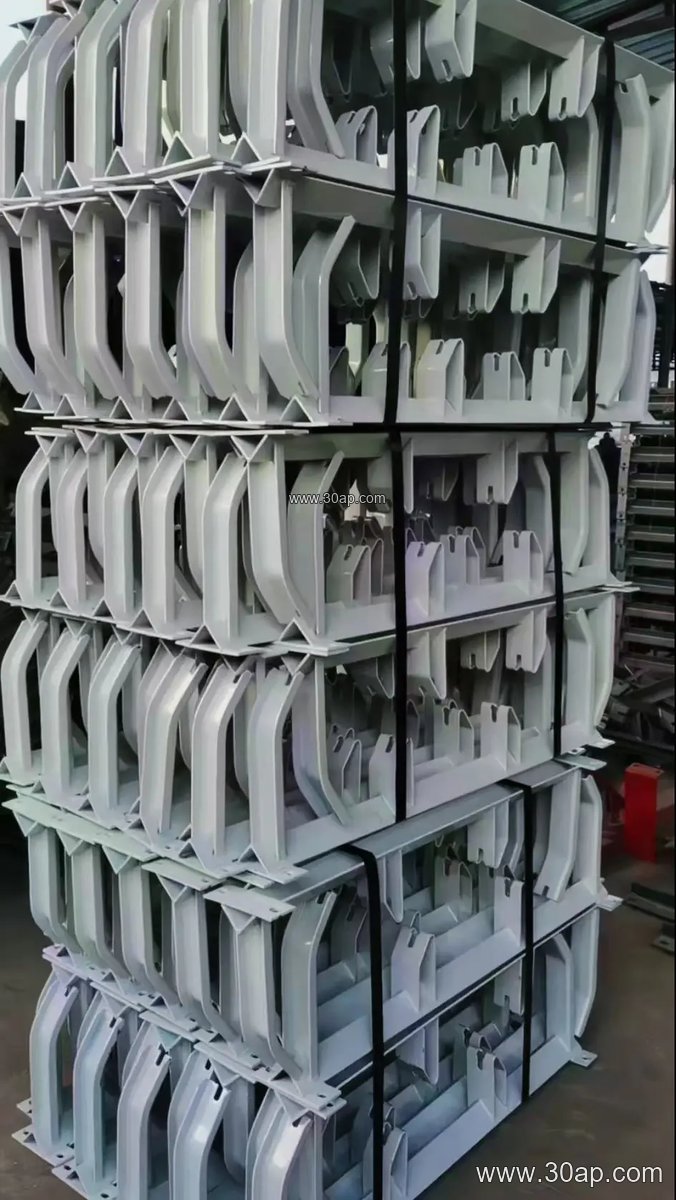
Where It Fits on the Conveyor
Alignment problems usually begin where the belt is loaded off-center or where the structure is slightly out of line. Placing a self-aligning bracket a few meters downstream of the feed point helps the belt settle before it reaches the next idler roller set. Additional units are often spaced along long horizontal sections and ahead of the conveyor pulley at the discharge end, so the belt enters the pulley centered.
In an underground coal mine or a tunnel muck line, space is tight and brackets must be compact. In a port or stockyard with wide belts, the frame is heavier and the pivot needs more torque to respond. A limestone quarry and a cement plant generally use the same principle but different frame sizes.
Common Reference Sizes
The values below are typical reference ranges, not a fixed matching rule. A given belt width can be paired with different trough angles and roller diameters depending on load and design.
| Belt width | Trough angle | Roller diameter | Frame material |
|---|---|---|---|
| B500 | 20 deg / 30 deg | Ø89 | Angle steel |
| B650 | 30 deg / 35 deg | Ø89 / Ø108 | Angle steel |
| B800 | 30 deg / 35 deg | Ø108 / Ø133 | Channel steel |
| B1000 | 35 deg / 45 deg | Ø108 / Ø133 | Channel steel |
| B1200 | 35 deg / 45 deg | Ø133 / Ø159 | Bent steel plate |
| B1400 | 35 deg / 45 deg | Ø133 / Ø159 | Bent steel plate |
| B1600 | 35 deg / 45 deg | Ø159 / Ø194 | Bent steel plate |
| B1800 | 35 deg / 45 deg | Ø159 / Ø194 | Bent steel plate |
| B2000 | 35 deg / 45 deg | Ø194 | Bent steel plate |
Adjustable brackets allow the trough angle to be set between the common values, for example from 20 to 35 degrees or 30 to 45 degrees. Forward-leaning brackets, a related but distinct design, usually set the side rollers at about 1.5 to 2 degrees ahead of the belt direction.
Buyer Checklist
- Confirm belt width, trough angle and roller diameter together, not belt width alone.
- Ask whether the frame is fixed or adjustable, and whether the pivot is on the carrying or return side.
- Check that the mounting hole spacing matches the existing stringer or crossbeam.
- Match the bracket to the belt duty: a heavy-duty mining conveyor belt or steel cord conveyor belt needs a stiffer frame than a light aggregate line.
- For dusty or wet service, confirm that the pivot has a clearance or seal arrangement that will not seize.
A self-aligning idler bracket is a small part of the conveyor, but it protects the belt edge and reduces spillage. Choosing it together with the right troughing set and pulley alignment gives the best tracking result.