What a conveyor bracket is and why its price varies
A conveyor bracket is the steel support that holds a conveyor idler roller in position under the belt. In a quarry, a coal washing plant, or a cement plant, the bracket is the quiet part of the line, but it decides how well the roller sits, how the belt tracks, and how quickly a maintenance team can replace a worn idler. Because it is a fabricated steel part rather than a bought-in bearing assembly, the conveyor bracket price moves with material, band width, trough angle, and the number of brackets in the order.
The same item is also called a conveyor idler bracket or roller support bracket. It is not a pulley and not a roller. A drive pulley, a tail pulley, and a bend pulley are separate components with their own price logic, and none of them substitutes for a bracket. When a buyer compares quotations, the bracket should be compared with brackets, not with a conveyor pulley.
How the bracket is built
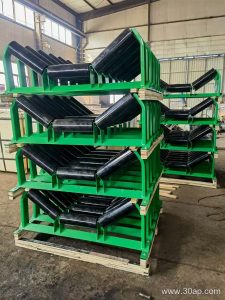
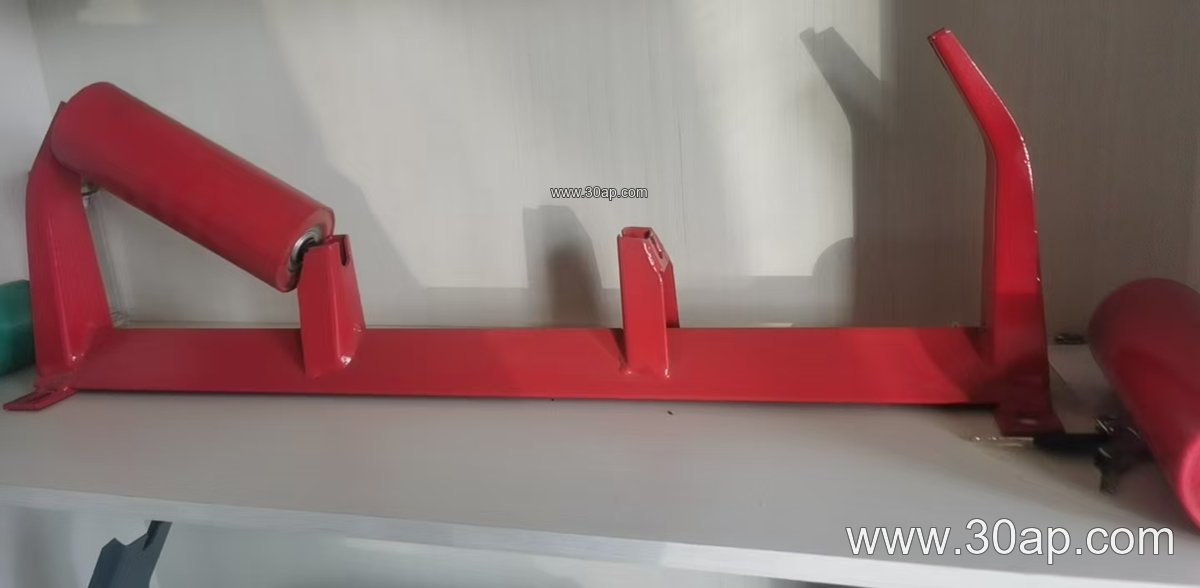
Most brackets are formed from angle steel, channel steel, or folded steel plate, then drilled, welded, and coated. The shape follows the job. A troughing bracket carries three rollers in a trough, a transition bracket eases the belt from flat to troughed, a return bracket supports the empty side, and a V-return or flat return bracket serves the lower run. Self-aligning and forward-tilted designs add a small angle, often about 1.5 to 2 degrees, to help the belt centre itself.
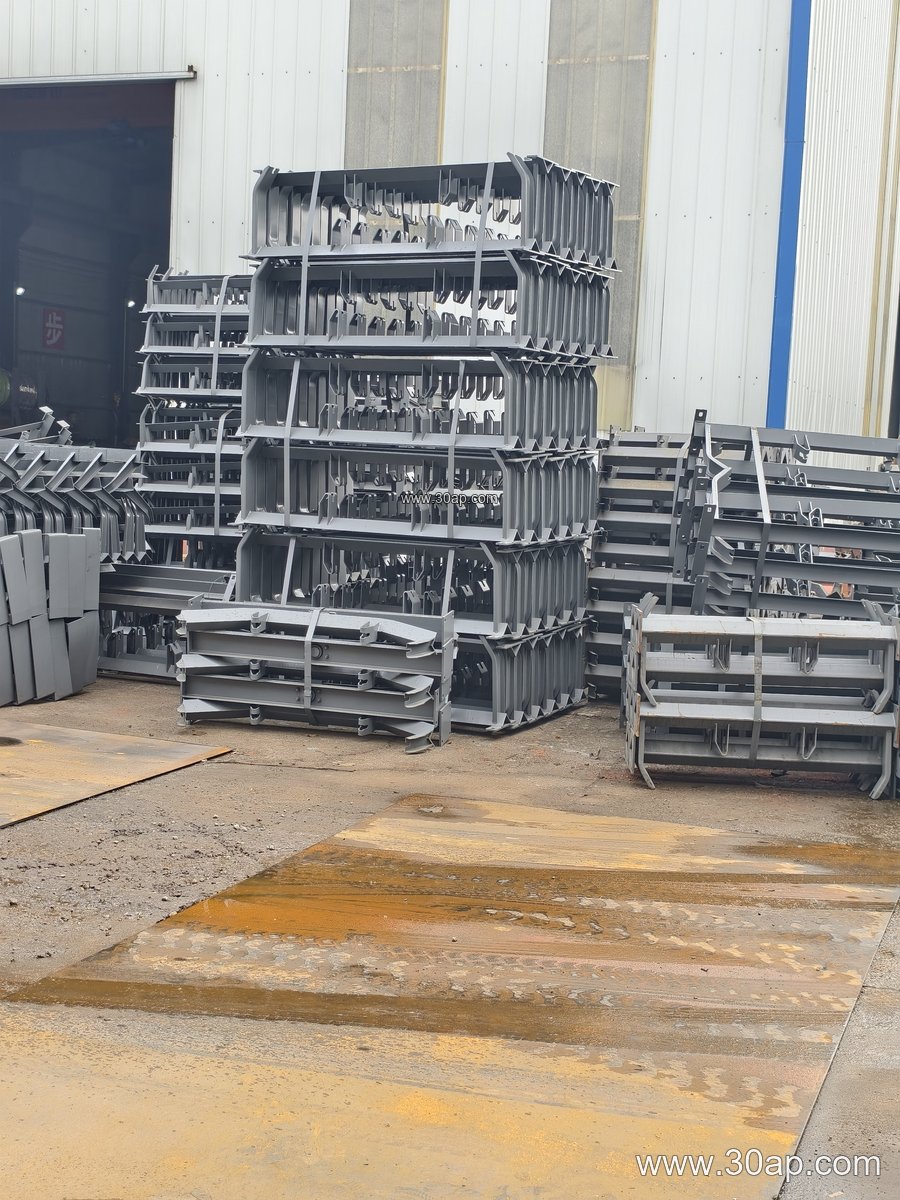
Two cost drivers hide in the details. First, the mounting hole spacing and crossbeam length change with belt width and trough angle, so a bracket for B800 is not the same fabrication as one for B1400. Second, surface treatment matters: painted, galvanized, or hot-dip galvanized brackets carry different prices, and a dusty quarry line may justify the extra spend.
Typical reference data
The table below lists common working combinations. These are reference values for discussion, not fixed pairings, and no single belt width is tied to only one trough angle or roller diameter.
| Item | Common options |
|---|---|
| Bracket type | Troughing, upper troughing, transition, return, flat return, V-return, impact, self-aligning, forward-tilted, spiral, suspended, adjustable |
| Belt width | B500, B650, B800, B1000, B1200, B1400, B1600, B1800, B2000, B2200 |
| Trough angle | 20, 30, 35, 45 degrees; adjustable types can move between these |
| Roller diameter | Ø89, Ø108, Ø133, Ø159, Ø194 |
| Material | Angle steel, channel steel, folded steel plate |
Example callouts such as B800, 35 degrees, Ø108 or B1200, 45 degrees, Ø133 may appear on a drawing, but the hole spacing and beam length are always set by design. A fabric core conveyor belt and a steel cord conveyor belt may run on the same width but need different roller loads, so the bracket is chosen from the load case, not from the belt name alone.
How the price is put together
Suppliers usually quote per piece, with tiers for quantity. The main variables are steel weight, welding time, hole and slot machining, and coating. Adjustable brackets cost more than fixed ones because of the extra slotting and hardware. Impact brackets with rubber rings or reinforced decks also sit higher. Freight is not trivial: brackets are bulky relative to their weight, so a full container of B1800 frames is priced differently from a small pallet for a sand and gravel line.
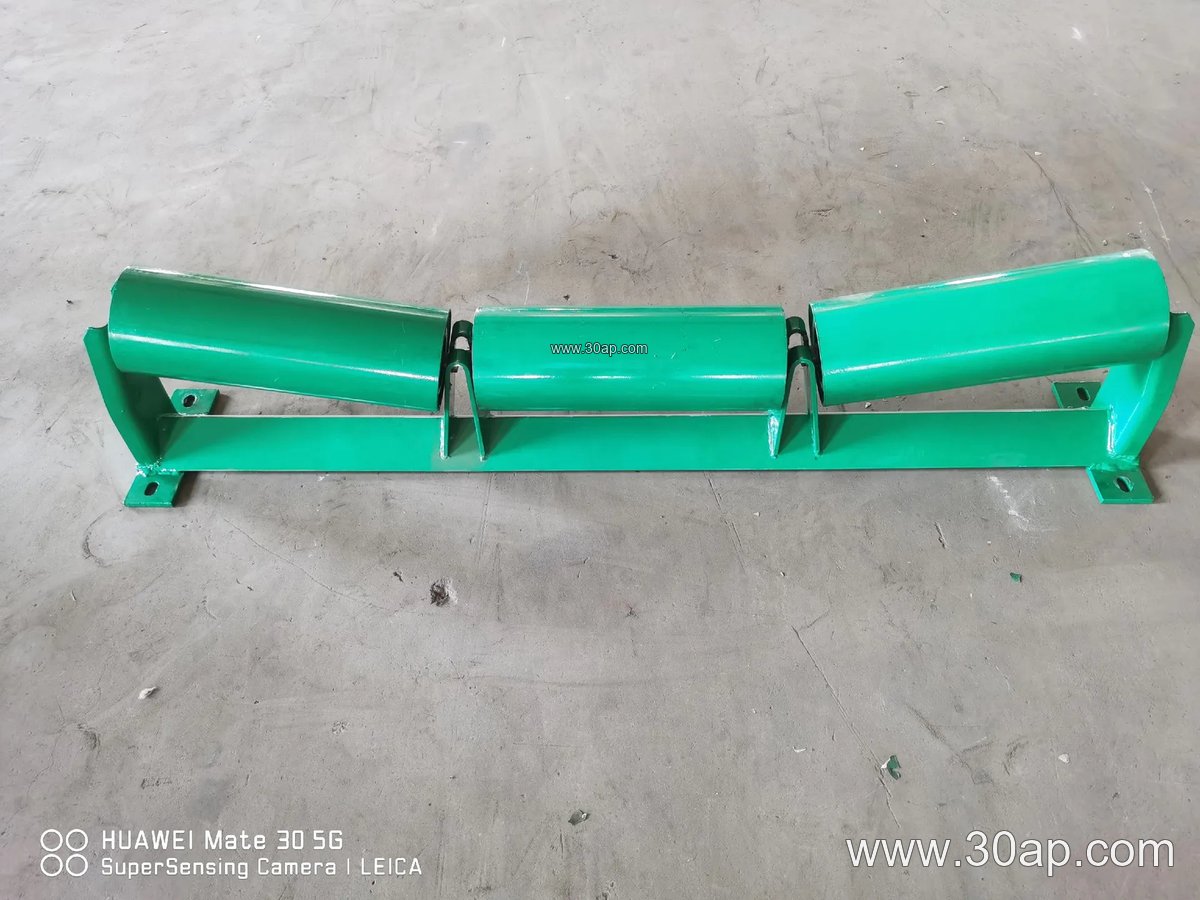
Ask for a breakdown by type and width instead of one lump figure. A quotation that separates troughing brackets, return brackets, and transition brackets shows where the money goes and makes later spare-part orders easier.
Where brackets are used
You will find them in iron ore and copper ore handling, in power plant coal conveying, in crushing and screening circuits, and in fertilizer or grain silo systems. In a tunnel spoil line, a low-profile return bracket may be preferred; in a primary crusher discharge, an impact bracket protects both roller and belt. The bracket works together with the idler roller and the conveyor belt, and a poorly matched bracket shows up as edge wear or mistracking long before the roller fails.
What to confirm before you buy
- Belt width and trough angle, plus the roller diameter the bracket must accept.
- Fixed or adjustable design, and the adjustment range if adjustable.
- Mounting hole spacing and crossbeam length, taken from the drawing.
- Steel section and coating, matched to the site conditions.
- Quantity per type, since mixed orders affect the conveyor bracket price.
A bracket is a small line item, but it sets the geometry of the whole conveyor. Confirm the drawing, confirm the coating, and compare like with like, and the price you pay will reflect the part you actually need. For related components such as the conveyor belt, idler roller, and conveyor pulley, keep the same discipline: match the specification to the duty, not to a catalogue page.