What a Rust-Resistant Idler Is Meant to Solve
A rust-resistant idler is a carrying or return roller built so that moisture, washdown water, and aggressive dust do not turn its shell and end caps into a crumbling, seized mess. In a quarry, a coal preparation plant, or a cement plant, water is often present from dust suppression, rain, or material with high surface moisture. The roller still has to let the conveyor belt run true, and it still has to turn freely after months of exposure.
The term describes a corrosion-resistant idler roller, usually through galvanized or coated steel shells, sealed bearing housings, and protective end caps. It is not a separate conveyor component category; it is the same roller family with a surface and sealing strategy aimed at wet service.
How the Roller Is Built
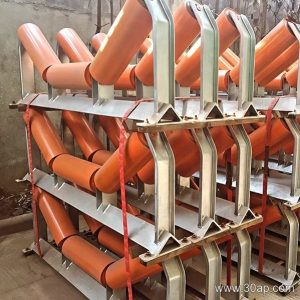
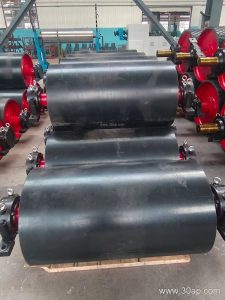
The construction is straightforward but the details matter. A steel tube forms the shell, the shaft passes through the center, and bearing housings are pressed or welded into each end. For rust resistance, the shell may be hot-dip galvanized, the end caps may be sealed with a labyrinth arrangement, and the shaft ends may be treated to resist corrosion at the bracket contact point.
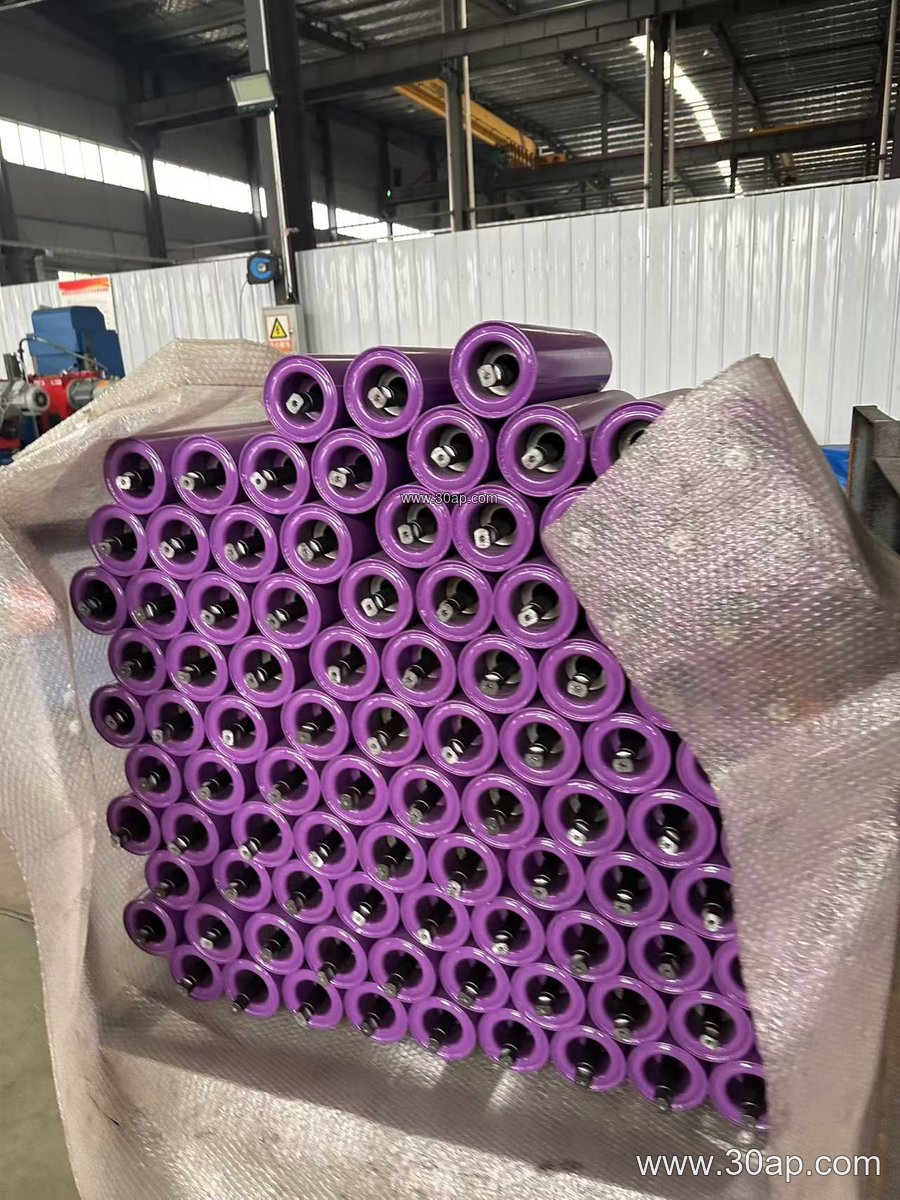
Shell and surface
Plain steel tube is common, but in wet or corrosive conditions a galvanized shell, nylon sleeve, or rubber ring can change how the roller behaves. Rubber rings are usually chosen for impact absorption rather than corrosion protection, so they are not a substitute for proper sealing and coating.
Bearing and seal
Bearing sizes such as 6204, 6205, 6305, 6306, 6308, and 6310 are common across the range. No single bearing is tied to one roller diameter; the bearing is selected with load, speed, and life in view. A multi-stage labyrinth seal plus grease retention is what keeps moisture out of the bearing cavity.
Where These Rollers Earn Their Place
Wet or humid service lines are the natural fit. In a coal preparation plant, washdown and fine coal slurry reach the return side. In a sand and gravel line, dust suppression sprays keep the belt and rollers damp. In a cement plant, raw material moisture and outdoor storage create corrosion pressure on the return run. A port or power plant coal yard exposes rollers to rain and coastal air.
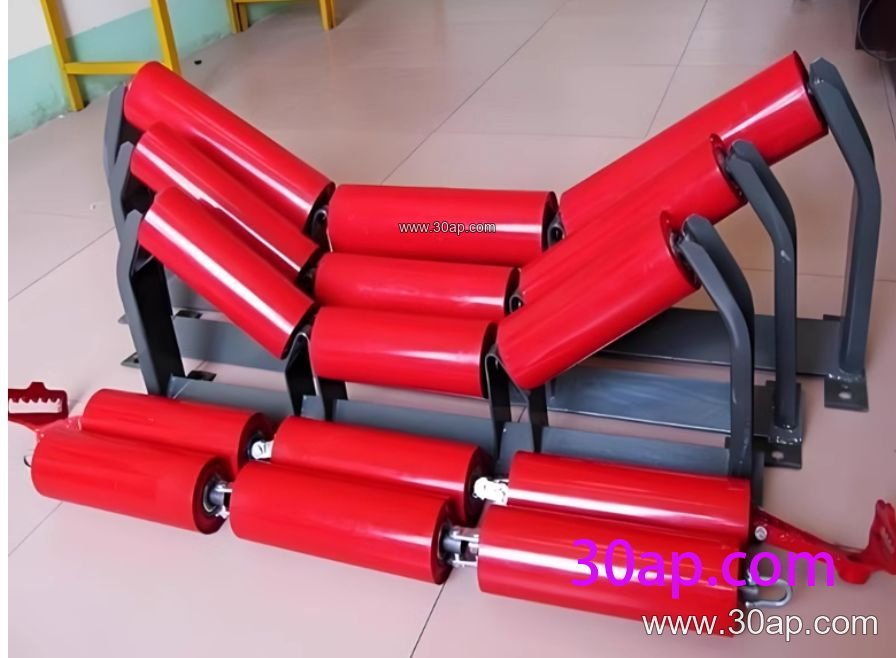
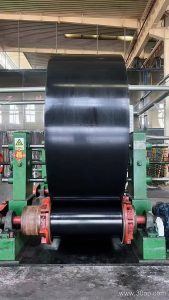
In these settings, the idler works with the conveyor belt as a system. A rough-running return roller increases belt drag and can damage the belt edge, while a properly sealed roller keeps friction low. When the belt is a heavy-duty mining conveyor belt or an abrasion resistant conveyor belt carrying wet ore, the return side benefits most from a corrosion-resistant roller because it sits close to splashing and standing water.
The roller also sits in a conveyor bracket, so the bracket interface should be checked for coating or drainage. A rusted bracket can seize a good roller just as quickly as a rusted shell.
Common Reference Dimensions
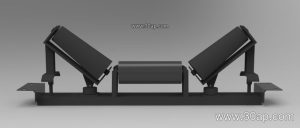
The values below are reference examples, not a fixed selection rule. Roller length changes with belt width, trough angle, and roller set type. Side rollers and center rollers can differ in length.
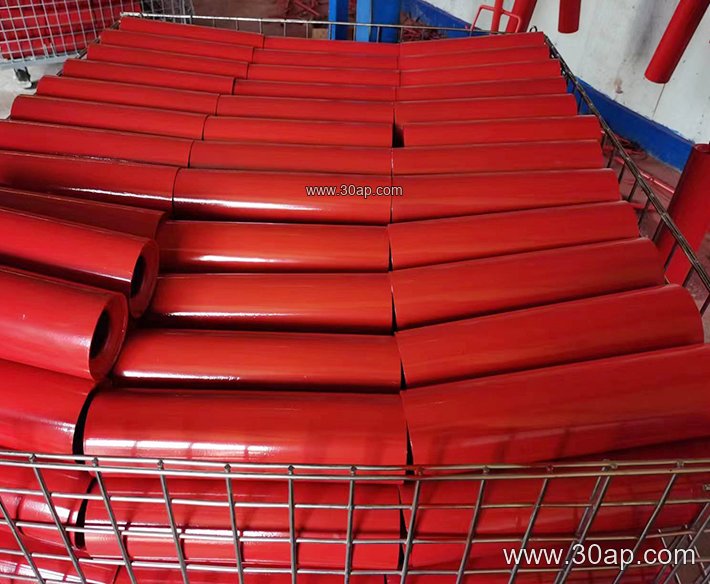
- Roller diameter references: Ø63, Ø76, Ø89, Ø102, Ø108, Ø127, Ø133, Ø159, Ø178, Ø194, Ø219
- Belt width references: B400, B500, B650, B800, B1000, B1200, B1400, B1600, B1800, B2000, B2200, B2400
- Trough angle references: 20°, 30°, 35°, 45°; forward tilt is often about 1.5° to 2° where used
Typical three-roller trough set, reference lengths only
| Belt width | Approximate roller length |
|---|---|
| B500 | 200 mm |
| B650 | 250 mm |
| B800 | 315 mm |
| B1000 | 380 mm |
| B1200 | 465 mm |
| B1400 | 530 mm |
| B1600 | 600 mm |
| B1800 | 670 mm |
| B2000 | 750 mm |
These are common examples only. A B800 belt is not locked to a single roller diameter, and a given belt width does not determine shaft diameter on its own.
What a Buyer Should Check
First, confirm the actual environment. A quarry that sprays water daily has different needs from a dry aggregate line that only sees humidity. Ask for the shell coating or galvanizing thickness, the seal design, and the bearing size. Second, match the roller to the belt width and trough set, not just to a catalog number. Third, check the shaft and bracket fit, because corrosion often starts at the mounting point.
For a wet coal line, a flame retardant conveyor belt or PVG conveyor belt may run alongside these rollers, and the roller selection should still follow moisture and load. For a long overland run, the return rollers are often the first place corrosion shows up, so specifying rust-resistant idlers there can extend service life.
Finally, keep spare units. A seized roller can score a belt in hours, and a small stock of sealed rollers is cheaper than replacing a section of conveyor belt.