What a Self-Cleaning Idler Does
A self-cleaning idler is a belt conveyor roller designed to shed material that would otherwise cling to its surface. On lines carrying wet, sticky or fine bulk material, ordinary rollers can build up a layer of mud, fines or residue that hardens into an uneven sleeve. That buildup changes the belt line, adds vibration and can lead to belt tracking problems. A self-cleaning idler addresses this by combining a roller body with a surface or profile that releases material as the belt passes over it.
The idler roller still carries the conveyor belt and supports the load, but its working face is shaped to avoid a smooth, continuous surface where sticky material can collect.
How the Roller Is Built
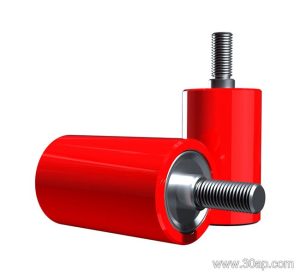
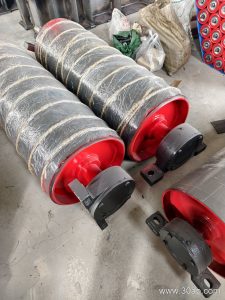
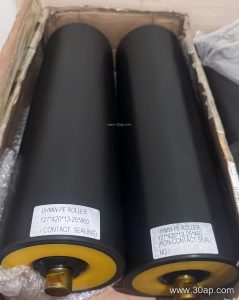
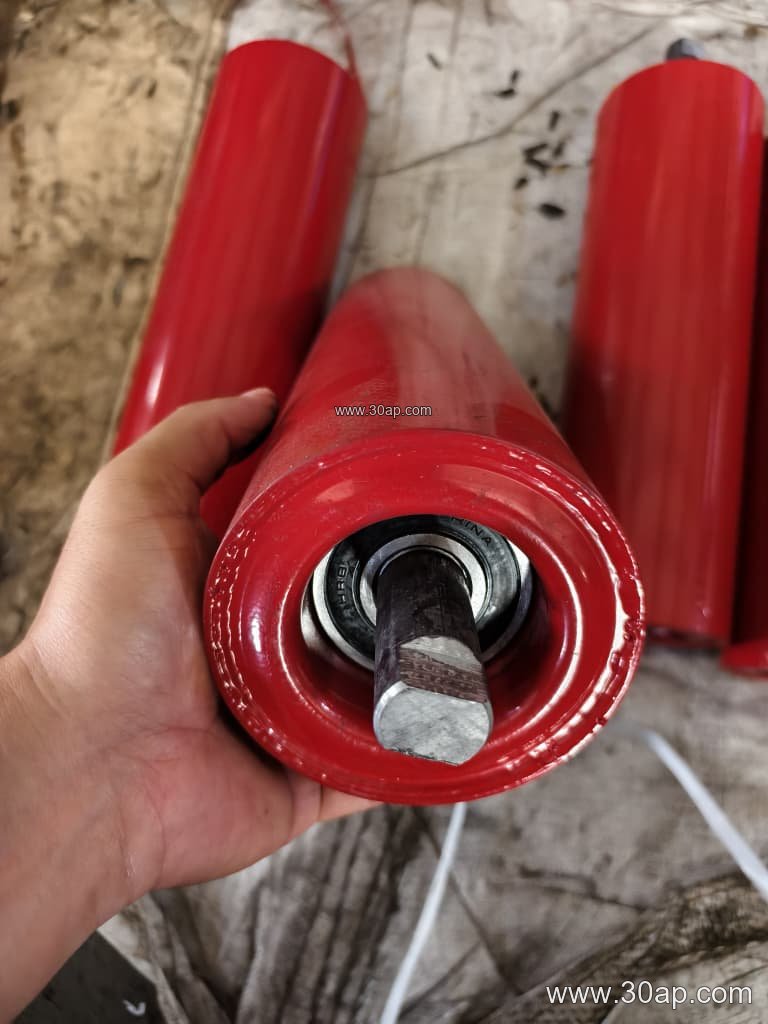
Most designs start with a steel tube body fitted with sealed bearings, then add a cleaning feature to the shell. Common approaches include spiral or helical flights that push residue toward the roller ends, rubber discs or rings that flex slightly and knock material free, and segmented or comb-like surfaces that break the contact area into smaller sections. Some self-cleaning idlers use profiled rubber or polyurethane sleeves over a steel core.
Bearing protection matters as much as the shell. Dust and moisture are the main enemies of idler life, so seals, end caps and bearing housings are usually specified for dirty service. Common bearing sizes on conveyor idlers include 6204, 6205, 6305, 6306, 6308 and 6310, matched to the roller diameter and load rather than fixed by belt width alone.
Where It Fits on the Conveyor
Self-cleaning idlers are most often used on the carrying side where the belt is loaded, and sometimes on the return side after a wet process. Typical applications include:
- Coal handling and wash plants, where fines and moisture create sticky carryback
- Cement and limestone lines with dusty, damp material
- Sand and aggregate conveyors after washing or in humid weather
- Fertilizer and other chemical bulk handling where residue clings to surfaces
- Power plant coal yards and transfer points with variable moisture
They are not a substitute for a scraper or belt cleaning system, but they reduce the amount of material that accumulates on the roller face. In a transfer chute or load zone, a self-cleaning idler may be paired with impact rollers or a cushion idler group to absorb loading energy.
Sizes and Fit with the Belt Line
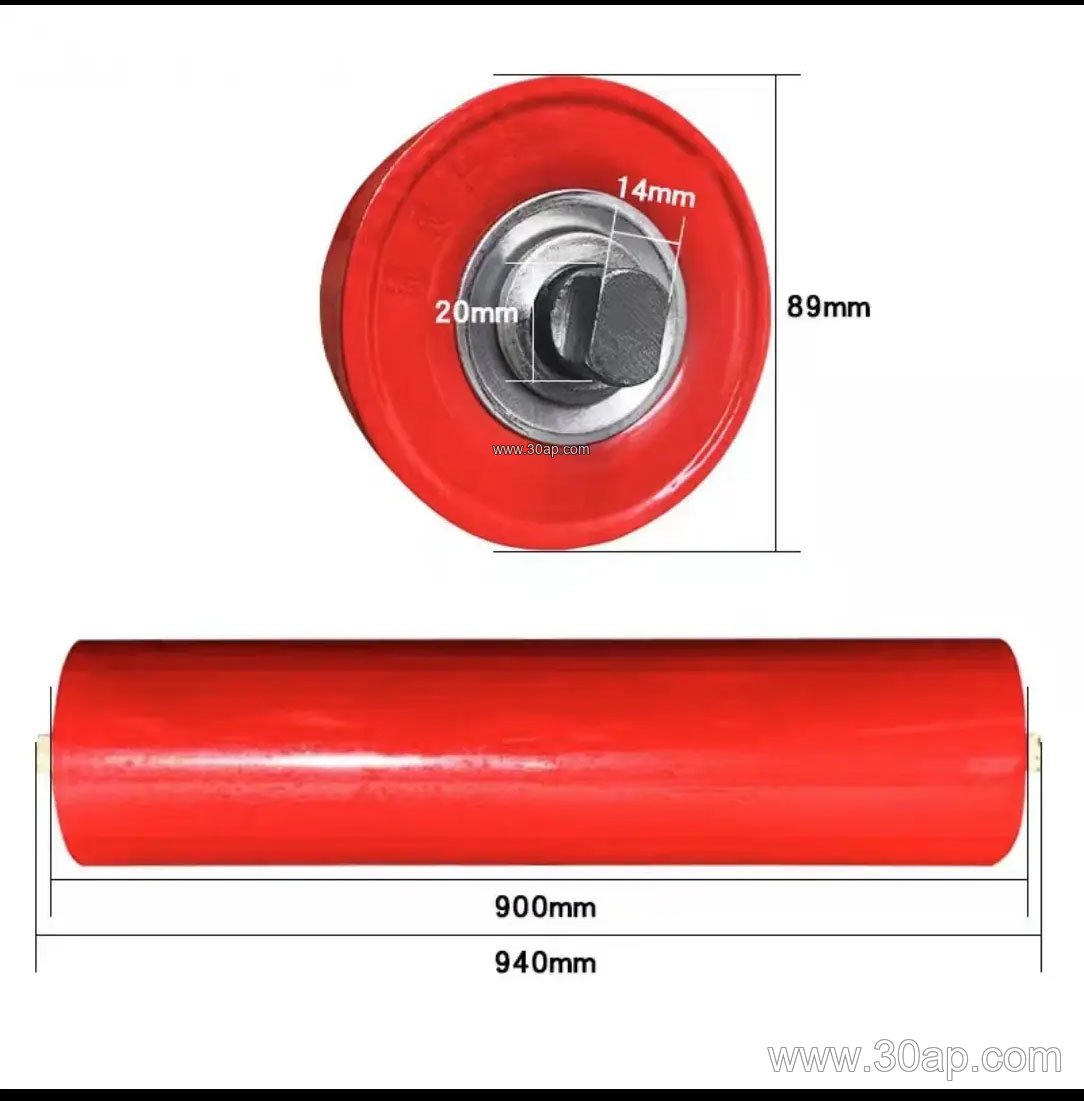
Roller diameter and length should follow the conveyor design, not a single rule. A self-cleaning idler is commonly ordered in diameters such as Ø89, Ø102, Ø108, Ø127, Ø133, Ø159 and Ø194 mm, with larger sizes for heavy-duty mining and port installations. Belt widths from B500 to B2000 are common, and roller length varies with belt width, trough angle and the idler group form.
| Parameter | Typical Range or Example |
|---|---|
| Roller diameter | Ø89, Ø102, Ø108, Ø127, Ø133, Ø159 mm |
| Belt width | B500, B650, B800, B1000, B1200, B1400, B1600 mm |
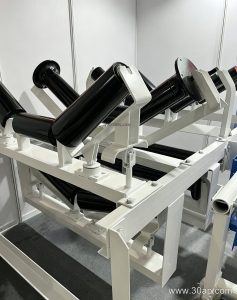
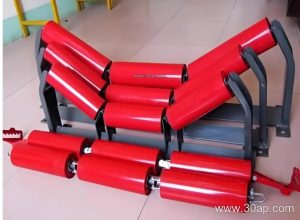
| Trough angle | 20°, 30°, 35°, 45° |
| Bearing | 6204, 6205, 6305, 6306, 6308, 6310 |
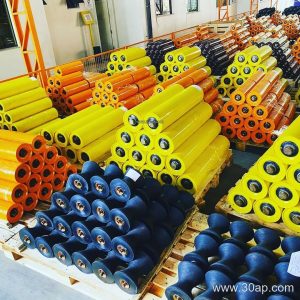
| Surface options | Steel tube, rubber rings, ceramic, nylon |
For a three-roll troughing set, common center roll lengths are about 200 mm for B500, 250 mm for B650, 315 mm for B800, 380 mm for B1000 and 465 mm for B1200. These are reference examples only; side rolls and center rolls may differ, and the final length should come from the conveyor layout.
Buyer Checklist
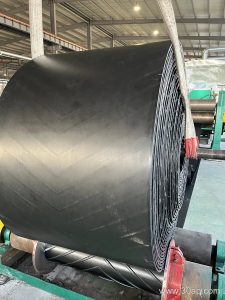
Before specifying a self-cleaning idler, confirm the belt width, trough angle, roller diameter and mounting style. Check whether the standard conveyor bracket fits the shaft end, and ask how the roller seals are protected in wet or dusty conditions. Match the roller surface to the material: rubber rings suit sticky fines, while steel or ceramic may be better where abrasion dominates. Also review the belt itself, since a worn or poorly spliced conveyor belt can cause tracking issues that no idler can fix.
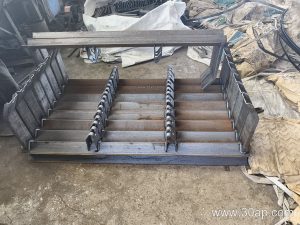
For related equipment, the idler works alongside the conveyor pulley, frame and belt cleaning components. A well-matched set of idlers and a properly tensioned belt will keep the line running smoothly in quarry, cement plant or coal handling service.