What a Trough Idler Bracket Does on a Conveyor
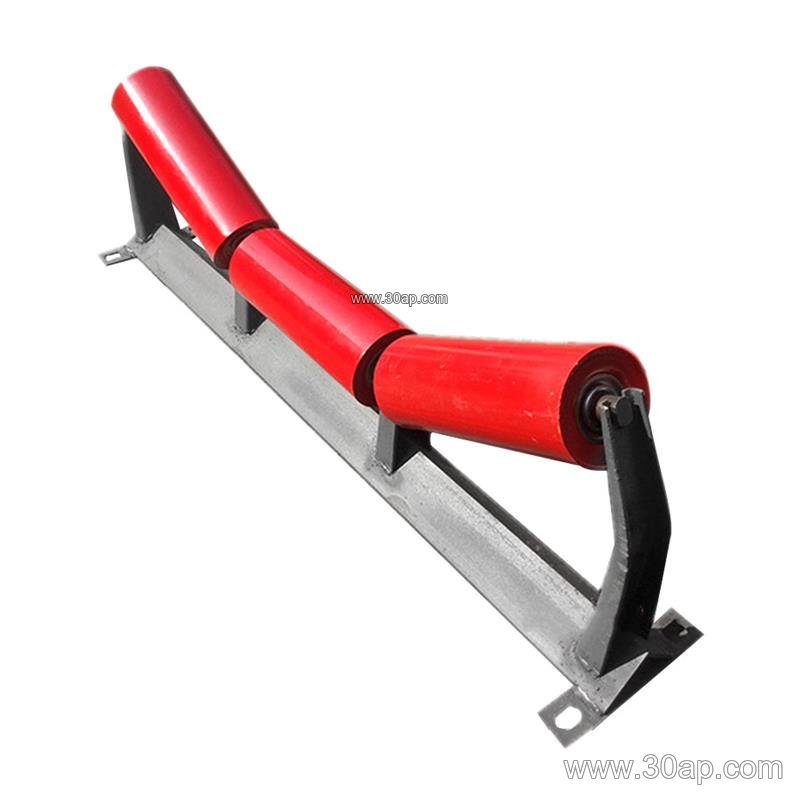
The trough idler bracket is the structural support that holds the inclined and center idler rollers in a three-roll (or five-roll) trough set, giving the conveyor belt its characteristic cupped profile. In a quarry, a coal washing plant, or a cement clinker line, this bracket is the part that carries the load path from the belt and material down into the conveyor frame. Without a properly aligned trough bracket, the idler rollers sit at the wrong angle, the belt edge lifts, and spillage starts at the transfer point.
Also called a troughing idler bracket or troughing frame bracket, it is a distinct structural component from the pulley-side brackets. Drive pulleys, tail pulleys, and bend pulleys are separate assemblies with their own support structures, and the trough bracket should not be confused with them. The bracket’s job is to position the carrying idlers, not to guide or drive the conveyor belt.
Construction and Materials
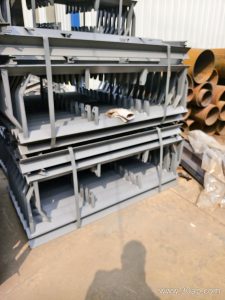
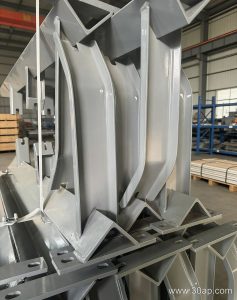
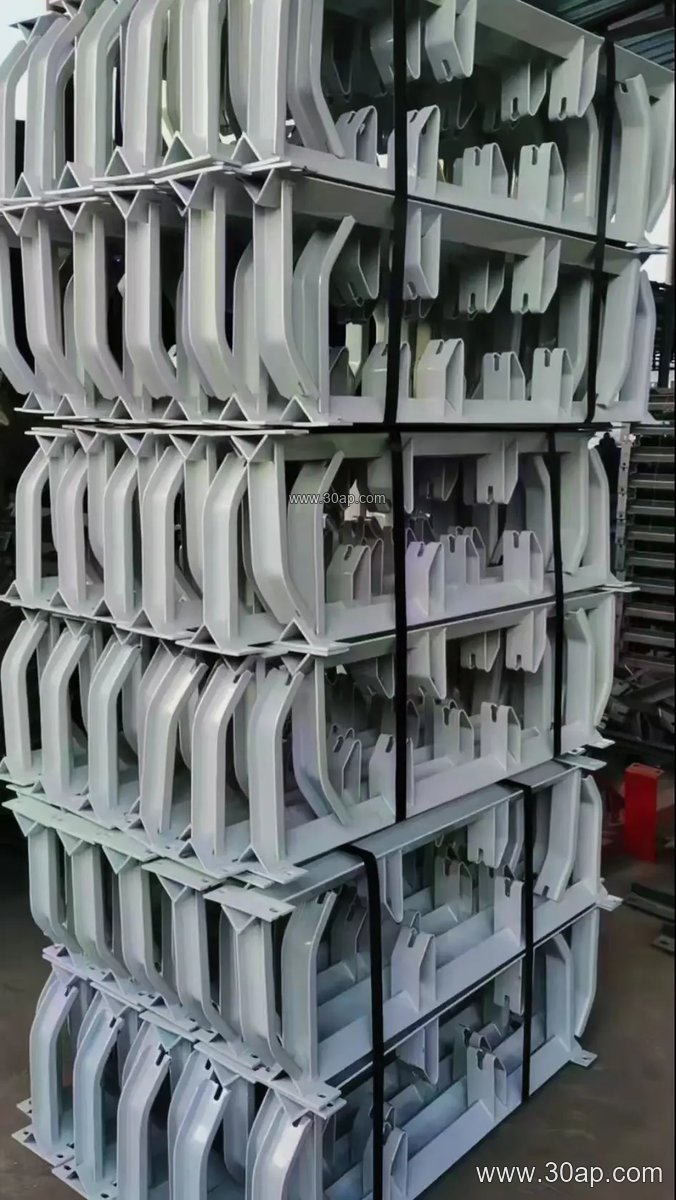
Most trough idler brackets are fabricated from angle steel, channel steel, or folded steel plate. The two side wings are bent or welded to the required trough angle, and the base includes mounting slots that bolt to the conveyor stringer or cross beam. Roller mounting gaps are punched or slotted so the idler shaft ends drop in and lock.
- Angle steel frame: economical, common on light and medium duty lines
- Channel steel frame: higher stiffness for wide belts and heavy loads
- Folded plate: cleaner profile, often used where dust buildup must be minimized
Welds should be continuous at load-bearing joints. Bolt holes are usually slotted to allow field adjustment of alignment, which matters on long overland conveyors where thermal movement and settling occur.
Matching Trough Angle, Belt Width, and Roller Diameter
The bracket fixes the trough angle, and this angle is selected together with belt width and material characteristics. A 20-degree trough suits easily troubled belts and low surcharge; 30 and 35 degrees are the workhorses; 45 degrees gives the deepest material bed for high-capacity transfer. Adjustable brackets allow the same frame to be set anywhere between these angles, which is useful during commissioning.
The table below lists common reference combinations. These are examples, not fixed rules, and actual hole spacing and beam length are determined by design.
| Belt Width | Trough Angle | Roller Diameter | Typical Use |
|---|---|---|---|
| B500 | 30 degrees | Ø89 | Small aggregate lines, fertilizer plants |
| B650 | 30 degrees | Ø89 | Grain silos, light sand conveying |
| B800 | 35 degrees | Ø108 | Crushing and screening plants |
| B1000 | 35 degrees | Ø108 / Ø133 | Coal washing, limestone mines |
| B1200 | 45 degrees | Ø133 | Power plant coal feed, iron ore |
| B1400 | 45 degrees | Ø159 | Port terminals, large stockyards |
| B1600 | 45 degrees | Ø159 / Ø194 | Heavy mineral duty |
A wider belt does not force a particular trough angle or roller diameter. Selection depends on capacity, lump size, belt stiffness, and transition distance. Transition brackets are often placed near the tail pulley to gradually change the belt from flat to troughed, reducing edge stress.
Where Trough Brackets Are Used
In a limestone quarry, trough idler brackets run continuously along the main haulage conveyor between the tail pulley and the head discharge. In a power plant coal yard, they support the carrying side through long straight runs and around gentle curves. The same component appears in tunnel muck removal lines and in sinter plants where hot material demands robust frames.
Related hardware on the same conveyor includes the idler roller, conveyor bracket for the return side, and the conveyor pulley assemblies at each end. Return-side brackets are a different subtype with a flatter or V-shaped profile and should be specified separately.
Buyer Checklist
- Confirm belt width and required trough angle before ordering.
- Check roller diameter and shaft end type so the bracket accepts the intended idler.
- Decide between fixed and adjustable brackets based on commissioning needs.
- Verify mounting hole spacing against the existing stringer or cross beam.
- Consider material buildup: folded plate and open profiles shed dust better.
- For impact zones, pair the bracket with impact idler rollers rather than standard carrying idlers.
Inspection during operation should focus on loose bolts, bent wings, and corrosion at the weld toes. A slightly misaligned trough frame will wear the conveyor belt edge and shorten idler life, so periodic alignment checks pay for themselves.