What the Impact Idler Bracket Does
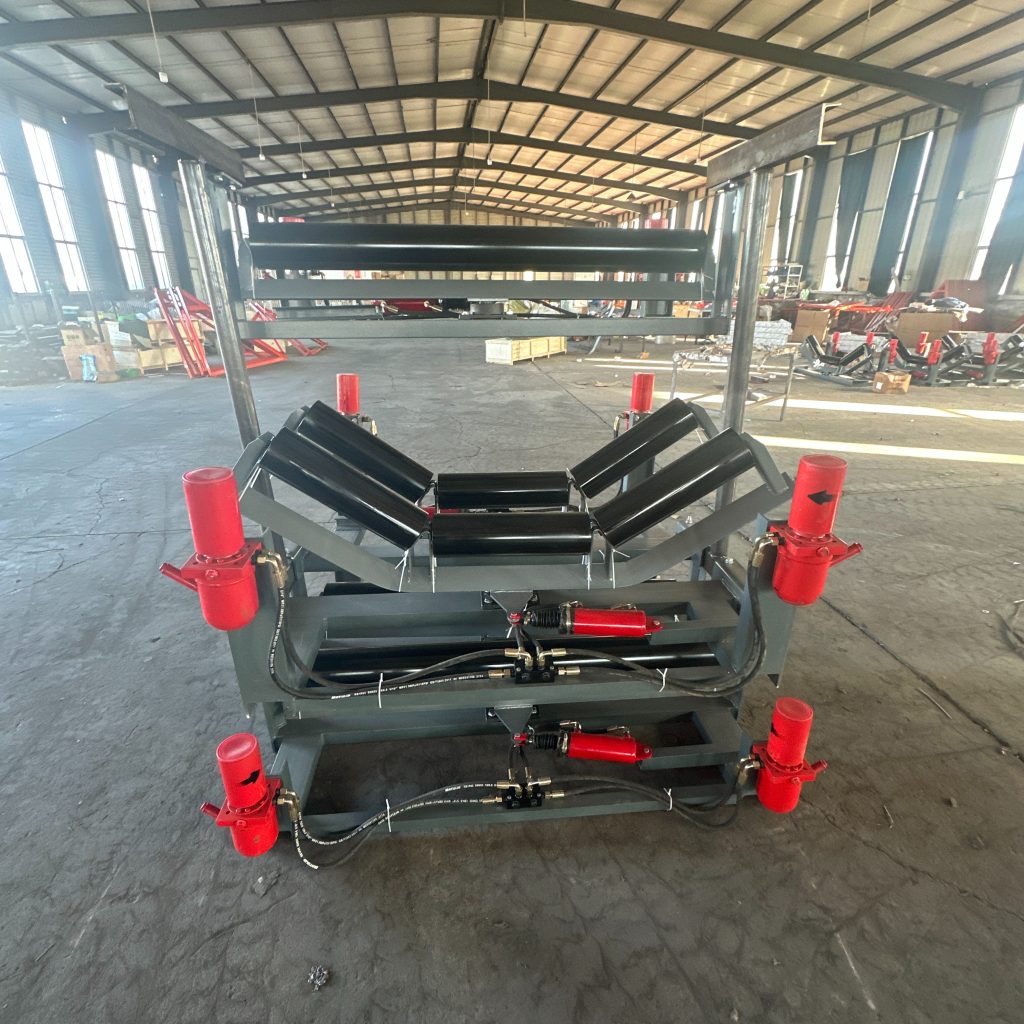
At a quarry transfer point or a coal yard receiving belt, the conveyor belt takes its hardest hits where rock, clinker or sinter drops onto it. The impact idler bracket is the steel support that carries the impact idler rollers directly under that drop zone. It holds the rollers at the correct trough angle and keeps them aligned with the belt, so the load is absorbed by the idler assembly instead of the belt carcass. In practice, this bracket is the interface between the conveyor bracket system and the rubber-covered impact rollers.
Plant operators in cement plants, power station coal handling and sand and gravel lines often specify a separate impact bracket zone because standard carrying brackets wear out quickly under repeated shock loading. The bracket itself does not cushion the belt; the impact idler rollers do that. The bracket’s job is to keep those rollers in position, at the right height and angle, and to transfer the shock into the conveyor frame.
How the Bracket Is Built
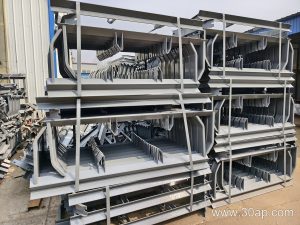
Most impact idler brackets are fabricated from angle steel, channel steel or folded steel plate. The design usually includes a base that bolts to the conveyor stringer, a crossbeam that spans the belt width, and mounting slots or brackets for the impact idler rollers. Because the loading zone is a high-wear area, the bracket often uses thicker material than a standard carrying bracket and may include gussets or reinforced corners.
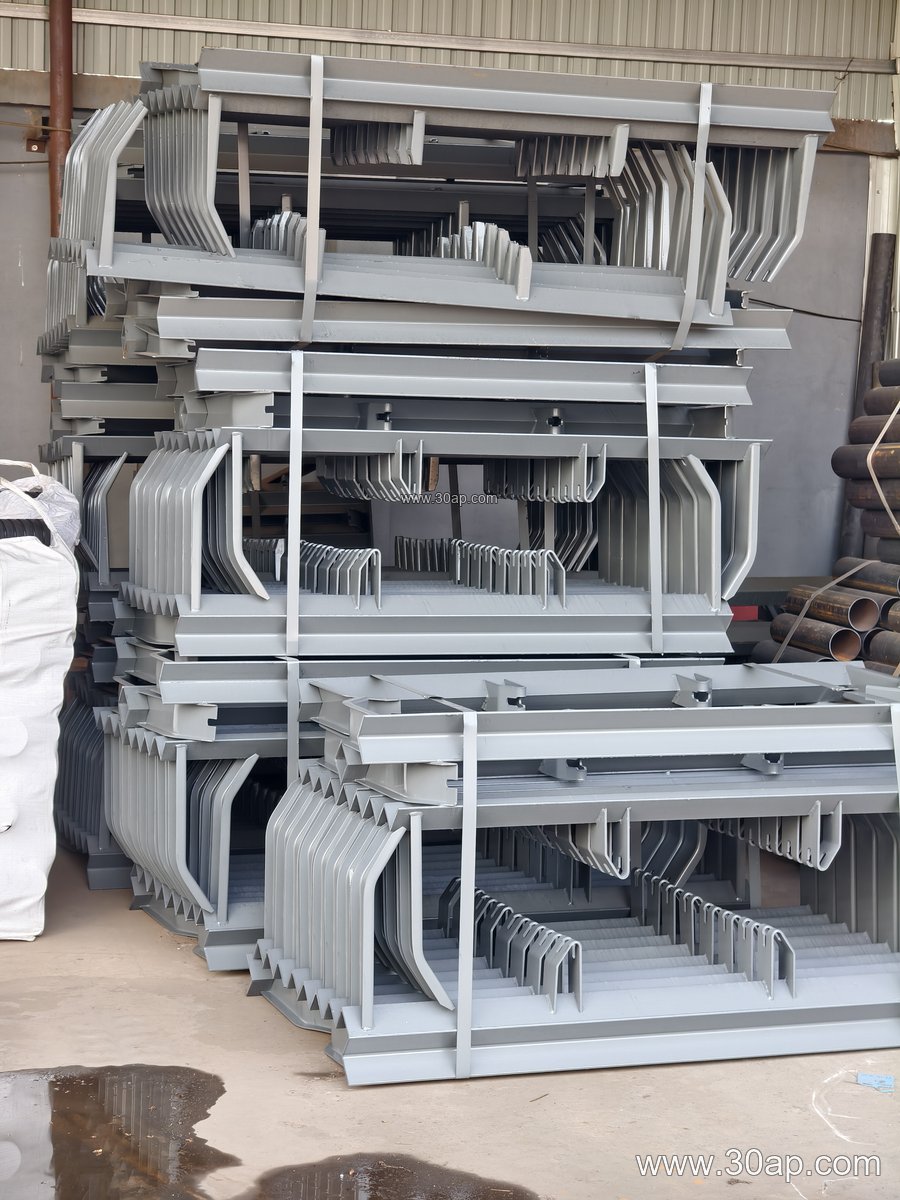
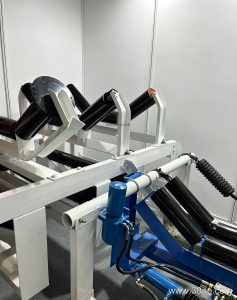
The bracket is normally fixed, not adjustable, but adjustable versions exist for operations that need to fine-tune trough angle or roller position. When the bracket is adjustable, the slot allows the roller mounting to move between common trough angles such as 20, 30, 35 or 45 degrees. The impact idler bracket should not be confused with a transition bracket or a return bracket; each has a different location and function on the conveyor.
Where It Fits on the Conveyor
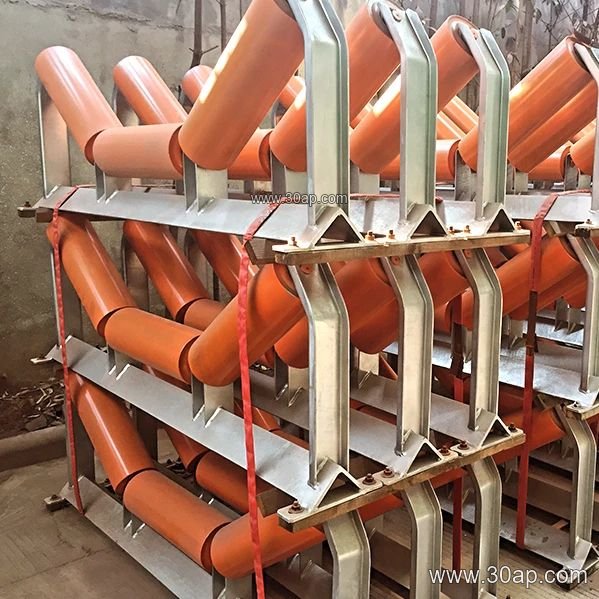
You will find the impact idler bracket in the loading zone, usually just downstream of the feed chute and before the first standard carrying idler set. In a limestone mine, it may sit under a primary crushing discharge; in a fertilizer plant, under a belt loading point from a silo. The bracket pairs with impact idler rollers, which are often fitted with rubber rings or a resilient disc surface to absorb energy. The conveyor belt runs over these rollers, and the bracket keeps the whole set stable under the falling material.
Impact brackets are not used at the drive pulley, tail pulley or bend pulley. Those locations use different support structures. A common mistake is to order an impact bracket for a bend pulley area; the bracket is specifically designed for the carrying side loading zone and should be selected for that duty only.
Matching Bracket to Belt and Roller Size
Selection starts with the conveyor belt width and the impact idler roller diameter. Reference data for common configurations is shown below; these are examples, not fixed rules. The bracket’s mounting hole spacing and crossbeam length vary with belt width and trough angle, so the actual dimensions should be confirmed with the bracket drawing for the project.
| Belt width | Common trough angle | Typical impact roller diameter |
|---|---|---|
| B500 | 20° – 30° | Ø89 |
| B650 | 30° | Ø89 – Ø108 |
| B800 | 30° – 35° | Ø108 |
| B1000 | 35° | Ø108 – Ø133 |
| B1200 | 35° – 45° | Ø133 |
| B1400 | 35° – 45° | Ø133 – Ø159 |
| B1600 | 35° – 45° | Ø159 |
| B1800 | 35° – 45° | Ø159 – Ø194 |
| B2000 | 35° – 45° | Ø194 |
| B2200 | 35° – 45° | Ø194 |
Do not assume that one belt width matches only one pulley diameter or one roller diameter. The table above lists common combinations; final selection depends on the conveyor design, the impact energy at the loading point and the roller manufacturer’s recommendation. For a B1200 belt with a 45-degree trough, a Ø133 impact roller is often used, but a different roller diameter may be suitable if the bracket and frame are designed for it.
What a Buyer Should Check
- Bracket type: Confirm whether the requirement is a fixed impact bracket or an adjustable impact bracket. Adjustable types allow trough angle changes between common angles, which can help when the loading zone is being re-tuned.
- Mounting dimensions: Check hole spacing, crossbeam length and the height from the stringer to the roller center. These depend on belt width and trough angle and should come from the bracket drawing, not from a general table.
- Material and finish: Angle steel, channel steel and folded plate are common. For dusty or wet locations, confirm the surface treatment with the supplier.
- Roller compatibility: The bracket must match the impact idler roller shaft and bearing housing. Bring the roller part number or drawing to the inquiry.
- Frame interface: The conveyor bracket must bolt to the existing stringer. If the stringer is old or non-standard, provide a sketch of the mounting surface.
Impact idler brackets are a small part of the conveyor, but they protect the conveyor belt and the idler roller set in the most demanding part of the route. Matching the bracket to the belt width, trough angle and impact roller size is the main task at the buying stage, and the mounting dimensions should always be confirmed against the actual conveyor frame.