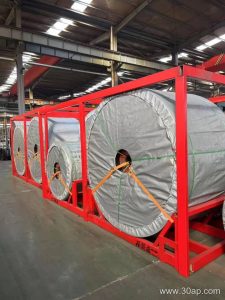
What a Rubber Lagged Pulley Does on a Conveyor
A belt conveyor rubber lagged pulley is a drum with a rubber layer bonded to its shell, used where the conveyor belt needs reliable grip. In a quarry, a limestone mine, or a cement plant handling clinker, the drive pulley must transmit torque without slipping, and the lagging is the part that makes that possible. The same rubber layer also shields the steel shell from abrasive dust and reduces the wear that a bare drum would suffer.
Lagging is not limited to the drive position. A bend pulley or a tension pulley may also be lagged to protect the belt and improve tracking, though the demands differ from those at the head drive. The term covers the finished assembly, not just the rubber sheet: shell, shaft, hubs, bearing housings, and the bonded surface all belong to the same product.
How the Pulley Is Built
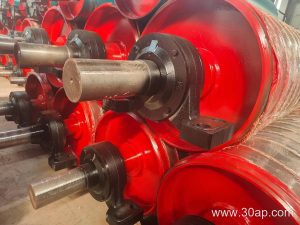
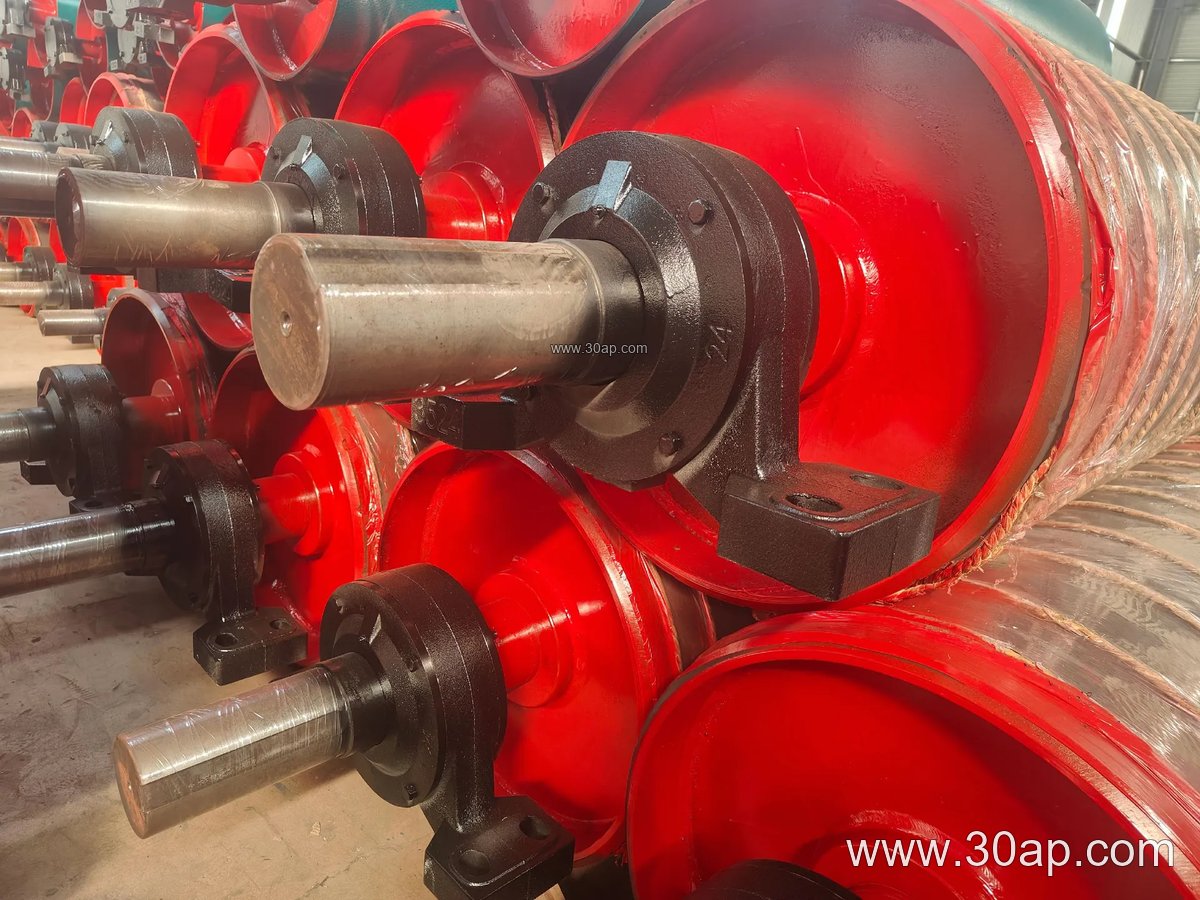
The core is a welded steel cylinder machined to a true diameter. A shaft passes through the hub and is keyed or shrink-fitted in place. Bearings sit in housings mounted on conveyor brackets at each end, and the whole unit is fixed to the conveyor frame.
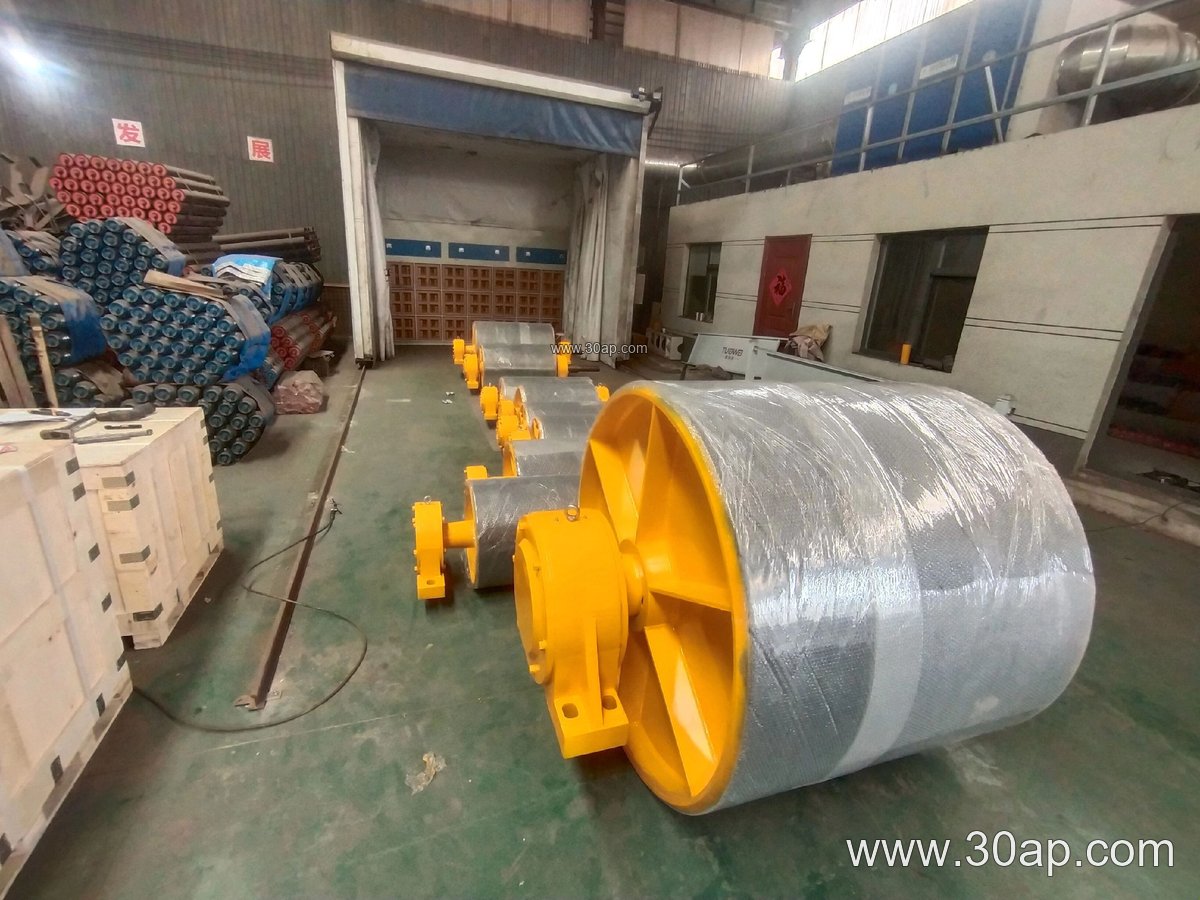
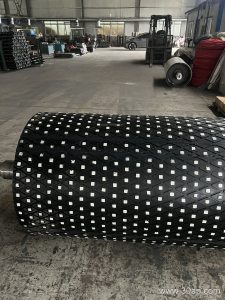
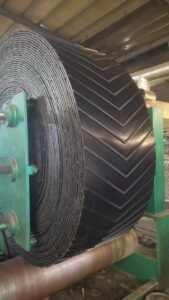
The rubber layer is applied in one of several ways. Cold-bonded rubber uses an adhesive system cured at ambient temperature. Hot vulcanized rubber is pressed and cured in an autoclave or with a heated press, giving a stronger bond for high-torque drives. Cast rubber is poured directly onto the shell. Surface patterns matter as much as the bonding method: plain, diamond, herringbone, and ceramic-studded forms each suit different conditions. Diamond lagging helps shed water in wet coal handling, while herringbone grooves channel debris away from the belt center.
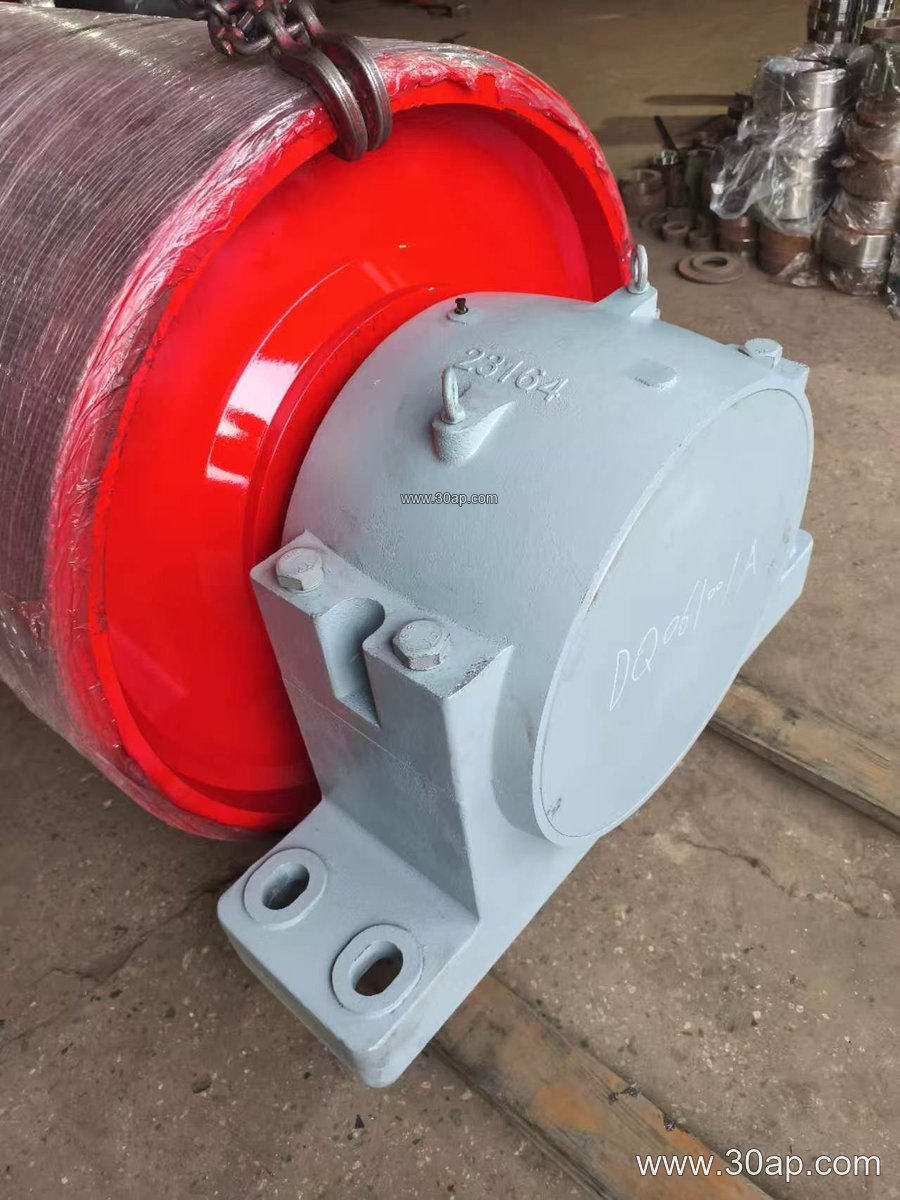
- Shell: rolled and welded steel, machined after welding
- Shaft: sized by torque and radial load, not by belt width
- Lagging thickness: commonly 8, 10, 12, 15, or 20 mm
- Surface: plain, diamond, herringbone, or ceramic
Common Sizes and Reference Dimensions
Pulley diameter is chosen together with belt width and the required wrap angle. The figures below are reference ranges, not fixed pairings; a given belt width can work with more than one drum diameter depending on tension and space.
| Belt width | Typical pulley face width | Reference diameter range |
|---|---|---|
| B400 | about 500 mm | Ø200 to Ø315 |
| B500 | about 600 mm | Ø250 to Ø400 |
| B650 | about 750 mm | Ø315 to Ø500 |
| B800 | about 950 mm | Ø400 to Ø630 |
| B1000 | about 1150 mm | Ø500 to Ø800 |
| B1200 | about 1400 mm | Ø630 to Ø1000 |
| B1400 | about 1600 mm | Ø800 to Ø1250 |
| B1600 | about 1800 mm | Ø1000 to Ø1400 |
| B1800 | about 2000 mm | Ø1250 to Ø1600 |
| B2000 | about 2200 mm | Ø1400 to Ø1800 |
Shaft diameters usually fall between Ø50 and Ø200, determined by drive torque, belt tension, and bearing selection. A B1200 × Ø1000 drive pulley and a B800 × Ø500 tail pulley are both realistic combinations, but neither size should be assumed without a calculation.
Where It Fits in the Plant
In a coal washing plant, a lagged head pulley pulls the loaded conveyor belt up an incline, and the rubber layer keeps slip to a minimum when the surface is damp. In a sand and gravel line feeding a screen, a lagged bend pulley protects the belt on a tight return path. Power plant coal handling, steel sinter lines, and fertilizer granulation plants all rely on the same principle: the drum grips, the belt moves, and the material keeps flowing.
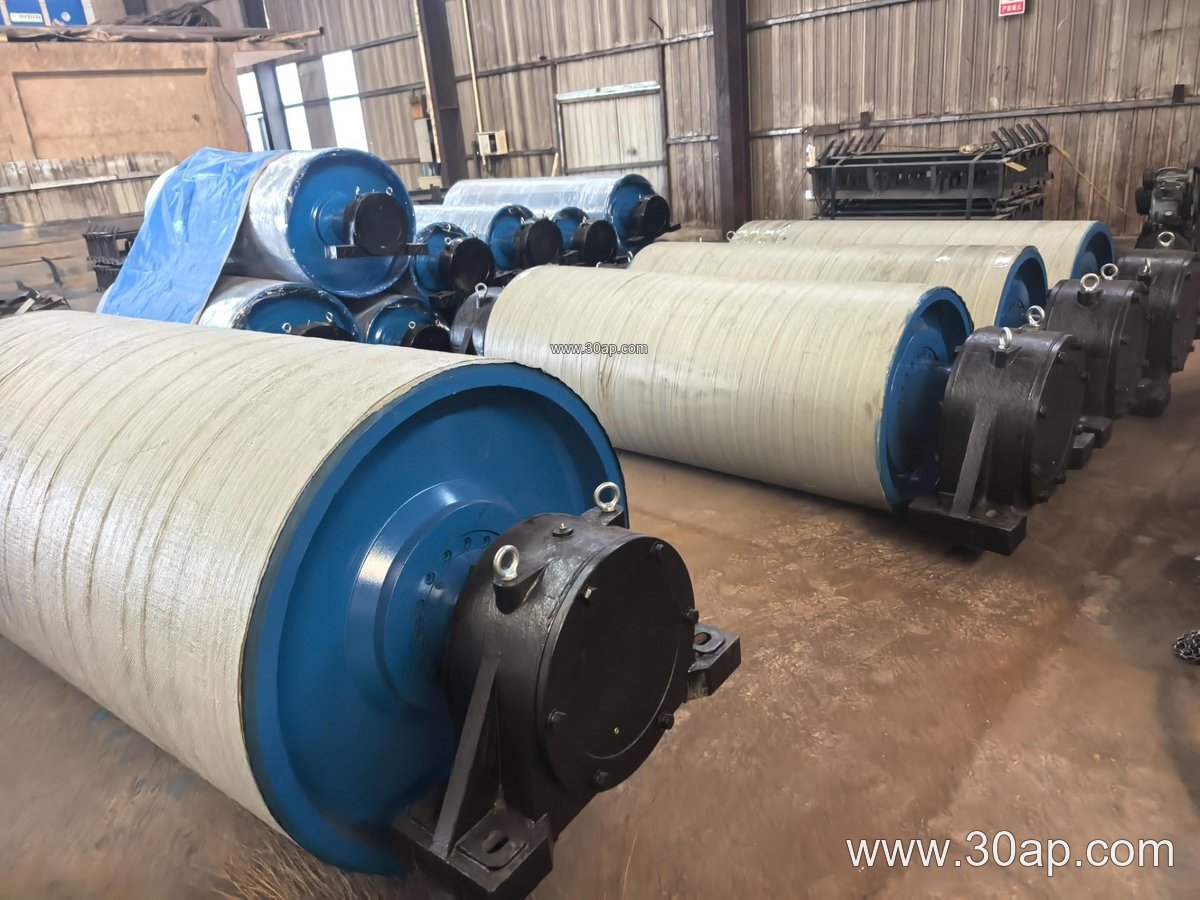
The choice of position changes the requirement. A drive pulley needs enough friction for the full transmitted torque, so hot vulcanized diamond or herringbone lagging is common. A tail or tension pulley mostly guides and tensions the belt, so a thinner plain or lightly grooved layer may be sufficient. Comparing these positions is useful, but a tail pulley cannot replace a drive pulley in the same duty.
Buyer Checklist
- Confirm the actual belt width and required face width, allowing for belt wander.
- State the drive power, belt speed, and wrap angle so the supplier can size the shaft.
- Choose the lagging bond and pattern for the environment: wet, dusty, oily, or abrasive.
- Check bearing type and housing fit with the existing conveyor bracket.
- Ask how the rubber is bonded and whether the surface can be re-lagged later.
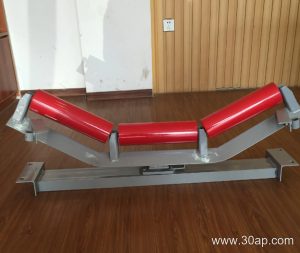
- Match the pulley to the conveyor belt and idler roller layout so the belt trains correctly.
Balancing quality, delivery, and service life usually matters more than picking the largest diameter available. A correctly specified rubber lagged drum, matched to the conveyor pulley duty and the belt it carries, will outlast a generic unit in almost any bulk handling site.