What a Stainless Steel Idler Is
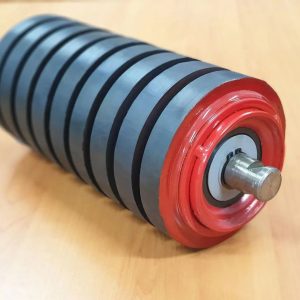
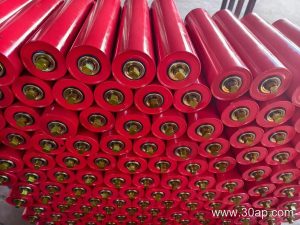
A stainless steel idler is a conveyor idler roller whose shell, end caps and often its shaft and bearing housing are made from stainless steel rather than painted carbon steel. It supports the conveyor belt and the material load on the carrying side, or holds the belt in shape on the return side, while rotating on its internal bearings. In practice, buyers also call it a stainless idler roller or stainless steel conveyor idler, and those names describe the same product.
The stainless grade is the point of the product. Where a standard steel idler would rust through after repeated washdowns, salt spray, or contact with wet, acidic or alkaline material, a stainless shell keeps its surface and reduces the chance of seized bearings and belt damage.
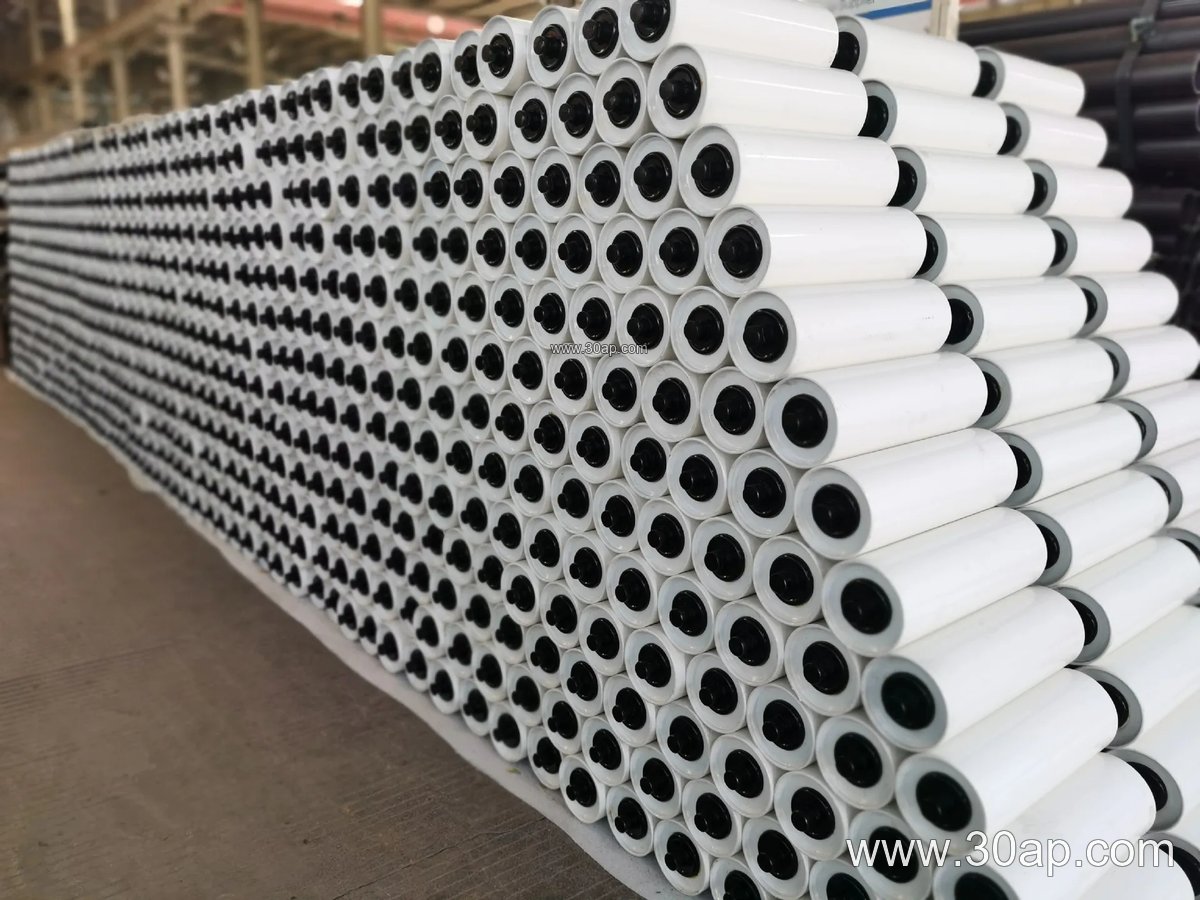
How the Roller Is Built
A typical unit has a tubular shell, two bearing housings pressed or welded into the ends, a through shaft, and a sealing arrangement in front of each bearing. The seal matters as much as the metal. A stainless shell with a poor seal will still fail early, because water and fine dust reach the bearing and wash out the grease.
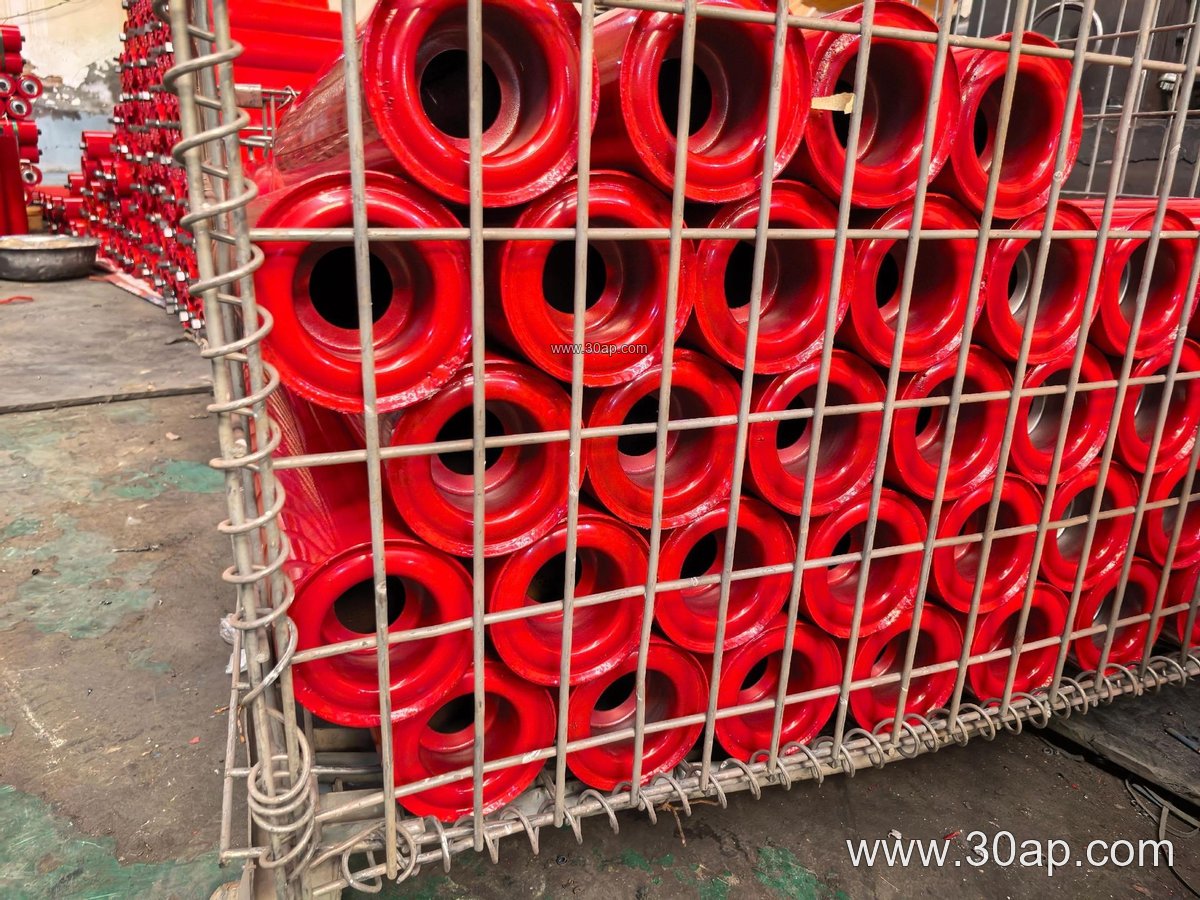
Shell surfaces follow the same logic as carbon steel idlers. Plain stainless tube is standard. Rubber rings can be added for impact absorption, and nylon or ceramic covers are used where belt wear or sticking is a concern. Bearing numbers such as 6204, 6205, 6305, 6306, 6308 and 6310 are common across the range, but the correct bearing is selected with the load and speed of the application, not by matching one bearing to one diameter.
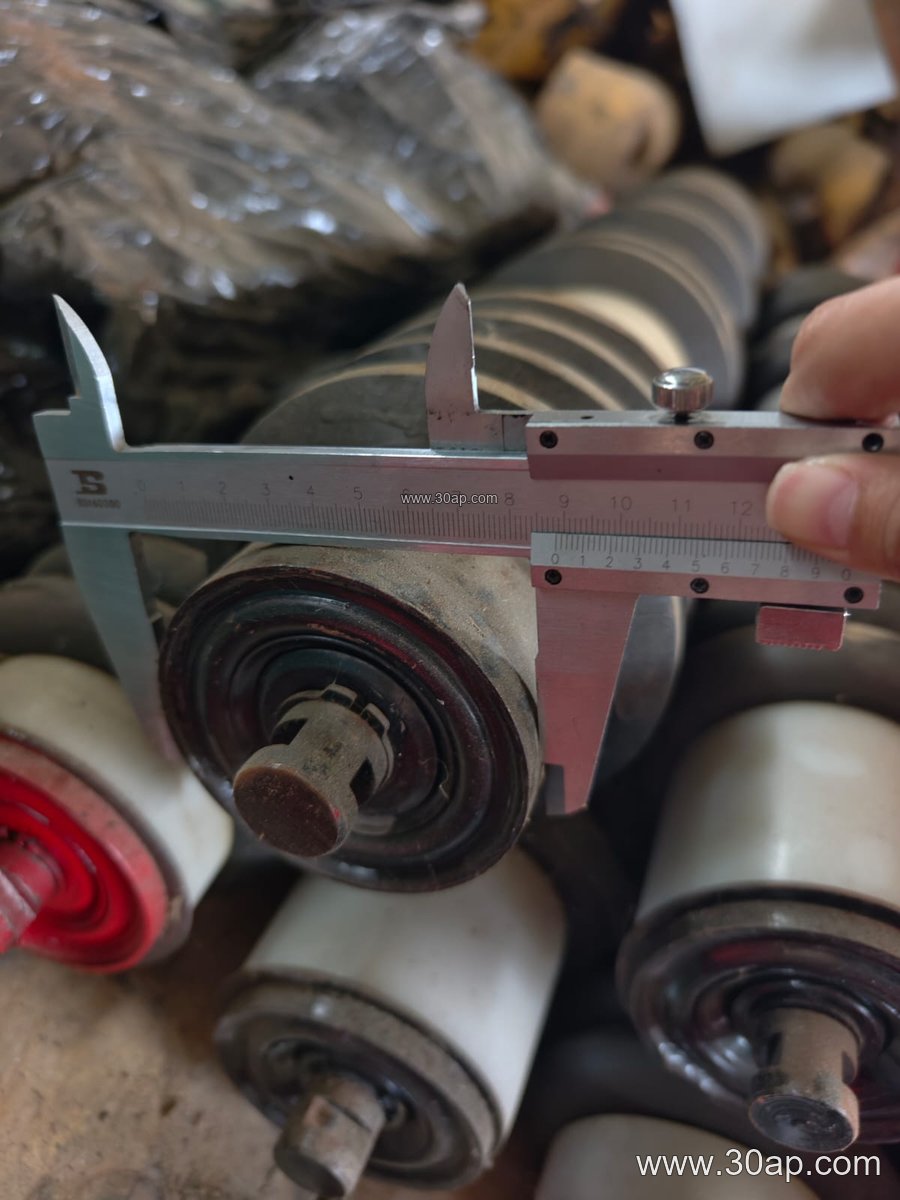
Common Reference Dimensions
The values below are typical references for planning, not a fixed catalogue. Final dimensions are set by the conveyor design.
| Item | Common reference values |
|---|---|
| Roller diameter | Ø63, Ø76, Ø89, Ø102, Ø108, Ø127, Ø133, Ø159, Ø178, Ø194, Ø219 mm |
| Belt width | B400, B500, B650, B800, B1000, B1200, B1400, B1600, B1800, B2000, B2200, B2400 |
| Trough angle | 20°, 30°, 35°, 45° |
| Trough set | single roll, two-roll, three-roll |
| Roller length, three-roll trough (example) | about 200 mm at B500, 250 mm at B650, 315 mm at B800, 380 mm at B1000, 465 mm at B1200, 530 mm at B1400, 600 mm at B1600, 670 mm at B1800, 750 mm at B2000 |
Side rolls and centre rolls can differ in length, and a wider belt does not force one particular shaft diameter. Shaft size follows the calculated load, the support spacing and the bearing chosen.
Where Stainless Idlers Earn Their Cost
Corrosive and wet duty is the natural home for this roller. A washdown area in a food or fertiliser plant, a coastal port handling damp cargo, a tunnel spoil line with constant seepage, and a concrete batching plant where cement dust meets rain are all reasonable candidates. In a power plant coal yard or a limestone stockpile, stainless is usually reserved for the wet or chemically exposed sections rather than the whole conveyor.
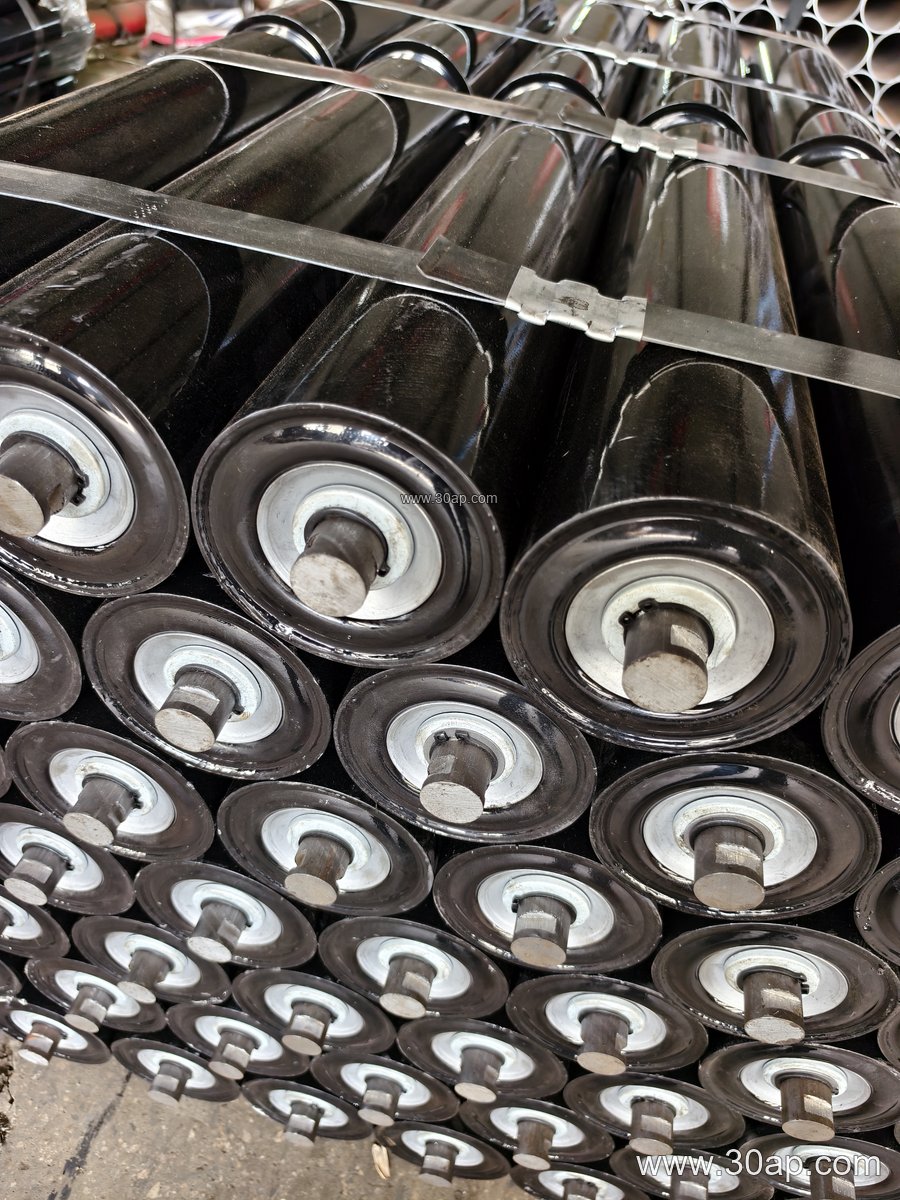
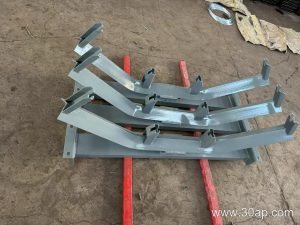
On the carrying side, a stainless trough idler set holds the conveyor belt in a trough so bulk material stays centred. On the return side, a flat or V-shaped stainless return idler supports the empty belt. Impact zones may use a stainless buffer idler with rubber rings, and self-aligning versions can be specified where belt tracking is a persistent problem.
Selection Points for Buyers
- Grade and finish. Confirm the stainless grade and whether the shaft and housings match the shell. Mixed materials can set up galvanic corrosion at the joints.
- Seal design. Ask how the bearing is protected against water and fine dust, and whether the seal is replaceable.
- Load and spacing. Roller diameter, wall thickness and bearing size should follow the belt load and idler spacing, not habit.
- Mounting. Check the shaft ends, the fixing centres and the conveyor bracket interface before ordering. A roller that does not seat correctly will wear the frame and the belt edge.
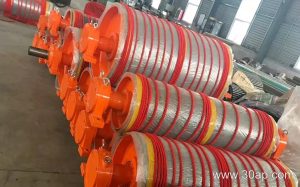
- Interchangeability. Stainless idlers replace carbon steel idlers of the same dimensions. They are not a substitute for a drive pulley, tail pulley or bend pulley, which transmit or redirect belt tension and are selected separately.
Installation and Maintenance Notes
Keep the roller free to rotate and aligned square to the belt direction. Check that the conveyor bracket is not bent and that the roller sits level across the frame. Stainless steel resists corrosion but is not wear-proof, so inspect shells at transfer points where abrasive material falls. Replace a roller when the shell is worn thin, the bearing is noisy, or runout is visible. A failed idler left in place will damage the conveyor belt far beyond the cost of the roller itself.