What the EP1250 Conveyor Belt Is
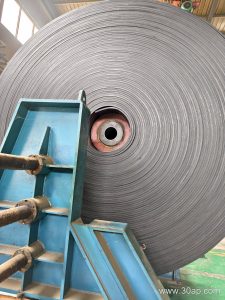
The EP1250 conveyor belt is a polyester-nylon (EP) fabric-reinforced rubber belt with a nominal tensile strength of 1250 N/mm. It sits in the upper-middle of the common EP strength range, above everyday EP630 and EP800 belts and below heavy-duty EP1600 and EP2000 constructions. That position makes it a practical choice for main haulage lines in mines, cement plants, power stations, coal preparation facilities and large sand and gravel operations, where a standard-strength belt would run out of margin but a steel cord belt is not required.
As an accurate equivalent, buyers will also see it described as an EP1250 rubber conveyor belt or a 1250 N/mm EP fabric belt. These names refer to the same product.
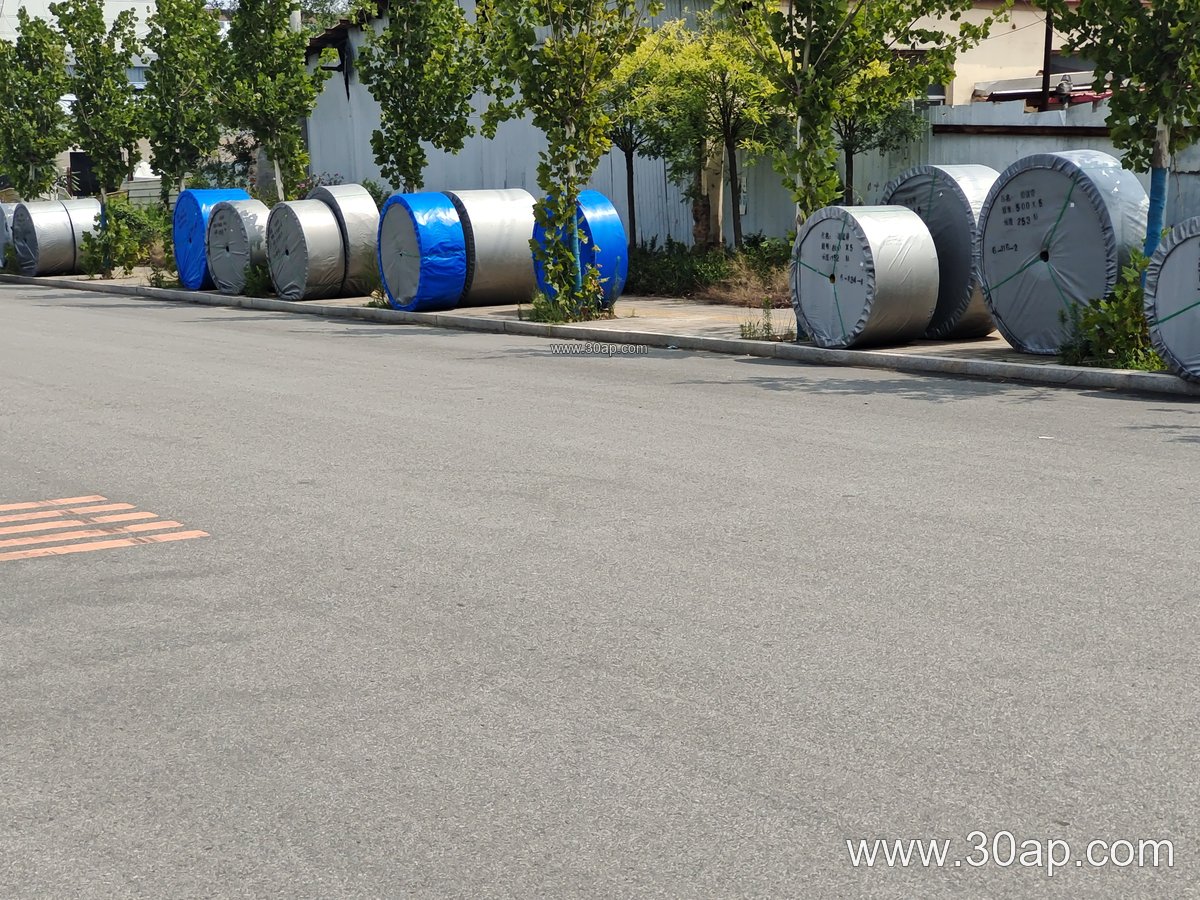
How the Belt Is Built
The carcass uses interwoven polyester warp and nylon weft plies. Polyester limits stretch under load, while nylon adds flexibility and resistance to impact. The plies are bonded with rubber skim, then covered on both faces with abrasion-resistant rubber. A typical build for this strength class is four to five plies, though the exact number is set by the manufacturer and the application.
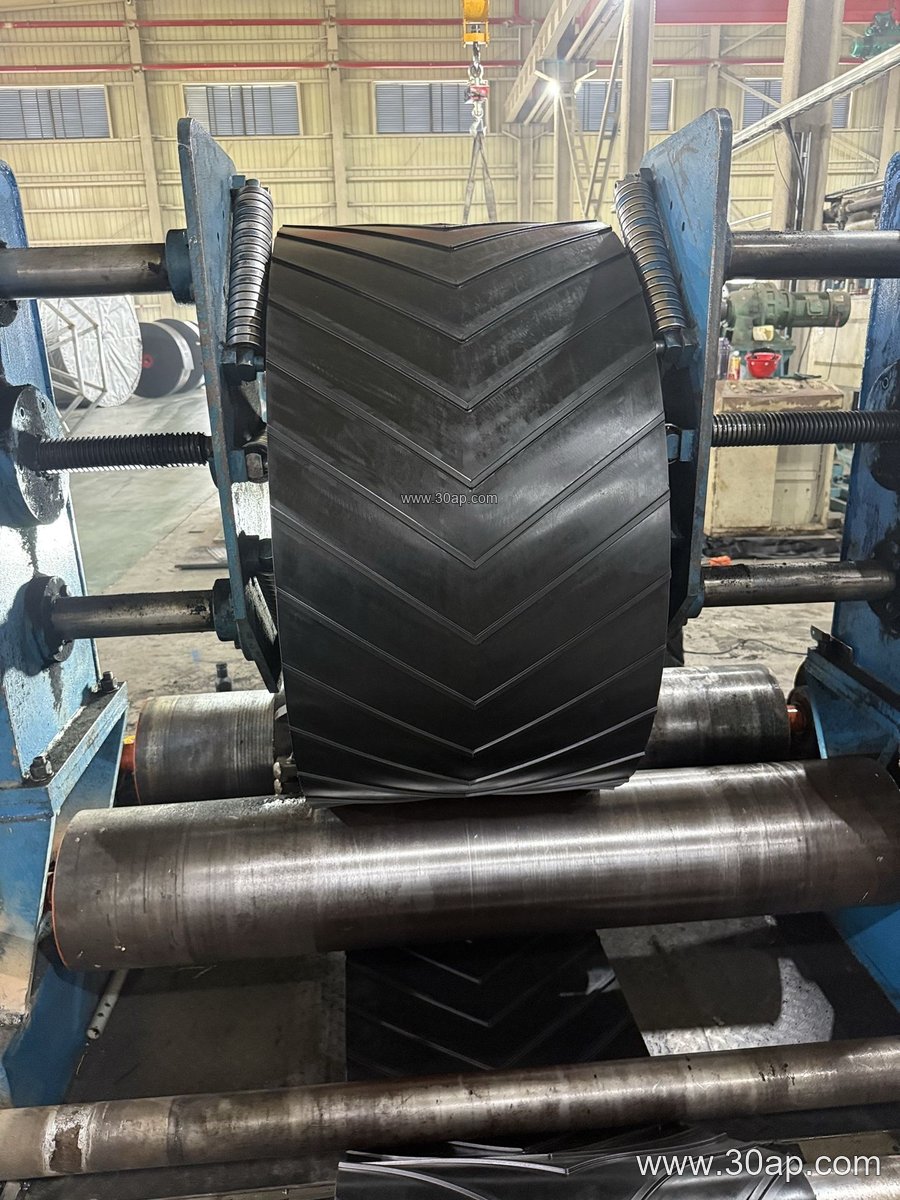
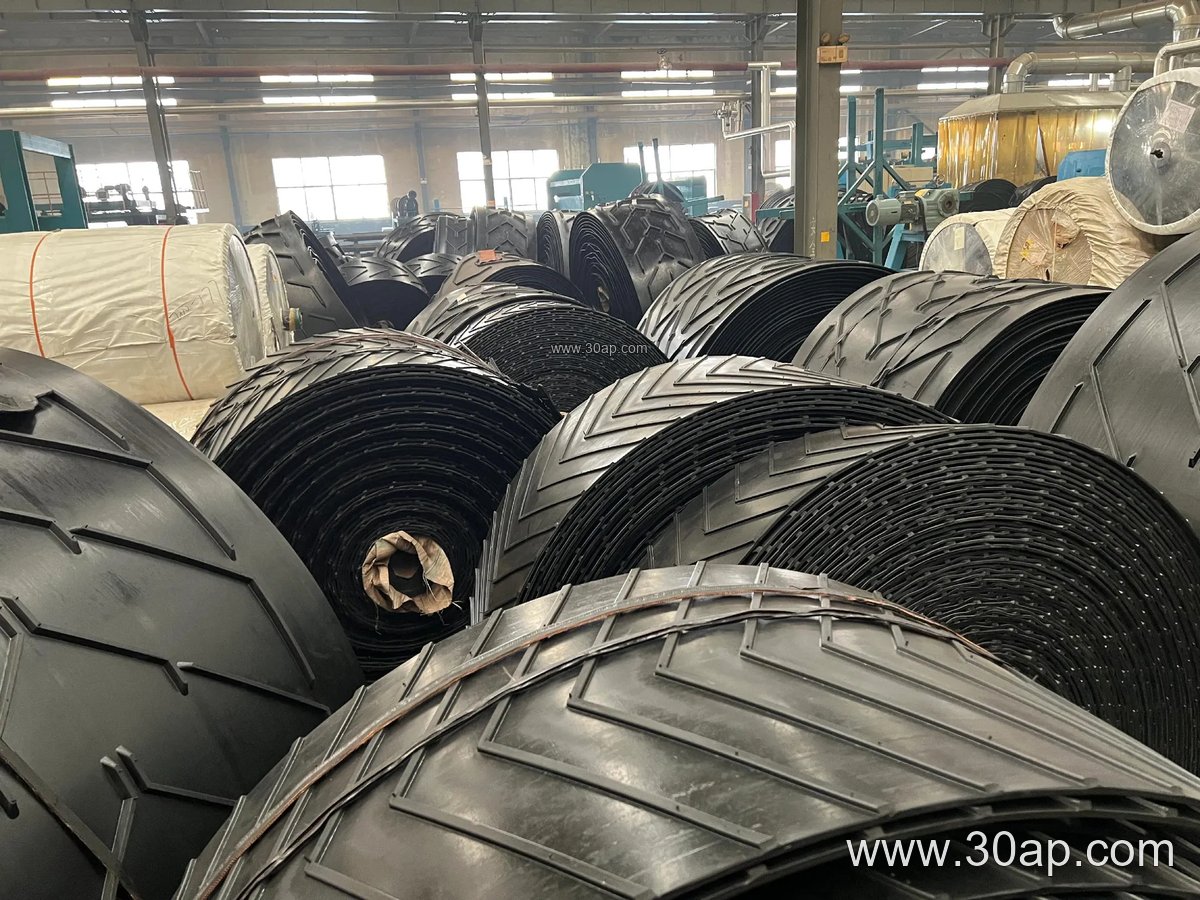
Cover thickness is usually quoted as top plus bottom, for example 5+2 mm or 6+2 mm. Heavier covers such as 8+3 mm may be specified where lump size and abrasion are severe. The belt can be supplied in standard, abrasion-resistant, heat-resistant, oil-resistant, flame-retardant or antistatic versions. Chevron or patterned top covers are available when incline angles call for extra grip.
Common Reference Dimensions
The table below shows reference values only. Actual availability, ply count and cover grade should be confirmed with the supplier for each project.
| Parameter | Common reference values |
|---|---|
| Strength grade | EP1250 (1250 N/mm) |
| Belt width | B650, B800, B1000, B1200, B1400, B1600 |
| Cover thickness | 4+2, 5+2, 6+2, 8+3 mm |
| Carcass plies | Usually 3 to 5, by design |
| Surface form | Smooth, abrasion-resistant, chevron, patterned |
Belt width and pulley diameter are matched through conveyor design calculations, not by a fixed rule. A wider belt does not automatically require a specific pulley size, and shaft diameter is determined from torque and load, not from belt width alone.
Where It Fits on the Conveyor
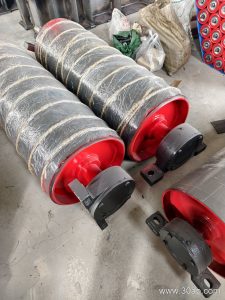
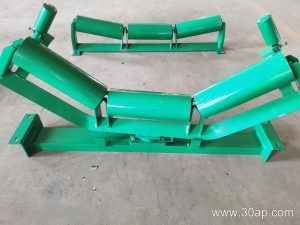
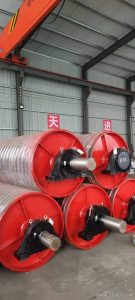
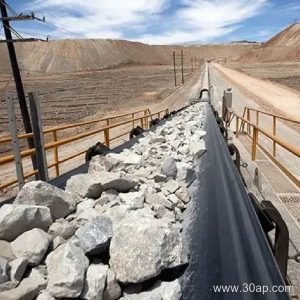
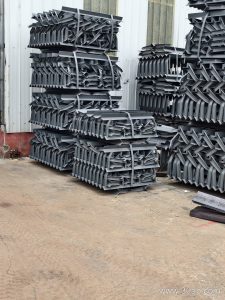
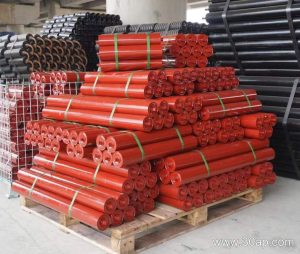
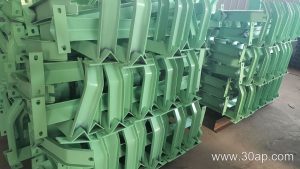
The belt runs over a drive pulley at the head, a tail pulley at the loading end, and bend pulleys along the return run. Conveyor idler rollers support the carrying and return strands, and conveyor brackets hold the idlers and pulleys in alignment. In a coal mine or a cement kiln feed line, the EP1250 belt may carry crushed limestone, clinker or coal over hundreds of meters. In a power plant it often handles fuel or ash. In a sand and gravel yard it moves screened aggregate between stockpiles.
Selection Points for Buyers
- Check the calculated maximum belt tension against the 1250 N/mm rating with a safety margin.
- Match cover grade to the material: abrasive stone, hot clinker, oily scrap or flammable dust each call for a different cover.
- Confirm ply count and cover thickness rather than relying on the strength grade alone.
- Verify splice method and edge condition, since these affect belt life on long runs.
- Review pulley and idler roller specifications together with the belt, because poor alignment shortens belt life.
Installation and Maintenance Notes
Store belts in a dry, shaded place and avoid sharp folds. During installation, keep the belt centered on the tail pulley and check that all conveyor idler rollers turn freely. Track the belt after the first few hours of running, then recheck tension. Inspect edges and covers for cuts, and repair small damage before it reaches the carcass. A correctly tensioned EP1250 belt on well-aligned pulleys and idlers usually gives long, predictable service in mine, cement, power and aggregate operations.