What a Diamond Grooved Lagged Pulley Does
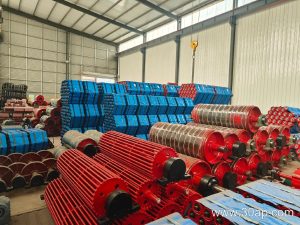
A diamond grooved lagged pulley is a conveyor pulley whose shell is covered with rubber lagging cut into a diamond pattern. The grooves channel water, dust and fine slurry away from the contact patch, so the belt keeps a firmer grip on the drum. In a quarry, a limestone mine or a sand and gravel line, that extra traction often decides whether a drive pulley can start a fully loaded conveyor belt without slipping.
The product is also called a diamond pattern rubber lagged drum or a diamond grooved rubber lagged roller, depending on the workshop. All three names describe the same item. Drive, tail and bend pulleys are different positions in the conveyor and are not interchangeable with each other; this article deals with the lagged drum itself.
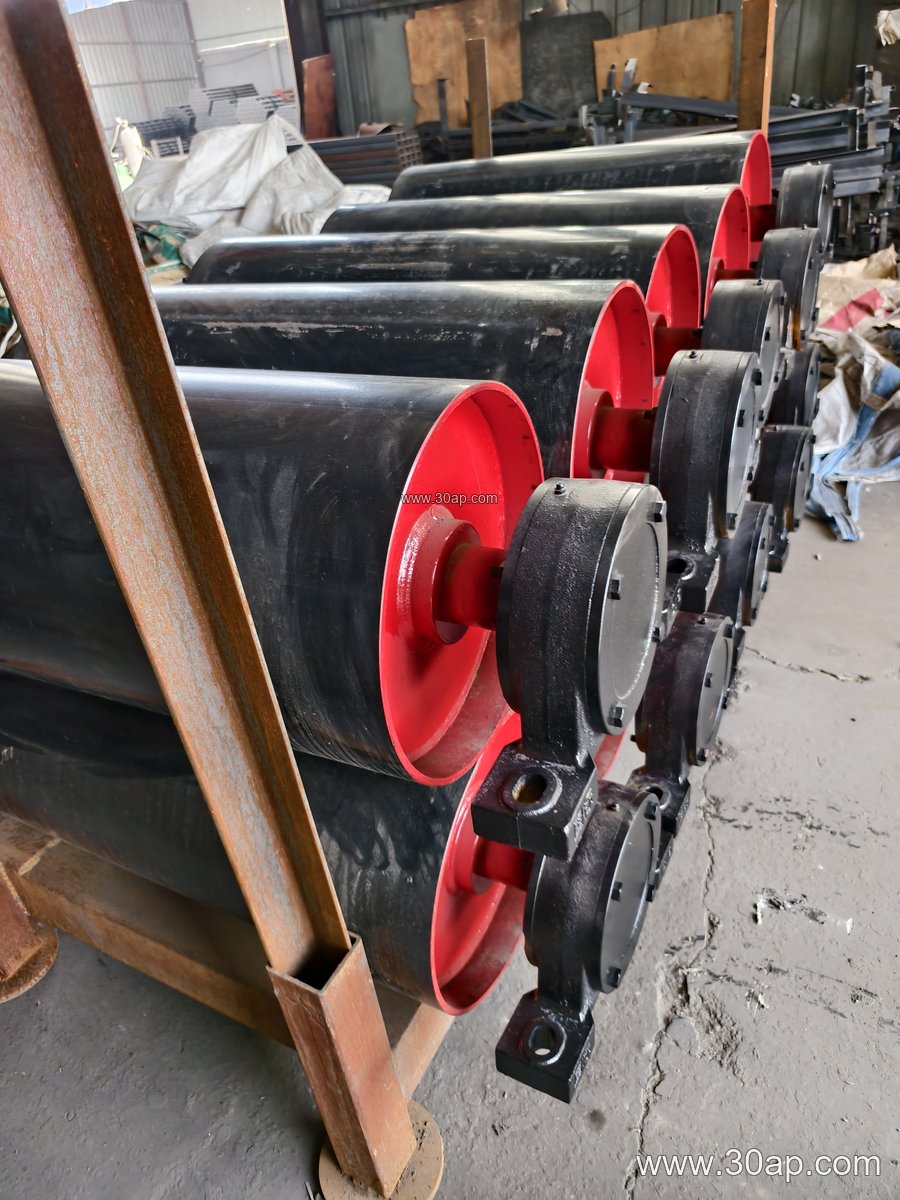
How the Lagging Is Built
The pulley body usually starts as a welded steel shell with end discs and a shaft. Lagging is then bonded to the shell in one of several ways, and the diamond pattern is cut or molded into the rubber surface afterwards.
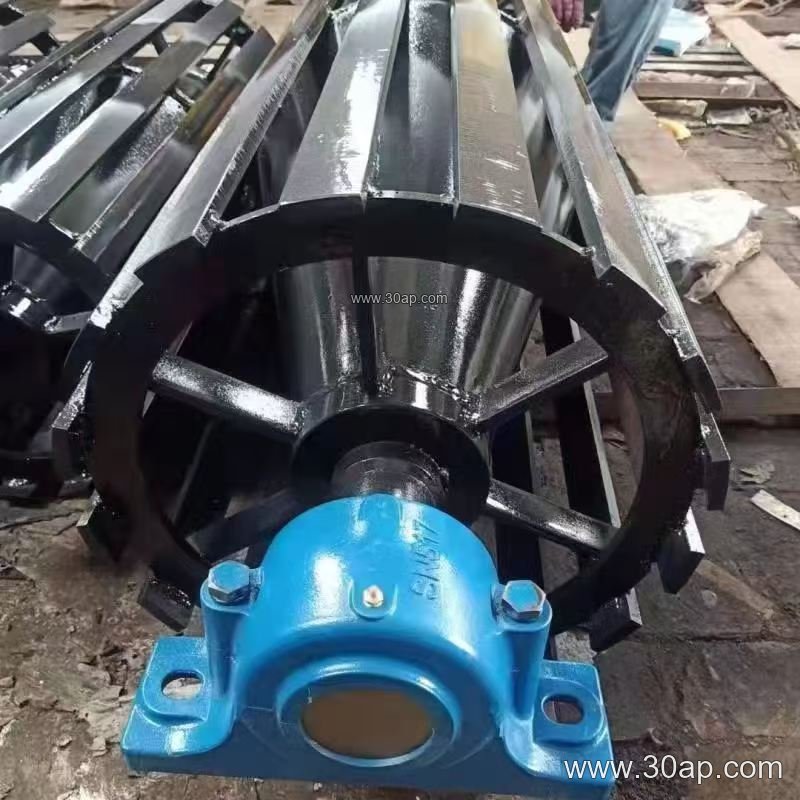
- Cold bonded rubber – sheet rubber fixed with adhesive, practical for many workshop rebuilds.
- Hot vulcanized rubber – cured onto the shell for a stronger bond, common on heavy duty drums.
- Cast rubber – rubber molded directly with the diamond profile in place.
Lagging thickness commonly falls between 8 mm and 20 mm. Thicker rubber lasts longer in abrasive service but adds weight and cost, so the choice should follow the duty rather than habit. The diamond grooves are usually a few millimeters deep; if they are worn flat, the drainage benefit is gone even when plenty of rubber remains.
Typical Sizes and Dimensioning
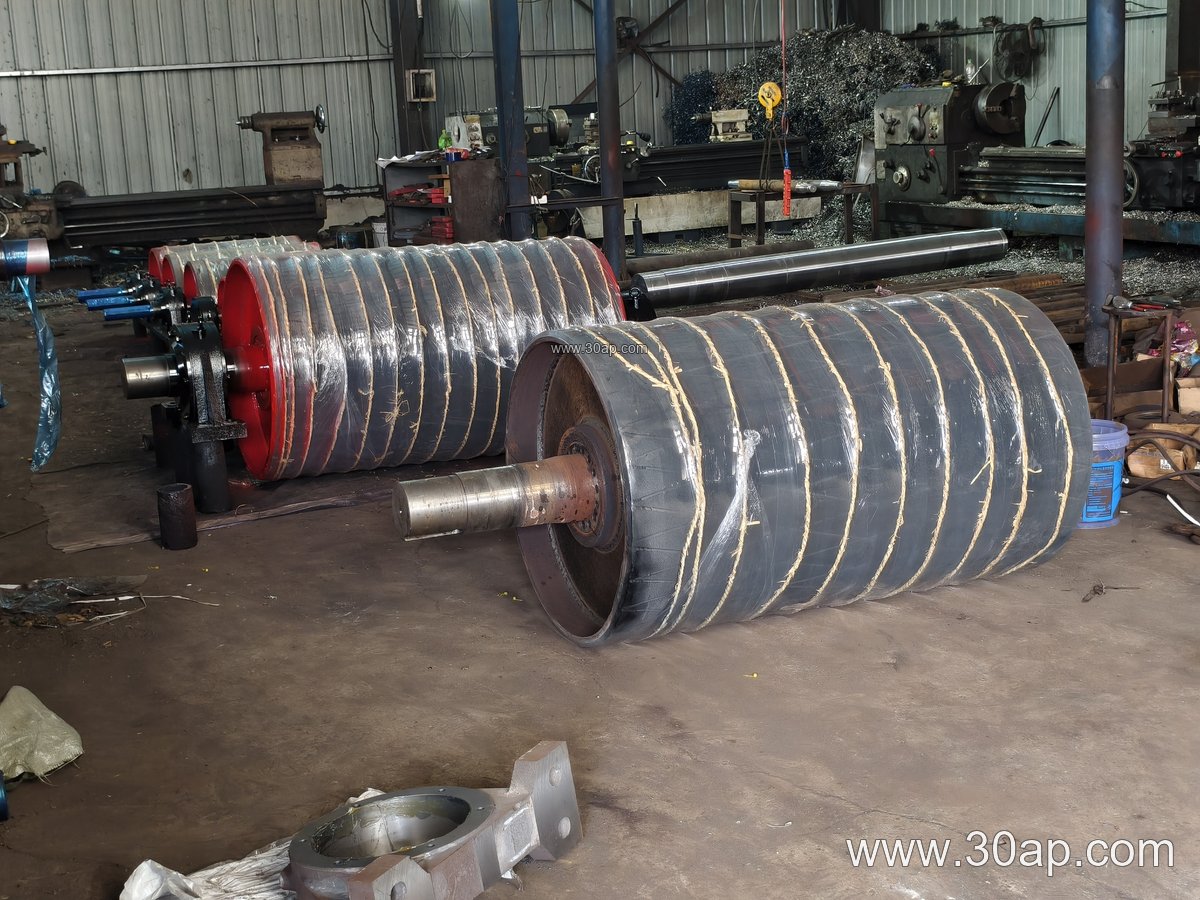
Pulley diameter and face width are chosen together with belt width, shaft load and wrap angle. The figures below are common reference values, not fixed pairings. A given belt width can work with more than one drum diameter.
| Belt width | Typical pulley face width | Example diameter range |
|---|---|---|
| B500 | about 600 mm | Ø250 to Ø400 |
| B650 | about 750 mm | Ø315 to Ø500 |
| B800 | about 950 mm | Ø400 to Ø630 |
| B1000 | about 1150 mm | Ø500 to Ø800 |
| B1200 | about 1400 mm | Ø630 to Ø1000 |
| B1400 | about 1600 mm | Ø800 to Ø1250 |
| B1600 | about 1800 mm | Ø1000 to Ø1400 |
A B1200 × Ø1000 drum and a B800 × Ø500 drum are both realistic combinations in different duties. Shaft diameter is a separate decision based on torque and bearing load; common values run from Ø50 to Ø200, but no belt width dictates one shaft size on its own.
Where It Fits in a Plant
The most common home is the drive position, where the drum must transmit torque to the belt. It also appears on tension pulleys that need reliable grip, and on some head pulleys handling wet or dusty material. In a coal preparation plant or a power station coal yard, the diamond pattern helps shed coal dust and spray water. In a cement plant, the same drum copes with clinker fines that would otherwise polish a plain steel face.
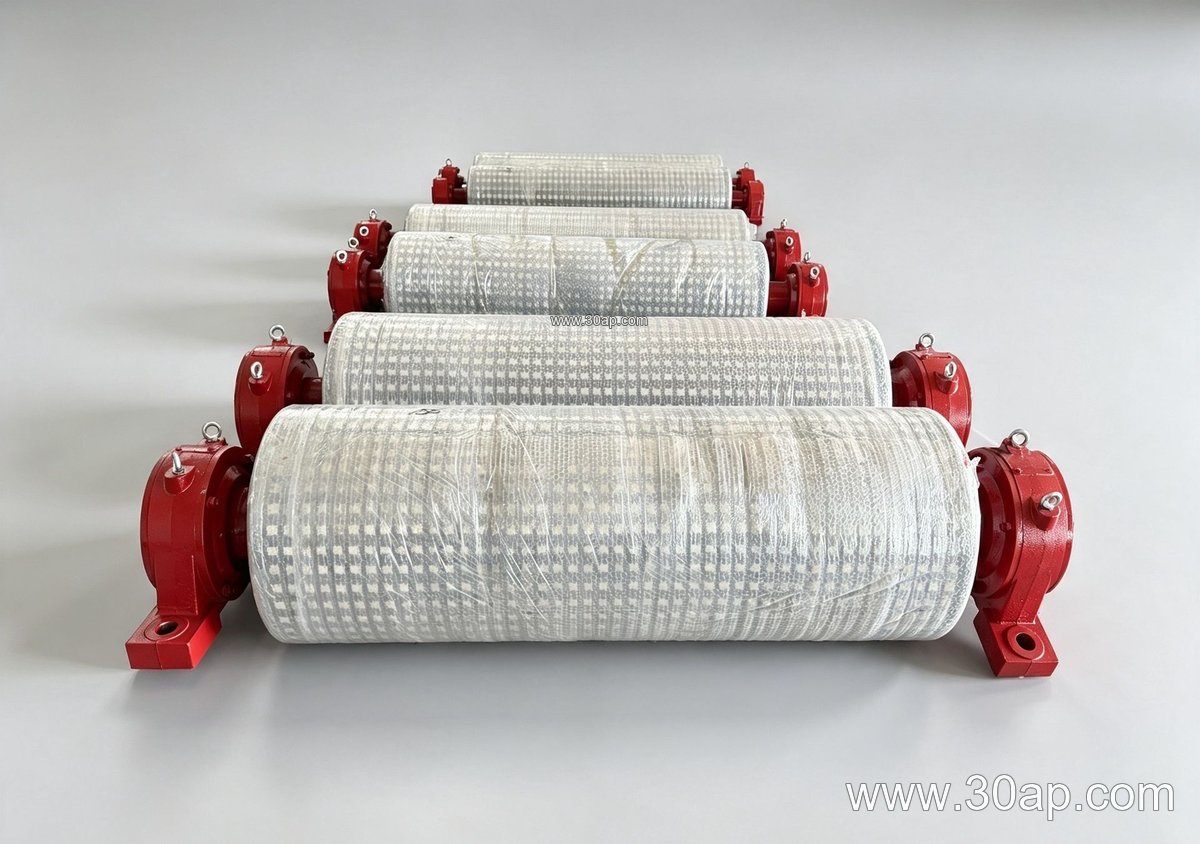
A bend pulley in the same conveyor usually stays plain or lightly lagged, because it only changes belt direction and does not need high friction. Matching the surface to the job keeps cost and weight sensible.
Buyer Checklist
- Confirm the drum position, belt width and required face width before ordering.
- State the lagging method and thickness, for example 12 mm hot vulcanized diamond lagging.
- Give the shaft diameter, bearing centers and keyway details from the conveyor drawing.
- Check that the diamond groove depth suits the material; sticky or wet loads benefit most.
- Ask how the lagging is bonded and whether the joint is vulcanized or glued.
- Plan inspection of groove wear along with conveyor belt and idler roller checks.
Mounting hardware matters too. A conveyor bracket that is out of square will load the drum unevenly and shorten lagging life, so alignment should be verified during installation. Treated as a wear part with a defined surface pattern, a diamond grooved lagged pulley gives a drive station predictable grip and a clear maintenance signal when the grooves begin to disappear.