What a conveyor bracket is and why its price varies
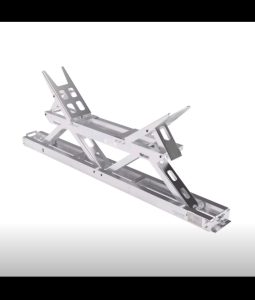
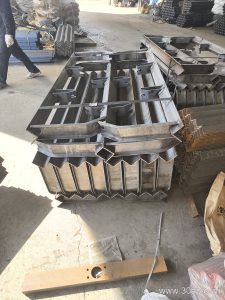
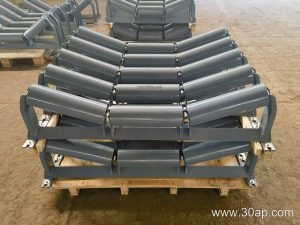
A conveyor bracket is the steel support that holds a idler roller in position under the conveyor belt. It is a fabricated part, usually made from angle steel, channel steel, or folded steel plate, and it is bolted to the conveyor frame rather than welded in most field installations. Because it is a structural item with several variables, the conveyor bracket price moves with material grade, plate thickness, bandwidth, trough angle, roller diameter, and the number of brackets in an order.
Buyers often compare a trough bracket with a return bracket, or a fixed bracket with an adjustable bracket, and find a wide spread in quotations. The difference is not arbitrary. Each variant uses a different amount of steel, a different bending or welding sequence, and a different hole pattern.
How the bracket is built
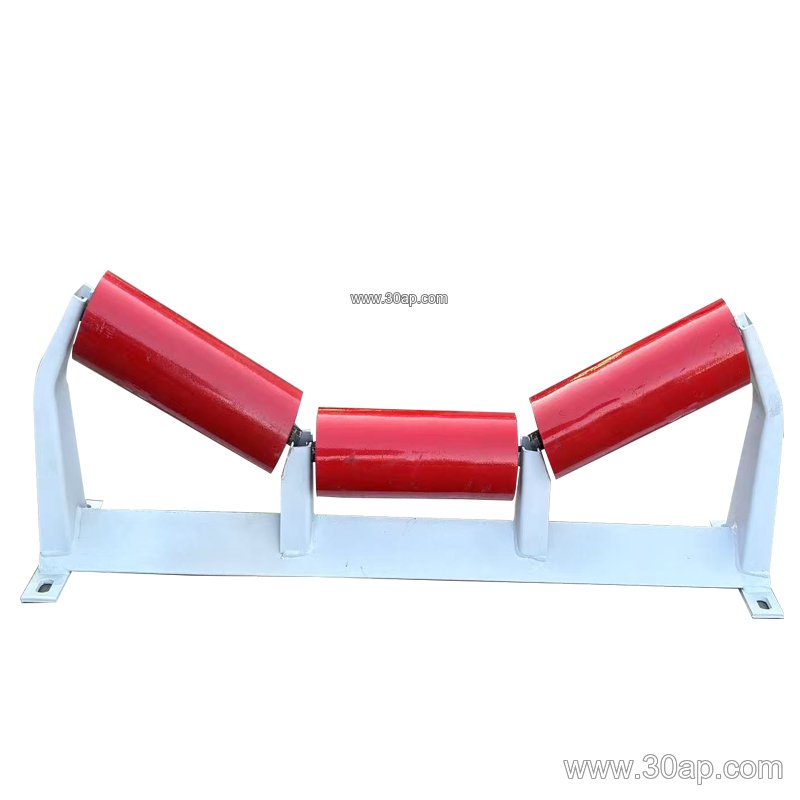
Most carrying-side brackets are formed as a three-roll trough station. The bracket body carries the side rollers at a set trough angle and the center roller in a lower position. Common trough angles are 20 degrees, 30 degrees, 35 degrees, and 45 degrees. Adjustable brackets allow the side roller position to be changed between these angles, which adds slots, pivots, or extra bolt holes and therefore adds cost.
Return-side brackets are simpler. A flat return bracket holds a single roller under the belt, while a V-return bracket uses two rollers set at an angle to help center the belt. A buffer bracket under a loading point uses a heavier frame and resilient roller mounts, and a self-aligning bracket adds a pivoting frame. Each of these features changes the steel content and the fabrication time, so the price of a buffer or self-aligning station is normally higher than a plain fixed trough bracket of the same bandwidth.
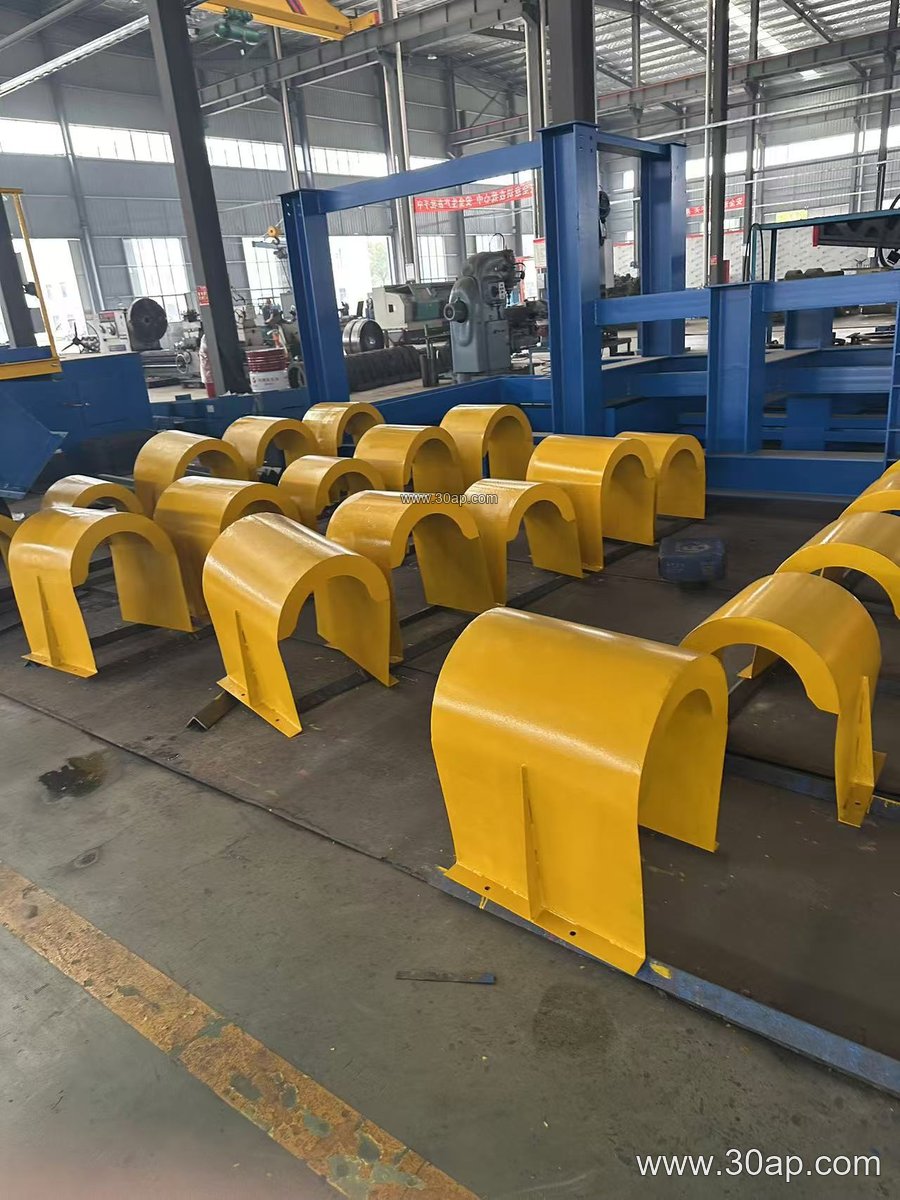
Material choice matters as much as shape. A bracket in a limestone quarry may be painted carbon steel, while a wash plant or a coastal port may ask for galvanized or stainless construction. Surface treatment is a real cost line and should be stated clearly in the inquiry.
Typical reference data used in inquiries
The table below lists common reference values. They are starting points for specification, not fixed rules, and the final hole spacing and beam length are always confirmed by design.
| Item | Common reference values |
|---|---|
| Bracket type | Trough bracket, transition bracket, return bracket, V-return bracket, buffer bracket, self-aligning bracket, suspended bracket, adjustable bracket |
| Belt width | B500, B650, B800, B1000, B1200, B1400, B1600, B1800, B2000, B2200 |
| Trough angle | 20 degrees, 30 degrees, 35 degrees, 45 degrees |
| Roller diameter | Ø89, Ø108, Ø133, Ø159, Ø194 |
| Material | Angle steel, channel steel, folded steel plate |
A combination such as B800, 35 degrees, Ø108 is common on a medium-duty aggregate line, while B1200, 45 degrees, Ø133 appears on higher-capacity stations. A B650, 30 degrees, Ø89 arrangement suits lighter duties. These are examples only. One belt width can be paired with more than one trough angle or roller diameter, and the shaft diameter must be confirmed from the roller load and frame design, not from belt width alone.
Where the bracket is used
Conveyor brackets appear wherever a belt changes direction or carries load. In a crushing and screening circuit they support the belt after the crusher discharge and through the transfer points. In a cement plant they carry clinker and raw meal lines; in a power plant coal yard they sit under the coal conveyor; in a sand and gravel line they hold the troughed belt through long horizontal runs. A tunnel spoil conveyor uses the same brackets in a confined frame, and a grain silo conveyor uses lighter versions.
The bracket works together with the conveyor belt, the idler roller, and the conveyor pulley. A misaligned bracket will wear the belt edge, and an undersized bracket will deflect under load and shorten roller life, so the support station deserves the same attention as the pulley and the belt itself.
What to check before comparing quotes
- State the bracket type and the mounting position, because a trough bracket and a return bracket are not interchangeable.
- Give belt width, trough angle, and roller diameter together, and confirm the shaft size with the roller supplier.
- Specify material and surface treatment, including whether galvanizing or painting is required.
- Confirm installation hole spacing and crossbeam length with the frame drawing rather than assuming a standard.
- Ask for the bracket weight per piece, since steel weight is a major part of the conveyor bracket price.
- Order spares for transition and buffer stations, which wear faster than plain carrying stations.
When these details are clear, quotations become comparable, and the price reflects the actual steel, fabrication, and finishing work needed for the station.