What a Conveyor Equipment Pulley Does on a Belt System
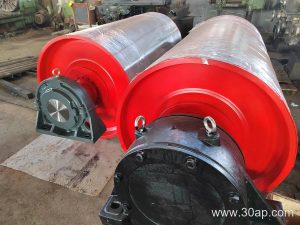
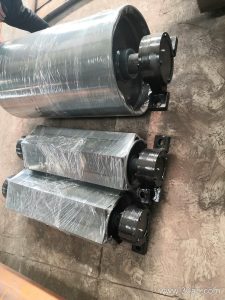
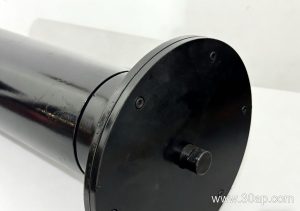
A conveyor equipment pulley is the rotating drum that carries and guides the conveyor belt at the ends and along the route of a belt conveyor. It transfers motion from the drive unit to the belt, maintains belt tension, and changes belt direction where the layout requires it. In a quarry, coal preparation plant, cement kiln line, or power station coal yard, these pulleys work continuously under dust, load, and varying tension, so their construction and surface treatment matter as much as the belt itself.
The same component is often called a conveyor drum or belt conveyor pulley. These are equivalent names for the same product. Within the family, drive pulleys, tail pulleys, and bend pulleys each perform a distinct duty and are not interchangeable.
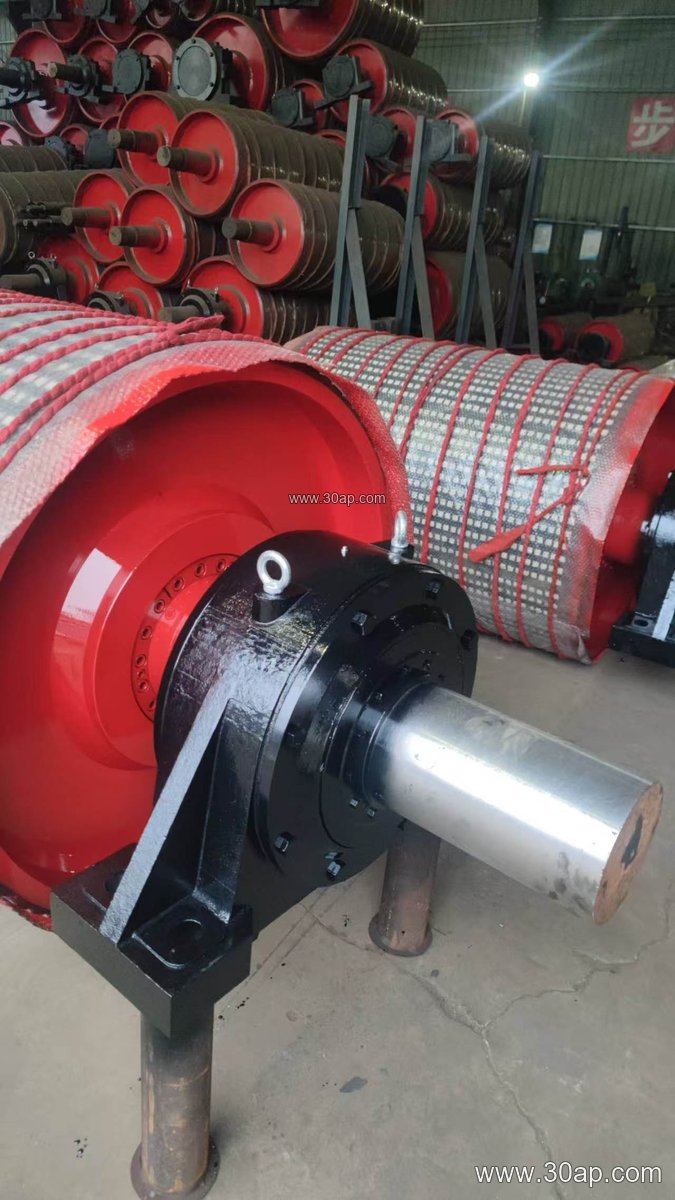
How the Pulley Is Built
A typical unit consists of a cylindrical shell, two end discs, a shaft, bearing housings, and a locking assembly. The shell is usually rolled from steel plate and machined at the ends to accept the discs. The shaft is sized by torque and radial load rather than by belt width alone, with common shaft diameters ranging from Ø50 to Ø200 mm depending on the duty. Bearings are mounted in pillow blocks or flange housings, and the whole assembly is fixed to the conveyor bracket or frame.
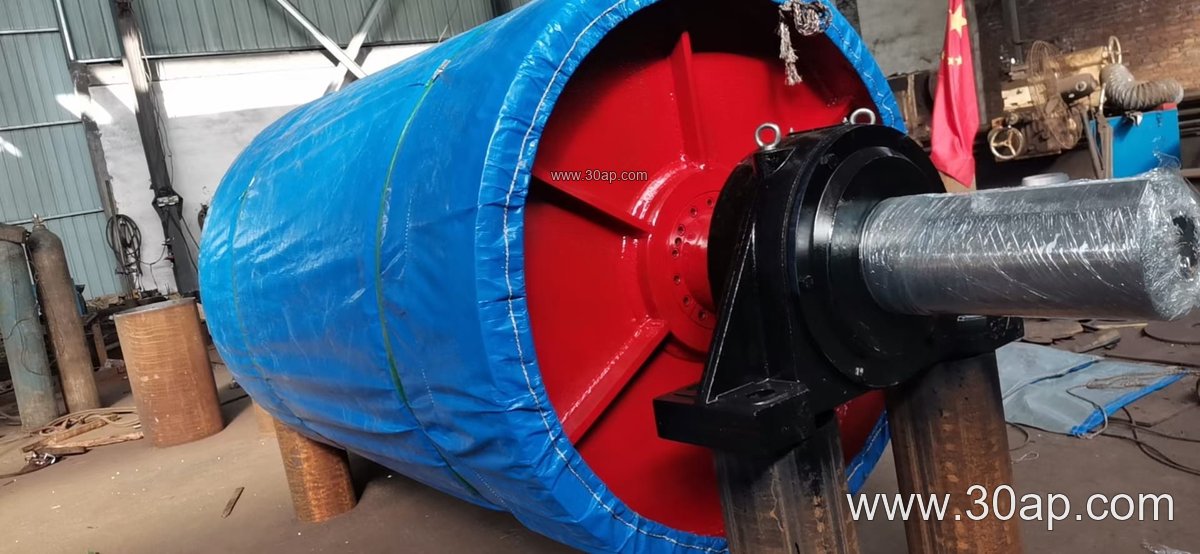
Surface treatment is a major decision. Plain shells suit light duties where slip is not a concern. Rubber lagging, applied by cold bonding or hot vulcanizing, improves friction and protects the shell. Diamond or herringbone grooving helps shed water and fines, while ceramic lagging is chosen where abrasive carryback is heavy. Lagging thickness commonly falls between 8 and 20 mm.
Common Types and Where They Sit
- Drive pulley — the powered drum at the head, transmitting torque to the belt; often lagged for grip.
- Tail pulley — located at the return end, guiding the belt and supporting the return strand.
- Bend pulley — used to redirect the belt path or increase wrap angle around the drive drum.
- Take-up pulley — works with the tensioning device to keep the belt at the correct tension.
A bend pulley is sometimes compared with a snub or pressure pulley when discussing wrap angle, but each has its own position and function. Selecting one in place of another changes the belt path and can affect traction and tracking.
Reference Dimensions for Early Planning
The table below gives common reference values. Final dimensions are set by the conveyor design, belt tension, and duty, not by a single fixed rule.
| Belt width | Typical face width | Common diameter range | Common lagging |
|---|---|---|---|
| B400 | approx. 500 mm | Ø200–Ø315 | plain or 8–10 mm rubber |
| B650 | approx. 750 mm | Ø250–Ø400 | 10–12 mm rubber |
| B800 | approx. 950 mm | Ø315–Ø500 | 10–15 mm diamond or plain |
| B1000 | approx. 1150 mm | Ø400–Ø630 | 12–15 mm rubber or ceramic |
| B1200 | approx. 1400 mm | Ø500–Ø800 | 15–20 mm rubber or ceramic |
| B1400 | approx. 1600 mm | Ø630–Ø1000 | 15–20 mm rubber |
| B1600 | approx. 1800 mm | Ø800–Ø1250 | 15–20 mm ceramic or rubber |
Combinations such as B800 × Ø500 or B1200 × Ø1000 appear in real projects, but no single belt width is tied to one diameter. Shaft size is confirmed separately from torque calculations.
Where These Pulleys Are Used
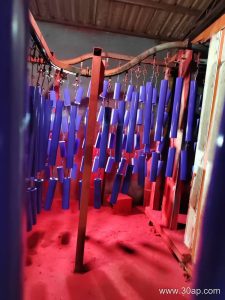
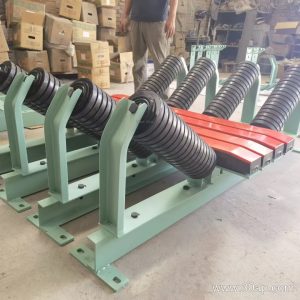
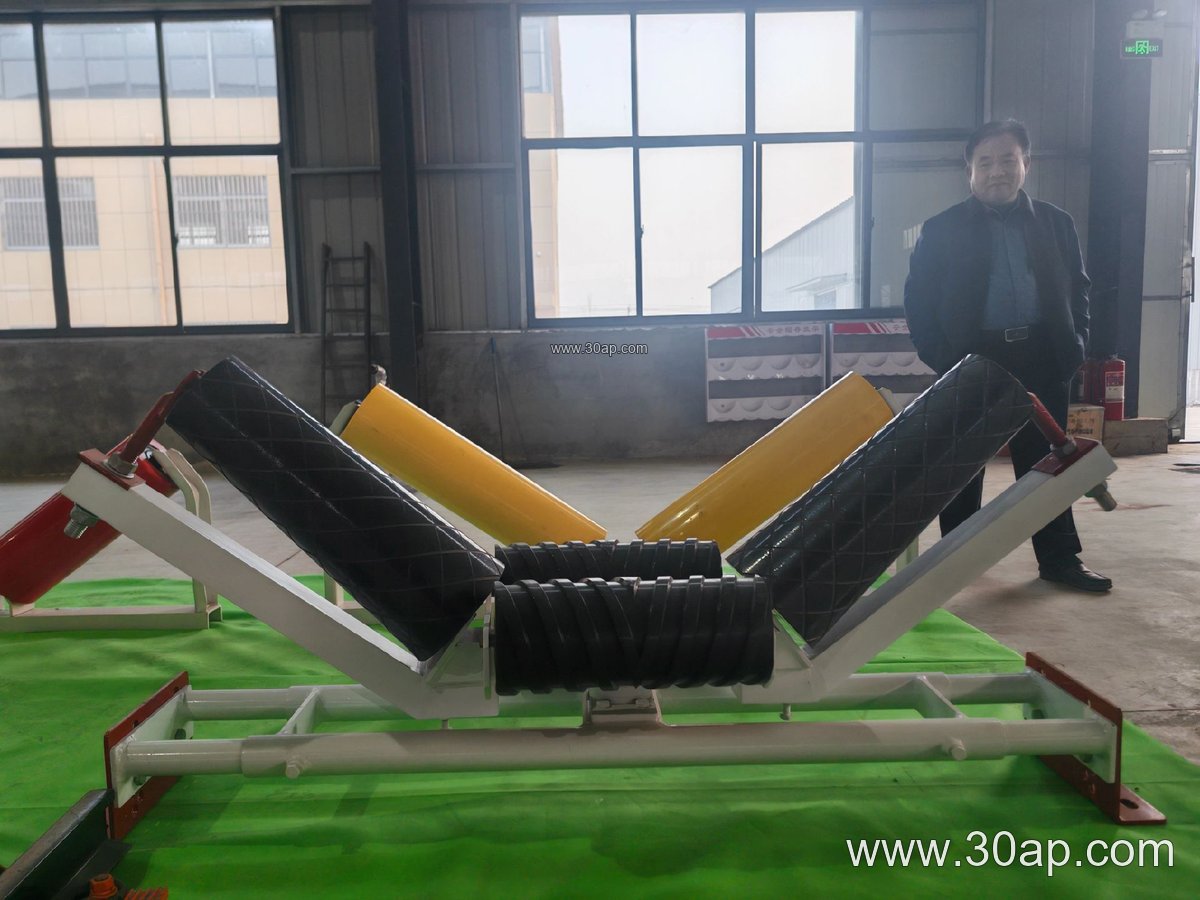
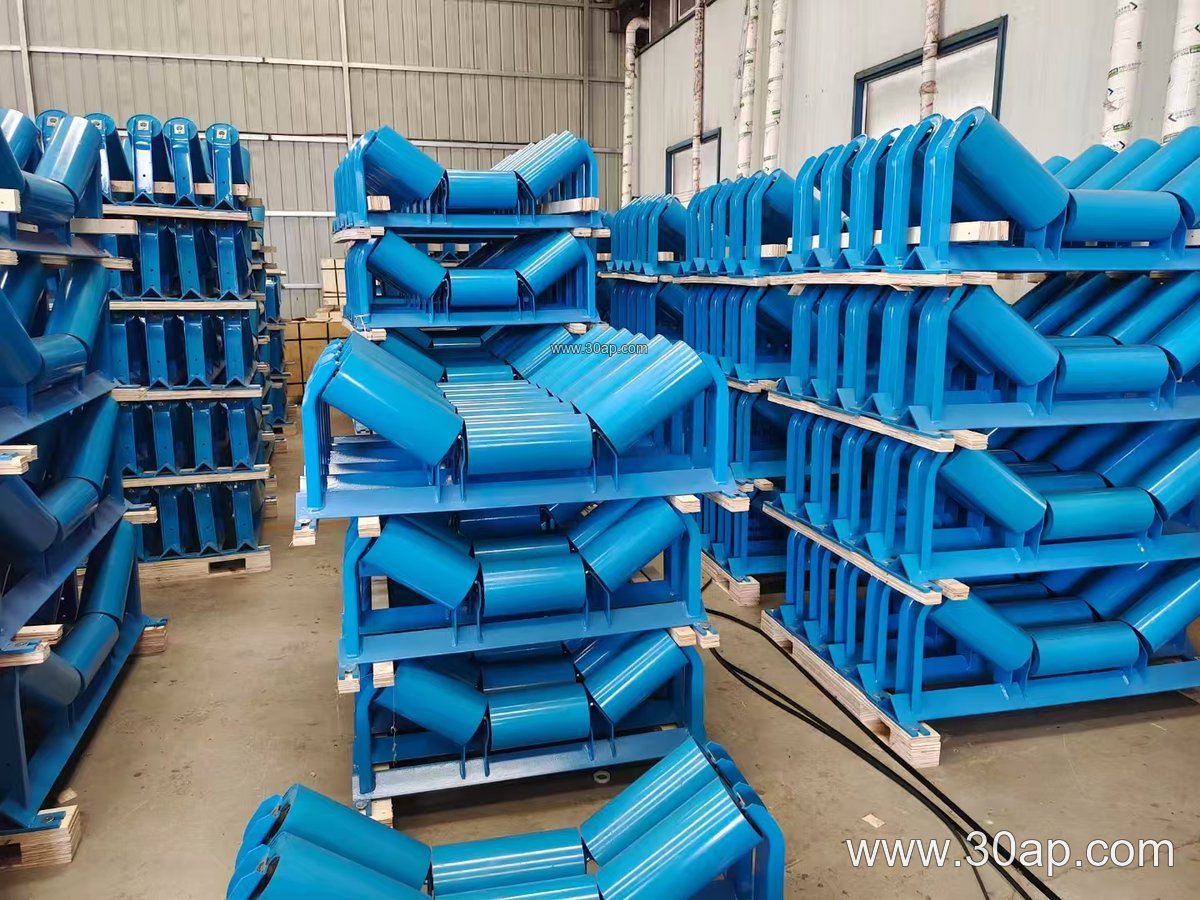
Belt conveyors in aggregate plants, coal handling systems, and clinker lines rely on correctly sized pulleys at every transfer point. In a crushing and screening circuit, the head pulley must cope with sharp stone and fine dust; in a port bulk terminal, lagging choice often focuses on wet conditions. A conveyor equipment pulley also works alongside the idler roller set and the conveyor bracket, so alignment across the whole frame affects belt tracking and pulley life.
What Buyers Should Check Before Ordering
- Confirm the duty position: drive, tail, bend, or take-up, and state it clearly on the inquiry.
- Provide belt width, belt speed, and estimated starting and running tension.
- Specify lagging type and thickness, and whether grooving is needed.
- State the shaft diameter required by the coupling or bearing arrangement.
- Check bearing type, sealing, and lubrication access for the site conditions.
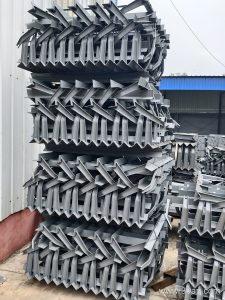
- Confirm face width and mounting interface with the conveyor bracket dimensions.
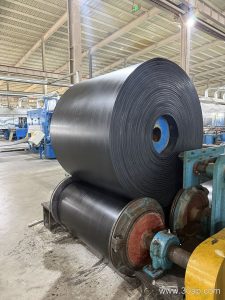
Matching the pulley to the conveyor belt and the surrounding structure avoids premature belt wear and keeps the line running at the intended capacity.