What the Conveyor Idler Shaft Does
A conveyor idler shaft is the stationary axle that carries the rotating shell of an idler roller. The shell turns on bearings mounted at each end of the shaft, while the shaft itself is held in the conveyor bracket and does not rotate. In a typical troughing set, three rollers sit on the same frame, and each one depends on its own shaft to keep the belt supported and tracking. Whether the line moves coal at a power plant, crushed limestone at a quarry, or clinker in a cement plant, the shaft is the fixed backbone of every turning roller.
How an Idler Shaft Is Built
Most shafts are machined from round carbon steel bar. The ends are turned down to fit bearing seats, and the bearing position is ground so the inner ring sits squarely. Common bearing sizes include 6204, 6205, 6305, 6306, 6308 and 6310, matched to the shaft diameter and load of the roller. A shaft usually has a machined flat or a pair of flats at each end so it locks into the conveyor bracket and cannot spin. Some designs use a through-shaft with a retaining groove or a threaded end for a nut. Sealing is handled by the roller shell, but the shaft finish matters, because a rough bearing seat wears the inner ring and shortens roller life.
The shaft must resist bending between the two bracket supports. That is why diameter grows with belt width and load. For reference only, common roller diameters include Ø63, Ø76, Ø89, Ø102, Ø108, Ø127, Ø133, Ø159, Ø178, Ø194 and Ø219 mm, and the shaft diameter is chosen to suit the bearing bore and the calculated load rather than belt width alone.
Where It Fits on the Conveyor
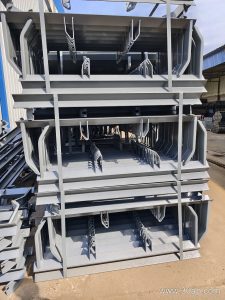
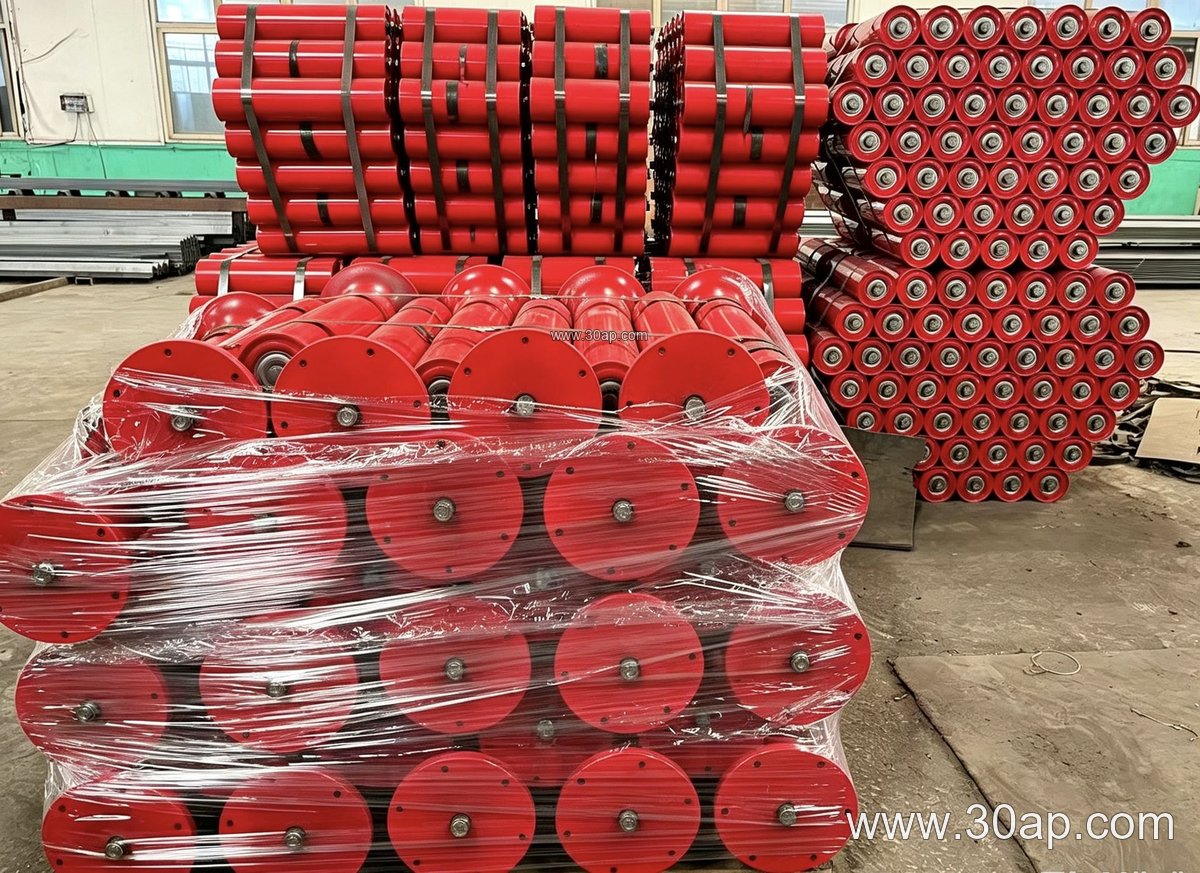
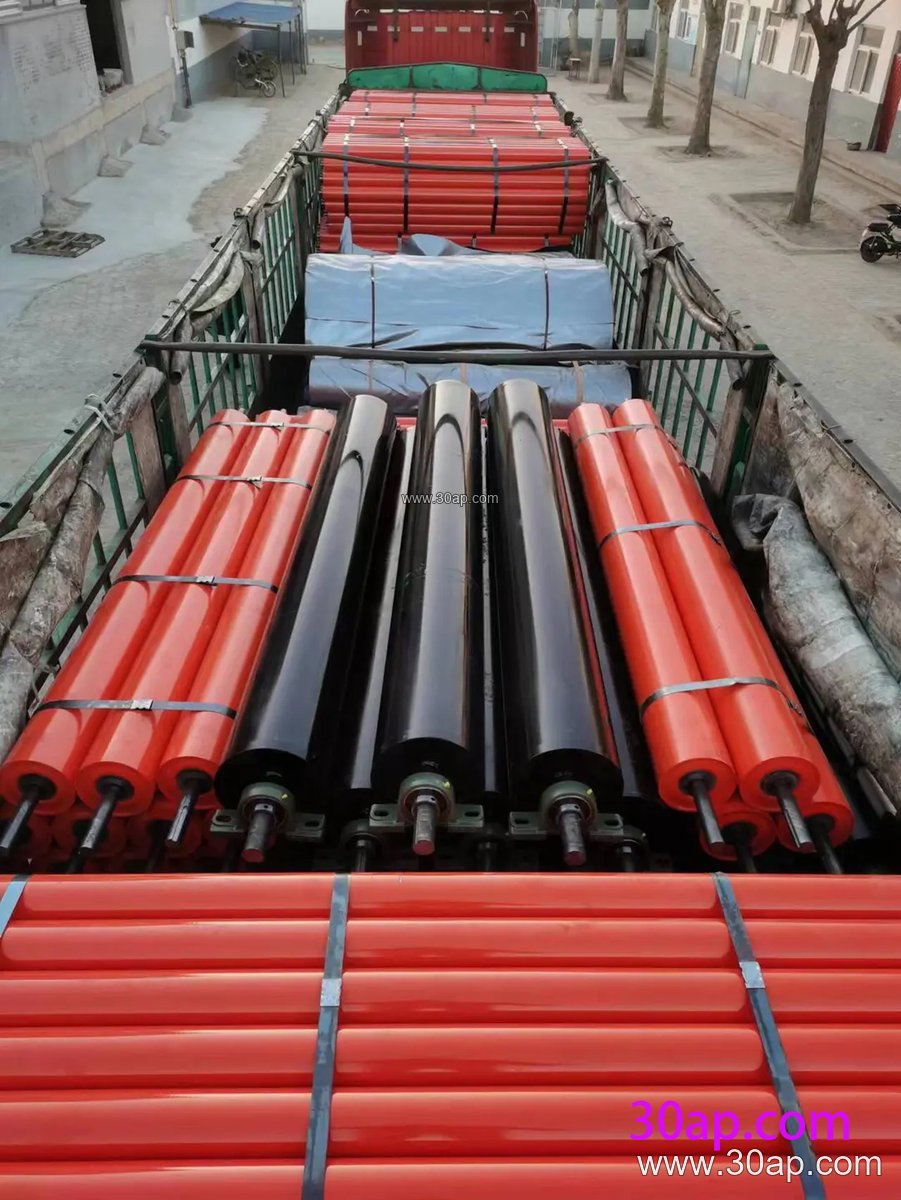
On the carrying side, shafts sit in three-roll troughing sets at 20, 30, 35 or 45 degree trough angles. On the return side, they appear in flat return rollers and V-type return sets. Impact zones under a crusher discharge often use cushion rollers with rubber rings, and those rollers still rely on a solid shaft. In a coal washing plant or a sinter line, dusty and damp conditions put extra demand on the bearing seat and seal area, so shaft finish and rust protection deserve attention. The shaft is not the same part as a conveyor pulley shaft; drive, tail and bend pulleys are separate assemblies with their own shafts and lagging, and they should not be treated as interchangeable with idler shafts.
Common Reference Dimensions
The table below shows typical roller lengths for three-roll troughing sets. Side rollers and center rollers can differ, and final values are set by the conveyor design.
| Belt width | Typical roller length (three-roll set) |
|---|---|
| B500 | about 200 mm |
| B650 | about 250 mm |
| B800 | about 315 mm |
| B1000 | about 380 mm |
| B1200 | about 465 mm |
| B1400 | about 530 mm |
| B1600 | about 600 mm |
| B1800 | about 670 mm |
| B2000 | about 750 mm |
Belt widths from B400 to B2400 are commonly discussed, but the shaft and roller dimensions must be confirmed from the drawing, not assumed from the belt width.
What a Buyer Should Check
- Bearing bore and shaft seat diameter, so the replacement matches the existing roller.
- Shaft end form, including flats, grooves or threads, and the fit in the conveyor bracket.
- Material and surface protection for the site, whether a dry aggregate yard or a wet wash box.
- Straightness and bearing seat finish, since these control vibration and roller life.
- Consistency across a batch, because mixed shafts complicate maintenance on a long conveyor belt line.
A well-made idler shaft is simple, but it decides how smoothly the idler roller turns and how often the maintenance team has to intervene.