What a Conveyor Belt Support Frame Does on the Line
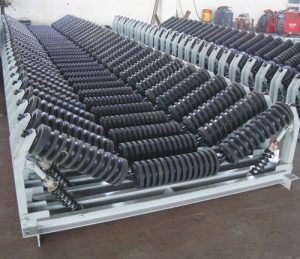
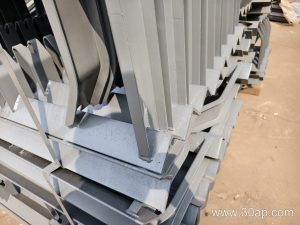
A conveyor belt support frame is the structure that holds the idlers in place and keeps the conveyor belt sitting at the right profile along the length of a conveyor. It is not a single part so much as a family of steel assemblies, sometimes called a belt conveyor support frame or idler support frame, that are bolted or welded to the conveyor stringers. In a quarry, a coal washing plant, or a cement clinker line, these frames are what keep the belt from sagging between pulleys and what set the trough shape that carries the load.
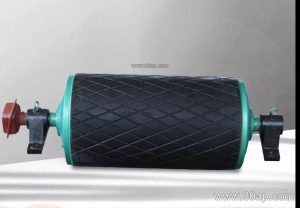
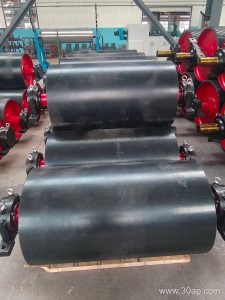
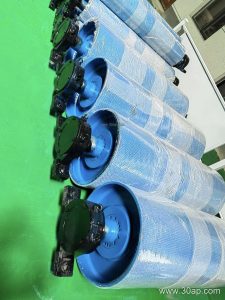
The frame works together with the conveyor belt, the idler roller, and the conveyor pulley at each end. Drive pulleys, tail pulleys, and bend pulleys each have their own mounting arrangements, and the support frame is a separate item with a separate job. Mixing those up in a purchase order is a common and costly mistake.
How the Frame Is Built
Most frames are fabricated from angle steel, channel steel, or folded steel plate. A typical troughing frame has a cross beam and two or three idler mounting positions set at a fixed trough angle; an adjustable frame uses slotted or pivoting mounts so the same frame can serve more than one trough angle. Return-side frames are flatter and often carry a single flat idler or a V-shaped pair.
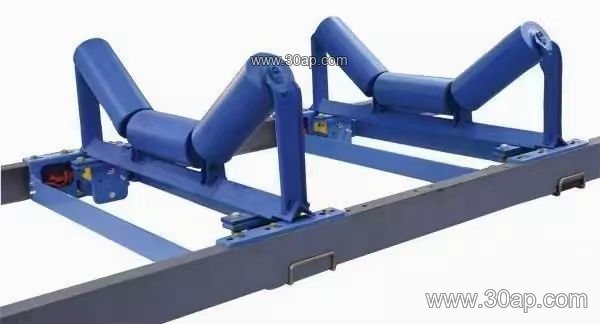
Key construction points a buyer should check:
- Mounting hole spacing and beam length, which change with belt width and trough angle and should be confirmed against the drawing rather than assumed.
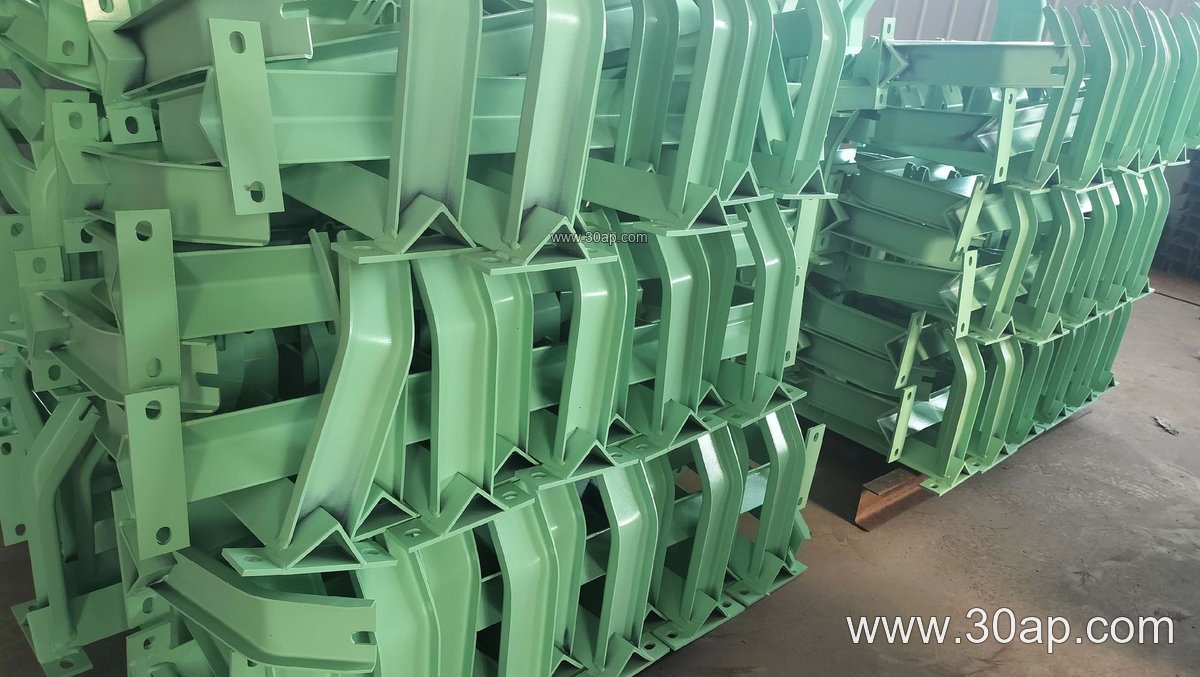
- Weld quality and any galvanizing or painting specified for dusty or wet conditions.
- Whether the frame is fixed or adjustable, since adjustable frames cost more but reduce spare-part variety.
- How the frame attaches to the stringer, often through a conveyor bracket, so the bolt pattern matches the existing structure.
Common Forms and Reference Dimensions
The table below lists forms and reference values that appear in project drawings. These are reference data, not a fixed catalogue, and final dimensions are set by design.
| Frame form | Typical duty | Reference values |
|---|---|---|
| Troughing / upper frame | Carrying side, three idlers | B500 to B2200; trough angle 20, 30, 35, 45 degrees |
| Transition frame | Gradual change from flat to trough near pulleys | Matched to adjacent trough angle |
| Return / flat frame | Belt return side | Single flat or V-return idler |
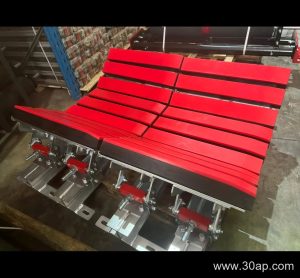
| Impact frame | Loading point, cushion idlers | Reinforced beam, impact idlers |
| Self-aligning frame | Belt tracking correction | Pivoting mount, often with forward tilt about 1.5 to 2 degrees |
| Adjustable frame | Lines with changing duty | Slotted mounts across 20 to 45 degrees |
Idler diameters seen with these frames include Ø89, Ø108, Ø133, Ø159, and Ø194. A frame for B800 at 35 degrees with Ø108 idlers and a frame for B1200 at 45 degrees with Ø133 idlers are both normal combinations; belt width does not lock a frame to one trough angle or one idler diameter.
Where These Frames Are Used
In a limestone quarry or a crushing and screening circuit, troughing frames carry run-of-mine rock and impact frames sit under the crusher discharge. In a power plant coal handling system, return frames and self-aligning frames keep the belt centred on long, lightly loaded runs. The same hardware appears in fertilizer plants, grain silos, and tunnel spoil lines, where dust and moisture make galvanized or well-painted frames worth the extra cost.
What to Confirm Before Ordering
Start with belt width, trough angle, and idler diameter, then confirm mounting hole spacing, beam length, and the stringer bolt pattern. State whether the frame is fixed or adjustable and whether it is for the carrying or return side. Ask for the drawing with dimensions rather than a type name alone, because two frames with the same name can differ in hole spacing. Finally, check that the frame is ordered as a support frame and not confused with a pulley assembly, since drive, tail, and bend pulleys are separate items with their own specifications.