What a Dual Drive Pulley Is
A dual drive pulley is a conveyor pulley that receives torque from two drive units, typically mounted at both ends of the shaft or on a common shaft through a split coupling arrangement. In a heavy-duty conveyor, this arrangement lets the drive power be shared across two motors and gearboxes instead of relying on a single large drive. The result is a more balanced load path, lower stress on individual components, and better starting and braking control on long or heavily loaded belts. Because it sits at the head of the conveyor, it is also a head pulley or discharge pulley by position, but its defining feature is the dual drive configuration rather than its location.
The equivalent name used in many project documents is twin-drive pulley or double-drive pulley, and all three refer to the same product. This is not a tail pulley, a bend pulley, or a tension pulley; those are separate positions and functions in a conveyor system.
Construction and Key Components
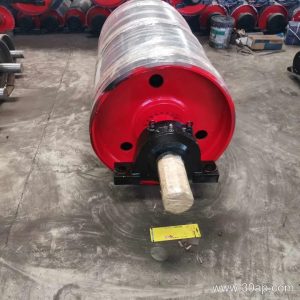
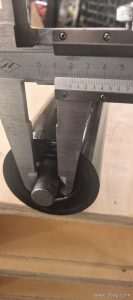
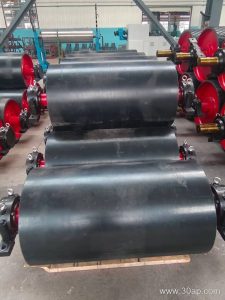
A dual drive pulley is built around a heavy fabricated or cast steel drum shell, with end discs, a through shaft, and bearing housings on both sides. The shaft is sized for the combined torque of both drives, so shaft diameter is determined by torque and load, not by belt width alone. Common shaft diameters include Ø100, Ø120, Ø140, Ø160, Ø180, and Ø200 mm for larger units, while smaller conveyors may use Ø80 or Ø90 mm.
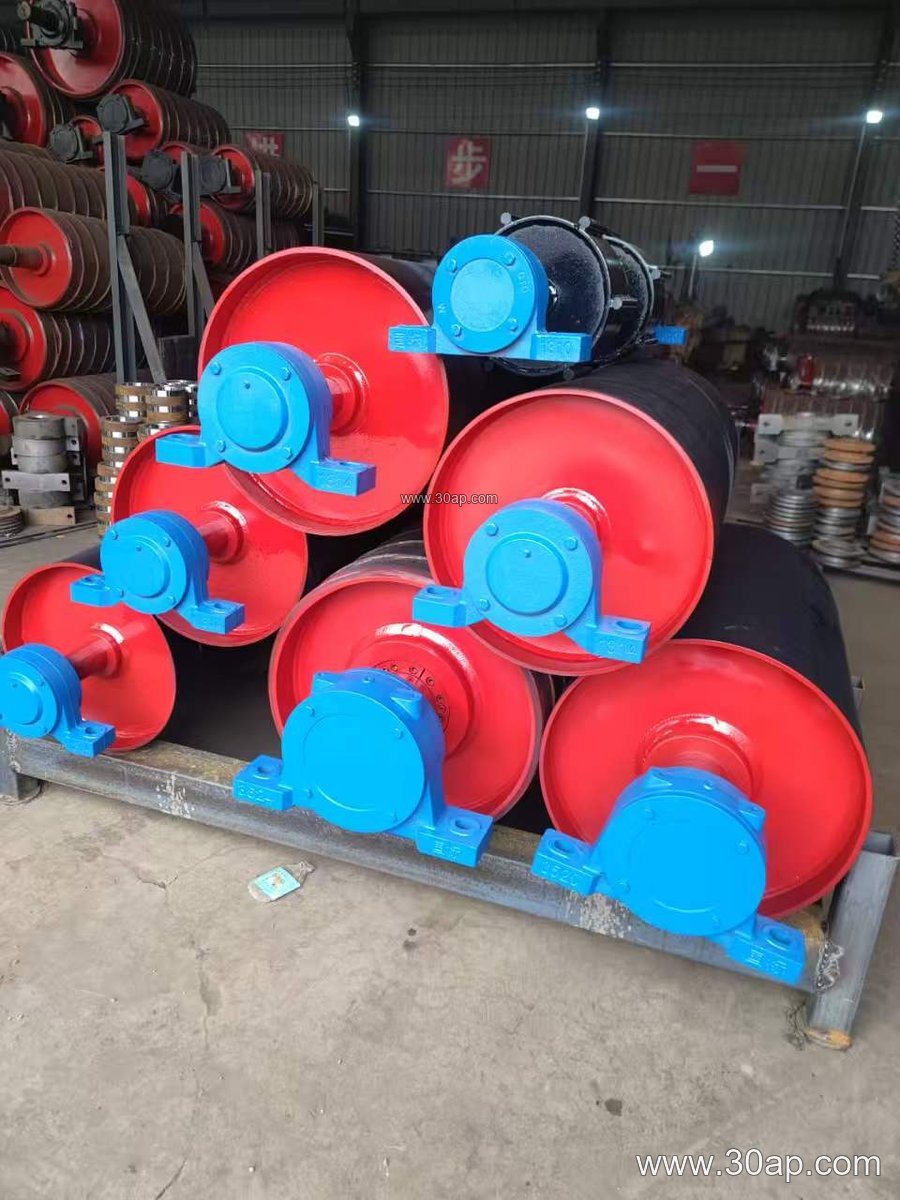
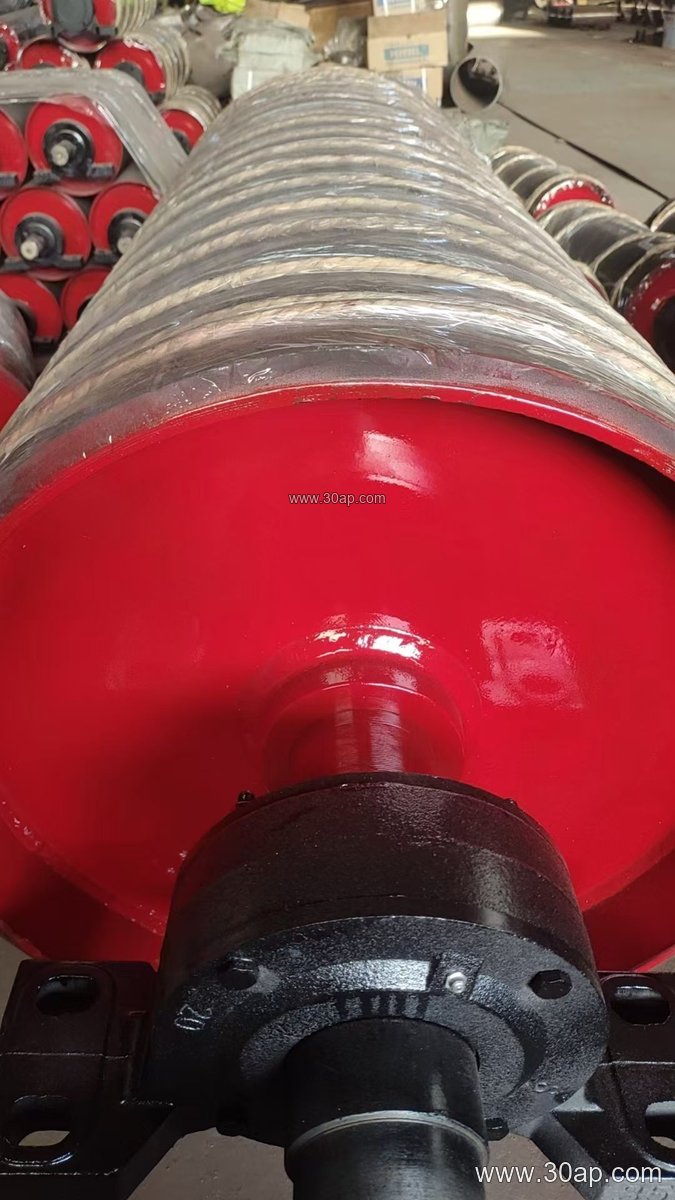
The pulley surface may be plain, or it may carry lagging to improve grip. Common surface forms are:
- Plain steel finish for clean, low-abrasion duty
- Cold-bonded rubber lagging for general bulk handling
- Hot vulcanized rubber for higher wear resistance
- Diamond or herringbone grooved lagging for wet or slippery conditions
- Ceramic lagging for abrasive slurries and high-traction needs
Lagging thickness commonly runs 8, 10, 12, 15, or 20 mm depending on the duty. The drum face width is normally wider than the belt, for example about 1400 mm for a B1200 belt or about 1600 mm for a B1400 belt, but the exact face width follows the conveyor design.
Where Dual Drive Pulleys Are Used
This drive arrangement appears where a single drive would be too large or too costly to service. In a limestone quarry or iron ore plant, a dual drive pulley at the head end helps distribute power on a long overland conveyor. In a coal preparation plant or a power station coal handling line, it supports smooth starting of a heavily loaded belt. Aggregate plants, cement clinker lines, and port bulk terminals also use twin-drive head pulleys when belt tensions and throughput demand a shared drive solution.
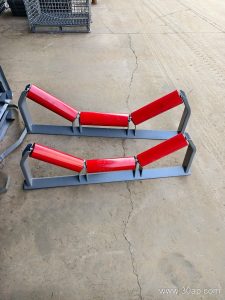
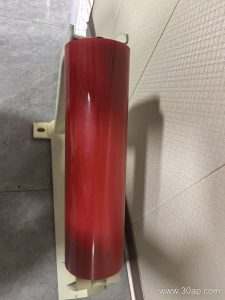
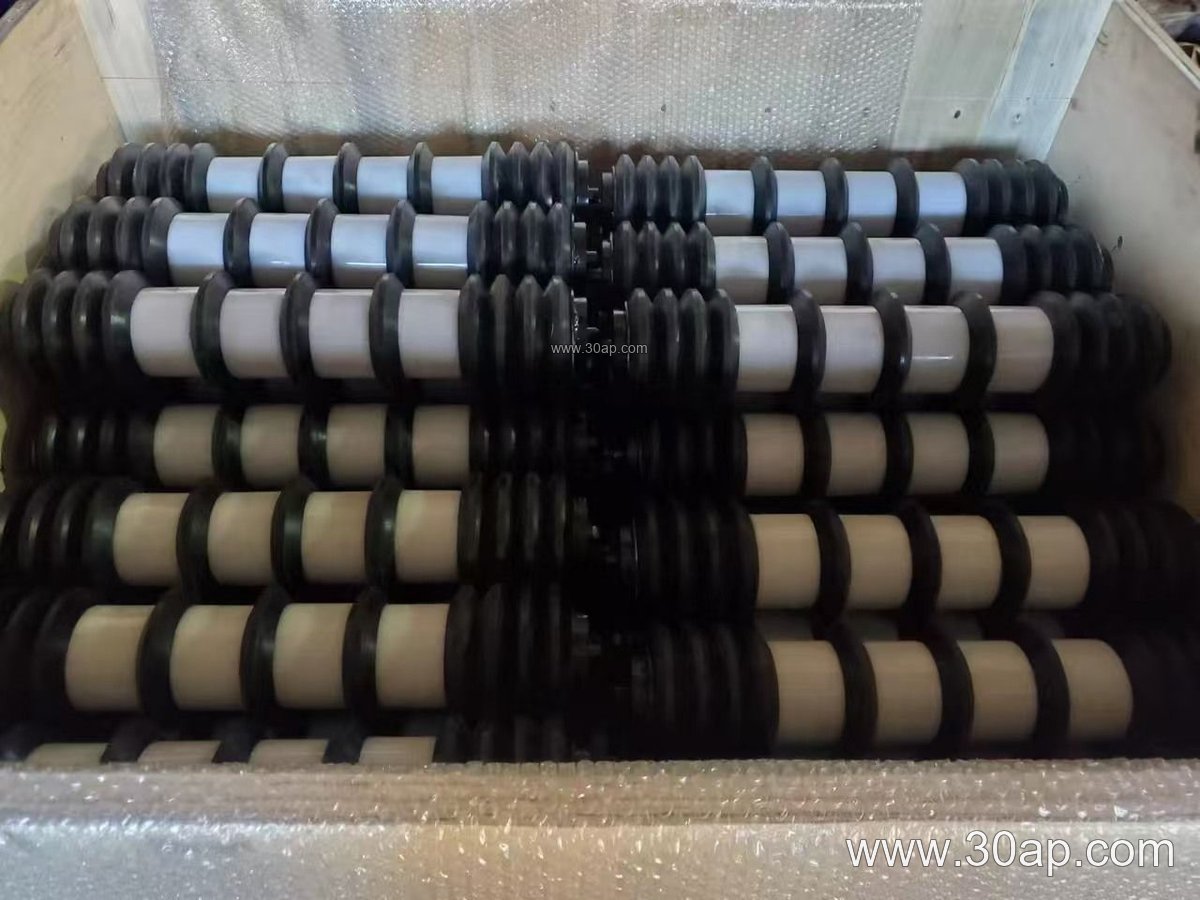
In these systems, the pulley works together with the conveyor belt, idler rollers, and conveyor brackets, so alignment and belt tracking are as important as the pulley itself.
Sizes and Configuration Notes
The table below shows typical reference combinations, not fixed rules. Final dimensions depend on belt tension, torque, and the conveyor layout.
| Belt width | Common pulley diameter | Typical face width | Shaft diameter range |
|---|---|---|---|
| B650 | Ø400 to Ø500 mm | about 750 mm | Ø80 to Ø100 mm |
| B800 | Ø500 to Ø630 mm | about 950 mm | Ø90 to Ø120 mm |
| B1000 | Ø630 to Ø800 mm | about 1150 mm | Ø100 to Ø140 mm |
| B1200 | Ø800 to Ø1000 mm | about 1400 mm | Ø120 to Ø160 mm |
| B1400 | Ø800 to Ø1250 mm | about 1600 mm | Ø140 to Ø180 mm |
One belt width can match several pulley diameters, and the choice depends on wrap angle, belt speed, and required traction. A B1200 × Ø1000 configuration and a B1200 × Ø800 configuration are both possible, but they suit different tension and grip conditions.
What Buyers Should Check
When specifying a dual drive pulley, confirm the total drive power, the split between the two drives, the belt speed, and the starting method. Ask for the shaft material and the bearing type, since these affect service life. Check the lagging form and thickness against the material being carried; wet, abrasive, or oily loads usually need grooved or ceramic lagging. Also confirm the pulley face width, the bearing center distance, and the mounting interface with the conveyor bracket.
For maintenance planning, keep spare lagging and bearing sets on hand, and check pulley alignment after any belt splice or idler roller replacement. A well-matched dual drive pulley reduces the chance of belt slip and keeps the whole conveyor line running steadily.