What a Conveyor Support Bracket Does on the Line
A conveyor support bracket is the structural interface between the conveyor frame and the idler roller that carries the belt. It holds the roller at the correct height, angle, and spacing so the conveyor belt runs smoothly from the tail pulley to the drive pulley and back along the return strand. In a quarry, a coal washing plant, or a cement kiln feed line, these brackets are the parts that quietly determine whether the belt tracks true or wanders. They are simple steel fabrications, but the details matter.
How the Bracket Is Built
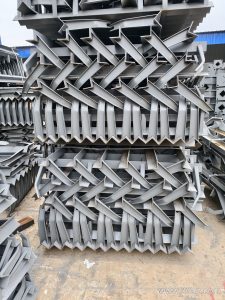
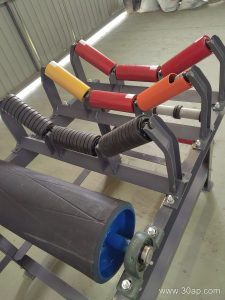
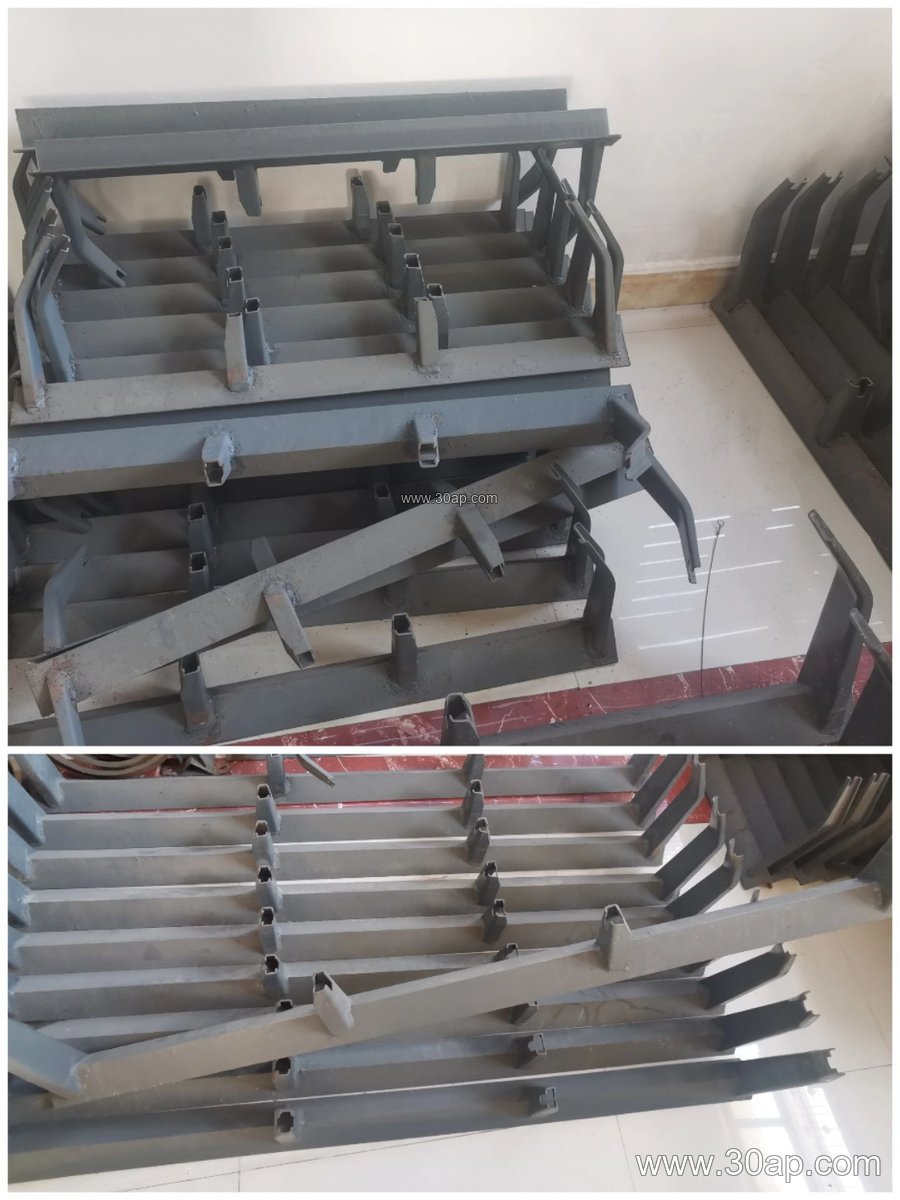
Most brackets are fabricated from angle steel, channel steel, or folded steel plate. The material choice follows the load and the environment. A light-duty bracket on a B650 sand and gravel line may be folded plate, while a heavy troughing bracket on a B1400 iron ore conveyor is more likely channel steel with welded gussets. The bracket typically includes mounting slots or holes for the idler roller shaft, a crossmember that sets the trough angle, and feet that bolt to the conveyor stringer.
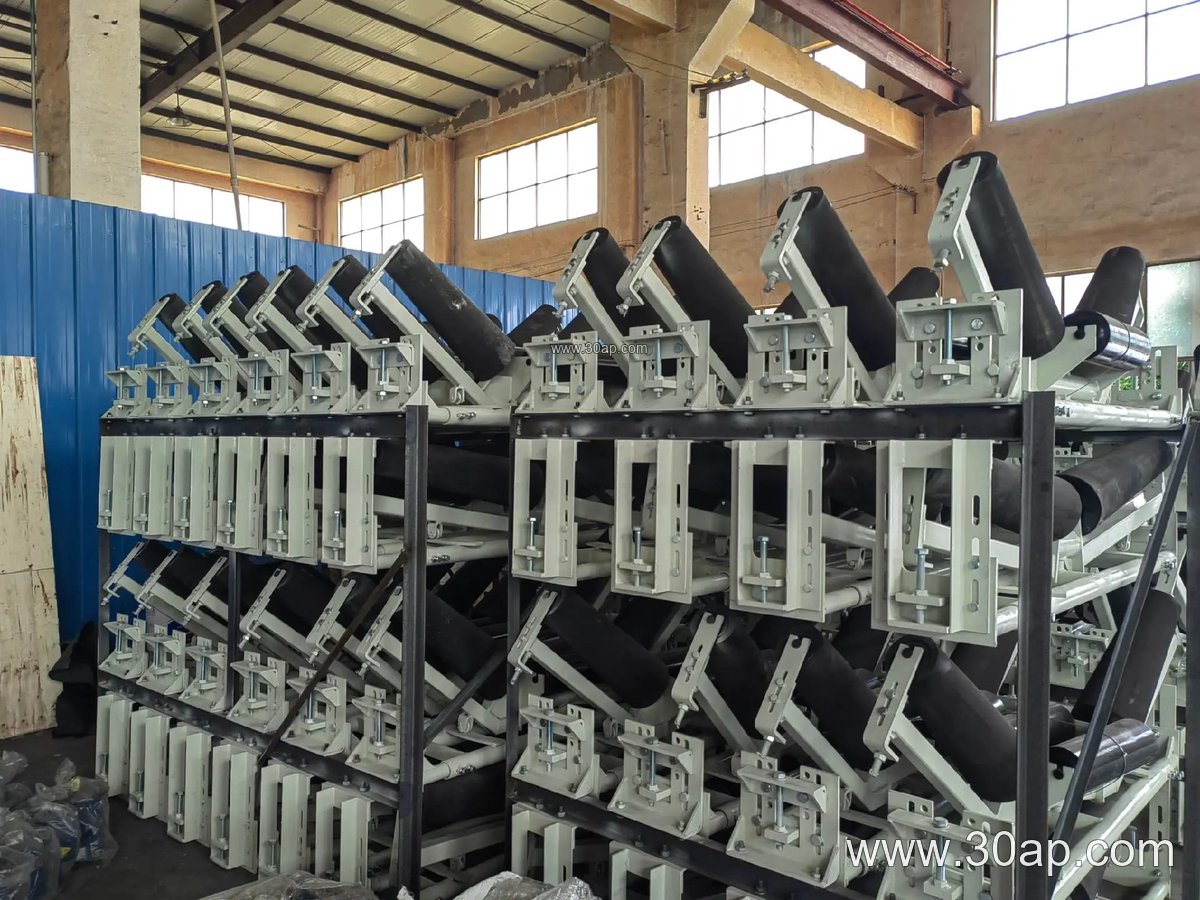
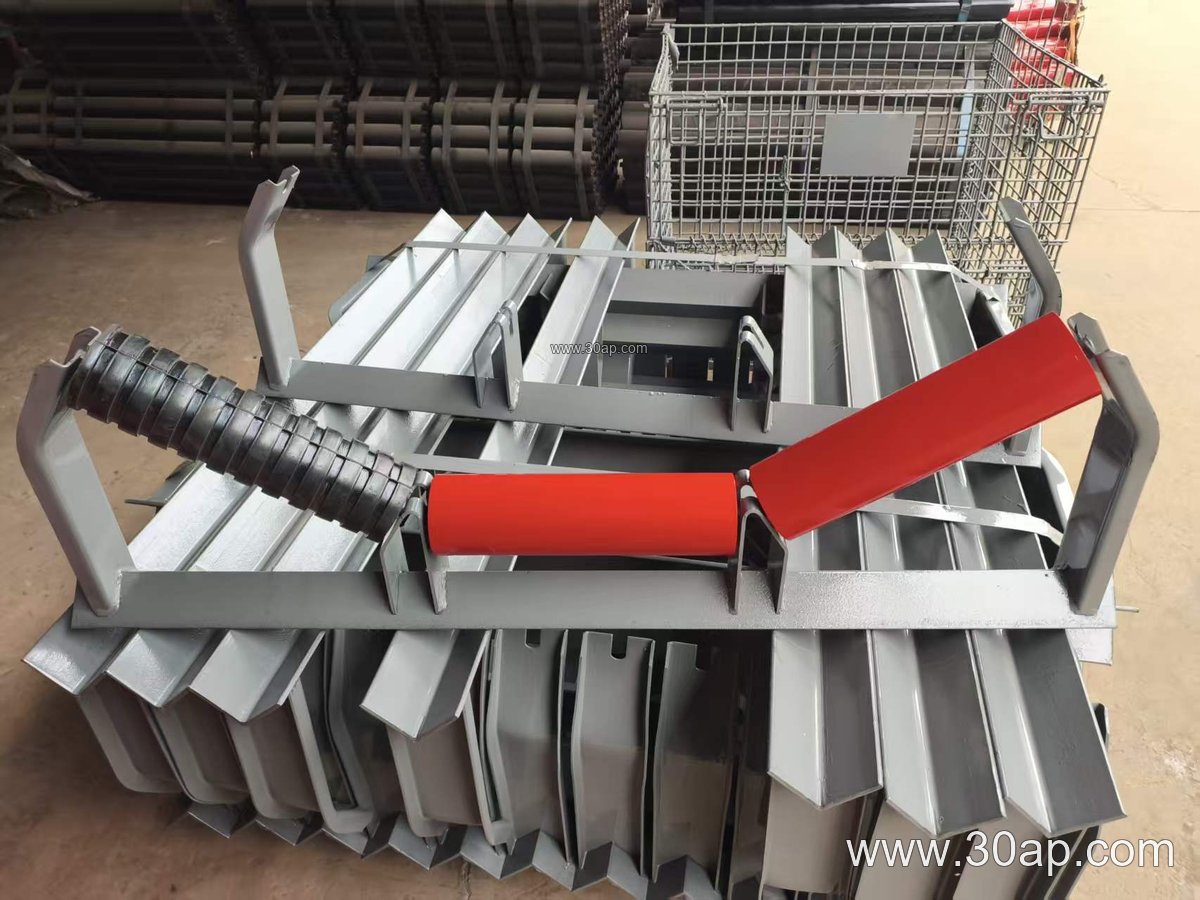
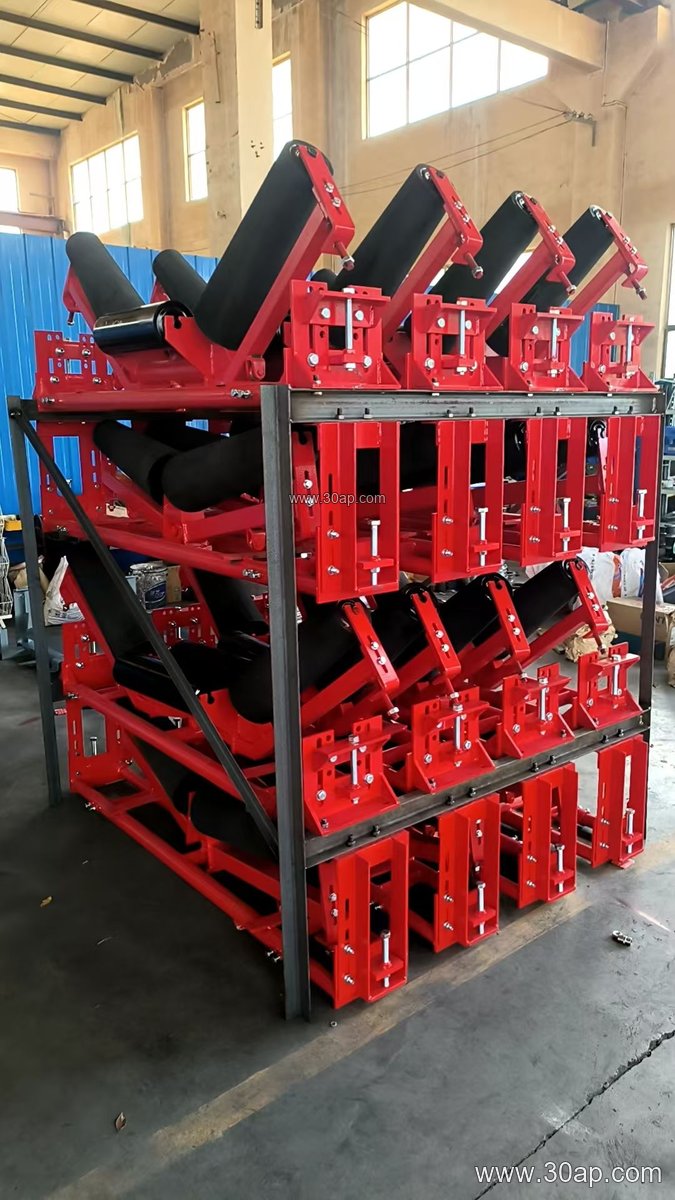
Common bracket families include the troughing bracket, upper trough bracket, transition bracket, return bracket, lower flat bracket, V-return bracket, impact bracket, self-aligning bracket, forward-leaning bracket, spiral roller bracket, suspended bracket, and adjustable bracket. Each has a specific mounting position; a return bracket is not a substitute for a troughing bracket, and a transition bracket is placed only where the belt changes from flat to troughed.
Matching Bracket, Belt Width, and Roller Diameter
Buyers often ask which bracket fits a given belt width. The answer is that the bracket is selected by belt width, trough angle, and roller diameter together, not by one number alone. A B800 belt may run at 35 degrees with Ø108 rollers, while a B1200 line might use 45 degrees with Ø133 rollers. Neither combination is universal. Installation hole spacing and crossmember length change with belt width and trough angle, so they should be confirmed against the conveyor drawing.
The table below shows typical reference combinations; treat them as examples, not fixed rules.
- B500, 20-30 degrees, Ø89
- B650, 30 degrees, Ø89
- B800, 35 degrees, Ø108
- B1000, 35-45 degrees, Ø133
- B1200, 45 degrees, Ø133
- B1400, 35-45 degrees, Ø159
- B1600, 35 degrees, Ø159
- B1800, 45 degrees, Ø194
- B2000, 35-45 degrees, Ø194
Adjustable brackets allow the trough angle to be changed between 20, 30, 35, and 45 degrees on site. Forward-leaning brackets are commonly set at about 1.5 to 2 degrees to help center the belt. These are design references, not verified supply commitments.
Where These Brackets Are Used
In a limestone quarry, troughing brackets support the carrying rollers through the crushing and screening circuit. At a power plant coal yard, return brackets and V-return brackets hold the belt on the return run, while impact brackets sit under the loading point. In a fertilizer or grain silo facility, suspended brackets and self-aligning brackets help keep the belt centered on long, lightly loaded runs. The choice of bracket type follows the duty, not the industry name.
Buyer Checklist Before Ordering
- Confirm belt width and required trough angle together.
- State the idler roller diameter and shaft end type.
- Check mounting hole spacing and crossmember length against the frame drawing.
- Specify fixed or adjustable, and whether forward lean is needed.
- Match material and finish to the site environment, such as washdown or dust.
- Decide whether the bracket is for carrying, return, transition, or impact duty.
A well-chosen conveyor support bracket keeps the idler roller aligned, protects the conveyor belt from edge wear, and reduces downtime. It is a small part, but on a working conveyor it is not a minor one.