What a Spiral Idler Does on a Conveyor
A spiral idler is a return-side roller with a helical wrap around its shell. Instead of a smooth cylindrical face, it carries a raised spiral that contacts the underside of the conveyor belt. As the belt runs, the spiral turns with the roller and gently works loose material that would otherwise stick to the belt surface. This makes it a practical choice on lines where carryback is a persistent housekeeping problem, such as a limestone quarry, a coal washing plant, or a cement plant handling damp, fine material.
The same product is also sold as a helical return roller, and both names describe the same item. It belongs to the return idler family, not to the drive, tail, or bend pulley group, which are conveyor pulleys with entirely different duties.
How the Roller Is Built
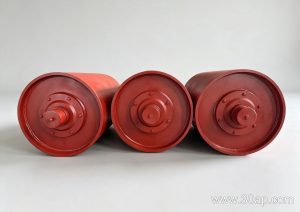
The core is a steel tube with welded end discs and a through shaft carried in two bearing housings. A steel or polymer spiral is fixed to the outside of the shell. Bearing seats are sealed against dust and water, since the return run often sits close to spillage. Typical bearing choices include 6205, 6305, and 6308, matched to the shaft and load rather than to belt width alone.
Surface options vary by supplier and duty. A plain steel spiral is the most common form, while rubber or polyurethane versions reduce belt wear in abrasive service. The spiral pitch and height are design details, not universal standards, so a buyer should confirm them against the belt and the material being handled.
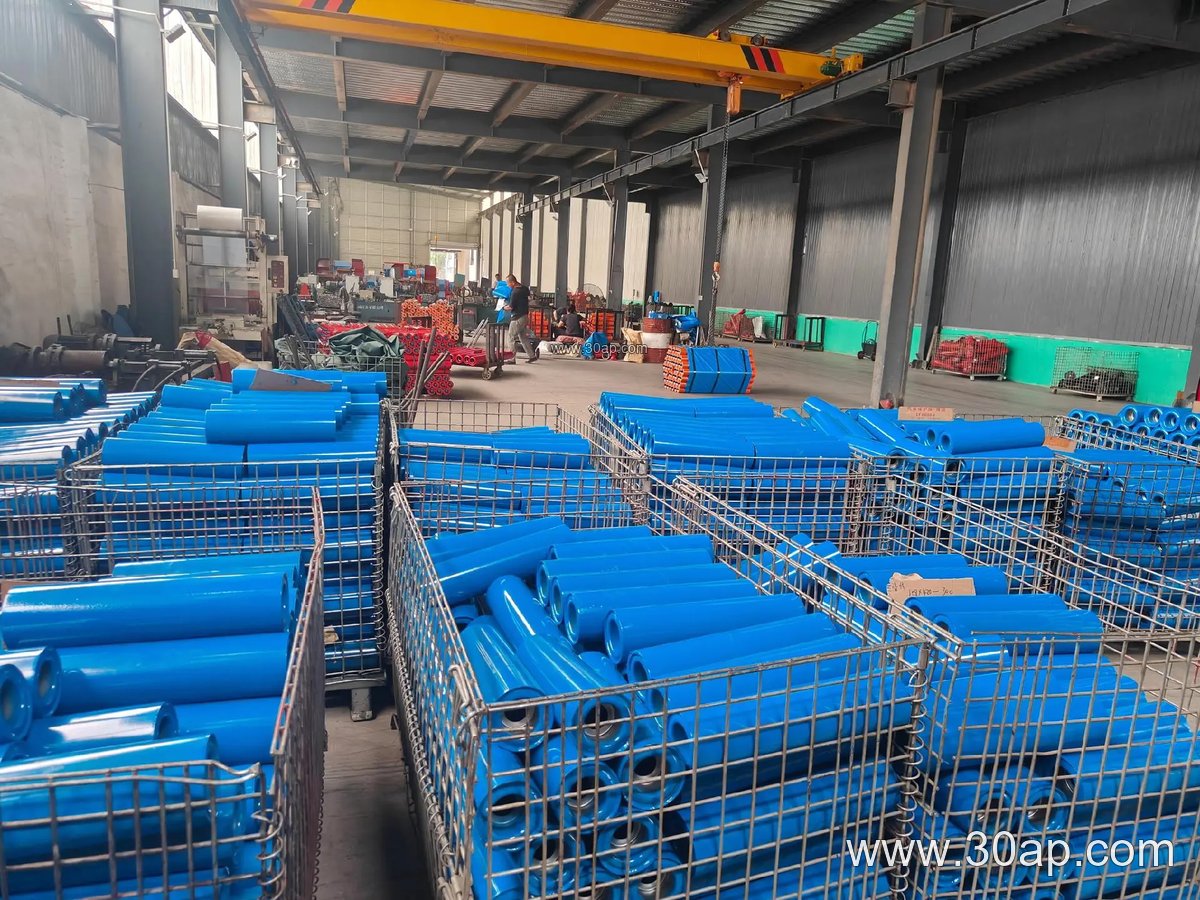
Where It Fits in the Conveyor Line
The spiral roller is mounted on the return strand, usually on a conveyor bracket that allows height adjustment. It is not a substitute for a troughing set on the carrying side, nor for a bend pulley at a curve in the route. It works well in these settings:
- Sand and gravel plants where wet fines cling to the belt
- Coal handling in power stations and preparation plants
- Crushing and screening circuits with dusty, sticky feed
- Fertilizer and grain lines where residue build-up matters
On a long overland conveyor, helical return rollers may be spaced at intervals among plain return rollers, targeting the zones where carryback is heaviest, such as after a transfer point. In a tunnel muck line or a concrete batching plant, the same logic applies: put them where the belt is dirtiest.
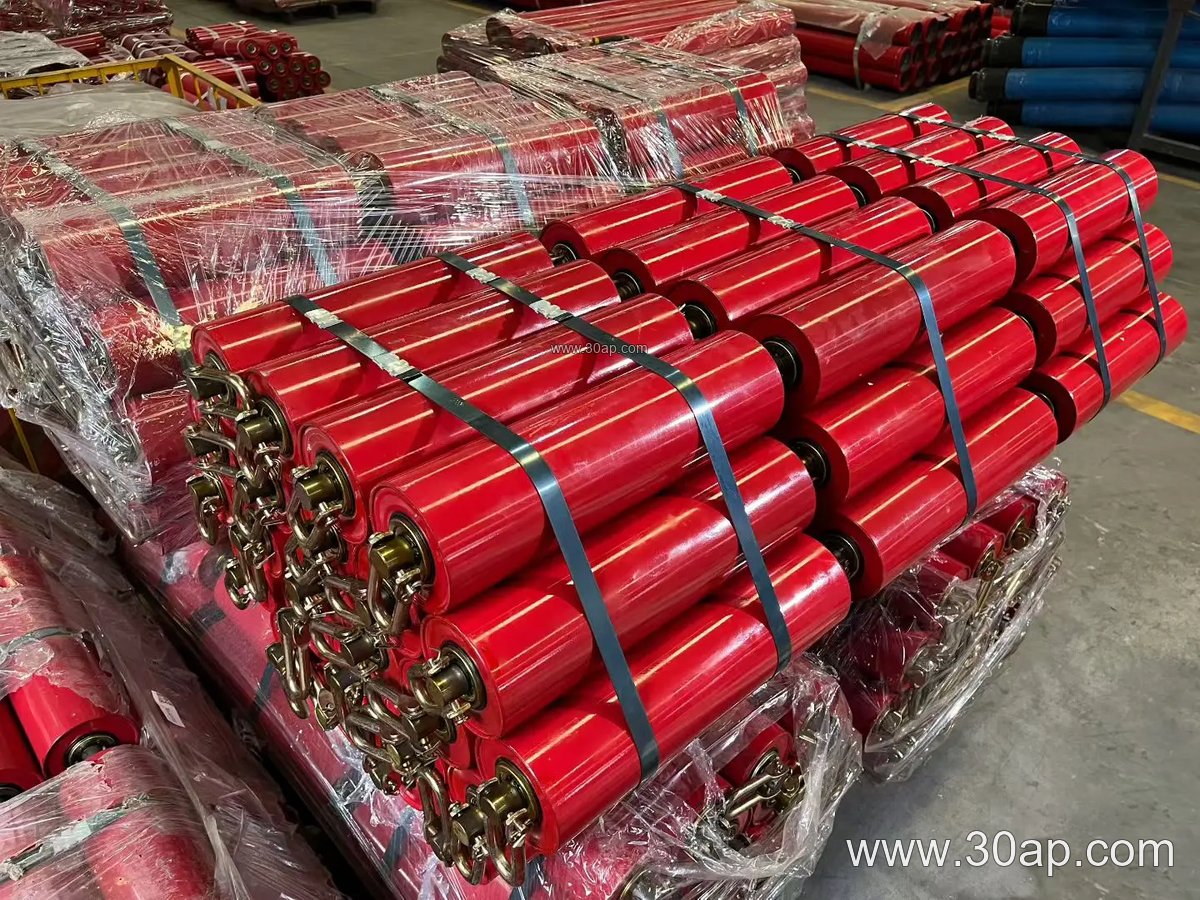
Common Sizes and Reference Data
The table below gives typical reference values. They are examples, not fixed matches, and final dimensions follow the conveyor design.
| Parameter | Common reference values |
|---|---|
| Roller diameter | Ø89, Ø102, Ø108, Ø127, Ø133, Ø159 mm |
| Belt width | B500, B650, B800, B1000, B1200, B1400 mm |
| Roller length (return, example) | About 200 mm at B500 up to about 530 mm at B1400 |
| Bearing | 6204, 6205, 6305, 6306, 6308 |
| Surface form | Steel spiral, rubber-covered spiral |
Roller length changes with belt width and mounting arrangement. A wider belt does not by itself dictate one shaft diameter, and a given belt width can pair with more than one pulley or roller diameter depending on load and speed. Trough angle, typically 20 to 45 degrees on the carrying side, does not apply to this return component, but it does affect the belt path and therefore the clearance needed around the return roller.
Buyer Checklist
Before ordering, confirm the belt width, the return strand height, the shaft ends and fixing centres, and the bearing seal class. Ask whether the spiral is intended for cleaning or for belt support, because the two duties lead to different spiral heights. Check that the roller can be serviced without removing the conveyor bracket, and keep a small stock of the same bearing size for maintenance.
During operation, inspect for wobble, noise, and material packed between the spiral and the shell. A worn spiral loses its cleaning effect before it fails outright, so replace it when the helix height drops noticeably. Pair the spiral idler with well-adjusted skirt rubber and belt cleaners to reduce the load it has to handle.