What the Conveyor Support Bracket Does
On a belt conveyor, the conveyor support bracket is the structural interface that holds idler rollers at the correct position and angle. It sits between the conveyor frame and the rollers, and it directly influences how the conveyor belt tracks, how the load is distributed, and how easily the system can be maintained. In a quarry, a coal preparation plant, or a cement plant, a poorly aligned bracket can cause belt wander, edge damage, and premature roller failure, so this seemingly simple part deserves attention during design and replacement.
Construction and Common Forms
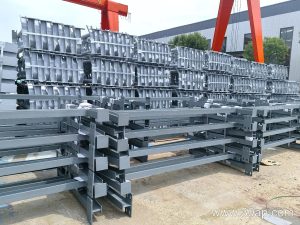
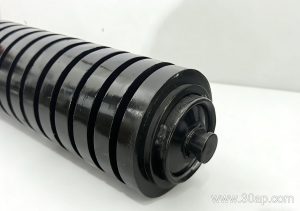
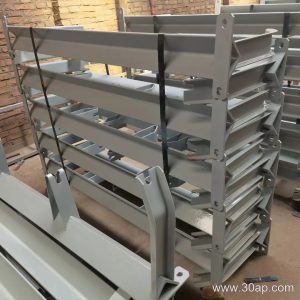
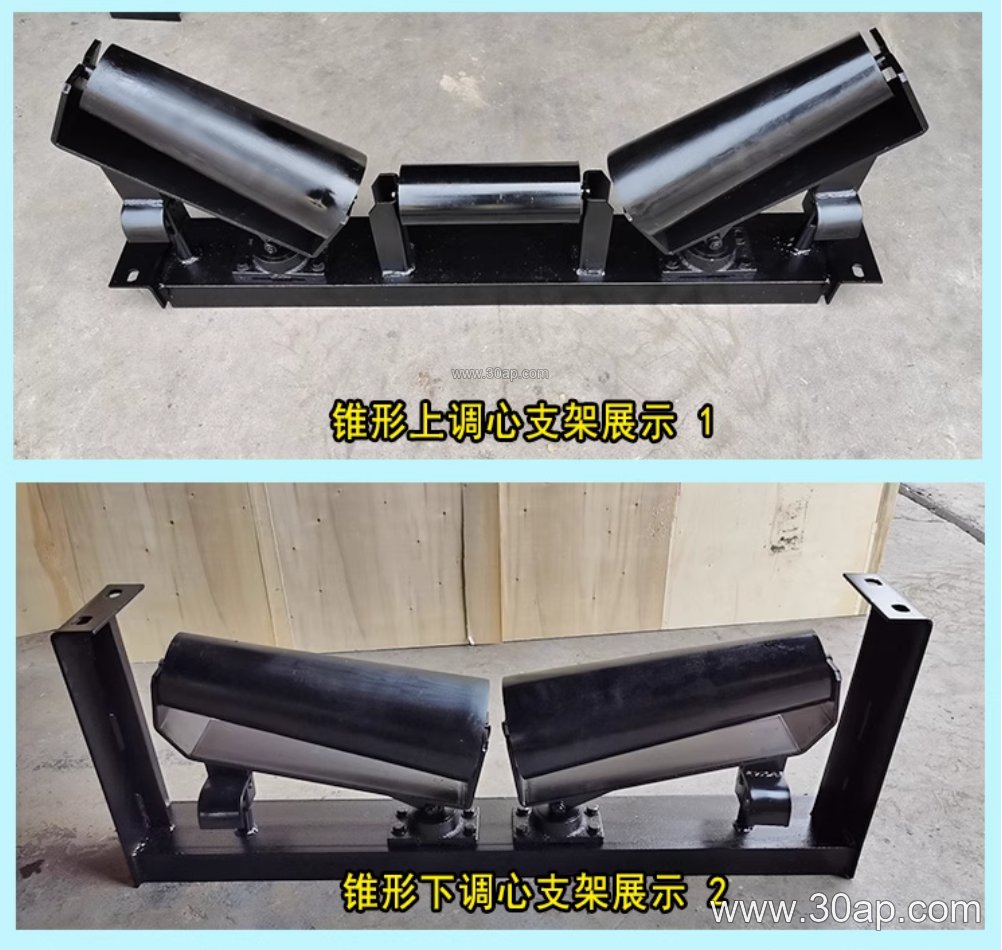
Most brackets are fabricated from angle steel, channel steel, or folded steel plate. The choice depends on the load, the belt width, and the environment. A troughing bracket is shaped to hold three rollers in a trough configuration, while a return bracket supports the belt on the return strand. A V-return bracket is a distinct form used to help center the belt on the return side, and a transition bracket is used near pulleys to gradually change the belt profile. Adjustable brackets allow the trough angle to be set on site, while fixed brackets are welded or bolted to a single angle.
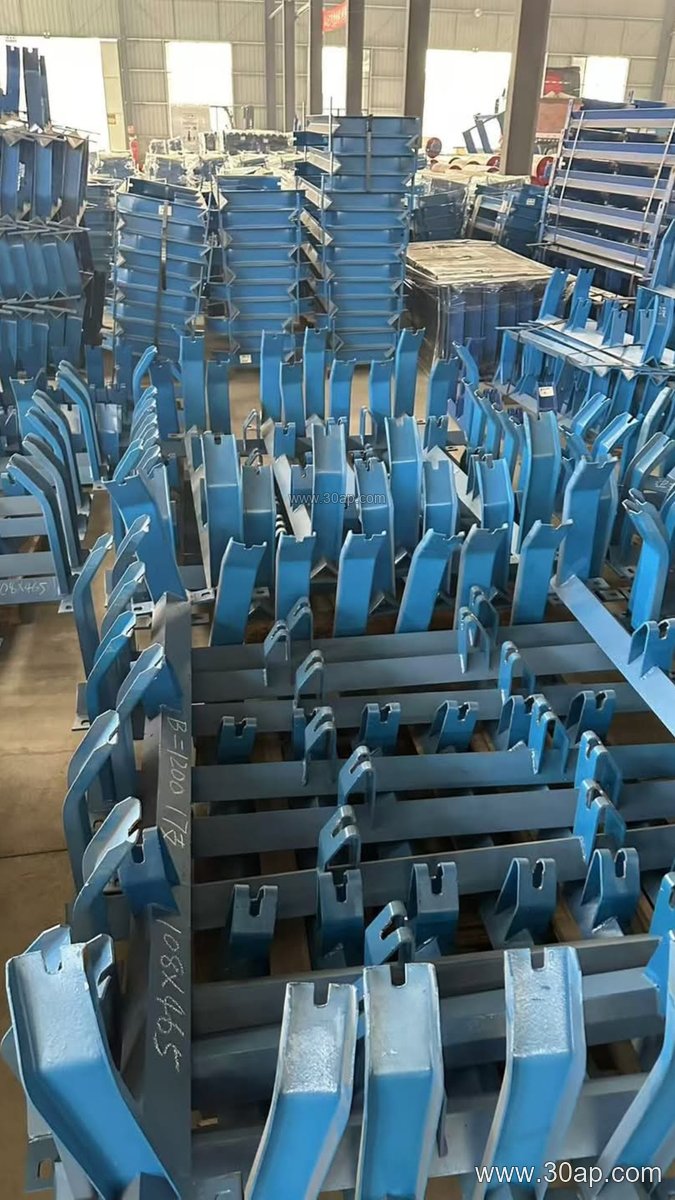
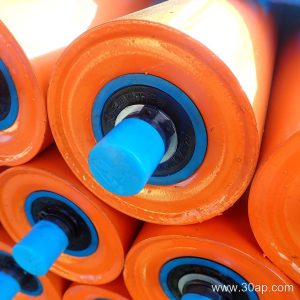
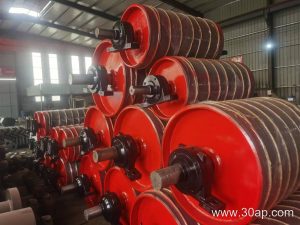
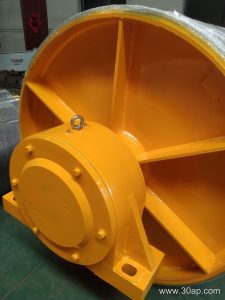
The bracket is not a substitute for a conveyor pulley, nor is it a drive pulley or tail pulley. Those are separate components with different functions. A conveyor support bracket works together with the idler roller and the conveyor belt, and in some layouts it also interacts with a conveyor bracket that carries the return roller. The names are not interchangeable, and a buyer should confirm which position the bracket is intended for before ordering.
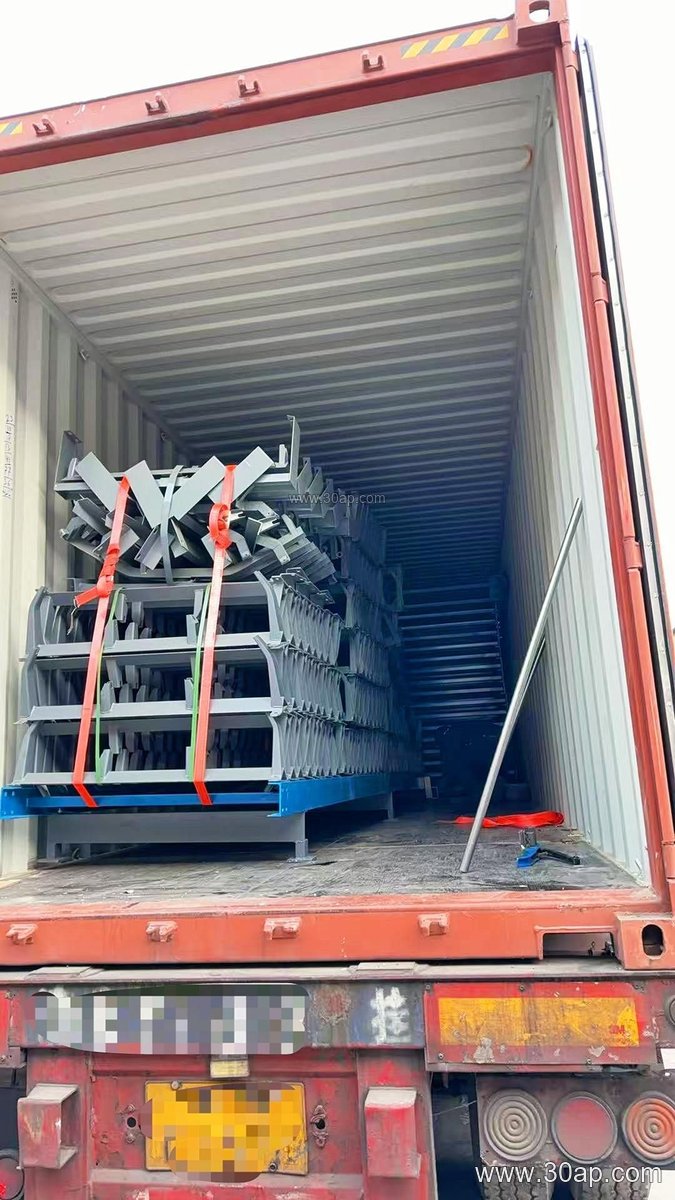
Where It Is Used
These brackets appear wherever a conveyor belt needs continuous support. In a sand and gravel line, they are common on the loading and transfer sections. In a power plant coal handling system, they carry the belt through long galleries. In an iron ore or limestone operation, heavy-duty brackets are used at the load point and along the carrying run. A crushing and screening plant often uses a mix of troughing and return brackets, while a tunnel muck removal system may use a more compact arrangement.
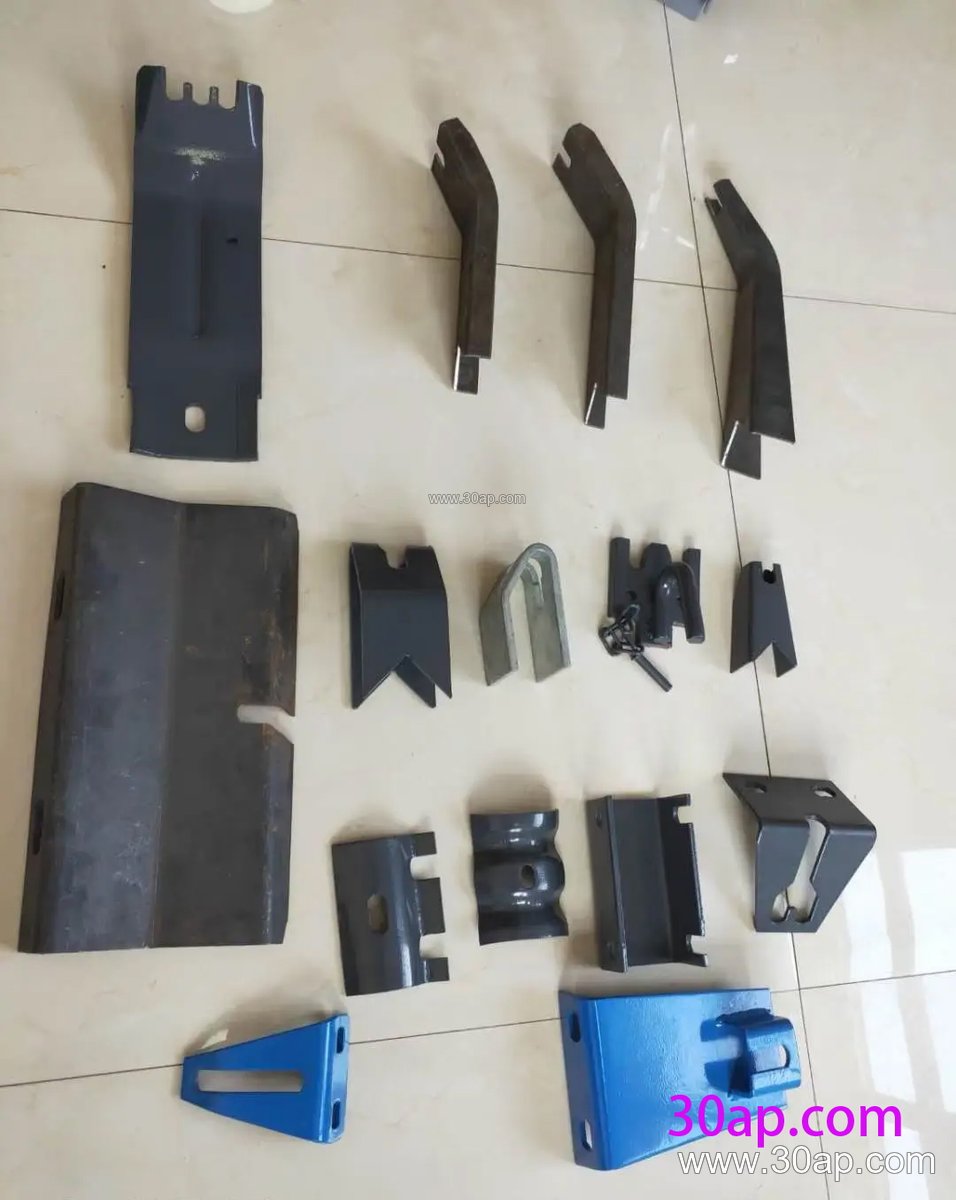
Because the bracket is exposed to dust, moisture, and impact, the surface treatment matters. Paint, galvanizing, or a combination is often specified, but the exact finish should be confirmed with the supplier for the specific site conditions. The bracket should not be treated as a wear part in the same way as a roller, but it must remain rigid enough to keep the idlers in line.
Matching Belt Width, Trough Angle, and Roller Diameter
Bracket dimensions are not universal. The mounting hole spacing and beam length usually change with belt width and trough angle. A bracket for a B800 belt with a 35-degree trough is not the same as one for a B1200 belt with a 45-degree trough. The roller diameter also matters because the bracket cradle must accept the roller shaft and end disc. Common roller diameters include Ø89, Ø108, Ø133, Ø159, and Ø194, but there is no rule that a given belt width must use only one diameter. A B650 conveyor might run with Ø89 rollers in a light duty application, while a B1400 conveyor could use Ø133 or Ø159 depending on load and speed.
For reference, the following combinations are often seen in general industry practice. They are examples, not mandatory pairings.
| Belt Width | Trough Angle | Typical Roller Diameter |
|---|---|---|
| B500 | 20 to 30 degrees | Ø89 |
| B650 | 30 to 35 degrees | Ø89 or Ø108 |
| B800 | 35 degrees | Ø108 or Ø133 |
| B1000 | 35 to 45 degrees | Ø108 to Ø133 |
| B1200 | 35 to 45 degrees | Ø133 or Ø159 |
| B1400 | 35 to 45 degrees | Ø133 to Ø159 |
| B1600 | 35 to 45 degrees | Ø159 or Ø194 |
| B1800 to B2200 | 35 to 45 degrees | Ø159 or Ø194 |
Adjustable brackets can be set between 20 and 45 degrees on site, which helps when the belt profile needs fine tuning. Forward tilt, often around 1.5 to 2 degrees, is a separate feature used on some troughing brackets to help center the belt. It should not be confused with the trough angle itself.
What a Buyer Should Check
- Position: Is the bracket for the carrying side, the return side, or a transition zone?
- Belt width and trough angle: These determine the frame length and the roller positions.
- Roller diameter and shaft: The cradle and mounting slots must match the idler roller.
- Material and finish: Angle steel and channel steel are common, but the coating should suit the environment.
- Adjustability: Fixed brackets are simpler, while adjustable brackets allow field correction of the trough angle.
- Compatibility: Confirm that the bracket works with the existing conveyor frame and does not interfere with the conveyor pulley or belt path.
A conveyor support bracket is a small part in the overall system, but it controls the geometry that keeps the belt stable. When replacing or specifying one, work from the actual belt width, roller size, and trough angle on the machine rather than from a generic table. That approach keeps the conveyor running smoothly in mines, ports, cement plants, and other bulk handling operations.